
Water Geopolitics: Conflicts, Opportunities, Sustainable Business
Water, often referred to as "blue gold," is undeniably one of the most critical resources on Earth. Its availability and management have always played a pivotal role in human civilization, shaping settlements, economies, and political power. In the 21st century, however, the geopolitics of water has escalated into a complex web of challenges, opportunities, and potential conflicts, driven by a confluence of factors including rapid population growth, climate change, industrialization, and agricultural demands.
Understanding the intricate dynamics of water geopolitics is essential for policymakers, businesses, and individuals alike. It involves analyzing how water resources are distributed, controlled, and shared across national borders, and how these interactions influence international relations, economic stability, and environmental sustainability. This comprehensive guide delves into the core aspects of this evolving landscape, exploring the underlying causes of water stress, the nature of water-related conflicts, the burgeoning opportunities for sustainable business, and the strategies necessary for fostering cooperation over competition.
- 1. Water Scarcity: A Growing Global Challenge
- 2. Drivers of Water Stress and Geopolitical Tension
- 3. Water Conflicts: Historical Precedents and Contemporary Flashpoints
- 4. Sustainable Business Opportunities in Water Management
- 5. Technological Innovations Driving the Water Sector
- 6. International Cooperation and Governance Frameworks
- 7. Future Outlook: Building Resilience and Ensuring Water Security
1. Water Scarcity: A Growing Global Challenge
Water scarcity is not merely a regional issue but a global phenomenon affecting billions of people. It manifests in two primary forms: physical scarcity, where there is insufficient water to meet demand, and economic scarcity, where water is available but lacks the infrastructure or financial resources to access it. The United Nations reports that over 2 billion people live in countries experiencing high water stress, a number projected to increase significantly.
This growing deficit has profound implications for food security, public health, economic development, and political stability. Regions like the Middle East, North Africa, and parts of South Asia are particularly vulnerable, with dwindling freshwater supplies exacerbating existing social and political tensions. The uneven distribution of water resources across the globe means that some areas are blessed with abundance, while others face chronic shortages, creating a geopolitical imbalance.
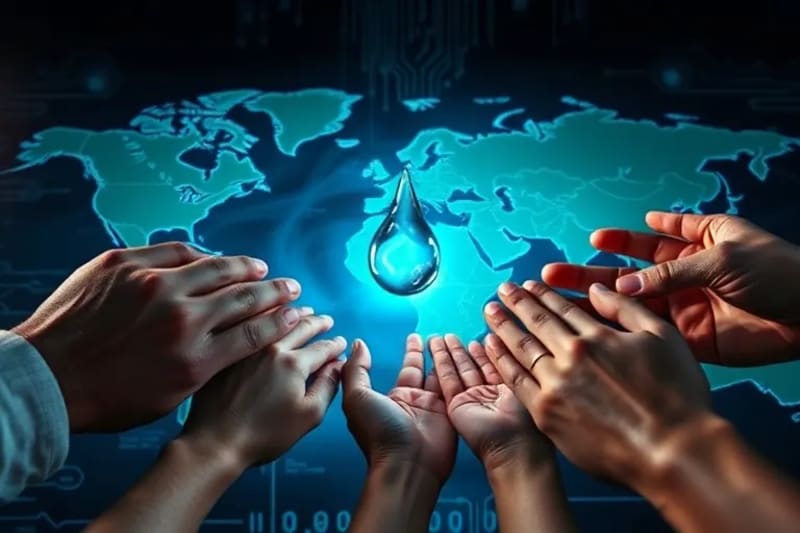
A global perspective on water scarcity, illustrating the complex interplay of resources and international relations.
2. Drivers of Water Stress and Geopolitical Tension
Several interconnected factors contribute to the escalating water crisis and its geopolitical ramifications. Understanding these drivers is crucial for developing effective mitigation and adaptation strategies. These factors often amplify each other, creating a vicious cycle of resource depletion and conflict potential.
- Climate Change: Altered precipitation patterns, increased frequency of droughts and floods, and glacier melt directly impact freshwater availability. Regions dependent on glacial meltwater, such as those fed by the Himalayas, face uncertain futures as these crucial sources diminish.
- Population Growth: A burgeoning global population demands more water for drinking, sanitation, and food production. The sheer scale of human consumption places immense pressure on finite water supplies, especially in densely populated urban centers.
- Agricultural Demands: Agriculture accounts for approximately 70% of global freshwater withdrawals. Inefficient irrigation practices, coupled with the cultivation of water-intensive crops, contribute significantly to water stress. The need to feed a growing world population often clashes with sustainable water use.
- Industrialization and Pollution: Industrial processes require vast amounts of water, and often discharge pollutants back into water bodies, rendering them unusable. This not only reduces available clean water but also poses severe health and environmental risks.
- Urbanization: Rapid urbanization leads to increased demand for water in cities, often necessitating the diversion of water from rural areas, which can create internal conflicts and exacerbate regional disparities.
These drivers collectively transform water from a local resource into a strategic asset, making its control and distribution a matter of national security and international diplomacy. The economic impact of resource scarcity, including water, can lead to inflation and affect personal savings, highlighting the broad implications of this crisis.
3. Water Conflicts: Historical Precedents and Contemporary Flashpoints
Throughout history, water has been a source of both cooperation and conflict. While many transboundary water agreements have fostered peace, instances of water-related disputes are becoming more frequent and intense. These conflicts can range from localized skirmishes over access to shared wells to interstate tensions over major river basins.
Key regions experiencing significant water-related geopolitical tensions include:
- The Nile Basin: Egypt, Sudan, and Ethiopia are locked in a long-standing dispute over the Grand Ethiopian Renaissance Dam (GERD), which Ethiopia is building on the Blue Nile. Egypt fears the dam will significantly reduce its downstream water supply, crucial for its agricultural and economic survival.
- The Jordan River Basin: This basin is shared by Israel, Jordan, Syria, and Palestine, all of whom face severe water stress. Historical and political factors complicate efforts to manage these shared resources equitably, contributing to regional instability.
- The Indus River Basin: India and Pakistan, two nuclear-armed neighbors, share the waters of the Indus River. Despite a treaty, tensions periodically flare, especially when one country undertakes projects that could affect the other's water supply.
- The Mekong River: Downstream countries like Vietnam, Cambodia, and Thailand express concerns over upstream dam construction by China, which impacts water flow, fisheries, and agricultural livelihoods.
These examples highlight how water, when poorly managed or unequally distributed, can become a catalyst for geopolitical friction. The absence of robust international legal frameworks and effective dispute resolution mechanisms further complicates these situations.
4. Sustainable Business Opportunities in Water Management
Despite the challenges, the global water crisis also presents significant opportunities for innovation and sustainable business development. The need for efficient water management, purification, and conservation has spurred growth in various sectors, attracting investment and fostering technological advancements. Businesses that can offer scalable and sustainable solutions are poised for substantial growth.
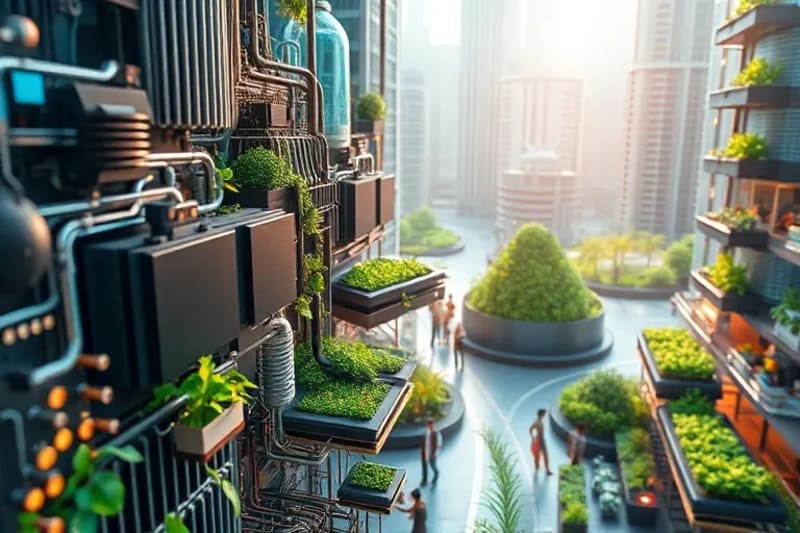
Envisioning a sustainable future where urban environments thrive on advanced water solutions.
Key areas for sustainable business opportunities include:
- Desalination Technologies: As freshwater sources dwindle, desalination of seawater and brackish water becomes increasingly vital. Advances in reverse osmosis and other energy-efficient methods are making this process more economically viable.
- Wastewater Treatment and Reuse: Treating and recycling wastewater for various purposes (irrigation, industrial use, and even potable water) reduces reliance on fresh supplies and minimizes pollution. This sector is seeing rapid innovation and investment.
- Smart Water Grids and Infrastructure: Developing intelligent systems for monitoring, managing, and distributing water can significantly reduce leaks and improve efficiency. This includes IoT-enabled sensors, AI-driven analytics, and automated control systems.
- Efficient Irrigation Systems: Transitioning from traditional flood irrigation to drip irrigation, precision agriculture, and other water-saving techniques can drastically reduce agricultural water consumption.
- Water Conservation Solutions: Businesses focused on residential and commercial water-saving devices, rainwater harvesting, and water-efficient landscaping are also gaining traction.
These opportunities not only offer financial returns but also contribute to global water security and environmental sustainability. The integration of IoT in precision forestry, for instance, demonstrates how technology can be leveraged for better resource management, a principle directly applicable to water.
5. Technological Innovations Driving the Water Sector
The 21st century has witnessed a surge in technological advancements that are revolutionizing water management. These innovations are crucial for addressing the dual challenges of scarcity and quality, offering hope for more sustainable and equitable water distribution. From advanced filtration to AI-powered analytics, technology is reshaping the water landscape.
A table summarizing key technological innovations:
| Innovation Category | Description | Impact on Water Geopolitics |
|---|---|---|
| Advanced Filtration (e.g., Graphene, Nanofiltration) | Highly efficient membranes for removing impurities, pathogens, and even microplastics from water sources. | Enables access to previously unusable water sources, reducing reliance on conventional freshwater and potentially easing transboundary tensions. |
| AI and Machine Learning for Water Management | Predictive analytics for demand forecasting, leak detection, optimization of water distribution networks, and real-time quality monitoring. | Improves efficiency and reduces waste, making existing supplies go further and potentially mitigating conflicts over allocation. |
| Atmospheric Water Generators (AWG) | Devices that extract potable water from ambient air, particularly useful in arid or water-stressed regions. | Offers localized, independent water sources, potentially reducing dependency on shared rivers or aquifers and fostering self-sufficiency. |
| Satellite Monitoring and Remote Sensing | Provides data on water levels, snowpack, soil moisture, and aquifer depletion, allowing for better resource assessment and management. | Enhances transparency and data sharing, which can be critical for building trust and facilitating agreements in transboundary water management. |
| Biotechnology for Water Purification | Using microorganisms or enzymes to break down pollutants and contaminants in wastewater, offering eco-friendly treatment options. | Reduces environmental impact of industrial and municipal discharges, improving overall water quality and availability for all stakeholders. |
These innovations, alongside others, are transforming the economic viability and political implications of water access. The continuous drive for innovations in water technology underscores humanity's commitment to overcoming resource challenges.
6. International Cooperation and Governance Frameworks
Given that over 260 river basins and countless aquifers are shared by two or more countries, international cooperation is paramount for peaceful and sustainable water management. Effective governance frameworks are essential to prevent conflicts and ensure equitable access to this vital resource. Diplomatic efforts, treaties, and shared management bodies play a crucial role.

Symbolizing the integration of technology and nature for holistic water resource management.
Key aspects of international water governance include:
- Transboundary Water Agreements: These treaties establish rules for water allocation, quality standards, and dispute resolution mechanisms among riparian states. Examples include the Indus Waters Treaty and agreements in the Rhine River Basin.
- Joint River Basin Organizations: Bodies like the Mekong River Commission facilitate dialogue, data sharing, and joint planning among member states, promoting a cooperative approach to shared water resources.
- International Law and Conventions: Frameworks such as the UN Watercourses Convention provide guiding principles for the equitable and reasonable utilization of transboundary water resources, though adherence varies.
- Diplomacy and Mediation: Third-party mediation and diplomatic initiatives are often necessary to de-escalate tensions and facilitate negotiations when water disputes arise.
The success of these frameworks hinges on political will, mutual trust, and a shared understanding of the long-term benefits of cooperation over unilateral action. As humanity looks towards new frontiers, the lessons learned in managing terrestrial resources could even inform future endeavors in private space exploration, where resource management will be equally critical.
7. Future Outlook: Building Resilience and Ensuring Water Security
The future of water geopolitics in the 21st century will largely depend on our collective ability to adapt to changing climatic conditions, manage growing demands, and foster international cooperation. Building resilience in water systems and ensuring water security for all will require a multi-faceted approach involving technological innovation, sound governance, and community engagement.
Key strategies for building a water-secure future include:
- Integrated Water Resource Management (IWRM): A holistic approach that coordinates the development and management of water, land, and related resources to maximize economic and social welfare without compromising the sustainability of vital ecosystems.
- Investment in Green Infrastructure: Protecting and restoring natural ecosystems like wetlands, forests, and floodplains can enhance water quality, regulate flow, and recharge aquifers, acting as natural water filters and reservoirs.
- Water Diplomacy and Conflict Prevention: Proactive diplomatic efforts, early warning systems for water stress, and institutionalized mechanisms for dialogue are crucial to prevent disputes from escalating into conflicts.
- Public Awareness and Education: Educating communities about water conservation, efficient use, and the value of water resources is fundamental for fostering a culture of responsible water stewardship.
- Equitable Access and Pricing: Ensuring that all populations have access to safe, affordable water, while also implementing pricing mechanisms that reflect water's true value, can incentivize conservation and efficient use.
The path forward is challenging, but not insurmountable. By embracing innovation, strengthening international partnerships, and prioritizing sustainable practices, humanity can navigate the complex waters of the 21st century, transforming potential conflicts into opportunities for shared prosperity and peace. The geopolitical landscape of water is a mirror reflecting our collective capacity for foresight, collaboration, and adaptation.
Related Topics & Further Reading
Source: Hybrid content assisted by AI and human editorial supervision.


Comentarios