
Hedy Lamarr Hollywood Wi-Fi Pioneer Technology Innovation
Hedy Lamarr, born Hedwig Eva Maria Kiesler in Vienna, Austria-Hungary, transcended the conventional boundaries of fame and intellect. Celebrated globally as a dazzling Hollywood star during the Golden Age of cinema, her public persona often overshadowed a remarkable, yet largely unacknowledged, scientific genius. Beyond the silver screen, Lamarr harbored a profound passion for invention, a drive that would ultimately lead her to co-create a technology fundamental to modern wireless communication.
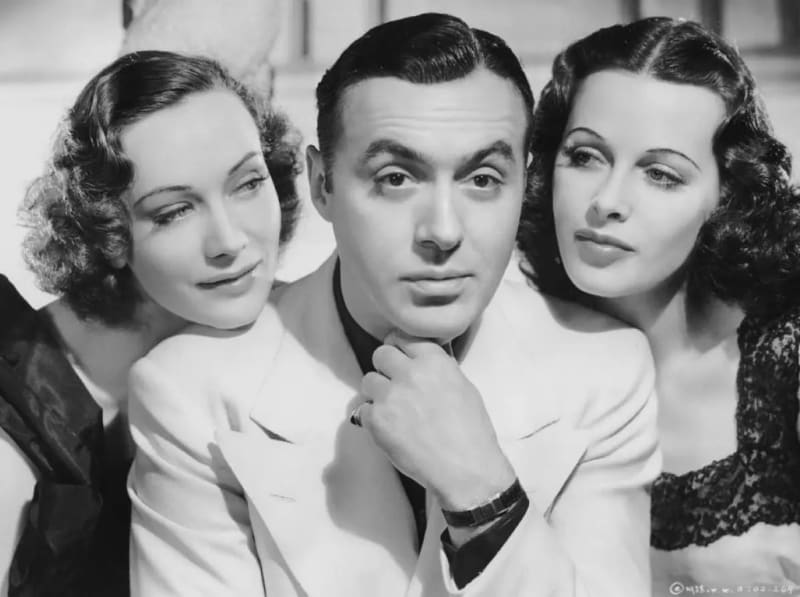
Precursors intelectuales, diagramas fundamentales y representaciones conceptuales que forjaron la visión de la icónica estrella de Hollywood sobre la tecnología de comunicación.
Fuente visual sujeta a disponibilidad del ecosistema: Wikimedia Commons bajo licencia CC BY-SA 4.0 o renderizado conceptual IA.
Her story is a compelling narrative of duality: the glamour and superficiality of celebrity juxtaposed with the rigorous intellectual pursuit of scientific discovery. This article delves into the extraordinary life of this influential figure, exploring how her contributions as an inventor laid the groundwork for technologies we now consider indispensable, such as Wi-Fi, Bluetooth, and GPS. Her journey from the dazzling lights of Hollywood to the intricate world of telecommunications innovation is a testament to an inquisitive mind that refused to be confined by societal expectations or public image.
This exploration aims to provide an introductory and educational perspective on her often-overlooked scientific achievements, ensuring that her full legacy, both as an actress and a technological pioneer, receives the recognition it rightfully deserves.
The Glamour of a Hollywood Icon
Before her scientific contributions came to light, the iconic star was primarily known for her captivating presence on the silver screen. Her career began in European cinema, where she gained notoriety for her role in the controversial 1933 Czech film Ecstasy. This film, which featured a brief nude scene, brought her international attention and led to a contract with MGM studio head Louis B. Mayer, who rebranded her as Hedy Lamarr.
Upon her arrival in Hollywood, the talented actress quickly became one of the industry's most sought-after leading ladies. She starred in numerous successful films, including Algiers (1938), Boom Town (1940), Comrade X (1940), and the epic Samson and Delilah (1949). Her exotic beauty and enigmatic charm captivated audiences worldwide, cementing her status as a global sex symbol and a paragon of Hollywood glamour.

A conceptual still-life blending elements of classic cinema and the intricate components of early wireless communication.
Despite her cinematic triumphs, the famous actress often expressed dissatisfaction with the roles she was offered, feeling that her physical appearance overshadowed her intelligence and creative potential. She yearned for more challenging work and often found herself bored by the superficiality of the film industry. This underlying intellectual restlessness would eventually drive her towards pursuits far removed from the glitz and glamour of her public life.
The Unseen Genius: Hedy Lamarr's Inventive Mind
What many did not know about the celebrated star was her profound interest in science and engineering. From a young age, she displayed a keen curiosity about how things worked, often dismantling and reassembling gadgets. Her first husband, Fritz Mandl, an Austrian arms manufacturer, exposed her to advanced military technology and discussions about weaponry, which further fueled her inventive spirit. She attended meetings with scientists and engineers, absorbing complex information that would later prove invaluable.
During World War II, deeply concerned by the escalating conflict and the vulnerability of Allied ships to German U-boats, the ingenious inventor sought ways to contribute to the war effort. She believed her scientific aptitude could be more useful than her celebrity. It was during this period that she met George Antheil, an avant-garde composer and inventor, whose work with synchronized player pianos sparked an idea in her mind.
Their collaboration began with a shared desire to help the Allies. The challenge was to create a secure communication system that could guide torpedoes without being jammed by enemy forces. Traditional radio guidance systems were easily intercepted and disrupted, rendering them ineffective. The inventive duo envisioned a method where the radio signal would "hop" between frequencies, making it virtually impossible for the enemy to detect or jam.
The Birth of Spread Spectrum Technology
In 1941, the visionary actress and George Antheil developed what they called a "Secret Communication System." Their groundbreaking concept involved a method of "frequency hopping" where a radio transmitter and receiver would rapidly change frequencies in a synchronized, predetermined pattern. This rapid switching would make it extremely difficult for adversaries to tune into the signal or block it effectively.
The inspiration for synchronizing the frequency changes came from Antheil's work with player pianos, which used perforated paper rolls to control multiple instruments simultaneously. They adapted this mechanism to control the radio frequencies, proposing that a similar synchronized roll could dictate the hopping pattern for both the transmitter and receiver. This innovative approach was a precursor to what is now known as spread spectrum technology.

An abstract visualization of the frequency hopping spread spectrum technology, a cornerstone of modern wireless networks.
On August 11, 1942, the pair were granted U.S. Patent No. 2,292,387 for their "Secret Communication System." The patent described a method for preventing enemy forces from jamming radio-guided torpedoes. While the U.S. Navy initially adopted a skeptical stance, deeming the technology too cumbersome to implement at the time, the fundamental principles of their invention were far ahead of their era. This patent is now recognized as a foundational document for modern wireless communication. For more context on how technology impacts global issues, consider the digital divide and economic inequality.
From Wartime Secret to Modern Connectivity
Despite its innovative nature, the original patent for the frequency hopping system remained largely dormant for many years. It was not until the 1950s that the U.S. Navy revisited the concept, eventually implementing a version of spread spectrum technology during the Cuban Missile Crisis. However, the true potential of the pioneering invention would not be fully realized until decades later, with the advent of digital communication.
In the 1980s and 1990s, as wireless communication began to proliferate, engineers recognized the immense value of spread spectrum principles. The technology, originally conceived for secure military communications, proved ideal for managing multiple signals in crowded radio bands and ensuring robust, interference-resistant connections. This led to its widespread adoption in various commercial applications.
Today, the core concepts of frequency hopping and spread spectrum are integral to many essential technologies. They form the bedrock of Wi-Fi (IEEE 802.11 standards), enabling seamless internet connectivity in homes, offices, and public spaces. Bluetooth, which facilitates short-range wireless connections between devices, also relies heavily on these principles. Furthermore, GPS systems utilize spread spectrum techniques for accurate positioning and navigation. The impact of such foundational innovations is often explored alongside the stories of forgotten software innovators who shaped the digital age.
A Legacy Reclaimed: Recognition and Influence
For many years, the brilliant inventor's contributions remained largely unknown to the public. Her patent had expired by the time her technology became commercially viable, meaning she never profited financially from her invention. It wasn't until the late 1990s, as the internet and wireless devices became ubiquitous, that her role as a technological pioneer began to receive widespread recognition.
In 1997, the Electronic Frontier Foundation (EFF) honored the visionary actress with an award for her pioneering work. She was also posthumously inducted into the National Inventors Hall of Fame in 2014, a fitting tribute to her extraordinary intellect and foresight. Her story has since become an inspiration, particularly for women in STEM (Science, Technology, Engineering, and Mathematics), demonstrating that brilliance can emerge from unexpected places and defy conventional stereotypes.
The enduring influence of her work extends beyond the technical specifications of Wi-Fi and Bluetooth. It serves as a powerful reminder that innovation often requires a multidisciplinary approach, blending creative thinking with scientific rigor. Her legacy challenges the notion that individuals must fit neatly into a single professional category, proving that one can be both a glamorous screen siren and a groundbreaking inventor. Her life exemplifies how diverse talents can converge to create profound and lasting impacts on society, much like the complex interplay of AI and quantum computing in addressing climate change.
The story of this iconic figure is a testament to the power of curiosity and perseverance. Her contributions continue to shape the digital landscape, making her an unsung hero of modern connectivity whose brilliance shines as brightly as her cinematic legacy.
Explore More Innovations
Delve deeper into the world of groundbreaking technologies and their impact on our future.
Source: Hybrid content assisted by AI and human editorial supervision.


Comentarios