
Neuro-rights and Mental Privacy: Safeguarding Digital Consciousness in the AI Era
The rapid advancements in neurotechnology and generative artificial intelligence (AI) are ushering in an unprecedented era, blurring the lines between human thought, digital data, and machine capabilities. As brain-computer interfaces (BCIs) become more sophisticated and AI models gain the ability to generate complex content, including text, images, and even synthetic voices, profound ethical and legal questions arise concerning the sanctity of our inner mental lives. This evolving landscape necessitates a critical examination of neuro-rights and mental privacy, fundamental concepts designed to protect individual autonomy and consciousness in a world increasingly shaped by technology that can access, interpret, and potentially influence our minds.
The concept of neuro-rights emerged from the recognition that traditional human rights frameworks might be insufficient to address the unique challenges posed by neurotechnologies. These rights aim to safeguard the brain and its activity from unauthorized intrusion, manipulation, and exploitation. Mental privacy, a cornerstone of neuro-rights, specifically addresses the protection of our thoughts, emotions, and cognitive processes from being accessed, stored, or used without explicit consent. In the age of generative AI, where algorithms can infer complex patterns from vast datasets and even create synthetic realities, the urgency to define and enforce these protections has become paramount for preserving human dignity and freedom.
Table of Contents
- The Emergence of Neurotechnology and Generative AI
- Defining the Core Neuro-rights Principles
- Generative AI: New Frontiers and Ethical Dilemmas for Mental Privacy
- Navigating the Legal and Regulatory Labyrinth
- Strategies for Safeguarding Digital Consciousness
- The Future of Neuro-rights in an AI-Driven World
The Emergence of Neurotechnology and Generative AI
Neurotechnology encompasses a broad range of devices and methods used to understand, monitor, or influence the brain and nervous system. This field includes non-invasive techniques like electroencephalography (EEG) and functional magnetic resonance imaging (fMRI), as well as invasive BCIs that can directly record and stimulate neural activity. These technologies are rapidly advancing, moving from clinical applications, such as assisting individuals with paralysis, to consumer products aimed at enhancing cognitive function, improving focus, or even facilitating direct communication with digital devices through thought alone.
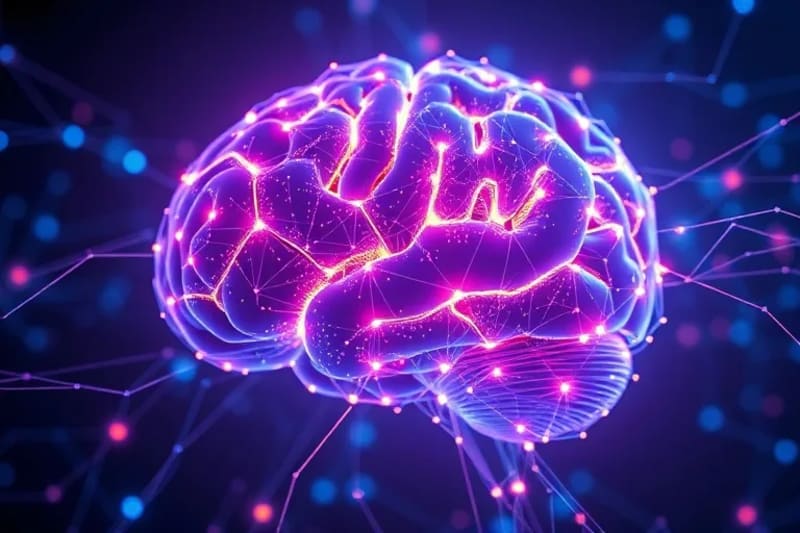
Conceptual representation of the intricate interplay between human cognition, advanced neurotechnology, and the pervasive influence of generative artificial intelligence, shaping the future of digital consciousness.
Image generated by AI, exploring the conceptual fusion of biological neural networks and artificial intelligence paradigms, under a creative commons-like interpretation.Concurrently, generative AI has revolutionized how machines interact with and create information. Models like large language models (LLMs) can produce human-like text, generate realistic images from textual descriptions, and even compose music. The power of these systems lies in their ability to learn complex patterns and relationships from vast datasets, allowing them to synthesize novel outputs. When combined with neurotechnology, generative AI could potentially interpret neural signals to reconstruct thoughts, dreams, or intentions, or conversely, generate stimuli designed to elicit specific mental states or responses.
The convergence of these fields presents both immense opportunities and significant risks. On one hand, it could lead to breakthroughs in treating neurological disorders, enhancing human capabilities, and fostering new forms of communication. On the other hand, it opens the door to unprecedented forms of surveillance, manipulation, and challenges to individual autonomy. The data generated by neurotechnologies—often referred to as "neuro-data"—is uniquely sensitive, reflecting the very essence of our identity and subjective experience. Its processing by generative AI, which excels at pattern recognition and synthesis, amplifies the need for robust ethical guidelines and legal protections.
Defining the Core Neuro-rights Principles
To address the unique ethical and legal vacuum created by advancing neurotechnology, a framework of neuro-rights has been proposed by leading ethicists and scientists. These rights aim to extend existing human rights to the neural domain, ensuring that individuals retain sovereignty over their minds. The primary proposed neuro-rights include:
- Right to Mental Privacy: This is the right to protect one's brain data from unauthorized access, collection, storage, or use. It ensures that thoughts, emotions, and cognitive processes remain private and are not subject to unwarranted intrusion or commercial exploitation. In the context of generative AI, this means preventing algorithms from inferring sensitive mental states without explicit, informed consent.
- Right to Mental Integrity: This right safeguards individuals from unauthorized neurotechnological interventions that could alter their neural activity or mental states. It protects against technologies that might degrade, enhance, or manipulate cognitive functions without the individual's free and informed choice. This is crucial as AI could potentially be used to deliver targeted neural stimuli.
- Right to Cognitive Liberty: This principle asserts the right of individuals to make free and informed decisions about the use of neurotechnologies and to maintain control over their own minds. It encompasses the freedom to choose whether to use neuro-enhancements, to access or refuse neuro-data, and to resist any form of mental coercion or manipulation.
- Right to Psychological Continuity: This right protects the coherence and stability of an individual's sense of self and identity from external alteration by neurotechnologies. As BCIs and AI could potentially influence memories or personality traits, this right aims to preserve the fundamental narrative of one's life.
- Right to Protection from Algorithmic Bias: Given that neuro-data processing by AI can perpetuate or even amplify existing societal biases, this right ensures that neurotechnologies and AI algorithms are developed and deployed in a fair and equitable manner, without discrimination based on neural patterns or cognitive profiles.
These principles form the bedrock of a future where neurotechnological innovation can thrive responsibly, without infringing upon fundamental human dignity and autonomy. The challenge lies in translating these abstract rights into actionable legal and ethical frameworks that can keep pace with technological advancements.
Generative AI: New Frontiers and Ethical Dilemmas for Mental Privacy
Generative AI introduces several novel challenges to mental privacy. Its ability to identify subtle patterns in vast datasets means that even seemingly innocuous neuro-data, when combined with other personal information, could be used to infer highly sensitive mental states, intentions, or vulnerabilities. For instance, AI could analyze brain activity patterns during decision-making tasks to predict consumer behavior or political preferences with unprecedented accuracy.

A conceptual visualization of mental privacy as a secure digital vault, illustrating the imperative to protect individual thoughts and neural data from unauthorized access in the AI era.
The potential for manipulation is also a significant concern. If generative AI can accurately model an individual's cognitive processes, it could then be used to create highly personalized and persuasive content or stimuli designed to influence thoughts, emotions, or behaviors. This could range from hyper-targeted advertising that bypasses conscious resistance to more insidious forms of psychological conditioning. The distinction between persuasion and manipulation becomes increasingly blurred when AI has direct access to neural responses.
Furthermore, the development of synthetic consciousness or AI models that simulate human-like thought processes raises questions about the very definition of consciousness and identity. If AI can generate outputs that are indistinguishable from human thought, how do we differentiate between authentic human experience and machine-generated content? This could lead to a crisis of authenticity and trust, where individuals struggle to discern the origin and intent behind information or even their own internal experiences if influenced by external neurotechnologies.
The lack of robust regulatory frameworks specifically designed for neuro-data and generative AI exacerbates these issues. Existing data protection laws, while foundational, often do not adequately address the unique sensitivity of neural information or the complex inferential capabilities of advanced AI. This gap creates a fertile ground for potential misuse, highlighting the urgent need for proactive legal and ethical responses.
Navigating the Legal and Regulatory Labyrinth
Current legal frameworks, such as the General Data Protection Regulation (GDPR) in Europe and the California Consumer Privacy Act (CCPA) in the United States, provide a baseline for data protection. They emphasize consent, data minimization, and the right to access and delete personal data. However, these regulations were not designed with neuro-data or the advanced inferential capabilities of generative AI in mind. Neuro-data often falls into categories of "special categories of personal data" due to its sensitivity, but specific provisions for its unique nature are lacking.
One of the primary challenges is defining what constitutes "neuro-data" and how it should be handled. Is it raw EEG signals, or also the inferences drawn from these signals by AI? How do we ensure truly informed consent when individuals may not fully grasp the implications of sharing their neural activity, especially when AI can extract unforeseen insights? The dynamic nature of generative AI, which can evolve and learn, further complicates the regulatory landscape, as the potential uses of collected neuro-data may change over time.
Several countries and international bodies are beginning to explore these issues. Chile, for example, has taken a pioneering step by amending its constitution to protect brain activity and the information derived from it, explicitly recognizing neuro-rights. The Council of Europe and the OECD have also started discussions on the ethical implications of neurotechnology. These initiatives represent crucial first steps towards establishing a global consensus on how to regulate neuro-data and AI responsibly.
The development of Neuro-Labor Rights is another critical area, focusing on the ethical and legal challenges presented by neurotechnology in professional settings. As neuro-enhancements and brain monitoring become more prevalent in workplaces, new regulations are needed to prevent coercion, ensure fair treatment, and protect workers' cognitive liberty. Similarly, the broader ethical discussions around Genetic Engineering and Human Future highlight the need for comprehensive ethical frameworks for technologies that profoundly impact human identity and biology.
Strategies for Safeguarding Digital Consciousness
Protecting mental privacy and upholding neuro-rights in the age of generative AI requires a multi-faceted approach involving technological, ethical, legal, and educational strategies:
- Technological Solutions: Developing robust encryption and anonymization techniques specifically tailored for neuro-data is crucial. Privacy-preserving AI, such as federated learning and differential privacy, can allow AI models to learn from neuro-data without directly accessing individual raw inputs. Secure hardware enclaves for processing sensitive neural information can also provide an additional layer of protection.
- Ethical AI Development: AI developers must adopt ethical principles from the design phase, prioritizing transparency, accountability, and fairness. This includes implementing "privacy by design" and "ethics by design" methodologies, conducting thorough impact assessments, and ensuring human oversight in critical decision-making processes involving neuro-data.
- Robust Legal Frameworks: Governments must enact specific legislation that defines neuro-rights, regulates the collection, processing, and use of neuro-data, and establishes clear penalties for violations. These laws should mandate explicit, granular, and revocable consent for neuro-data sharing and place strict limits on its commercial exploitation or use for manipulation.
- Public Awareness and Education: Educating the public about the risks and benefits of neurotechnology and generative AI is essential. Individuals need to understand their rights, how their neuro-data might be used, and how to make informed decisions about engaging with these technologies. Digital literacy initiatives should expand to include neuro-literacy.
- Interdisciplinary Collaboration: Addressing these complex issues requires collaboration among neuroscientists, AI researchers, ethicists, legal scholars, policymakers, and civil society organizations. This interdisciplinary dialogue can foster a holistic understanding of the challenges and facilitate the development of comprehensive and effective solutions.
An abstract depiction of ethical AI development, emphasizing the integration of human oversight and collaborative principles in the design and deployment of artificial intelligence systems for neurotechnology.
The Future of Neuro-rights in an AI-Driven World
The trajectory of neurotechnology and generative AI suggests an ever-increasing integration with human cognitive processes. As these technologies become more pervasive, the concept of digital consciousness—the sum of our mental life as it interacts with and is mediated by digital systems—will become a central concern. Protecting this digital consciousness will require continuous vigilance and adaptability in our ethical and legal frameworks.
Future challenges may include the emergence of sophisticated neuro-marketing techniques, the potential for brain-to-brain communication mediated by AI, and the creation of highly realistic virtual realities that could blur the lines between perception and reality. Each of these advancements will introduce new dimensions to the debate on mental privacy and neuro-rights, demanding proactive policy-making rather than reactive measures.
Ultimately, the goal is to foster an environment where neurotechnological innovation can flourish responsibly, enhancing human well-being and capabilities without compromising fundamental rights. This requires a global commitment to ethical principles, robust legal protections, and a society that is well-informed and empowered to navigate the complexities of the digital age. Safeguarding digital consciousness is not merely about protecting data; it is about preserving the essence of what it means to be human in an increasingly interconnected and technologically advanced world.
Explore More Relevant Content
Dive deeper into the intricate relationship between technology, ethics, and human well-being with our curated selection of articles:
- Deep Sleep Biohacking: Cronobiología, Recuperación Celular, Longevidad
- Psicología Consumidor Online Neuromarketing: Comportamiento Compra
- Mindfulness Astrological Transits Navigating Challenges Presence
- Angels Archangels Digital Guides Spiritual Labyrinth
Source: Hybrid content assisted by AI and human editorial supervision.


Comentarios