
Gratitude Economy: Purpose-Driven Sustainable Business Models
In an era increasingly defined by conscious consumption and a demand for ethical practices, a transformative paradigm is emerging in the global marketplace: the Gratitude Economy. This concept transcends traditional transactional models, embedding a deep sense of appreciation, purpose, and reciprocity into the very fabric of business operations. It represents a fundamental shift from profit-at-all-costs to a more holistic approach where success is measured not only by financial returns but also by positive societal and environmental impact, and the genuine well-being of all stakeholders.
The Gratitude Economy is not merely a philanthropic add-on or a marketing gimmick; it is a strategic framework that redefines value. Businesses operating within this model actively cultivate a culture of appreciation, extending it to their employees, customers, suppliers, communities, and the planet itself. This approach fosters stronger relationships, enhances brand loyalty, and ultimately builds more resilient and sustainable enterprises in a rapidly evolving world. It’s about recognizing interdependence and acting with intentional kindness and responsibility.

Visualizing the interconnectedness of purpose, community, and sustainable growth within modern economic frameworks.
Conceptual rendering by AI, reflecting the spirit of collaborative prosperity.Table of Contents
- Understanding the Gratitude Economy
- Core Principles of Gratitude-Driven Business Models
- Benefits for Stakeholders: A Win-Win Ecosystem
- Implementing Gratitude: Practical Business Models
- Challenges and the Path Forward
- The Transformative Power of Gratitude in Commerce
- Explore Our Content Ecosystem
Understanding the Gratitude Economy
At its heart, the Gratitude Economy is an economic framework where appreciation and positive impact are central to business strategy. It moves beyond Corporate Social Responsibility (CSR) as a separate department or initiative, integrating ethical considerations and stakeholder well-being into every operational decision. This means that from product development to supply chain management, and from marketing to customer service, the underlying ethos is one of mutual benefit and genuine care.
This economic model recognizes that businesses do not operate in a vacuum. They are integral parts of complex ecosystems, relying on natural resources, human capital, community support, and consumer trust. By acknowledging these dependencies with gratitude, companies are incentivized to act as responsible stewards rather than mere exploiters. The result is a more resilient business that can navigate economic fluctuations and build enduring relationships based on trust and shared values.
The rise of this economy is fueled by several factors. Consumers, particularly younger generations, are increasingly discerning, seeking brands that align with their values and demonstrate authentic commitment to social and environmental causes. Employees are also looking for more than just a paycheck; they desire purpose-driven work environments where their contributions are valued and where they can feel proud of their employer's impact. Investors, too, are shifting towards Environmental, Social, and Governance (ESG) criteria, recognizing that responsible business practices often correlate with long-term financial stability and growth.
Core Principles of Gratitude-Driven Business Models
Several foundational principles underpin the Gratitude Economy, guiding businesses towards more purposeful and sustainable operations:
- Purpose-Driven Mission: Beyond profit, these businesses articulate a clear, compelling mission that addresses a societal or environmental need. This purpose acts as a compass, guiding decisions and inspiring stakeholders.
- Stakeholder-Centric Approach: Rather than solely focusing on shareholders, gratitude-driven models consider the well-being of all stakeholders: employees, customers, suppliers, communities, and the environment.
- Transparency and Authenticity: Openness about practices, challenges, and impacts builds trust. Authenticity in communication and action is paramount to avoid accusations of "purpose-washing."
- Reciprocity and Fair Exchange: Value is exchanged fairly across the entire supply chain. This includes fair wages, ethical sourcing, and ensuring that all parties benefit from the business relationship.
- Long-Term Vision: These businesses prioritize long-term sustainability and impact over short-term gains, investing in practices that ensure enduring value for future generations. This often aligns with circular business models that emphasize regeneration and waste reduction.
- Conscious Leadership: Leaders in these organizations embody the values of gratitude, empathy, and service, fostering a culture where these principles are lived daily.
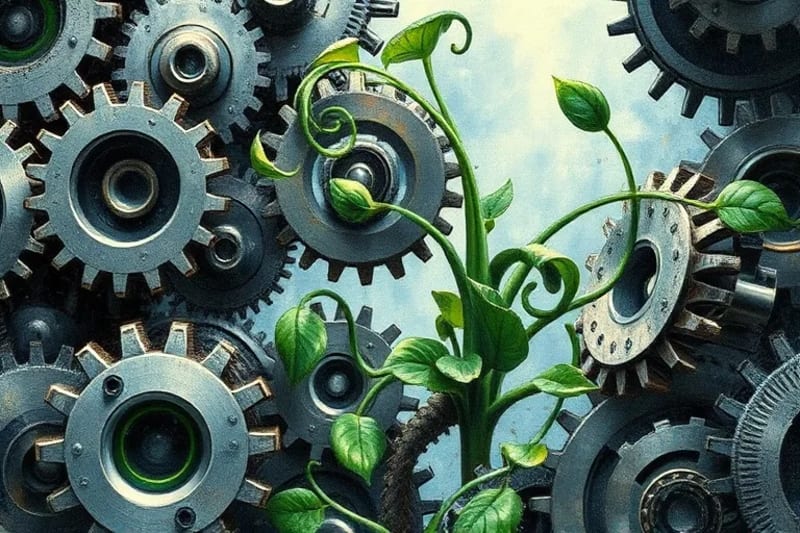
The harmonious integration of industrial progress with ecological vitality, representing sustainable innovation.
Conceptual art generated by AI, illustrating the symbiosis of commerce and nature.Benefits for Stakeholders: A Win-Win Ecosystem
The adoption of a gratitude-driven approach yields substantial benefits across the entire ecosystem:
- For Businesses: Enhanced brand reputation, increased customer loyalty, higher employee retention and engagement, greater innovation, and improved financial performance in the long run. Companies become more resilient and adaptable to market changes and crises.
- For Customers: A sense of trust and alignment with brands that reflect their values, leading to more meaningful purchasing decisions and a feeling of contributing to positive change.
- For Employees: A more fulfilling work experience, a stronger sense of purpose, better work-life balance, and a supportive, appreciative work environment, leading to higher morale and productivity.
- For Communities: Positive social impact through job creation, local investment, ethical practices, and addressing community needs, fostering stronger local economies and social cohesion.
- For the Environment: Reduced ecological footprint through sustainable sourcing, waste reduction, energy efficiency, and investment in regenerative practices, contributing to a healthier planet.
Implementing Gratitude: Practical Business Models
The Gratitude Economy manifests in various practical business models and certifications:
- Certified B Corporations (B Corps): These companies meet rigorous standards of social and environmental performance, accountability, and transparency. They legally commit to considering the impact of their decisions on all stakeholders.
- Social Enterprises: Businesses that prioritize a social or environmental mission alongside financial sustainability. Their primary goal is to create positive change, with profits reinvested to further their mission.
- Conscious Capitalism: A philosophy and movement that emphasizes four tenets: higher purpose, stakeholder integration, conscious leadership, and conscious culture. It believes that business can be a force for good.
- Fair Trade Organizations: These businesses adhere to standards that ensure fair prices, safe working conditions, environmental protection, and community development for producers in developing countries.
- Impact Investing Funds: Financial vehicles that seek to generate positive social and environmental impact alongside a financial return. This growing sector provides capital for businesses aligned with gratitude economy principles, including green investments in emerging markets.
These models demonstrate that it is possible to build successful businesses that are deeply rooted in ethical principles and a genuine desire to contribute positively to the world. They offer tangible frameworks for companies looking to integrate gratitude and purpose into their core operations.

The nascent stages of growth for purpose-driven initiatives, emphasizing care and potential.
AI-generated macro photography, capturing the essence of nurturing ethical business.Challenges and the Path Forward
While the Gratitude Economy offers immense promise, its implementation is not without challenges. One significant hurdle is maintaining authenticity and avoiding "purpose-washing," where companies superficially adopt ethical language without genuine commitment. Consumers are increasingly adept at detecting insincerity, making genuine integration of values crucial.
Another challenge lies in scalability and measurement. For smaller businesses, integrating these principles might be more straightforward, but for large corporations, transforming established systems and cultures requires significant effort and investment. Developing robust metrics to quantify social and environmental impact alongside financial performance is also an evolving field, though frameworks like the UN Sustainable Development Goals (SDGs) provide a useful guide.
The path forward involves continued education, collaboration, and innovation. Businesses need to share best practices, consumers need to continue demanding ethical products, and policymakers can create supportive regulatory environments. Investors play a critical role by directing capital towards truly purpose-driven enterprises, accelerating their growth and influence. Ultimately, it requires a collective shift in mindset, recognizing that economic activity can and should serve a higher purpose.
The Transformative Power of Gratitude in Commerce
The Gratitude Economy is more than a trend; it is a fundamental re-evaluation of how business operates in the 21st century. It proposes a world where commerce is a force for good, driven by empathy, responsibility, and a deep appreciation for the interconnectedness of all life. By consciously choosing to operate with gratitude, businesses can build stronger relationships, foster innovation, attract and retain top talent, and ultimately contribute to a more equitable, sustainable, and prosperous world for everyone.
As we move deeper into an era of global challenges, the principles of the Gratitude Economy offer a compelling blueprint for a future where economic success and societal well-being are not mutually exclusive but inherently intertwined. It invites us all—as entrepreneurs, employees, consumers, and citizens—to participate in building a more mindful and appreciative global economy.
Explore Our Content Ecosystem
Delve deeper into related topics that explore innovation, sustainability, and human impact:
- Neuroarchitecture: Designing Spaces for Cognitive Well-being
- Generative AI: Creativity, Future Authorship, and Intellectual Property
- Biometric Divination: AI-Enhanced Intuition for Self-Discovery
- Monastic Mysticism in a Hyperconnected Era: Finding Inner Peace
Source: Hybrid content assisted by AI and human editorial supervision.


Comentarios