
Circular Economy Blockchain: Sustainable Regenerative Supply Chains
The global economy faces an urgent need for transformation, moving away from the traditional linear "take-make-dispose" model towards more sustainable practices. This shift is embodied by the concept of the circular economy, which aims to keep resources in use for as long as possible, extract the maximum value from them whilst in use, then recover and regenerate products and materials at the end of each service life. Simultaneously, blockchain technology has emerged as a powerful tool, offering unprecedented levels of transparency, traceability, and immutability in data management. The convergence of these two paradigms—circular economy principles and blockchain's capabilities—presents a revolutionary approach to building truly sustainable and regenerative supply chains.
This article delves into how blockchain can serve as a foundational technology for implementing circular economy models, enhancing efficiency, fostering trust, and enabling a more responsible management of resources across various industries. By understanding their combined potential, businesses and consumers can pave the way for an economic system that is not only environmentally sound but also economically resilient.
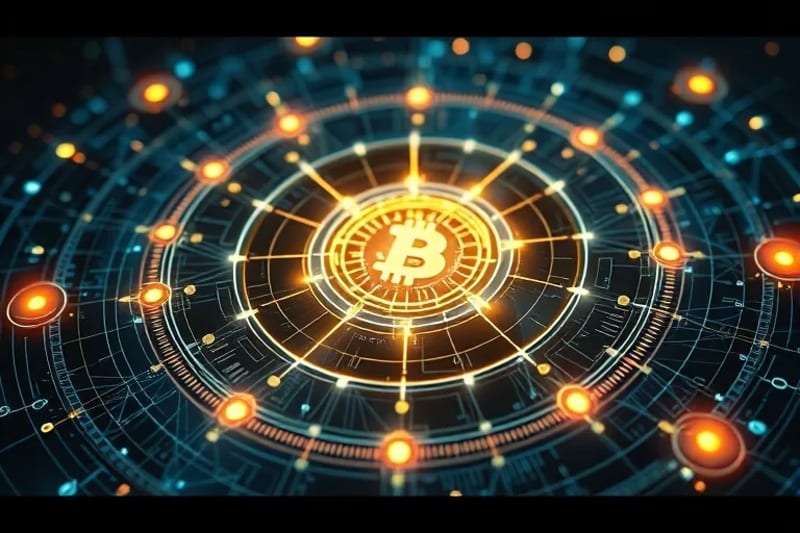
Conceptual representation of the synergy between digital ledger technologies and sustainable resource management, illustrating how interconnected systems can drive ecological and economic regeneration.
This visual concept, rendered by AI, captures the intricate relationship between technological innovation and environmental stewardship, reflecting a forward-thinking approach to global resource challenges.Table of Contents
1. Introduction to the Circular Economy
2. Blockchain as a Foundational Technology
3. The Synergy: Circular Economy Meets Blockchain
4. Key Applications in Sustainable Supply Chains
5. Benefits for Businesses and Consumers
6. Challenges and Future Outlook
7. Conclusion: Towards a Regenerative Future
1. Introduction to the Circular Economy
The circular economy is an economic system aimed at eliminating waste and the continual use of resources. It is a regenerative approach that contrasts sharply with the traditional linear economy, which follows a "take-make-dispose" pattern. In a circular model, products are designed for durability, reuse, repair, and recycling, ensuring that materials retain their value for as long as possible.
This framework is built upon three core principles: designing out waste and pollution, keeping products and materials in use, and regenerating natural systems. By embracing these principles, businesses can reduce their environmental footprint, enhance resource security, and unlock new economic opportunities. The transition to a circular economy requires systemic innovation across product design, business models, and supply chain management.
Unlike the linear model that depletes finite resources and generates vast amounts of waste, the circular economy aims to decouple economic growth from resource consumption. It envisions a future where materials flow in closed loops, minimizing environmental impact and maximizing economic value. This paradigm shift is crucial for addressing global challenges such as climate change, biodiversity loss, and resource scarcity.
2. Blockchain as a Foundational Technology
Blockchain technology, at its core, is a decentralized, distributed ledger that records transactions across many computers. Each "block" in the chain contains a timestamped set of transactions, and once recorded, the data in any given block cannot be altered retroactively without the alteration of all subsequent blocks and the consensus of the network. This immutability and transparency are its defining characteristics.
Beyond cryptocurrencies, blockchain's applications extend to various sectors, including supply chain management, healthcare, and intellectual property. Its ability to create an unchangeable record of events makes it ideal for tracking assets, verifying provenance, and ensuring data integrity. This robust data management system can significantly enhance trust among participants in a network, removing the need for central intermediaries.
The distributed nature of blockchain means that no single entity controls the entire ledger, making it highly resilient to fraud and manipulation. Smart contracts, self-executing agreements stored on the blockchain, further automate processes and enforce terms without human intervention. These features make blockchain a powerful tool for complex systems requiring high levels of security and accountability, such as those found in mobile banking security or intricate supply networks.
3. The Synergy: Circular Economy Meets Blockchain
The inherent characteristics of blockchain—transparency, traceability, and immutability—are perfectly aligned with the needs of a circular economy. For materials and products to be reused, repaired, or recycled effectively, their entire lifecycle history must be known and verifiable. This includes information about their origin, composition, previous uses, and end-of-life options.
Blockchain provides a secure and shared platform for all stakeholders in a supply chain to record and access this critical data. From raw material extraction to manufacturing, distribution, consumption, and eventual recovery, every step can be logged on a blockchain. This creates a "digital passport" for each product, enabling unprecedented visibility and accountability.
This synergy allows for the creation of truly regenerative supply chains, where resources are not only kept in circulation but also contribute to the restoration of natural capital. By fostering trust and providing verifiable data, blockchain can unlock the full potential of circular business models, such as product-as-a-service or closed-loop recycling systems.
An artistic interpretation of a sustainable supply chain, highlighting the interconnectedness and transparency facilitated by modern technologies.
4. Key Applications in Sustainable Supply Chains
The practical applications of blockchain in circular and sustainable supply chains are diverse and impactful. These range from enhancing product lifecycle management to optimizing waste recovery processes.
- Product Lifecycle Management (PLM): Blockchain can create immutable records of a product's entire journey, including its design specifications, materials used, manufacturing processes, repair history, and end-of-life instructions. This "digital twin" of a product enables better maintenance, easier repair, and more efficient recycling, as all necessary information is readily available and verifiable.
- Waste Management and Recycling: By tracking materials from their point of disposal to their recycling or reuse, blockchain can ensure accountability and transparency in waste streams. It can incentivize proper sorting and collection by rewarding participants for their contributions to circularity. This also helps combat illegal waste dumping and improves the quality of recycled materials.
- Ethical Sourcing and Provenance: Consumers increasingly demand ethically sourced products. Blockchain provides an unalterable record of a product's origin, verifying claims of fair labor practices, sustainable farming, or conflict-free minerals. This enhances consumer trust and supports responsible production, similar to how green entrepreneurship focuses on ethical impact.
- Reverse Logistics and Asset Tracking: For products designed for multiple use cycles, such as reusable packaging or leased electronics, blockchain can efficiently track their movement in reverse logistics. This ensures that assets are returned, refurbished, and redeployed, maximizing their utility and minimizing waste. Smart contracts can automate payments and agreements related to these cycles.
These applications demonstrate how blockchain moves beyond mere data storage to actively facilitate the operationalization of circular principles. It transforms opaque, linear processes into transparent, circular flows, offering a new level of control and insight.
5. Benefits for Businesses and Consumers
The integration of blockchain into circular economy models offers substantial advantages for all stakeholders involved, from manufacturers to end-consumers.
For businesses, the primary benefits include enhanced operational efficiency and reduced costs. Improved traceability minimizes fraud, reduces product recalls due to better quality control, and optimizes inventory management. The ability to verify the authenticity and sustainability claims of suppliers also strengthens brand reputation and reduces supply chain risks. Furthermore, new revenue streams can emerge from circular business models enabled by blockchain, such as selling product-as-a-service or trading recycled materials with verifiable data.
Consumers gain increased trust and transparency regarding the products they purchase. They can access verifiable information about a product's environmental and social impact, empowering them to make more informed and ethical purchasing decisions. This transparency can also lead to greater confidence in product durability and repairability, aligning with consumer values for sustainable living. The ability to track a product's journey from origin to end-of-life fosters a sense of shared responsibility and engagement in the circular economy.

A conceptual visualization of how recycled components and raw materials are digitally integrated and tracked within a blockchain-powered circular system.
6. Challenges and Future Outlook
Despite its immense potential, the widespread adoption of blockchain in circular supply chains faces several challenges. Scalability remains a concern for some blockchain networks, as processing a vast number of transactions for every product item can be resource-intensive. Interoperability between different blockchain platforms and legacy systems is another hurdle, requiring standardized protocols and collaborative efforts.
Regulatory frameworks are still evolving, and clear guidelines are needed to govern data ownership, privacy, and liability within blockchain-based circular systems. The initial investment in blockchain infrastructure and the need for specialized expertise can also be barriers for smaller businesses. However, ongoing developments in blockchain technology, such as layer-2 solutions and more energy-efficient consensus mechanisms, are addressing these technical limitations.
The future outlook is promising, with increasing pilot projects and industry collaborations demonstrating the viability of this approach. As blockchain technology matures and becomes more accessible, it will play an increasingly pivotal role in enabling a truly circular and regenerative global economy. This shift will contribute significantly to global sustainability goals, much like the focus on investment in emerging markets with sustainable funds.
7. Conclusion: Towards a Regenerative Future
The combination of circular economy principles and blockchain technology offers a powerful pathway to a more sustainable and equitable future. By leveraging blockchain's unique capabilities for transparency, traceability, and trust, businesses can transform their linear supply chains into regenerative ecosystems. This integration enables efficient resource management, reduces waste, and empowers consumers with verifiable information.
While challenges remain, the ongoing innovation in both circular economy models and blockchain technology suggests a future where sustainable practices are not just aspirational but deeply embedded in economic operations. The journey towards a fully circular and regenerative global economy is complex, yet the synergy between these two transformative forces provides a clear and actionable framework for achieving it.
Embracing this convergence is not merely an environmental imperative but also an economic opportunity, fostering resilience, innovation, and long-term value creation for all. The digital backbone provided by blockchain is set to become indispensable in building the sustainable supply chains of tomorrow.
Explore More Sustainable Innovations
Dive deeper into related topics that are shaping the future of business and technology:
- Quantum and Post-Quantum Cryptography: Protecting New Era Data
- Franchise Models: Advantages, Disadvantages, and Success
- Behavioral Finance: Psychology in Investments
- Neuro-rights and Digital Consciousness: Protecting the AI Mind
- Urban Air Quality Monitoring: Advanced Guide for Public Health
- Biohacking for Longevity: Genomic and Cellular Strategies for Prolonged Life
- AI Art Ethics: Authorship, IP, and Contemporary Debate
- History of Television: From Early Broadcasts to Streaming Platforms
- Grocer: Role, Evolution, and Future of Food Commerce
- Advanced Planetary Dignities in Electional Astrology
- Moon Houses: Emotional Foundations and Inner Needs in Astrology
Source: Hybrid content assisted by AI and human editorial supervision.


Comentarios