
Generative AI Cybersecurity: Quantum Financial Deepfakes Defense
Generative AI Cybersecurity: Defense Against Quantum Financial Deepfakes
The rapid evolution of generative artificial intelligence (AI) has ushered in an era of unprecedented technological capabilities, transforming industries from creative arts to scientific research. However, this advancement also presents a formidable challenge to cybersecurity, particularly with the emergence of sophisticated deepfakes. These AI-generated synthetic media, once primarily a concern for misinformation and propaganda, are now posing significant threats to financial systems, exacerbated by the theoretical capabilities of quantum computing. Understanding and mitigating these "quantum financial deepfakes" requires a multi-faceted approach, combining advanced AI defenses, quantum-resistant cryptography, and robust regulatory frameworks.
The confluence of generative AI's ability to create hyper-realistic fraudulent content and the potential of quantum computing to break existing encryption methods creates a perfect storm for financial institutions and individuals alike. This article delves into the mechanics of these threats, explores current and future defense mechanisms, and outlines the critical steps necessary to safeguard the global financial infrastructure against this evolving digital menace.
Table of Contents
- The Rise of Generative AI and Deepfakes
- Deepfakes in Financial Fraud: Current Landscape
- The Quantum Computing Threat to Cybersecurity
- The Confluence: Quantum Financial Deepfakes
- Current Cybersecurity Defenses Against Deepfakes
- Advanced Countermeasures: AI-Powered Defense
- Quantum-Resistant Cryptography and Post-Quantum Security
- Regulatory and Ethical Frameworks
- Future Outlook and Preparedness
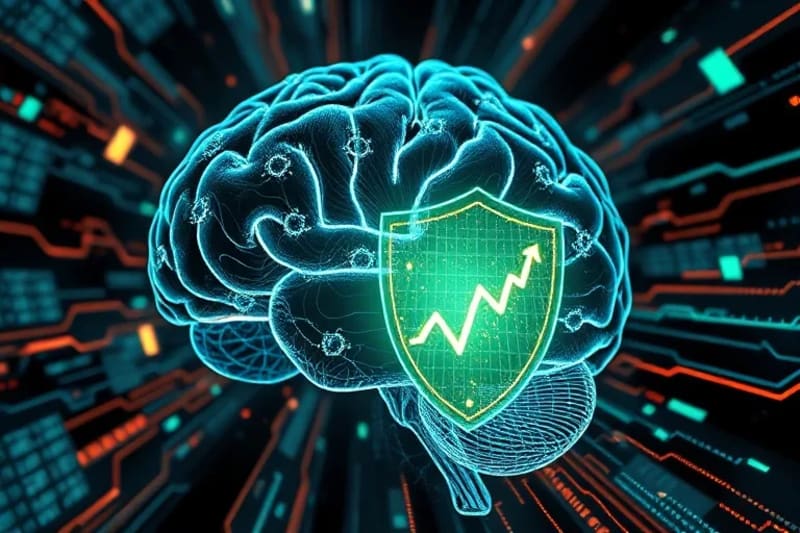 Precursors intellectuales, diagramas fundamentales y representaciones conceptuales que forjaron la visión de la ciberseguridad avanzada sobre la defensa contra amenazas emergentes.
Fuente visual sujeta a disponibilidad del ecosistema: Wikimedia Commons bajo licencia CC BY-SA 4.0 o renderizado conceptual IA.
The Rise of Generative AI and Deepfakes
Generative AI, particularly models like Generative Adversarial Networks (GANs) and transformers, has demonstrated an astonishing capacity to create new data that mimics existing patterns. This includes generating realistic images, audio, video, and text that are often indistinguishable from authentic content. Deepfakes, a prominent application of generative AI, refer to synthetic media in which a person in an existing image or video is replaced with someone else's likeness. These can range from simple face swaps to sophisticated voice cloning and full-body manipulations.
The underlying technology relies on training deep learning models on vast datasets. For instance, a GAN consists of two neural networks: a generator that creates synthetic data and a discriminator that tries to distinguish between real and fake data. Through this adversarial process, the generator learns to produce increasingly convincing fakes. The accessibility of these tools, combined with growing computational power, has democratized their creation, making them a potent weapon in the hands of malicious actors.
Deepfakes in Financial Fraud: Current Landscape
The financial sector is a prime target for deepfake-powered fraud due to the high stakes involved and the reliance on digital communication. Deepfakes can be leveraged in various forms of financial crime:
- CEO Fraud/Business Email Compromise (BEC): Attackers use voice deepfakes to impersonate executives, instructing employees to transfer funds or release sensitive information. A notable incident involved an energy firm CEO whose voice was cloned to authorize a €220,000 transfer.
- Identity Theft and KYC Evasion: Deepfake videos or images can bypass Know Your Customer (KYC) verification processes, allowing fraudsters to open fraudulent accounts or access existing ones.
- Market Manipulation: Fabricated news reports or executive statements (via deepfake video/audio) could be used to artificially inflate or deflate stock prices, leading to significant financial gains for the perpetrators.
- Loan and Credit Card Fraud: Synthetic identities, complete with deepfake documents and biometric data, can be used to apply for loans or credit cards, making detection extremely difficult for traditional systems.
The sophistication of these attacks means that human vigilance alone is often insufficient. As deepfakes become more realistic, the need for automated, AI-driven detection systems becomes paramount. The integration of advanced AI in cybersecurity is crucial for identifying subtle anomalies that betray synthetic content.
The Quantum Computing Threat to Cybersecurity
Quantum computing, while still in its nascent stages, poses a theoretical, yet significant, threat to current cryptographic standards. Algorithms like Shor's algorithm could efficiently factor large numbers, thereby breaking widely used public-key cryptography such as RSA and ECC, which secure most of our digital communications and financial transactions. Grover's algorithm could also speed up brute-force attacks on symmetric-key ciphers and hash functions.
The implications for financial cybersecurity are profound:
- Encryption Compromise: Sensitive financial data, transaction histories, and personal information encrypted today could be decrypted by future quantum computers.
- Digital Signature Forgery: Quantum attacks could forge digital signatures, leading to unauthorized transactions and identity impersonation on a massive scale.
- Blockchain Vulnerability: While often touted as immutable, certain aspects of blockchain technology, particularly the cryptographic hashes and digital signatures, could be vulnerable to quantum attacks.
The "harvest now, decrypt later" threat is particularly concerning, where encrypted data is stolen today with the expectation of decrypting it once quantum computers become powerful enough. This necessitates immediate action to transition to quantum-resistant cryptographic solutions.
The Confluence: Quantum Financial Deepfakes
The concept of "quantum financial deepfakes" describes a future scenario where the capabilities of generative AI are amplified and accelerated by quantum computing. While direct quantum computation for deepfake generation is still speculative, the indirect impacts are highly plausible:
- Enhanced Deepfake Realism: Quantum machine learning could potentially accelerate the training of generative AI models, leading to deepfakes that are even more indistinguishable from reality, making detection exponentially harder.
- Rapid Attack Generation: Quantum-enhanced AI could generate a vast number of highly personalized and convincing deepfake attacks in real-time, overwhelming existing human and automated defenses.
- Breaching Secure Channels: If quantum computers break current encryption, attackers could compromise secure communication channels, intercepting and manipulating financial data or injecting deepfakes into trusted systems without detection.
This convergence represents a critical inflection point for financial cybersecurity. The ability to create perfect forgeries and then securely transmit them through compromised channels, or even use quantum computing to bypass authentication, paints a dire picture. The need for robust defenses that consider both AI and quantum threats is urgent.
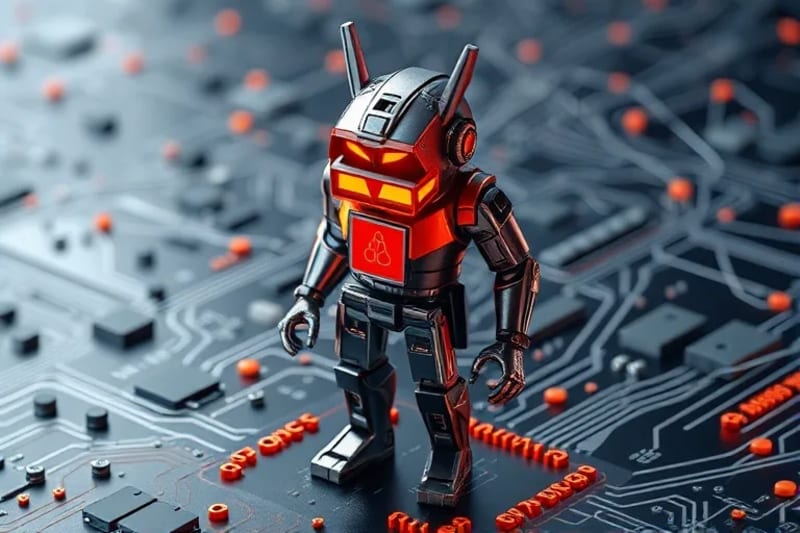 A conceptual representation of advanced AI systems actively defending digital infrastructures against sophisticated cyber threats.
Current Cybersecurity Defenses Against Deepfakes
Current strategies to combat deepfakes primarily involve forensic analysis and AI-driven detection. These methods focus on identifying subtle artifacts left by generative models or inconsistencies that human eyes might miss:
- Forensic Analysis: Examining metadata, pixel-level inconsistencies, compression artifacts, and physiological anomalies (e.g., irregular blinking, lack of natural micro-expressions).
- AI-Powered Detection: Machine learning models trained on vast datasets of both real and synthetic media can learn to identify patterns indicative of deepfakes. These models often look for specific "fingerprints" left by generative algorithms.
- Blockchain for Authenticity: Some initiatives explore using blockchain to timestamp and verify the authenticity of media content at its source, creating an immutable record of origin.
- Behavioral Biometrics: Analyzing unique user behaviors (typing patterns, mouse movements, voice inflections) can help detect anomalies that suggest an impersonation, even if the visual or audio deepfake is perfect.
However, these defenses are in a constant arms race with deepfake generation technology. As generative models improve, detection methods must also evolve rapidly. The sheer volume of data and the speed at which deepfakes can be created pose significant scalability challenges for current detection systems.
Advanced Countermeasures: AI-Powered Defense
To effectively counter quantum financial deepfakes, cybersecurity must leverage advanced AI in a defensive capacity. This involves moving beyond simple detection to proactive and adaptive defense mechanisms:
- Adversarial AI for Defense: Developing defensive AI models that can anticipate and counteract the tactics of generative adversarial networks. This could involve training AI to add imperceptible "noise" to legitimate data, making it harder for deepfake generators to learn from it.
- Federated Learning for Threat Intelligence: Financial institutions can collaboratively train AI models on shared threat intelligence without exposing sensitive raw data, improving collective deepfake detection capabilities.
- Explainable AI (XAI) for Transparency: Implementing XAI to understand why a system flags content as a deepfake, allowing human analysts to verify and refine detection models.
- Real-time Biometric Authentication with Liveness Detection: Integrating advanced liveness detection with biometric systems to ensure that the person presenting their biometrics is a living individual, not a deepfake. This is critical for preventing identity theft and unauthorized access.
The synergy between AI and cybersecurity is not merely about detecting threats but about building resilient, self-healing systems that can adapt to novel attack vectors. For further insights into data protection, consider exploring Homomorphic Encryption: Protecting Data in the Cloud, which offers privacy-preserving computation crucial in an AI-driven world.
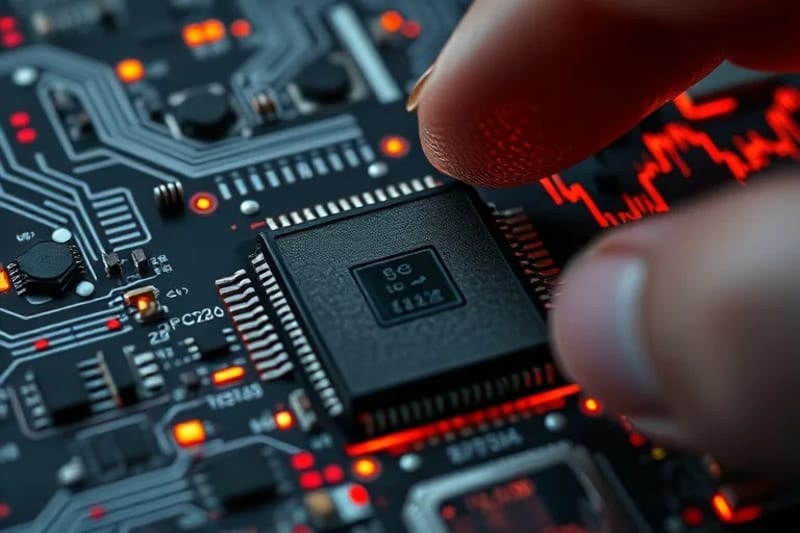 An abstract visualization illustrating the subtle yet pervasive manipulation of financial data through advanced digital means.
Quantum-Resistant Cryptography and Post-Quantum Security
Addressing the quantum threat requires a proactive transition to post-quantum cryptography (PQC). This involves developing and implementing new cryptographic algorithms that are secure against both classical and quantum attacks. International efforts, such as those by the National Institute of Standards and Technology (NIST), are underway to standardize PQC algorithms.
Key PQC approaches include:
- Lattice-based Cryptography: Relies on the computational hardness of problems on mathematical lattices.
- Code-based Cryptography: Based on error-correcting codes.
- Multivariate Polynomial Cryptography: Uses systems of multivariate polynomials over finite fields.
- Hash-based Signatures: Utilizes cryptographic hash functions for digital signatures.
Financial institutions must begin planning and implementing a "crypto-agility" strategy, allowing them to smoothly transition to PQC standards as they mature. This includes inventorying cryptographic assets, identifying vulnerabilities, and piloting new solutions. The protection of digital consciousness and privacy is also a growing concern in this era, as highlighted in discussions around Neuro-rights Mental Privacy: Protecting Digital Consciousness, emphasizing the broader implications of advanced digital threats.
Regulatory and Ethical Frameworks
Technological solutions alone are insufficient. Robust regulatory and ethical frameworks are essential to manage the risks associated with generative AI and deepfakes. Key areas include:
- Legislation Against Malicious Deepfakes: Laws that specifically criminalize the creation and dissemination of deepfakes for fraudulent purposes, with severe penalties.
- Content Provenance and Watermarking: Developing standards for digital watermarking and content provenance to trace the origin and modifications of digital media.
- Ethical AI Development: Promoting responsible AI development, emphasizing transparency, accountability, and built-in safeguards against misuse.
- International Cooperation: Establishing global agreements and information-sharing protocols to combat cross-border deepfake financial fraud and industrial espionage, a topic with significant legal and economic consequences, as explored in Industrial Espionage: Prevention, Legal Consequences.
These frameworks must strike a balance between fostering innovation and safeguarding society from the potential harms of advanced technologies. Public awareness and education are also vital to help individuals and organizations recognize and report deepfake attempts.
Future Outlook and Preparedness
The battle against quantum financial deepfakes will be an ongoing, dynamic process. Financial institutions, governments, and technology providers must collaborate to stay ahead of the curve. Key areas for future focus include:
- Investment in Research and Development: Continuous funding for research into advanced AI detection, quantum-resistant algorithms, and novel cybersecurity paradigms.
- Skill Development: Training a new generation of cybersecurity professionals proficient in AI, quantum mechanics, and advanced forensic techniques.
- Adaptive Security Architectures: Moving towards security architectures that are inherently flexible and can rapidly integrate new defense mechanisms.
- Scenario Planning and Red Teaming: Regularly simulating quantum financial deepfake attacks to identify vulnerabilities and test response strategies.
The threat is complex, but with concerted effort and strategic investment, the financial world can build resilient defenses capable of withstanding the challenges posed by generative AI and quantum computing. Proactive measures today will determine the security of tomorrow's digital economy.
Source: Hybrid content assisted by AI and human editorial supervision.


Comentarios