
Generative AI Art: Authorship, Intellectual Property Debates
Generative AI Art: Redefining Authorship and Intellectual Property in the Digital Age
The advent of generative artificial intelligence (AI) has ushered in a transformative era for artistic creation, blurring the lines between human ingenuity and algorithmic output. Tools capable of producing original images, music, and text from simple prompts are now widely accessible, challenging long-held conventions about what constitutes art and who can be considered an artist. This technological leap has ignited a profound global debate, primarily centered on the complex issues of authorship and intellectual property rights within the realm of AI-generated content.
As AI systems become increasingly sophisticated, their capacity to mimic, adapt, and even innovate raises fundamental questions about the nature of creativity itself. The legal and ethical frameworks designed for human-centric creation are now struggling to accommodate the unique characteristics of AI-assisted or AI-autonomous works. Understanding these evolving dynamics is crucial for artists, technologists, legal professionals, and policymakers alike, as they collectively shape the future landscape of digital art and its economic implications.
Table of Contents
- The Rise of Generative AI in Artistic Creation
- Unpacking Authorship: Who is the Creator?
- Intellectual Property Challenges and Copyright Dilemmas
- Navigating Legal Frameworks and Emerging Solutions
- Ethical Dimensions of AI-Generated Art
- Economic Impact and the Future of the Art Market
- Conclusion: A Symbiotic Future for Art and Technology
Conceptual art gallery showcasing the integration of generative AI creations into contemporary artistic spaces, highlighting the evolving interaction between technology and human perception.
The Rise of Generative AI in Artistic Creation
The journey of generative AI in art began with rudimentary algorithms producing abstract patterns, evolving significantly over the past decade. Early experiments, such as Harold Cohen's AARON program in the 1970s, laid foundational groundwork by demonstrating machines could follow rules to create images. However, the true explosion in capabilities arrived with deep learning models, particularly Generative Adversarial Networks (GANs) and later transformer-based architectures like DALL-E, Midjourney, and Stable Diffusion.
These advanced systems are trained on colossal datasets of existing art, photographs, and text, enabling them to understand complex visual and conceptual relationships. Users can input natural language prompts, and the AI interprets these instructions to synthesize entirely new images, often with astonishing detail and artistic flair. This accessibility has democratized art creation, allowing individuals without traditional artistic skills to produce sophisticated visual works, thereby expanding the definition of who can participate in the art world.
The rapid proliferation of AI art tools has not only empowered new creators but also challenged established artists and institutions. Debates rage about whether AI-generated works possess genuine artistic merit or merely remix existing styles. Regardless of these aesthetic arguments, the technological capacity for AI to generate unique and compelling visual content is undeniable, forcing a re-evaluation of artistic processes and outputs.
Unpacking Authorship: Who is the Creator?
Traditionally, authorship is unequivocally attributed to a human being, an individual or a collective, who conceives and executes an original work. This concept is deeply embedded in legal frameworks worldwide, forming the bedrock of copyright protection. However, generative AI introduces a profound ambiguity: when an AI system produces an artwork, who holds the mantle of "author"?
Several candidates emerge in this complex scenario. One perspective suggests the human user who crafts the prompt and guides the AI's output is the author, akin to a photographer using a camera or a sculptor using tools. Their intellectual contribution lies in the conceptualization and direction. Another viewpoint posits that the developers who designed and trained the AI model are the true authors, as their code and data curation enabled the creation.
A more radical notion considers the AI itself as a potential author, given its capacity for autonomous generation and unexpected creative outcomes. However, current legal systems do not recognize non-human entities as authors, primarily because authorship implies legal personhood and the ability to hold rights and responsibilities. This fundamental disconnect necessitates a re-evaluation of authorship criteria in the digital age.
| Aspect | Traditional Authorship | AI-Assisted/Generated Authorship |
|---|---|---|
| Creator Identity | Human individual or group. | Human prompt engineer, AI system developer, or the AI itself (debated). |
| Creative Intent | Exclusively human-driven. | Human intent via prompts; AI's "emergent" creativity (debated). |
| Skill & Effort | Manual and intellectual skill, significant human effort. | Prompt engineering skill, computational resources, AI model training. |
| Originality | Human expression, unique perspective. | Novel combinations of training data; algorithmic uniqueness. |
| Legal Standing | Clear copyright protection for human authors. | Uncertain; often attributed to the human operator or considered public domain. |
Intellectual Property Challenges and Copyright Dilemmas
The intersection of generative AI and intellectual property (IP) law presents a labyrinth of unresolved questions. Existing copyright statutes were not designed to accommodate autonomous or semi-autonomous creative agents, leading to significant ambiguities regarding ownership, originality, and infringement. The core challenge lies in applying human-centric legal principles to machine-generated outputs.
One of the most contentious issues revolves around the training data used by generative AI models. These models learn by processing vast quantities of existing images, text, and audio, much of which is copyrighted. Critics argue that this constitutes unauthorized copying and creates derivative works without proper licensing or compensation to the original creators. Conversely, proponents claim it falls under fair use, similar to how a human artist learns from observing other works.
Furthermore, determining infringement becomes problematic. If an AI generates an image that closely resembles an existing copyrighted work, who is liable? Is it the user who provided a prompt that led to the similarity, or the AI developer whose model facilitated it? These questions highlight a critical gap in current legal frameworks, demanding urgent attention and innovative solutions. You can delve deeper into these discussions by exploring the AI Generative Intellectual Property: Open Debate.
- Defining Originality: Current copyright laws often require a "modicum of creativity" and human origin. AI's ability to generate novel works challenges this, as its "creativity" stems from algorithms and vast datasets.
- Ownership of AI Output: If an AI creates a piece, who owns it? The user who prompted it, the developer of the AI model, or the AI itself (which lacks legal personhood)?
- Training Data Copyright: Generative AIs are trained on massive datasets, often comprising copyrighted works. This raises questions about whether AI output constitutes derivative work or fair use, and if compensation is due to original creators.
- Infringement and Liability: If an AI-generated work inadvertently infringes on existing copyrights, who is liable? The user, the developer, or the AI?
- Attribution and Transparency: Should AI-generated art always be disclosed as such? What are the implications for artistic integrity and consumer perception if it isn't?
Navigating Legal Frameworks and Emerging Solutions
Globally, legal systems are grappling with how to adapt to the rapid advancements in AI art. The United States Copyright Office, for instance, has clarified that it will only register works where a human author is demonstrably involved, explicitly denying copyright to purely AI-generated creations. This stance emphasizes the human element as a prerequisite for copyright protection, aligning with traditional interpretations.
Conversely, some jurisdictions are exploring alternative approaches. The UK Intellectual Property Office has considered granting "computer-generated work" status, where the author is deemed to be the person who made the arrangements for the creation of the work. This pragmatic approach attempts to assign ownership without necessarily granting personhood to the AI. The European Union is also actively discussing potential legislative changes to address AI's impact on copyright, focusing on transparency and accountability.
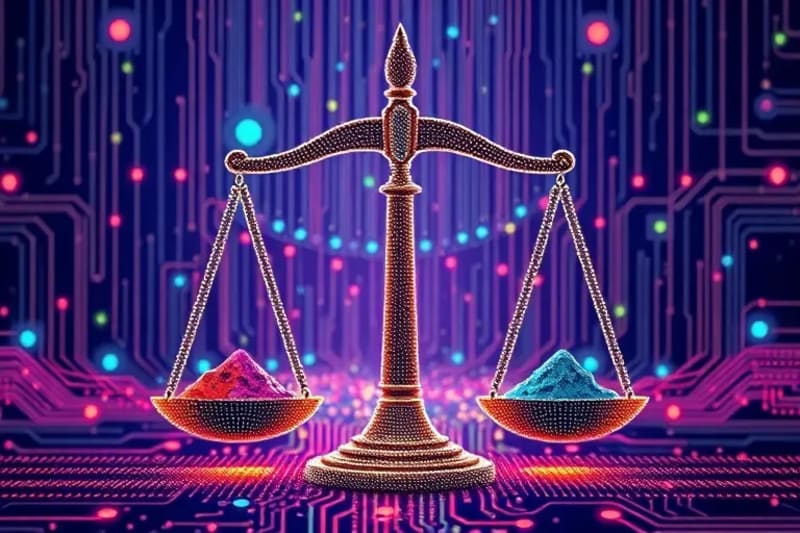
A visual metaphor depicting the delicate balance between artistic expression and legal frameworks in the context of AI-generated intellectual property.
Proposed solutions include new licensing models for training data, mandatory disclosure of AI involvement in creative works, and the establishment of "AI registries" for generated content. These measures aim to strike a balance between fostering innovation and protecting the rights of human creators. The ongoing dialogue underscores the need for flexible and forward-thinking legal frameworks that can evolve with technology, much like the challenges faced in Ethics in Digital Journalism: Fake News, Information Verification, where authenticity is paramount.
Ethical Dimensions of AI-Generated Art
Beyond legalities, generative AI art raises profound ethical questions concerning authenticity, artistic value, and the very essence of human creativity. Critics argue that AI art lacks the soul, intention, and lived experience that define human artistic expression, potentially devaluing the emotional and intellectual labor of human artists. The ease of generating art could flood the market, diminishing the perceived uniqueness and value of human-made works.
There are also concerns about the potential for AI to perpetuate biases present in its training data, leading to stereotypical or even harmful artistic outputs. Ensuring ethical AI development and deployment in creative fields requires careful consideration of fairness, transparency, and accountability. The debate extends to whether consumers should always be informed if an artwork is AI-generated, impacting their appreciation and understanding of the piece's origin.
The ethical imperative is to foster a symbiotic relationship where AI enhances human creativity rather than replaces it. This involves developing tools that empower artists, providing new mediums and techniques, while maintaining a clear distinction and appreciation for human artistic contributions. The dialogue around these ethical considerations is crucial for shaping a responsible and equitable future for AI in art.
Economic Impact and the Future of the Art Market
The economic ramifications of generative AI in the art market are multifaceted and potentially disruptive. On one hand, AI tools can significantly reduce the cost and time required for art production, making high-quality visuals accessible to businesses and individuals who previously couldn't afford custom artwork. This could lead to new business models, such as AI art platforms offering subscription services for unique visual content, similar to challenges and opportunities seen in the Subscription Economy Physical Products Ecommerce Challenges.
On the other hand, the proliferation of AI-generated art poses a threat to traditional artists and illustrators, particularly those involved in commercial art, concept design, and stock imagery. The market could become saturated, driving down prices and making it harder for human artists to earn a living. This necessitates a shift in focus for human artists towards areas where AI currently struggles, such as deeply personal narratives, unique conceptual frameworks, and live performance art.
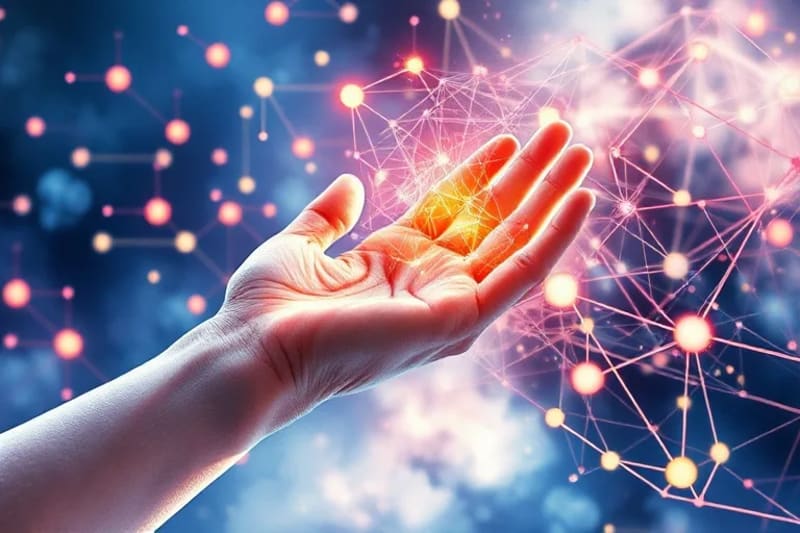
A conceptual visualization of human and artificial intelligence collaborating to create new artistic expressions, symbolizing a future of shared innovation.
The art market may bifurcate, with a premium placed on verifiable human-created art and a new, more accessible market for AI-generated content. Galleries, auction houses, and collectors will need to adapt their valuation criteria, potentially distinguishing between AI-assisted human art and purely AI-generated works. This evolving economic landscape will require innovative strategies from all stakeholders to ensure sustainability and fair compensation.
Conclusion: A Symbiotic Future for Art and Technology
The integration of generative AI into the artistic domain is not merely a technological advancement; it is a profound cultural shift that redefines our understanding of creativity, authorship, and value. While the debates around intellectual property and authorship are complex and ongoing, they present an opportunity to forge new legal and ethical frameworks that are more resilient to technological change.
The future of art will likely involve a symbiotic relationship between human artists and AI. AI can serve as a powerful tool, an endless source of inspiration, and a collaborator, augmenting human capabilities and opening up new creative avenues. The challenge lies in establishing clear guidelines that protect human creators, ensure fair use of data, and foster an environment where both human and AI-assisted art can thrive. This ongoing dialogue will shape not only the art world but also our broader societal relationship with artificial intelligence.
Explore More Content
Source: Hybrid content assisted by AI and human editorial supervision.


Comentarios