
Music Neuroscience: Rhythm, Melody, Brain Impact
Music, an ancient and universal human phenomenon, transcends cultural boundaries, deeply embedding itself in our daily lives. From the rhythmic pulse of a drum to the soaring melody of a symphony, sound organizes itself into patterns that resonate profoundly within us. The field of music neuroscience delves into this intricate relationship, exploring how the human brain processes, perceives, and responds to musical stimuli. This interdisciplinary area combines aspects of psychology, biology, and cognitive science to unravel the complex mechanisms by which music impacts our emotions, cognitive functions, and even motor skills.
Understanding the neurological underpinnings of music appreciation and creation offers profound insights into the brain's plasticity and its capacity for complex processing. It reveals how a seemingly abstract art form can engage multiple brain regions simultaneously, leading to a rich tapestry of sensory, emotional, and intellectual experiences. This article will explore the fundamental components of music—rhythm and melody—and detail their specific effects on the human brain, highlighting both the scientific mechanisms and the broader implications for health and well-being.

Conceptual visualization of the intricate neural pathways and brain regions activated by musical stimuli, illustrating the profound connection between sound and human cognition.
Fuente visual sujeta a disponibilidad del ecosistema: Wikimedia Commons bajo licencia CC BY-SA 4.0 o renderizado conceptual IA.
Table of Contents
- The Brain's Symphony: An Introduction
- Rhythm: The Foundation of Musical Processing
- Melody: Emotional Resonance and Cognitive Function
- Neurochemical Responses to Music
- Therapeutic Applications and Cognitive Enhancement
- Future Directions in Music Neuroscience
The Brain's Symphony: An Introduction
The human brain is remarkably adept at processing auditory information, and music represents one of its most complex and rewarding forms. When we listen to music, our brains don't just passively receive sounds; they actively engage in a sophisticated process of decoding, interpreting, and responding. This involves a vast network of brain regions, including the auditory cortex, motor cortex, cerebellum, limbic system, and prefrontal cortex, each contributing to different aspects of the musical experience.
From a neuroscientific perspective, music is not merely an aesthetic pleasure but a powerful tool for understanding brain function. Studies using functional magnetic resonance imaging (fMRI) and electroencephalography (EEG) have revealed the dynamic interplay of these regions. This intricate neural dance allows us to perceive pitch, timbre, rhythm, and melody, integrate them into a coherent whole, and imbue them with emotional meaning.
The unique way music engages the brain has led to its exploration in various therapeutic contexts, from treating neurological disorders to enhancing cognitive abilities. The universality of music suggests a deep evolutionary connection, hinting at its role in human communication, social bonding, and emotional regulation. By dissecting the effects of rhythm and melody, we gain a clearer picture of this profound connection.
Rhythm: The Foundation of Musical Processing
Rhythm is arguably the most fundamental element of music, providing its temporal structure and driving force. It's the beat, the pulse, the pattern of sounds and silences that organizes music over time. The brain's response to rhythm is deeply ingrained, often eliciting automatic motor responses like foot-tapping or head-nodding. This suggests a strong link between auditory processing and motor systems.
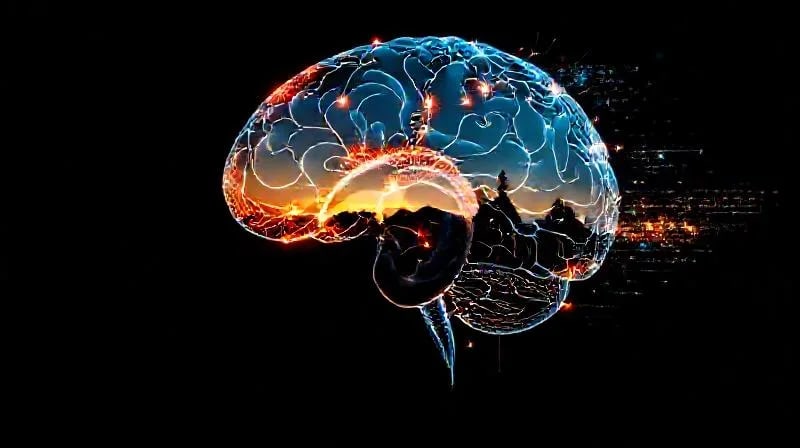
The brain's intricate response to rhythmic patterns, highlighting the connection between auditory and motor processing.
Neurologically, rhythm processing primarily involves the auditory cortex, which initially registers the sound, but quickly extends to motor areas such as the cerebellum, basal ganglia, and supplementary motor area. These regions are crucial for timing, coordination, and movement. The strong coupling between auditory and motor systems is evident in phenomena like "entrainment," where our internal physiological rhythms (e.g., heart rate, breathing) synchronize with external musical rhythms.
Research indicates that rhythmic training can enhance motor skills and timing precision, making it a valuable tool in rehabilitation for conditions like Parkinson's disease, where rhythmic auditory stimulation can help improve gait and balance. Furthermore, the predictive nature of rhythm engages the brain's anticipation mechanisms, contributing to feelings of pleasure and reward. This predictive processing is a key aspect of how the brain learns and adapts, as discussed in broader contexts of Machine Learning and Deep Learning, where pattern recognition is paramount.
The ability to perceive and synchronize with rhythm is not only fundamental to music but also plays a role in language acquisition and social interaction. For instance, the rhythm and prosody of speech convey significant meaning and emotional information. Disruptions in rhythmic processing can sometimes be observed in developmental disorders, underscoring its importance for cognitive development.
Melody: Emotional Resonance and Cognitive Function
Melody, the sequential arrangement of pitches that forms a recognizable tune, is often described as the "soul" of music. It's what we hum, what we remember, and what often carries the emotional weight of a piece. The brain's processing of melody is more complex than rhythm alone, involving higher-order cognitive functions and deep emotional engagement.
When we listen to a melody, the auditory cortex processes the individual pitches and their relationships. However, the emotional impact of melody largely stems from its interaction with the limbic system, particularly the amygdala and hippocampus, which are central to emotion, memory, and reward. This explains why certain melodies can evoke strong feelings, trigger vivid memories, or even induce chills.
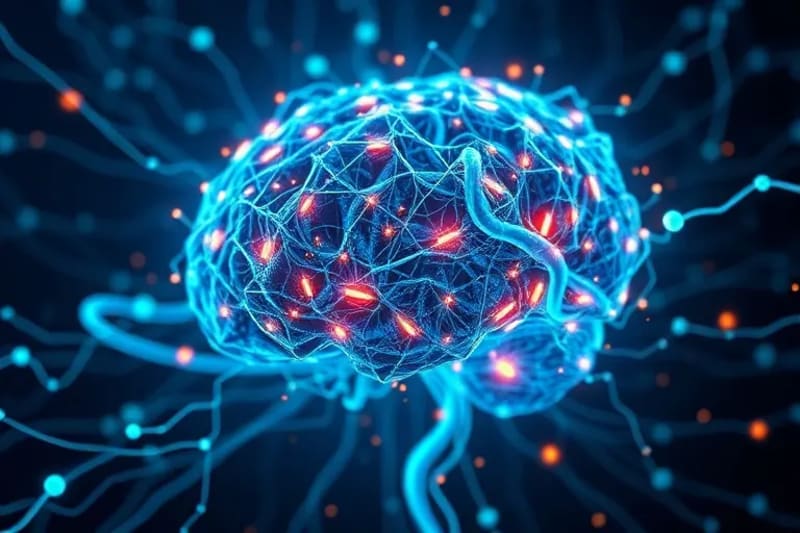
A conceptual rendering of how the brain's neural networks intricately process melody, connecting musical patterns with emotional and cognitive responses.
The prefrontal cortex, responsible for executive functions like attention, planning, and decision-making, also plays a significant role in melodic processing. It helps us anticipate melodic contours, recognize patterns, and make sense of musical structures. This engagement of executive functions can lead to improvements in cognitive abilities, a concept also explored in the context of cognitive tools like the Abacus for Child Neurodevelopment.
Furthermore, melodic patterns are crucial for musical memory. We can often recall melodies heard years ago, demonstrating the brain's remarkable capacity to encode and retrieve musical information. This strong link between music and memory has significant implications for educational strategies and interventions for memory-related conditions.
Neurochemical Responses to Music
Beyond specific brain regions, music also triggers the release of various neurotransmitters, the chemical messengers of the brain. These neurochemical responses are key to understanding music's powerful effects on mood, motivation, and well-being. One of the most significant neurotransmitters involved is dopamine.
Dopamine, often associated with pleasure and reward, is released in anticipation of and during peak emotional moments in music. This explains the euphoric feeling we get from listening to our favorite songs or experiencing a particularly moving musical passage. The dopamine system's activation by music is similar to its response to other rewarding stimuli, such as food, sex, or even certain drugs, highlighting music's fundamental role in our reward circuitry.
Other neurotransmitters and hormones also play a role. Oxytocin, linked to social bonding and trust, can be released during shared musical experiences, fostering feelings of connection. Endorphins, natural painkillers, contribute to the sense of well-being and can reduce stress and anxiety. Cortisol, a stress hormone, has been shown to decrease in response to calming music, indicating music's potential as a stress-reduction tool.
The complex interplay of these neurochemicals underscores music's ability to regulate mood, alleviate pain, and enhance social cohesion. This neurochemical symphony explains why music is so effective in diverse contexts, from enhancing athletic performance to providing comfort during difficult times.
Therapeutic Applications and Cognitive Enhancement
The profound impact of music on the brain has led to its increasing use in therapeutic settings and as a tool for cognitive enhancement. Music therapy is a recognized clinical intervention that uses music to address physical, emotional, cognitive, and social needs of individuals.
In neurological rehabilitation, music is used to improve motor function in stroke patients through rhythmic auditory stimulation, which helps synchronize movement. For individuals with Alzheimer's disease and other forms of dementia, familiar music can evoke memories, reduce agitation, and improve mood, tapping into the preserved musical memory pathways in the brain. Music has also been shown to reduce anxiety and pain in medical settings, such as during surgery or childbirth.
Beyond therapy, music offers significant benefits for cognitive enhancement. Learning to play a musical instrument, for example, has been linked to improvements in language skills, mathematical reasoning, memory, and executive functions. This is because musical training demands high levels of attention, fine motor coordination, auditory processing, and pattern recognition, all of which strengthen neural connections across various brain regions.
The cognitive benefits of music extend to children, where early musical exposure can foster brain development and improve academic performance. For adults, engaging with music, whether through listening or playing, can help maintain cognitive vitality and potentially delay age-related cognitive decline. These benefits align with the broader concept of lifelong learning and skill development necessary for the Future Skills for the 2030 Labor Market.
Future Directions in Music Neuroscience
The field of music neuroscience is continually evolving, with new research avenues emerging rapidly. Advances in neuroimaging techniques, computational modeling, and artificial intelligence are opening up unprecedented opportunities to explore the brain's musical capacities with greater precision and depth.
Future research will likely focus on personalized music interventions, tailoring musical experiences to individual neurological profiles and therapeutic needs. The integration of AI in analyzing musical preferences and brain responses could lead to highly effective, customized music therapies. Furthermore, understanding the genetic and epigenetic factors that influence musicality and music perception will provide a more complete picture of the brain-music connection.
Exploring music's role in social cognition, empathy, and collective behavior also represents a promising area. How does shared musical experience foster group cohesion? Can music be used to bridge cultural divides? These questions highlight the potential of music neuroscience to contribute not only to individual well-being but also to broader societal understanding and harmony.
As our understanding deepens, music will continue to be recognized not just as an art form, but as a powerful force capable of shaping our brains, influencing our emotions, and enhancing our cognitive abilities. The symphony of the brain and music is a testament to the intricate beauty of human existence.
Related Articles
- Abada: Rhinoceroses, History, Culture, Current Conservation
- Cybersecurity Critical Infrastructures: Energy, Water Protection
- Future Skills: Learning for the 2030 Labor Market
- Generative AI: Ethics, Creativity, Intellectual Property Digital Art
- Cosmic Sociology AI Mapping Global Consciousness Evolution
Source: Hybrid content assisted by AI and human editorial supervision.


Comentarios