
Augmented Reality Cultural Heritage Digital Preservation
Cultural heritage, encompassing tangible and intangible aspects of human legacy, faces constant threats from environmental decay, human conflict, and the passage of time. Preserving these invaluable treasures for future generations is a monumental task that increasingly relies on advanced technological solutions. Among these, Augmented Reality (AR) stands out as a transformative force, offering innovative ways to experience, document, and protect our shared past. AR bridges the gap between the physical and digital worlds, allowing users to interact with historical sites and artifacts in unprecedented ways, enhancing understanding and fostering deeper connections.
This technology not only enriches the visitor experience but also provides powerful tools for researchers, conservators, and educators. By overlaying digital information onto real-world environments, AR can virtually reconstruct lost monuments, animate historical events, and provide detailed contextual data directly at the point of interest. This article delves into the multifaceted applications of Augmented Reality in cultural heritage conservation, exploring its potential to create immersive experiences and ensure the digital preservation of our global patrimony.
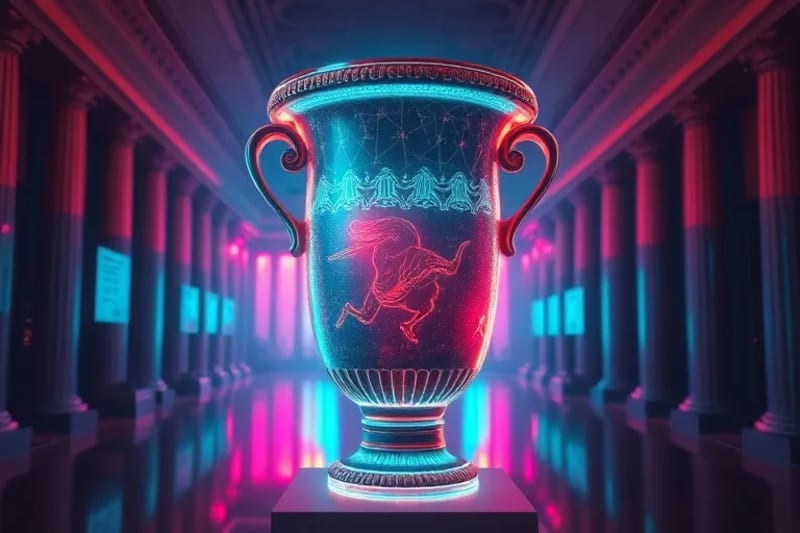
A digital overlay brings ancient artifacts to life, offering new perspectives on historical context and artistic detail within modern exhibition spaces.
Conceptual visualization generated by AI, reflecting the innovative intersection of technology and cultural preservation.Table of Contents
- What is Augmented Reality?
- Challenges in Cultural Heritage Preservation
- How AR Transforms Heritage Experiences
- Key Technologies Powering AR in Heritage
- Case Studies and Applications
- Benefits of AR for Preservation and Education
- Challenges and Ethical Considerations
- The Future of AR in Cultural Heritage
- Conclusion
What is Augmented Reality?
Augmented Reality (AR) is a technology that overlays digital information onto the real world, enhancing a user's perception of reality. Unlike Virtual Reality (VR), which creates an entirely artificial environment, AR integrates virtual objects and data with the user's live view of the physical world. This integration can happen through various devices, including smartphones, tablets, and specialized AR glasses, making digital content appear as if it exists in the same space as physical objects.
The core components of an AR system typically include a camera to capture the real world, a display to show the augmented view, sensors (like GPS, accelerometers, and gyroscopes) to track position and orientation, and a processor to render and combine digital content with the real-world feed. This seamless blending of digital and physical elements allows for interactive and context-aware experiences, making AR a powerful tool across diverse sectors, from gaming and education to healthcare and, notably, cultural heritage.
Challenges in Cultural Heritage Preservation
Cultural heritage sites and artifacts face a multitude of challenges that threaten their long-term survival and accessibility. Natural disasters, climate change, pollution, and urban development can cause irreversible damage to historical structures and archaeological remains. Furthermore, the sheer volume and fragility of many artifacts make physical preservation and exhibition difficult, often limiting public access and detailed study.
Beyond physical threats, there's the challenge of engaging modern audiences, particularly younger generations, with historical narratives that might seem distant or abstract. Traditional interpretive methods, such as static plaques or audio guides, sometimes fall short in creating truly immersive and memorable educational experiences. This is where digital technologies like AR offer a compelling solution, providing new avenues for both preservation and engagement.
How AR Transforms Heritage Experiences
Augmented Reality offers a dynamic suite of tools that can fundamentally change how we interact with cultural heritage. Its ability to layer digital information onto the physical world unlocks new dimensions of exploration and understanding.
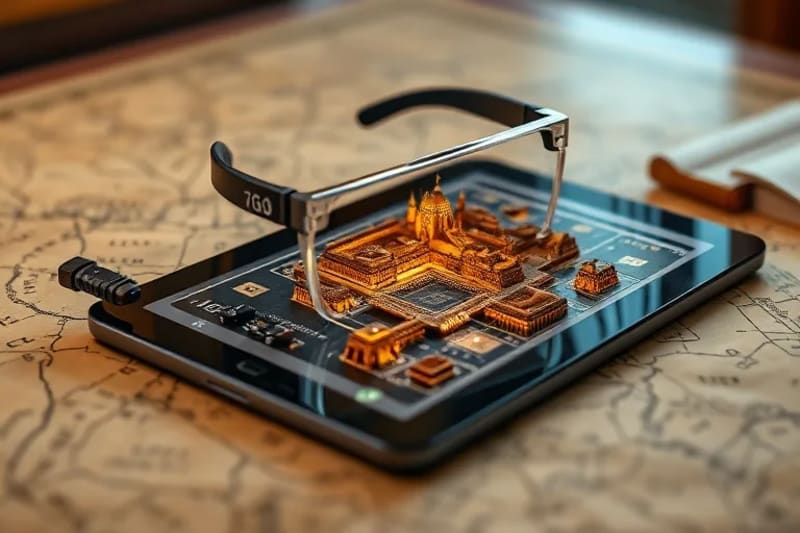
Modern AR devices interact with historical documents, creating a tangible link between digital reconstructions and physical heritage.
This conceptual image is an AI-generated representation, illustrating the fusion of advanced technology and historical preservation.Virtual Reconstructions
One of the most impactful applications of AR is the virtual reconstruction of lost or damaged historical sites. Visitors at an archaeological ruin can point their AR-enabled device at a crumbling wall and see a digital overlay of what the structure looked like in its prime. This allows for an immediate, intuitive understanding of the site's original grandeur and context, transforming fragmented remains into a vivid historical tableau. This capability is crucial for sites where physical restoration is impossible or undesirable.
Interactive Storytelling
AR can bring historical narratives to life through interactive storytelling. Instead of reading about past events, users can witness them unfold as digital characters or animations appear in their real-world view. Imagine walking through a historical battlefield and seeing virtual soldiers re-enact key moments, or exploring an ancient market square populated by digital merchants and citizens. This immersive approach makes history more engaging and memorable, appealing to a broader audience.
Enhanced Visitor Engagement
Museums and heritage sites can leverage AR to offer personalized and interactive experiences. AR applications can provide detailed information about artifacts, including their origins, materials, and cultural significance, through text, audio, and 3D models. Visitors can virtually handle fragile objects, explore their internal structures, or view them from different angles without risk of damage. Gamified AR experiences can also turn a visit into an adventure, encouraging exploration and learning through puzzles and challenges.
Accessibility
AR can significantly improve accessibility for individuals with disabilities. For example, visually impaired visitors can use AR to receive audio descriptions triggered by their location or by pointing their device at specific exhibits. Similarly, AR can provide sign language interpretations for deaf visitors or offer multi-language support seamlessly, breaking down communication barriers and making heritage accessible to a global audience. This aligns with broader efforts in biosustainable architecture and cognition, aiming for inclusive design.
Key Technologies Powering AR in Heritage
The effectiveness of AR in cultural heritage relies on several underlying technological advancements that enable precise tracking, realistic rendering, and seamless interaction. Understanding these components helps appreciate the complexity and potential of AR applications.
- SLAM (Simultaneous Localization and Mapping): This technology allows AR devices to build a map of an unknown environment while simultaneously keeping track of their own location within that map. SLAM is crucial for markerless AR, enabling digital content to be accurately anchored to real-world surfaces and objects without needing predefined markers.
- Marker-based vs. Markerless AR:
- Marker-based AR uses specific visual cues (like QR codes or images) to trigger and position digital content. It's highly accurate but requires the presence of these markers.
- Markerless AR uses SLAM and other computer vision techniques to recognize surfaces, objects, and environments, allowing digital content to be placed freely in space. This offers greater flexibility and realism for heritage sites.
- Wearable Devices (Smartglasses): AR smartglasses, such as Microsoft HoloLens or Magic Leap, offer a hands-free, immersive AR experience. They project digital images directly into the user's field of view, blending them seamlessly with the real world. While still evolving, these devices hold immense promise for heritage interpretation.
- Mobile AR (Smartphones/Tablets): The most accessible form of AR, mobile AR leverages the cameras and processing power of everyday smartphones and tablets. Platforms like ARKit (Apple) and ARCore (Google) have made it easier for developers to create sophisticated AR experiences that reach a wide audience without specialized hardware.
Case Studies and Applications
Numerous projects worldwide have successfully demonstrated the power of AR in enriching cultural heritage experiences:

The digital preservation of cultural memory is depicted through flowing data streams emerging from ancient structures.
This abstract artwork is an AI-generated concept, representing the digital transformation of historical knowledge.- Pompeii, Italy: AR applications allow visitors to see virtual reconstructions of houses, temples, and public spaces as they appeared before the eruption of Vesuvius, bringing the ancient city back to life.
- The Tower of London, UK: AR experiences offer interactive tours, showing historical events and characters within the castle walls, enhancing the narrative of its long and often dark history.
- Smithsonian National Museum of Natural History, USA: AR apps provide virtual tours and interactive exhibits, allowing users to explore artifacts in 3D, learn about their context, and even place virtual dinosaurs in their living rooms.
- Ancient Olympia, Greece: Visitors can use AR to visualize the ancient Olympic Games, seeing athletes compete and ceremonies unfold in their original settings, offering a dynamic perspective on historical events.
These examples highlight AR's versatility in creating engaging and educational experiences, transforming static sites and objects into dynamic portals to the past. The ability of AR to enhance human memory and learning through immersive interaction is particularly valuable.
Benefits of AR for Preservation and Education
The integration of AR into cultural heritage management brings a host of benefits, impacting both the physical preservation of artifacts and the educational outreach of institutions.
Preventing Physical Deterioration
By providing virtual access and reconstructions, AR can reduce the need for physical handling of fragile artifacts and limit direct visitor impact on delicate sites. This minimizes wear and tear, contributing directly to their long-term preservation. Digital models created for AR can also serve as invaluable records for conservation efforts.
Reaching Wider Audiences
AR applications can extend the reach of cultural heritage beyond physical locations. People worldwide can virtually explore museums and historical sites from their homes, fostering a global appreciation for diverse cultures. This democratizes access to heritage, making it available to those who cannot travel.
Educational Value
AR provides an engaging and interactive learning platform. By allowing users to visualize historical contexts, manipulate 3D models of artifacts, and participate in virtual re-enactments, AR makes learning about history and culture more dynamic and memorable. It caters to different learning styles and can spark curiosity in subjects that might otherwise seem dry.
Economic Impact
Implementing AR experiences can attract more visitors to heritage sites and museums, boosting tourism and local economies. The novelty and immersive nature of AR can create unique selling points, drawing in new demographics and encouraging repeat visits. This increased engagement can also lead to greater funding and support for preservation initiatives.
Challenges and Ethical Considerations
Despite its immense potential, the application of AR in cultural heritage is not without its challenges and ethical dilemmas. Careful consideration is required to ensure that technology serves preservation goals responsibly.
- Accuracy and Authenticity: Digital reconstructions must be based on rigorous historical and archaeological research to ensure accuracy. Presenting speculative or inaccurate information as fact can mislead the public and undermine the integrity of historical interpretation.
- Technological Obsolescence: AR hardware and software evolve rapidly. Solutions developed today might become obsolete in a few years, requiring continuous updates and maintenance, which can be costly and resource-intensive.
- Digital Divide: Access to AR-enabled devices and reliable internet connectivity is not universal. Over-reliance on AR could exclude certain segments of the population, exacerbating existing inequalities in access to cultural heritage.
- Data Privacy: AR applications often collect user data, including location and interaction patterns. Ensuring the privacy and security of this data is paramount, especially in public spaces.
- Over-reliance on Technology: While AR enhances experience, it should not replace the intrinsic value of direct engagement with physical heritage. The goal is to augment, not distract from, the real object or site.
The Future of AR in Cultural Heritage
The trajectory of Augmented Reality in cultural heritage is one of continuous innovation and deeper integration. As AR technology becomes more sophisticated and accessible, its applications will expand even further. We can anticipate several key developments:
- AI Integration: Artificial Intelligence will play an increasingly significant role, enabling AR systems to offer more personalized, context-aware experiences. AI could analyze user preferences to tailor content, or dynamically generate narratives based on real-time interactions. This parallels advancements in AI in preventive medicine, where personalization is key.
- Haptic Feedback and Multi-sensory Experiences: Future AR systems may incorporate haptic feedback, allowing users to "feel" virtual textures or vibrations, further blurring the lines between the digital and physical. Olfactory and auditory AR could also create truly multi-sensory historical environments.
- Collaborative AR: Multiple users will be able to share AR experiences simultaneously, interacting with the same virtual objects and narratives in real-time. This could transform group tours and educational workshops into highly collaborative and engaging sessions.
- Ubiquitous AR: As AR glasses become lighter, more powerful, and socially acceptable, AR experiences will become more seamlessly integrated into daily life, potentially transforming entire historical districts into living, interactive museums.
Conclusion
Augmented Reality is not merely a technological gimmick; it is a powerful ally in the ongoing mission to preserve, understand, and share our global cultural heritage. By offering immersive experiences, facilitating virtual reconstructions, and enhancing visitor engagement, AR breathes new life into ancient stories and forgotten places. It provides invaluable tools for education, conservation, and accessibility, ensuring that the rich tapestry of human history remains vibrant and accessible for generations to come.
While challenges related to authenticity, technological obsolescence, and equitable access must be carefully navigated, the transformative potential of AR is undeniable. As the technology continues to evolve, its role in bridging the past with the present and future will only grow, forging deeper connections between people and their shared human legacy. The digital preservation offered by AR is a testament to how innovation can serve the timeless goal of safeguarding our collective memory.
Explore More About Digital Innovation and Heritage
- Quantum Abacus: Algorithms, History, Future of Computing
- Emerald Tablet: Quantum Manifestation and Hermetic Reality
- Digital Cryptozoology: Rare Creatures Search in the Online World
Source: Hybrid content assisted by AI and human editorial supervision.


Comentarios