
Circular Business Models for SMEs: Digitalization and Accelerated Green Growth
Circular Business Models for SMEs: Digitalization and Accelerated Green Growth
The global economy is undergoing a profound transformation, shifting from a linear "take-make-dispose" model to a more sustainable circular economy. This paradigm emphasizes resource efficiency, waste reduction, and value creation through extended product lifecycles. Small and Medium-sized Enterprises (SMEs) play a pivotal role in this transition, offering agility and innovation to adopt new practices. Embracing circular business models not only contributes to environmental protection but also unlocks significant economic opportunities, fostering resilience and competitive advantage in a rapidly evolving market.
Digitalization acts as a powerful catalyst for this shift, providing the tools and technologies necessary to implement circular strategies effectively. From advanced data analytics to blockchain-enabled supply chains, digital solutions empower SMEs to optimize resource use, track materials, and engage with customers in new, sustainable ways. This article explores the core concepts of circular business models, their benefits for SMEs, and how digital transformation can accelerate their adoption for green growth.
Table of Contents
- Core Principles of the Circular Economy
- Key Benefits for SMEs
- Digitalization as an Enabler of Circularity
- Practical Circular Business Models for SMEs
- Overcoming Challenges and Fostering Adoption
- The Future of Circular SMEs
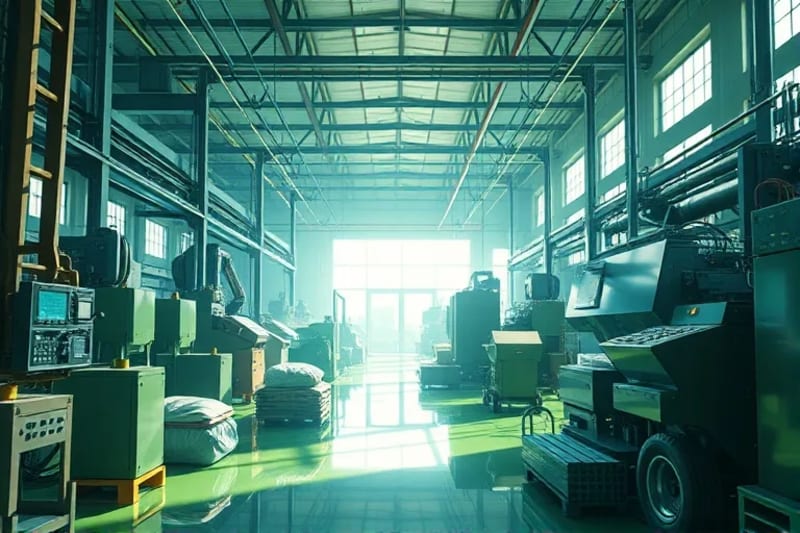 A modern facility demonstrating advanced recycling processes and resource optimization, central to circular economy principles.
Core Principles of the Circular Economy
The circular economy is built upon three fundamental principles, designed to eliminate waste and pollution, circulate products and materials, and regenerate natural systems. These principles guide businesses in rethinking their operations, from product design to end-of-life management, ensuring that resources are kept in use for as long as possible.
- Design Out Waste and Pollution: This principle advocates for products and processes that inherently avoid waste generation and harmful emissions. It involves careful material selection, designing for durability, repairability, and recyclability from the outset.
- Keep Products and Materials in Use: Instead of discarding items after a single use, the circular model promotes activities like reuse, repair, remanufacturing, and recycling. This extends the lifespan of products and components, maximizing their value and reducing the need for new raw materials.
- Regenerate Natural Systems: Beyond minimizing harm, the circular economy aims to actively improve environmental quality. This includes using renewable energy, supporting biodiversity, and returning biological materials safely to the biosphere.
For SMEs, understanding these principles is the first step towards integrating circular practices into their business models. It requires a holistic view of their value chain and a commitment to innovation that goes beyond traditional sustainability efforts.
Key Benefits for SMEs
Adopting circular business models offers a multitude of advantages for SMEs, extending beyond mere environmental compliance. These benefits can significantly enhance their market position, operational efficiency, and long-term viability.
- Cost Savings and Resource Efficiency: By reusing, repairing, and recycling materials, SMEs can reduce their reliance on virgin resources, leading to lower procurement costs and more stable supply chains. Efficient energy and water use also contribute to operational savings.
- Enhanced Brand Reputation and Customer Loyalty: Consumers are increasingly conscious of environmental issues. Businesses demonstrating a commitment to sustainability often attract a loyal customer base and improve their public image. This can differentiate SMEs in crowded markets.
- New Revenue Streams: Circular models open up opportunities for new services, such as product-as-a-service, repair services, or selling recovered materials. This diversifies income sources and creates new value propositions.
- Increased Resilience to Supply Chain Shocks: By creating closed-loop systems and reducing dependence on external raw material markets, SMEs become less vulnerable to price volatility and supply disruptions.
- Innovation and Competitive Advantage: The transition to circularity often sparks innovation in product design, process optimization, and service delivery, giving pioneering SMEs a significant edge over competitors.
- Access to New Funding and Partnerships: Many governments and financial institutions offer incentives, grants, and loans for businesses adopting sustainable practices. Circularity can also foster collaborations with other businesses and research institutions.
Digitalization as an Enabler of Circularity
Digital technologies are indispensable for the effective implementation and scaling of circular business models. They provide the infrastructure for data collection, analysis, and communication, enabling SMEs to manage complex circular flows and optimize resource utilization. The synergy between digitalization and circularity creates a powerful engine for green growth.
 Visualizing the seamless integration of digital technologies within circular supply chain models.
Key digital technologies that facilitate circularity include:
- Internet of Things (IoT): IoT sensors can track products throughout their lifecycle, monitoring usage, performance, and location. This data is crucial for maintenance, repair, and efficient collection for recycling or remanufacturing.
- Artificial Intelligence (AI) and Machine Learning (ML): AI can optimize resource allocation, predict maintenance needs, improve sorting processes for recycled materials, and identify patterns for waste reduction. It can also enhance product design for circularity.
- Blockchain Technology: Blockchain provides transparent and immutable records of material origins, product components, and ownership transfers. This enhances traceability, authenticity, and trust in circular supply chains, as explored in the context of Blockchain for Circular Economy and Sustainable Supply Chains.
- Data Analytics: Big data analytics helps SMEs understand resource flows, identify bottlenecks, and measure the environmental impact of their operations. This data-driven insight is vital for continuous improvement and informed decision-making.
- Digital Platforms and Marketplaces: Online platforms facilitate the sharing, exchange, and resale of products and materials, connecting businesses with consumers or other businesses for circular transactions.
The integration of these technologies allows SMEs to move beyond theoretical circularity to practical, measurable, and economically viable solutions. Furthermore, understanding the legal challenges of artificial intelligence in content creation can also provide insights into responsible AI deployment in circular processes.
Practical Circular Business Models for SMEs
SMEs can adopt various circular business models, each offering unique approaches to resource optimization and value creation. The choice often depends on the industry, product type, and existing capabilities of the enterprise.
| Model Type | Description | SME Example |
|---|---|---|
| Product-as-a-Service (PaaS) | Customers pay for the use of a product rather than its ownership. The company retains ownership, maintaining and eventually recovering the product. | A small office furniture supplier leasing ergonomic chairs, maintaining them, and upgrading components over time. |
| Repair and Maintenance | Focuses on extending product lifespan through professional repair, refurbishment, and preventative maintenance services. | A local electronics repair shop specializing in prolonging the life of smartphones and laptops. |
| Resource Recovery and Recycling | Collecting and processing waste materials to reintroduce them into the production cycle, either for the same product or a new one. | A textile company collecting old garments to convert them into new fibers for apparel production. |
| Sustainable Sourcing | Prioritizing the use of renewable, recycled, or sustainably harvested materials, often locally sourced to reduce transportation impact. | A craft brewery using only locally grown organic hops and barley, and recycling its spent grains as animal feed. |
| Sharing Platforms | Creating platforms that enable multiple users to access and share products or resources, maximizing utilization and reducing individual ownership. | A tool-sharing cooperative where members can borrow specialized equipment for a fee, reducing the need for individual purchases. |
Each model requires careful planning and often leverages digital tools for efficient management. For instance, PaaS models rely heavily on IoT for product tracking and predictive maintenance. Resource recovery benefits from advanced sorting technologies and transparent supply chain management, where blockchain auditing can ensure financial transparency and material integrity.
Overcoming Challenges and Fostering Adoption
While the benefits of circular business models are clear, SMEs often face specific challenges in their adoption. These can range from initial investment costs to integrating new processes within existing operations. However, strategic planning and leveraging available support can help overcome these hurdles.
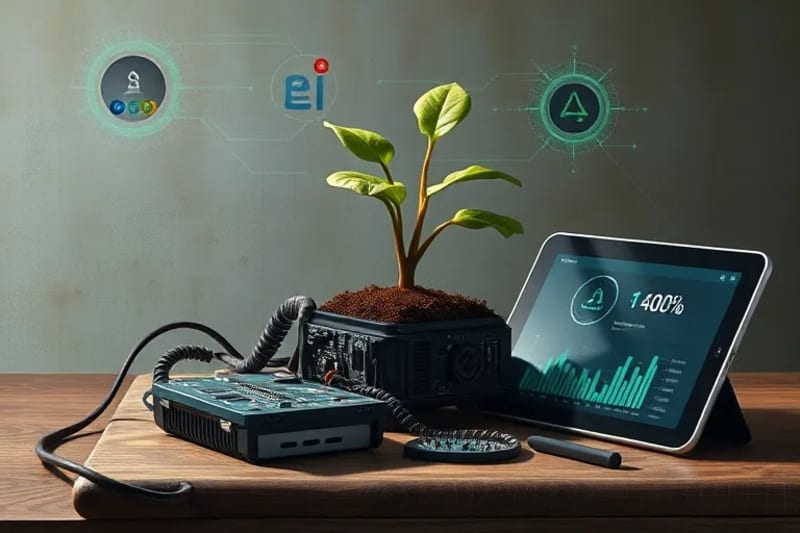 A conceptual composition highlighting the longevity, regeneration, and data-driven insights of circular business.
Common challenges include:
- Initial Investment: Transitioning to circular models may require upfront investment in new technologies, infrastructure, or training.
- Supply Chain Integration: Establishing closed-loop supply chains requires collaboration and coordination with suppliers, customers, and waste management partners.
- Consumer Behavior: Shifting consumer mindsets from ownership to access, or from new to refurbished products, can be a gradual process.
- Lack of Expertise: SMEs may lack the internal knowledge or resources to design and implement complex circular strategies.
- Regulatory and Policy Barriers: Existing regulations might not always support circular practices, or there might be a lack of clear policy frameworks.
To address these challenges, SMEs can seek support from various sources. Government incentives, subsidies, and grants are often available for green initiatives. Collaborating with industry associations, research institutions, and specialized consultants can provide access to expertise and best practices. Furthermore, exploring innovative financing options, such as those discussed in Microfinance for Female Entrepreneurship, can help secure the necessary capital for transition.
The Future of Circular SMEs
The trajectory towards a circular economy is irreversible, driven by environmental necessity, evolving consumer demands, and increasing regulatory pressure. For SMEs, embracing circular business models is not just an ethical choice but a strategic imperative for long-term survival and prosperity. As digital technologies continue to advance, their integration into circular practices will become even more seamless and impactful, accelerating the transition towards a truly sustainable industrial landscape.
Future developments will likely see greater standardization in circular metrics, more sophisticated digital tools for material tracking and optimization, and increased collaboration across industries to create comprehensive circular ecosystems. SMEs that proactively adapt and innovate in this space will be well-positioned to thrive, contributing significantly to both economic growth and environmental regeneration.
In conclusion, circular business models, powered by digitalization, offer a robust framework for SMEs to achieve accelerated green growth. By focusing on waste elimination, resource circulation, and natural regeneration, these enterprises can build resilient, profitable, and environmentally responsible operations for the future.
Related Articles
- Blockchain Economy Circular: Sustainable Supply Chain
- Blockchain Auditing: Financial Transparency Digital Era
- Legal Challenges Artificial Intelligence Content Creation: Complete Guide
- Franchise Models: Advantages, Disadvantages and Success
Source: Hybrid content assisted by AI and human editorial supervision.


Comentarios