
Hedy Lamarr: Hollywood Star, Wi-Fi Pioneer, Disruptive Innovator
The name Hedy Lamarr often conjures images of a dazzling Hollywood star, a symbol of glamour and beauty from the Golden Age of cinema. Yet, beneath the surface of this silver screen icon lay a brilliant mind, an inventor whose contributions to technology were as profound as her on-screen performances. Her story is a compelling narrative of dual identities: the public persona of a celebrated actress and the private passion of an innovator whose pioneering work laid the groundwork for modern wireless communication technologies like Wi-Fi, Bluetooth, and GPS.
This article delves into the extraordinary life and enduring legacy of this remarkable individual, exploring how her unconventional genius transcended the confines of Hollywood to leave an indelible mark on the world of science and technology. We will uncover the origins of her inventive spirit, the specific nature of her groundbreaking patent, and the eventual recognition of her contributions, long after they were initially overlooked. Her journey serves as a powerful reminder that innovation can emerge from the most unexpected places and that true talent often defies categorization.
Table of Contents
- Early Life and the Path to Stardom
- The Golden Age of Hollywood and Its Constraints
- Beyond the Screen: A Hidden Passion for Invention
- The Birth of Frequency Hopping Spread Spectrum
- A Patent for Patriotism: Guiding Torpedoes
- Years of Obscurity and Eventual Recognition
- The Enduring Legacy: Wi-Fi, Bluetooth, and GPS
- Overcoming Stereotypes and Gender Bias
- A True Disruptive Innovator
- Conclusion: The Unforgettable Dual Legacy
Early Life and the Path to Stardom
Born Hedwig Eva Maria Kiesler in Vienna, Austria-Hungary, in 1914, the future Hollywood star displayed an early aptitude for both the arts and sciences. Her father, a successful bank director, fostered her intellectual curiosity by explaining the inner workings of various machines, from printing presses to streetcars. This early exposure to mechanical principles undoubtedly sowed the seeds of her later inventive pursuits. Her mother, a concert pianist, encouraged her artistic talents, leading her towards a career in acting.
Her foray into acting began in German cinema, where she quickly gained notoriety for her role in the controversial 1933 film Ecstasy. This film, which featured a brief nude scene and close-ups of her face conveying intense emotion, caused a sensation across Europe and beyond, cementing her image as a daring and unconventional beauty. Her early career was marked by a marriage to Fritz Mandl, an Austrian armaments manufacturer, who was known for his controlling nature and connections to the Nazi regime. During this period, she was often present at high-level meetings where military technologies and communications systems were discussed, absorbing technical details that would later prove invaluable.
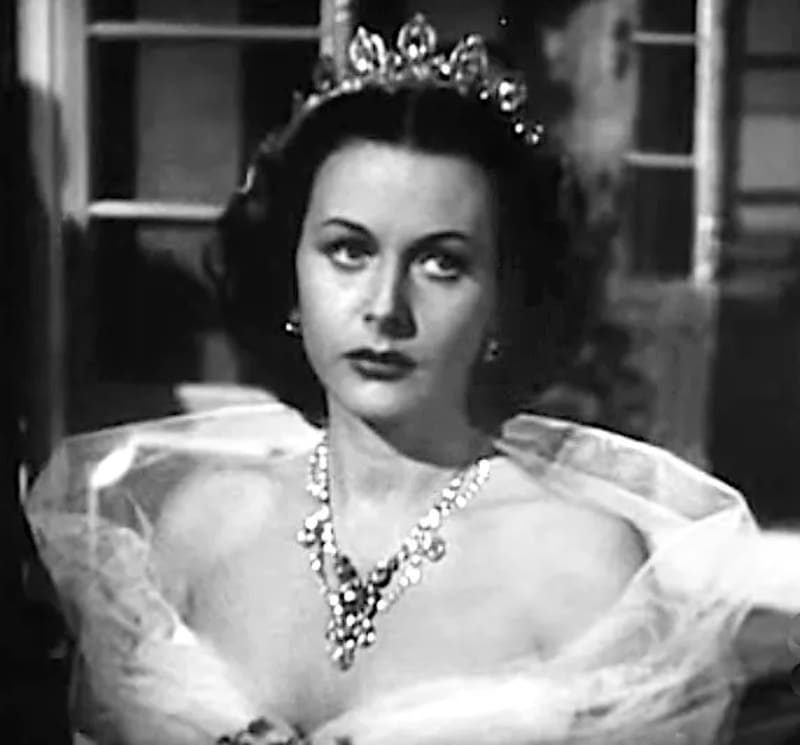 Precursors intellectuales, diagramas fundamentales y representaciones conceptuales que forjaron la visión de la icónica actriz sobre la intersección del arte y la ciencia.
Fuente visual sujeta a disponibilidad del ecosistema: Wikimedia Commons bajo licencia CC BY-SA 4.0 o renderizado conceptual IA.
The Golden Age of Hollywood and Its Constraints
Escaping her marriage and the escalating political tensions in Europe, the future star made her way to Hollywood. There, she was discovered by MGM studio head Louis B. Mayer, who famously renamed her Hedy Lamarr. Her striking beauty and exotic allure quickly made her a sensation, starring in films such as Algiers (1938), Boom Town (1940), and Samson and Delilah (1949). She was often typecast as a glamorous femme fatale, a role that, while bringing her immense fame, also constrained her intellectual aspirations.
Despite her success, the actress found Hollywood's social scene and the limitations of her roles unfulfilling. She later remarked, "Any girl can be glamorous. All you have to do is stand still and look stupid." This sentiment highlighted her frustration with being perceived solely for her physical appearance, while her keen mind yearned for more stimulating challenges. Her time in Hollywood, however, did not entirely detach her from her scientific inclinations; in fact, it provided her with the resources and the quiet moments needed to pursue them.
Beyond the Screen: A Hidden Passion for Invention
While her public image was that of a movie star, in her private life, the iconic figure was an avid inventor. She set up an inventing room in her home, complete with a drafting table and tools. Her interests ranged widely, from improving traffic signals to developing a dissolvable tablet that would turn water into a carbonated drink (an idea that, while well-intentioned, was not commercially successful). Her inventive drive was not merely a hobby; it was a fundamental aspect of her personality, a testament to her restless intellect.
The outbreak of World War II deeply affected her. As an Austrian immigrant who had witnessed the rise of Nazism and understood the horrors of war, she felt a strong desire to contribute to the Allied war effort. She initially tried to join the National Inventors Council but was reportedly told she could better serve the country by using her celebrity status to sell war bonds. While she did participate in bond drives, raising millions of dollars, her inventive spirit pushed her to seek a more direct technological contribution to the war.
The Birth of Frequency Hopping Spread Spectrum
Her most significant invention stemmed from her concern about the vulnerability of Allied radio-controlled torpedoes to enemy jamming. These torpedoes were guided by a single radio frequency, making them easy targets for interception and redirection. She conceived of a system that would prevent this by rapidly changing the radio signal's frequency, making it impossible for the enemy to jam or detect. This concept became known as "frequency hopping spread spectrum."
To bring her idea to fruition, she sought help from George Antheil, an avant-garde composer and inventor. Antheil had previously experimented with synchronized player pianos for his musical compositions. Together, they developed a system that used a synchronized piano roll to rapidly switch between 88 frequencies (the number of keys on a piano). This ingenious mechanism ensured that both the transmitter and receiver would jump from frequency to frequency in unison, creating an unjammable and undetectable communication channel. This innovative approach to secure communication was truly ahead of its time, demonstrating a deep understanding of radio technology and signal processing.
 A conceptual still-life evoking the golden age of cinema, featuring classic tools of the trade.
A Patent for Patriotism: Guiding Torpedoes
In 1941, the actress and Antheil were granted U.S. Patent No. 2,292,387 for their "Secret Communication System." The patent described a method for frequency hopping, intended to make radio-guided torpedoes more secure. The duo freely offered their patent to the U.S. Navy. However, at the time, the Navy largely dismissed the invention. The technology was considered too complex and impractical to implement with the mechanical components available during the war, especially the bulky piano rolls.
Despite the initial rejection, the underlying principle of their invention was sound. The concept of spreading a signal across multiple frequencies to make it harder to detect and jam was revolutionary. This was a critical step towards what we now understand as resilient communication systems. Their work highlighted the importance of robust and secure data transmission, a concept that continues to evolve with advancements in fields like Blockchain Cybersecurity: Shielding the Digital Ecosystem.
Years of Obscurity and Eventual Recognition
For decades, the actress's contribution remained largely unknown to the public. Her patent expired in 1959, long before the technology could be practically implemented using solid-state electronics. It wasn't until the 1980s, with the advent of digital technology, that engineers began to fully appreciate the genius of her and Antheil's invention. The principles of frequency hopping were rediscovered and applied to various military and civilian technologies.
In 1997, the Electronic Frontier Foundation (EFF) honored her and Antheil with a Pioneer Award, finally recognizing their groundbreaking work. This belated acknowledgment brought her invention into the spotlight, revealing a hidden chapter of her life to a world that had only known her as a screen siren. Her story became a powerful example of how intellectual property, even if initially unutilized, can hold immense future value, influencing generations of technological development.
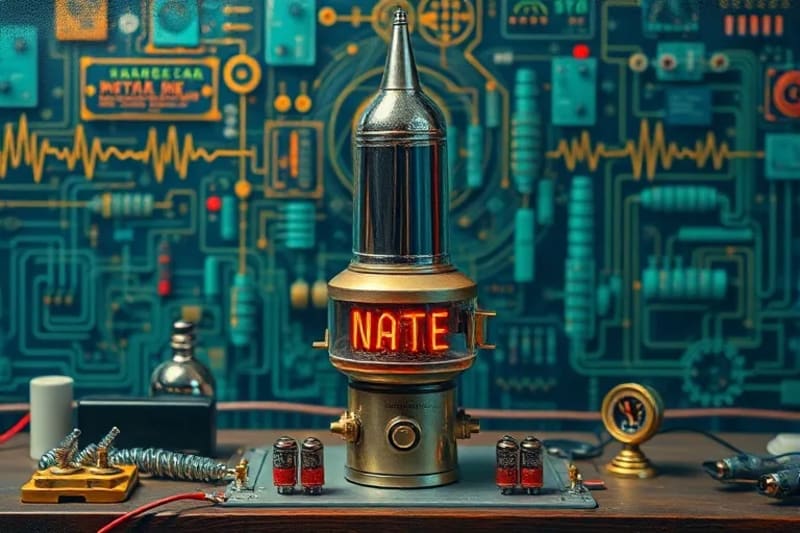 An abstract representation of the foundational principles behind modern wireless communication.
The Enduring Legacy: Wi-Fi, Bluetooth, and GPS
The core principles of frequency hopping spread spectrum, patented by the Hollywood legend and George Antheil, are fundamental to many of the wireless technologies we rely on today. Without their pioneering work, the landscape of modern communication would be vastly different. Here’s how their invention underpins key technologies:
- Wi-Fi (Wireless Fidelity): While Wi-Fi primarily uses Direct Sequence Spread Spectrum (DSSS) and Orthogonal Frequency-Division Multiplexing (OFDM), the broader concept of spread spectrum technology, which involves spreading a signal over a wider frequency band to reduce interference and enhance security, is directly related to their work. Early Wi-Fi standards, particularly those involving frequency hopping, drew inspiration from these foundational ideas. The ability to transmit data reliably and securely across a shared spectrum is a direct descendant of their initial vision.
- Bluetooth: This short-range wireless technology, ubiquitous in devices like headphones, smartphones, and smart home gadgets, explicitly uses frequency hopping spread spectrum. Bluetooth devices rapidly switch between 79 different frequencies within the 2.4 GHz band, making connections robust, secure, and resistant to interference. This direct application showcases the practical genius of the original patent.
- GPS (Global Positioning System): Although GPS uses DSSS rather than frequency hopping, the underlying principle of spread spectrum to ensure signal integrity and resistance to jamming in a noisy environment is crucial. The ability of GPS receivers to accurately pinpoint locations relies on receiving weak signals that are spread across a wide bandwidth, a concept deeply rooted in the spread spectrum paradigm.
- Military Communications: Beyond its civilian applications, spread spectrum technology remains vital for secure military communications, precisely as the inventors intended. It provides anti-jamming and low probability of interception capabilities essential for modern warfare.
The impact of their invention extends far beyond these specific examples, influencing countless other wireless applications and contributing to the global digital ecosystem. It's a testament to how a single, brilliant idea can ripple through time, transforming daily life in ways its creators might never have fully imagined. The continuous evolution of wireless communication, including advancements in Augmented Reality Ecosystem Conservation: Monitoring Education, owes a debt to these foundational concepts.
Overcoming Stereotypes and Gender Bias
The story of the pioneering inventor is also a powerful narrative about overcoming stereotypes and gender bias. For much of her life, her intellectual contributions were overshadowed by her extraordinary beauty and celebrity status. The prevailing societal norms of the mid-20th century often struggled to reconcile the image of a glamorous actress with that of a serious inventor. This dichotomy led to her scientific work being largely dismissed or ignored by the very institutions it sought to assist.
Her experience highlights a broader issue faced by many women in STEM fields throughout history – the struggle for recognition and validation in environments dominated by men. Despite her intelligence and demonstrable inventive capabilities, she was not taken seriously as a scientist. This gender bias not only delayed the implementation of her crucial invention but also deprived her of the credit and financial rewards she deserved during her lifetime. Her resilience in pursuing her passion, even in the face of such dismissiveness, serves as an inspiration. Her journey reminds us of the importance of fostering environments where talent is recognized regardless of background or perceived role, a principle increasingly vital in discussions around Responsible AI: Legal Challenges Causality Autonomous Systems.
A True Disruptive Innovator
The actress's invention was not merely an incremental improvement; it was a disruptive innovation. Disruptive innovations are those that create new markets and value networks, eventually displacing established market-leading firms, products, and alliances. Her frequency hopping concept fundamentally changed how secure wireless communication could be achieved, even if its full potential wasn't realized for decades.
Her ability to think outside the box, combining her understanding of military vulnerabilities with her knowledge of music and mechanics, exemplifies the interdisciplinary nature of true innovation. She wasn't bound by conventional engineering thought processes, which allowed her to envision a solution that traditional engineers might have overlooked. This ability to connect seemingly disparate fields is a hallmark of many successful innovators and is increasingly valued in today's fast-paced technological landscape, as seen in the rise of Longevity Startups: Biohacker Business Models for Active Aging.
Her legacy extends beyond the technical specifications of her patent. It's a story that encourages us to look beyond superficial appearances and to recognize the multifaceted talents that individuals possess. She demonstrated that creativity and intelligence are not confined to specific professions or genders, and that a curious, determined mind can contribute profoundly to human progress, regardless of its primary public role.
Conclusion: The Unforgettable Dual Legacy
Hedy Lamarr's life was a testament to the power of a curious mind and an unyielding spirit. From the glittering stages of Hollywood to the quiet solitude of her inventing room, she navigated a world that often failed to see beyond her beauty. Her journey from a celebrated actress to an unacknowledged inventor, and finally to a posthumously recognized pioneer, is a compelling narrative of perseverance and intellectual brilliance.
Today, as we seamlessly connect to the internet via Wi-Fi, communicate wirelessly with Bluetooth devices, and navigate with GPS, we are all beneficiaries of her foresight and ingenuity. Her story serves as an enduring inspiration, reminding us that true innovation often comes from unexpected sources and that the greatest legacies are sometimes built in the quiet moments, far from the spotlight. Hedy Lamarr was not just a star; she was a visionary whose disruptive ideas continue to shape our connected world.
Source: Hybrid content assisted by AI and human editorial supervision.


Comentarios