
Biosustainable Neuroarchitecture: AI-Driven Cognitive Well-being Spaces
In an era defined by rapid technological advancement and increasing environmental awareness, the fields of architecture are undergoing a profound transformation. Traditional design principles are now being augmented by scientific insights into human biology and cognition, giving rise to specialized disciplines like biosustainable architecture and neuroarchitecture. These innovative approaches aim to create built environments that not only minimize ecological impact but also actively promote the physical, mental, and emotional well-being of their occupants. The integration of Artificial Intelligence (AI) further amplifies these capabilities, offering unprecedented opportunities for personalized, adaptive, and highly optimized spaces.
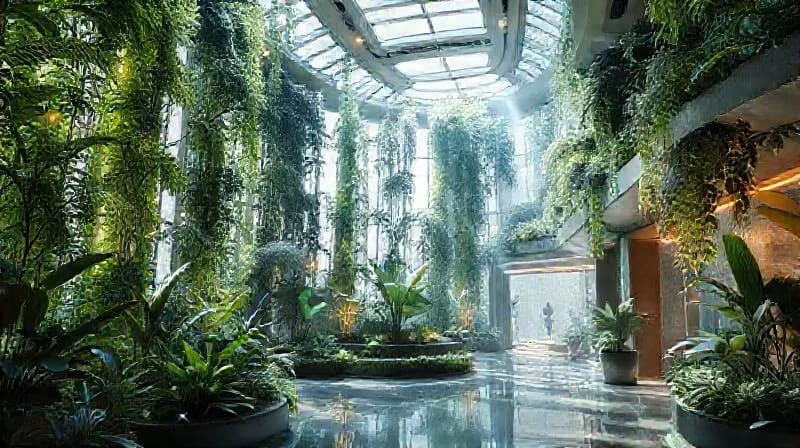 Precursors, conceptual frameworks, and advanced visualizations that shape the understanding of biosustainable neuroarchitecture in the digital age.
This article delves into the synergistic relationship between biosustainable architecture, neuroarchitecture, and the transformative role of AI. We will explore how these disciplines converge to design spaces that are not merely functional or aesthetically pleasing, but are meticulously crafted to support human cognition, reduce stress, and foster a deeper connection with nature. By understanding the underlying principles and practical applications, we can envision a future where our built environments are truly extensions of our well-being, intelligently responding to our needs and contributing positively to our planet.
Table of Contents
- The Foundations of Biosustainable Architecture
- Neuroarchitecture: Designing for the Human Brain
- The Synergy Between Biosustainable Architecture and Neuroarchitecture
- AI's Transformative Role in Designing Intelligent Spaces
- Practical Applications and Case Studies
- Challenges and the Future Outlook
The Foundations of Biosustainable Architecture
Biosustainable architecture, often interchangeably used with green architecture or ecological design, focuses on minimizing the negative environmental impact of buildings. This involves a holistic approach that considers the entire lifecycle of a building, from material sourcing and construction to operation and eventual deconstruction. The core tenets revolve around resource efficiency, renewable energy integration, and the creation of healthy indoor environments.
Key principles include the use of local and recycled materials, passive design strategies (optimizing natural light and ventilation), rainwater harvesting, and waste reduction. The goal is to create structures that exist in harmony with their natural surroundings, reducing carbon footprint and promoting ecological balance. This discipline is crucial for addressing global challenges such as climate change and resource depletion, offering tangible solutions for a more sustainable future.
- Energy Efficiency: Designing buildings to consume less energy through insulation, efficient HVAC systems, and smart controls.
- Water Conservation: Implementing systems for rainwater collection, greywater recycling, and low-flow fixtures.
- Sustainable Materials: Prioritizing materials that are renewable, recycled, non-toxic, and locally sourced.
- Site Selection and Planning: Minimizing disruption to ecosystems and integrating with existing natural features.
- Indoor Environmental Quality: Ensuring good air quality, thermal comfort, and access to natural light.
Neuroarchitecture: Designing for the Human Brain
Neuroarchitecture is an emerging field that applies insights from neuroscience to the design of built environments. It seeks to understand how physical spaces influence human brain activity, emotions, and behavior. By leveraging knowledge about perception, cognition, and emotional responses, neuroarchitects aim to create spaces that optimize specific mental states, such as focus, relaxation, creativity, or social interaction.
This involves considering elements like light, color, acoustics, spatial configuration, and access to nature. For instance, studies have shown that exposure to natural light can improve mood and cognitive performance, while certain color palettes can evoke feelings of calm or excitement. The ultimate goal is to design environments that support psychological well-being and enhance human potential, moving beyond purely functional considerations to embrace the profound impact of space on the human mind.
 AI-driven design principles for cognitive optimization.
Neuroarchitecture draws heavily on empirical research, utilizing tools like fMRI and EEG to measure brain responses to different architectural stimuli. This scientific rigor allows designers to make evidence-based decisions, rather than relying solely on intuition or aesthetic preferences. The application of these principles can be seen in various settings, from hospitals designed to promote healing to schools optimized for learning and concentration. For more on how technology intersects with future trends, consider exploring articles on AI Labor Laws.
The Synergy Between Biosustainable Architecture and Neuroarchitecture
While biosustainable architecture focuses on the planet and neuroarchitecture on the human brain, their objectives are deeply intertwined. A truly sustainable building is one that supports its occupants' health and well-being, and a building designed for optimal cognition often incorporates elements that are inherently sustainable. The concept of biophilia, the innate human tendency to connect with nature, serves as a powerful bridge between these two fields.
Biophilic design, a core component of both disciplines, integrates natural elements and processes into the built environment. This includes features like indoor plants, natural light, views of greenery, and the use of natural materials. Research consistently demonstrates that biophilic design can reduce stress, improve cognitive function, and enhance overall mood. By combining biosustainable practices with neuroarchitectural insights, designers can create environments that are not only environmentally responsible but also profoundly beneficial for human health and productivity.
Consider a building designed with ample natural ventilation (biosustainable) that also provides fresh air and reduces airborne toxins, thus improving cognitive clarity (neuroarchitectural). Or a structure that maximizes natural light (biosustainable) to reduce energy consumption while simultaneously regulating circadian rhythms and boosting alertness (neuroarchitectural). This holistic approach creates a virtuous cycle where environmental stewardship directly translates into human flourishing. The principles of Bioclimatic Architecture are a great example of this synergy.
AI's Transformative Role in Designing Intelligent Spaces
The advent of Artificial Intelligence introduces a new dimension to biosustainable and neuroarchitectural design. AI can process vast amounts of data, identify complex patterns, and make predictions far beyond human capabilities. This makes it an invaluable tool for optimizing building performance, personalizing environments, and even predicting occupant needs.
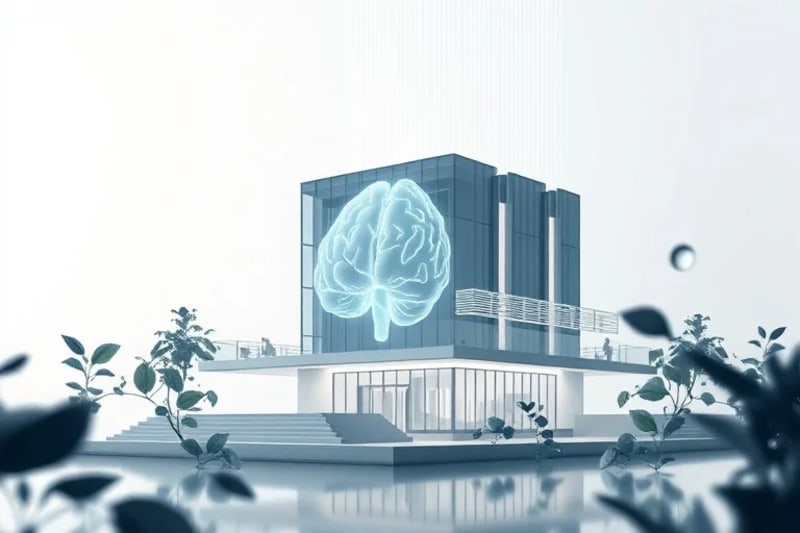 The interplay of natural elements and cognitive function in modern design.
AI-powered systems can analyze real-time data from sensors (temperature, humidity, light levels, CO2 concentration, noise) and even biometric data (heart rate, movement patterns) to dynamically adjust environmental parameters. For instance, an AI could learn an individual's preferences for lighting and temperature, automatically adjusting them to maintain optimal comfort and cognitive performance throughout the day. It can also predict energy consumption patterns, optimize HVAC systems, and manage renewable energy sources more efficiently, enhancing the biosustainability of a building.
Furthermore, AI can assist in the design phase itself. Generative design algorithms can explore thousands of potential architectural layouts and material combinations, evaluating them against biosustainable and neuroarchitectural criteria. This allows architects to discover novel solutions that might be overlooked by human designers alone, leading to more innovative and effective spaces. The insights provided by AI can also help in understanding complex interactions, similar to how the Butterfly Effect illustrates how small changes can have large consequences.
| Application Area | Description | Benefit |
|---|---|---|
| Generative Design | AI algorithms explore and generate optimal architectural layouts and material choices based on predefined criteria (e.g., energy efficiency, natural light, spatial flow). | Accelerates design process, uncovers innovative solutions, optimizes for multiple complex variables simultaneously. |
| Environmental Control Systems | Smart HVAC, lighting, and shading systems that use AI to learn occupant preferences and real-time environmental data to adjust settings. | Enhances occupant comfort and cognitive performance, reduces energy consumption, adapts to changing conditions. |
| Predictive Maintenance | AI analyzes sensor data to predict equipment failures, optimize maintenance schedules, and reduce resource waste. | Increases operational efficiency, extends lifespan of building components, minimizes environmental impact of repairs. |
| Occupancy and Flow Optimization | AI uses sensor data to understand how spaces are used, optimizing traffic flow, space allocation, and even cleaning schedules. | Improves user experience, maximizes space utilization, reduces energy waste in unoccupied areas. |
| Personalized Wellness Environments | AI-driven systems tailor lighting, soundscapes, and even scent to individual occupants' biometric data or stated preferences to promote focus or relaxation. | Creates highly adaptive and responsive environments that directly support individual well-being and cognitive states. |
Practical Applications and Case Studies
The principles of biosustainable neuroarchitecture, enhanced by AI, are already finding their way into various building types, from corporate offices to healthcare facilities and residential homes. In office environments, AI-controlled lighting systems can adjust color temperature and intensity throughout the day to mimic natural light cycles, supporting employees' circadian rhythms and reducing eye strain. This leads to increased productivity and reduced fatigue.
Healthcare settings benefit immensely from these integrated approaches. Hospitals designed with biophilic elements, natural light, and optimized acoustics have been shown to reduce patient recovery times, decrease reliance on pain medication, and improve staff morale. AI can further personalize these environments, adjusting room conditions based on patient-specific needs or even real-time physiological data, creating a truly healing space. The concept of Environmental Health is critical here.
Smart homes are another prime example, where AI learns occupant routines and preferences to optimize energy use, manage indoor air quality, and create personalized sensory experiences. Imagine a home that automatically adjusts lighting and temperature as you wake up, plays calming sounds as you prepare for sleep, and even suggests opening windows for fresh air when CO2 levels rise. These adaptive environments contribute significantly to both environmental sustainability and occupant well-being.
Challenges and the Future Outlook
Despite the immense potential, the widespread adoption of biosustainable neuroarchitecture with AI integration faces several challenges. The initial cost of implementing advanced sensor systems, AI platforms, and sustainable materials can be higher than conventional construction. There is also a need for greater interdisciplinary collaboration between architects, neuroscientists, data scientists, and engineers to fully realize the potential of these fields.
Data privacy and security are also significant concerns, especially when personal biometric data might be used to tailor environments. Ethical guidelines and robust data protection measures will be essential for building trust and ensuring responsible implementation. However, as technology advances and costs decrease, these challenges are likely to diminish.
The future of architecture lies in creating intelligent, responsive, and regenerative environments. Biosustainable neuroarchitecture, powered by AI, represents a paradigm shift towards buildings that are not just structures but active partners in our well-being and the health of the planet. As our understanding of the human brain and ecological systems deepens, and AI capabilities continue to evolve, we can expect to see spaces that are increasingly intuitive, restorative, and inspiring, truly shaping a better future for all.
The integration of these advanced concepts is not just about efficiency; it's about creating spaces that foster a deeper connection between humans and their environment, promoting mental clarity, emotional balance, and physical health. This holistic vision promises a future where our built surroundings actively contribute to a thriving existence, both for individuals and for the global ecosystem.
Related Articles
- Resilient Cities: Urban Climate Adaptation and Sustainability
- Cosmic Archaeology: Seeking Alien Technosignatures
- Fungal Ecosystems AI: Biology and a Sustainable Future
- Agile Leadership: Adaptability, Resilience, and Modern Success
- Cosmic Sociology AI: Global Consciousness Evolution Trends
Source: Hybrid content assisted by AI and human editorial supervision.


Comentarios