
Templar Legacy: Myths, Wealth, and Medieval Influence
The Enduring Legacy of the Knights Templar: Myths, Wealth, and Medieval Influence
The Knights Templar, officially known as the Poor Fellow-Soldiers of Christ and of the Temple of Solomon, stand as one of history's most enigmatic and influential military orders. Founded in 1119, their initial purpose was to protect European pilgrims traveling to the Holy Land following the First Crusade. Over nearly two centuries, they evolved from a small band of knights into a powerful and wealthy organization, deeply intertwined with the political, economic, and religious fabric of medieval Europe. Their dramatic rise and even more dramatic fall have cemented their place in popular culture, spawning countless myths and legends that persist to this day.
This article delves into the true historical impact of the Templars, separating fact from fiction. We will explore their foundational principles, the sources of their immense wealth, their significant influence on medieval society, and the controversies that ultimately led to their downfall. Understanding the Templar legacy requires a careful examination of primary sources and a critical perspective on the narratives that have accumulated over centuries.
Table of Contents
- Founding and Initial Mission
- The Templars' Vast Wealth and Economic Power
- Political and Social Influence in Medieval Europe
- Military Prowess and Crusader States
- Enduring Myths and Conspiracy Theories
- The Downfall: Accusations and Dissolution
- Modern Interpretations and Cultural Impact
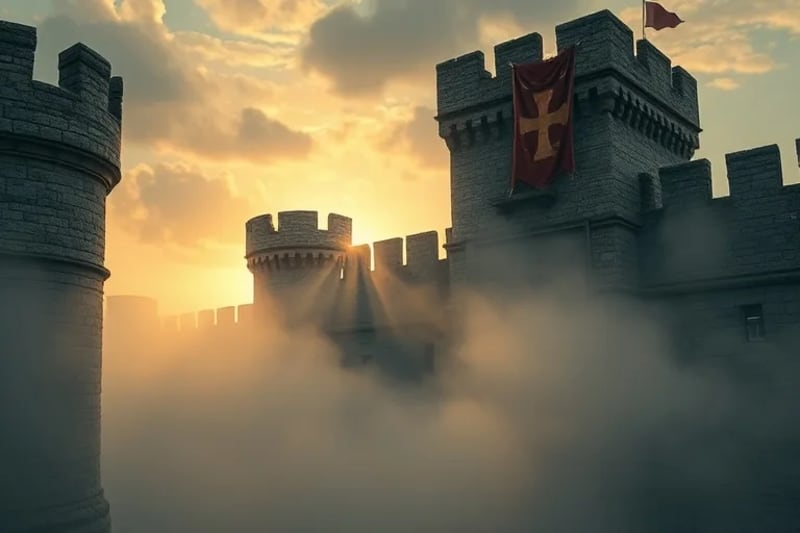 Architectural remnants, historical artifacts, and conceptual visualizations that illustrate the profound spiritual and temporal influence of the Knights Templar throughout the medieval era.
Fuente visual sujeta a disponibilidad del ecosistema: Wikimedia Commons bajo licencia CC BY-SA 4.0 o renderizado conceptual IA.
Founding and Initial Mission
The Knights Templar were founded by Hugh de Payens and eight other knights in 1119, with the explicit mission to protect Christian pilgrims traveling through the dangerous territories of the Holy Land. Their initial headquarters were granted by King Baldwin II of Jerusalem in a wing of the royal palace on the Temple Mount, believed to be built on the ruins of Solomon's Temple, thus giving the order its distinctive name.
Initially, the Templars were a small, impoverished group, relying on donations for their survival. However, their fortunes changed dramatically with the endorsement of Bernard of Clairvaux, a highly influential abbot and a leading figure in the Cistercian order. Bernard's eloquent writings, particularly his treatise "In Praise of the New Knighthood," provided a theological justification for a monastic military order, combining the spiritual ideals of monasticism with the martial prowess of knighthood. This endorsement, coupled with papal recognition at the Council of Troyes in 1129, granted the Templars a unique status, exempting them from local episcopal authority and placing them directly under the Pope.
The Templars' Vast Wealth and Economic Power
The Templars' wealth grew exponentially through a combination of generous donations, land grants, and their innovative economic practices. Monarchs, nobles, and ordinary citizens across Europe, inspired by their piety and military success, bequeathed vast estates, castles, and funds to the order. These donations were often made in exchange for spiritual benefits or simply out of respect for their mission in the Holy Land.
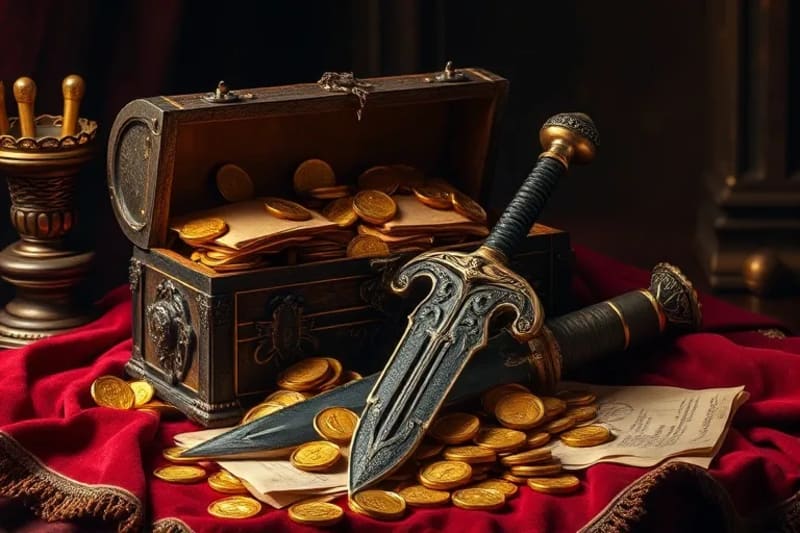 The material wealth and financial instruments that underpinned the Templars' influence and operational capabilities.
Beyond direct donations, the Templars became pioneers in the development of sophisticated financial systems. They established a vast network of commanderies (local administrative units) across Europe, which managed their agricultural lands, collected rents, and served as safe houses for pilgrims and travelers. These commanderies effectively functioned as early banks, offering services such as:
- Letters of Credit: Pilgrims could deposit money in a Templar commandery in their home country and withdraw an equivalent amount in the Holy Land, avoiding the dangers of carrying large sums of cash. This system was a precursor to modern banking.
- Loans and Investments: They lent money to kings and nobles, often financing crusades and royal projects, and invested in various enterprises, from shipping to construction.
- Safekeeping: They acted as custodians for valuable assets, including royal treasuries and important documents.
Political and Social Influence in Medieval Europe
The Templars' influence extended far beyond their military and economic roles. Their direct allegiance to the Pope granted them significant political leverage, often allowing them to act as intermediaries in disputes between monarchs and the Church. They served as royal treasurers, diplomats, and advisors to various European rulers, including the King of France and the King of England. Their impartiality, enforced by their monastic vows and international structure, made them trusted agents in sensitive negotiations.
Socially, the Templars were revered and feared. Their distinctive white mantles with a red cross were a symbol of piety, courage, and dedication. They attracted recruits from noble families, offering a path to spiritual salvation combined with military honor. Their presence in towns and cities across Europe, marked by their commanderies and fortified churches, made them a visible and integral part of the social landscape. They were also instrumental in the development of new technologies and infrastructure, managing vast estates and contributing to agricultural innovation.
Military Prowess and Crusader States
At their core, the Templars were elite warriors. Their military discipline, training, and fanatical devotion made them formidable opponents on the battlefield. They were often at the forefront of crusader armies, renowned for their bravery and willingness to fight to the death. Their tactical formations, such as the "Templar charge," were legendary and highly effective against larger Muslim forces.
The Templars played a crucial role in the defense and administration of the Crusader States in the Levant. They garrisoned key castles, such as Safed and Tortosa, which formed a vital defensive line against Muslim incursions. Their military expertise was indispensable, especially during periods of intense conflict. Despite their military successes, the ultimate decline of the Crusader States, culminating in the fall of Acre in 1291, marked a significant turning point for the order, shifting their focus back to Europe.
Enduring Myths and Conspiracy Theories
The sudden and brutal suppression of the Templars fueled a fertile ground for myths and conspiracy theories that continue to captivate the public imagination. One of the most persistent myths is that the Templars discovered and guarded immense treasures, including the Holy Grail or the Ark of the Covenant, beneath Solomon's Temple. While it is true they were based on the Temple Mount, and their wealth was considerable, there is no historical evidence to support the discovery of such legendary artifacts.
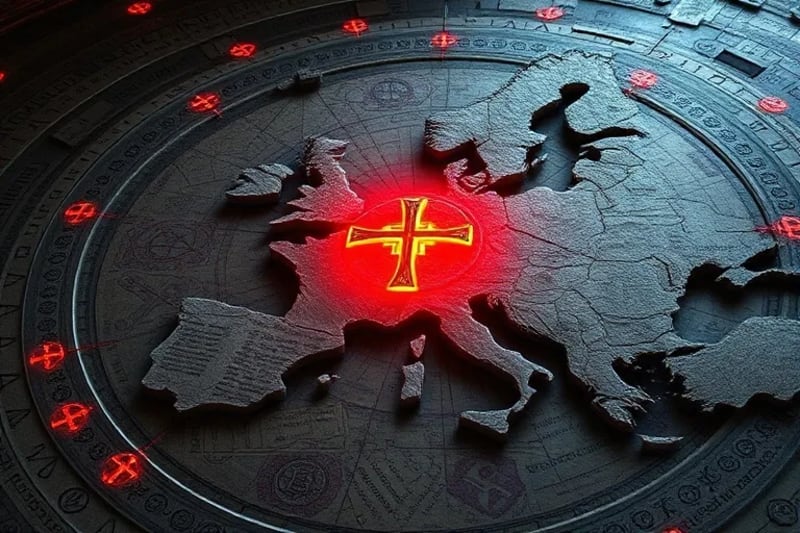 Abstract concepts and symbolic representations of the Templars' hidden influence, secret knowledge, and the enduring mystique surrounding their legacy.
Another popular myth suggests that the Templars escaped their persecution and went underground, forming secret societies like the Freemasons or the Rosicrucians. While some Masonic rituals bear superficial resemblances to alleged Templar practices, direct historical links are tenuous at best. The idea of a continuous, unbroken line from the Templars to modern secret societies remains largely speculative fiction. The allure of such hidden knowledge and secret organizations is a recurring theme in human history, often explored in fields like Digital Cryptozoology, where the search for rare and hidden entities continues in a new form.
Furthermore, accusations of heresy, idolatry, and blasphemy during their trials, though likely coerced, have fueled narratives of dark rituals and forbidden knowledge. These sensational claims, despite their dubious origins, have contributed to the Templars' enduring mystique, portraying them as guardians of ancient secrets rather than simply a military-monastic order. This fascination with hidden truths and profound influence often parallels discussions around Intellectual Property of AI-Generated Content, where the origins and ownership of new forms of knowledge become critical.
The Downfall: Accusations and Dissolution
The downfall of the Knights Templar was swift and brutal, largely orchestrated by King Philip IV of France. Deeply in debt to the Templars and coveting their vast wealth, Philip launched a coordinated attack on the order on Friday, October 13, 1307. Thousands of Templars across France were arrested, accused of heresy, idolatry (worshipping a head known as Baphomet), spitting on the cross, and homosexual practices.
Under torture, many Templars confessed to these charges, providing Philip with the justification he needed. Pope Clement V, initially hesitant, eventually succumbed to Philip's pressure and initiated papal inquiries across Europe. Despite many Templars retracting their confessions and maintaining their innocence, the political pressure was immense. In 1312, Pope Clement V officially dissolved the order through the papal bull "Vox in excelso," transferring their assets to the Knights Hospitaller, though much of their wealth in France ended up in royal coffers.
The final act of this tragedy occurred in 1314, when Jacques de Molay, the last Grand Master, and Geoffroi de Charney, the Preceptor of Normandy, were burned at the stake. Legend has it that de Molay, as he burned, cursed Philip IV and Clement V, prophesying their deaths within a year, a prophecy that, by coincidence, came true. This dramatic end only served to deepen the mystery surrounding the order.
Modern Interpretations and Cultural Impact
Despite their official dissolution, the Knights Templar have never truly faded from public consciousness. Their story continues to inspire books, films, video games, and documentaries, often portraying them as guardians of ancient secrets, master strategists, or tragic heroes. The enduring fascination stems from the blend of historical fact with the tantalizing possibility of hidden truths and untold stories.
Academically, the Templars remain a subject of intense study, with historians continually re-evaluating their role in the Crusades, their economic innovations, and the political machinations that led to their downfall. While many popular myths have been debunked by rigorous historical research, the Templars serve as a powerful reminder of the complex interplay between religion, power, and finance in medieval society. Their legacy is a testament to how an organization, born of piety and military necessity, can rise to unparalleled power and then fall victim to its own success and the ambitions of secular rulers.
Source: Hybrid content assisted by AI and human editorial supervision.


Comentarios