
Sustainable Nuclear Fusion: The AI-Driven Era
The quest for sustainable energy represents one of humanity's most profound scientific and engineering challenges. Among the myriad of potential solutions, nuclear fusion stands out as a beacon of hope, promising an almost limitless supply of clean, safe, and carbon-free power. Unlike nuclear fission, which powers current nuclear plants and relies on splitting heavy atoms, nuclear fusion mimics the process that fuels the sun and stars: combining light atomic nuclei to release immense amounts of energy. This article delves into the intricate science behind sustainable nuclear fusion, explores the cutting-edge technologies driving its development, and highlights the pivotal role of Artificial Intelligence (AI) in overcoming its most formidable obstacles.
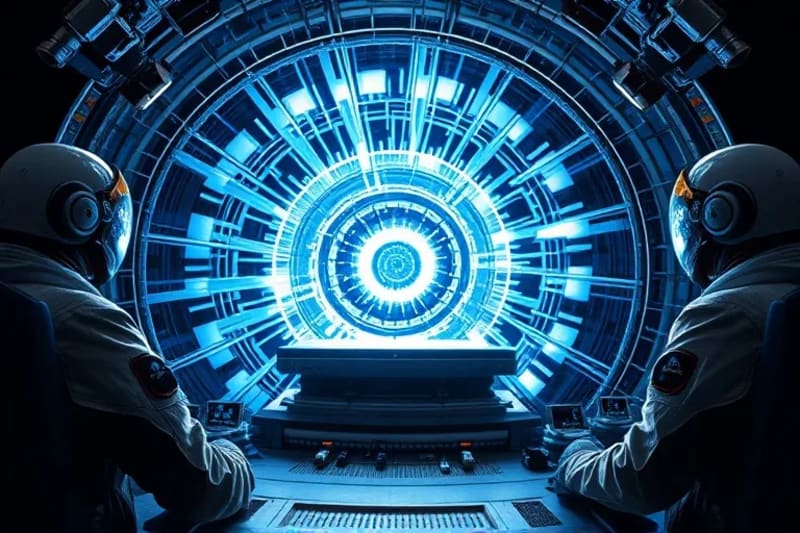
A conceptual rendering of a cutting-edge fusion reactor, depicting the controlled plasma that promises a new era of energy.
This image is an AI-generated conceptualization, illustrating the complex interplay of physics and engineering required for sustainable fusion.The concept of nuclear fusion has captivated scientists for decades, primarily due to its inherent advantages. Fusion fuels, such as deuterium, are abundant in seawater, and tritium can be bred from lithium, making the fuel supply virtually inexhaustible. Furthermore, fusion reactions produce no long-lived radioactive waste, and there is no risk of a runaway chain reaction, ensuring intrinsic safety. Achieving sustainable fusion, however, requires overcoming extreme conditions, including temperatures exceeding 100 million degrees Celsius, far hotter than the sun's core, to force atomic nuclei to fuse.
Fundamental Principles of Nuclear Fusion
At its core, nuclear fusion involves combining two light atomic nuclei to form a heavier nucleus, releasing a tremendous amount of energy in the process. The most promising reaction for terrestrial fusion power involves deuterium (D) and tritium (T), isotopes of hydrogen.
- Deuterium (D): A stable isotope of hydrogen with one proton and one neutron. It is readily available in ordinary water, making it an almost inexhaustible fuel source.
- Tritium (T): A radioactive isotope of hydrogen with one proton and two neutrons. While naturally scarce, it can be produced from lithium, another abundant element, through neutron bombardment within the fusion reactor itself.
When deuterium and tritium nuclei fuse, they form a helium nucleus and a high-energy neutron. This neutron carries away most of the released energy, which can then be captured to generate electricity. The primary challenge lies in creating and sustaining the conditions necessary for these nuclei to overcome their natural electrostatic repulsion and fuse. This requires incredibly high temperatures and pressures to form a plasma, a superheated, ionized gas where electrons are stripped from atoms.
Key Confinement Technologies
Two main approaches dominate the research landscape for confining and heating plasma to fusion conditions: magnetic confinement and inertial confinement.
Magnetic Confinement Fusion (MCF)
MCF uses powerful magnetic fields to trap and control the superheated plasma. Since no material can withstand direct contact with plasma at millions of degrees, magnetic fields act as an invisible "bottle."
- Tokamaks: The most widely researched MCF device, tokamaks are toroidal (doughnut-shaped) chambers. Magnetic coils around the torus create a helical magnetic field that confines the plasma. Projects like ITER (International Thermonuclear Experimental Reactor) are prime examples of large-scale tokamak experiments aiming for net energy gain.
- Stellarators: These devices also use magnetic fields but achieve plasma confinement through complex, twisted magnetic coils, eliminating the need for a large electrical current within the plasma itself. This offers potential advantages in terms of continuous operation and plasma stability, though their construction is geometrically more challenging.
Inertial Confinement Fusion (ICF)
ICF involves compressing and heating a small pellet of fusion fuel using high-power lasers or particle beams. The fuel is compressed to extreme densities and heated so rapidly that fusion occurs before the material has a chance to expand significantly (hence "inertial").
- Laser Inertial Fusion: Facilities like the National Ignition Facility (NIF) in the US use powerful lasers to ablate the outer layer of a fuel capsule, creating an implosion that compresses and heats the deuterium-tritium fuel to fusion conditions. Recent breakthroughs at NIF have achieved ignition, where the fusion reaction generates more energy than the laser energy delivered to the target.
Overcoming the Challenges: The Role of AI
Despite significant progress, several formidable challenges remain before fusion power can become a commercial reality. These include maintaining plasma stability, developing materials capable of withstanding extreme conditions, and achieving a sustained net energy gain (Q factor > 1).

An artistic depiction of AI algorithms analyzing and guiding complex energy dynamics within a fusion environment.
This conceptual artwork, generated by AI, visualizes the intricate data processing involved in advanced fusion research.Artificial Intelligence is emerging as a critical tool in addressing these complex issues, accelerating research and development in ways previously unimaginable. AI's ability to process vast datasets, identify subtle patterns, and optimize complex systems makes it ideally suited for fusion science.
Plasma Control and Stability
Plasma behavior is notoriously complex and prone to instabilities that can disrupt fusion reactions. AI, particularly machine learning algorithms, is being used to:
- Predict and Prevent Disruptions: AI models can analyze real-time diagnostic data from plasma to predict potential instabilities seconds before they occur, allowing for corrective actions to be taken. This is crucial for maintaining stable, long-duration plasma confinement.
- Optimize Plasma Shape and Current: Deep reinforcement learning algorithms are being trained to control magnetic coils, precisely shaping the plasma and optimizing its current profile to achieve maximum performance and stability. Google's DeepMind, in collaboration with EPFL, has demonstrated AI's ability to control plasma in a tokamak.
Materials Science and Engineering
Fusion reactors require materials that can withstand extreme neutron bombardment, high heat flux, and plasma erosion. Developing such materials is a significant hurdle. AI is assisting by:
- Accelerating Material Discovery: Machine learning can predict the properties of new alloys and composites, guiding experimentalists toward promising candidates and significantly reducing the time and cost of material development.
- Modeling Radiation Damage: AI models can simulate the effects of neutron radiation on materials at an atomic level, helping engineers design more resilient components for reactor walls and internal structures.
Experimental Design and Data Analysis
Fusion experiments generate enormous amounts of data. AI is indispensable for extracting meaningful insights:
- Automated Data Analysis: AI can quickly process and interpret complex diagnostic data, identifying correlations and anomalies that human researchers might miss. This accelerates the scientific discovery process.
- Optimizing Experimental Parameters: Machine learning algorithms can suggest optimal experimental settings to achieve specific plasma conditions or improve energy confinement, leading to more efficient use of experimental facilities.
The integration of AI in fusion research is not merely an incremental improvement; it represents a paradigm shift, enabling faster iteration cycles, more precise control, and the exploration of previously intractable problems. This synergy between advanced physics and Artificial Intelligence is crucial for accelerating the path to commercial fusion power.
Environmental and Economic Impact
The successful development of sustainable nuclear fusion would have a transformative impact on global energy, environmental, and economic landscapes.
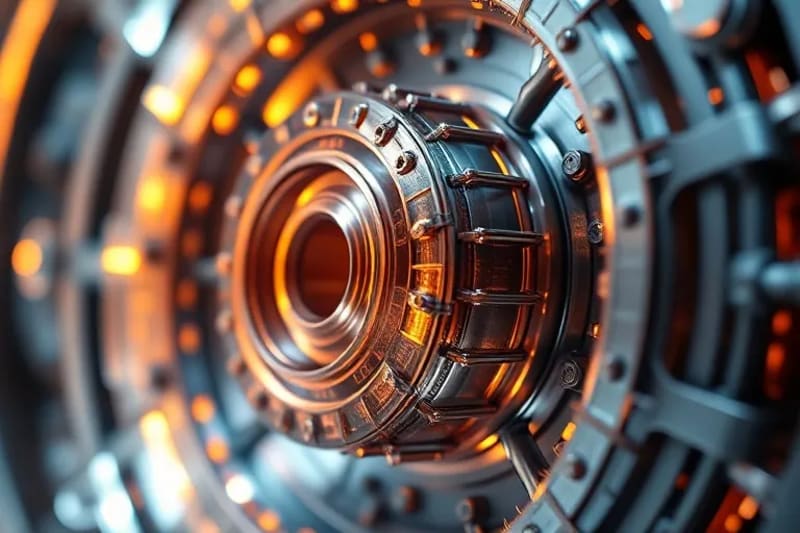
A detailed 3D render illustrating the complex internal structure of a tokamak, showcasing its magnetic confinement system.
This 3D rendering provides an intricate view of a fusion reactor's core, highlighting the engineering marvels involved, courtesy of a conceptual AI design.Clean Energy and Climate Change Mitigation
Fusion power produces no greenhouse gas emissions or air pollutants. By replacing fossil fuels, it could drastically reduce humanity's carbon footprint, offering a powerful tool in the fight against climate change. Its non-intermittent nature, unlike renewables like solar and wind, provides a stable, baseload power source.
Energy Security and Independence
With abundant and widely distributed fuel sources (deuterium from water, lithium for tritium breeding), fusion power could liberate nations from reliance on geopolitically sensitive fossil fuel imports, fostering greater energy independence and stability. This could also alleviate concerns related to critical infrastructure cybersecurity in the energy sector.
Economic Growth and Innovation
The development and deployment of fusion technology would spur significant economic growth, creating new industries, jobs, and technological advancements. The intellectual property and engineering expertise gained would have spillover effects across various sectors, similar to the impact of the space race. Furthermore, the need for advanced computing and data analytics in fusion research could drive innovation in areas like SaaS business models for SMEs looking to leverage scientific computing.
The Future of Fusion: A Glimpse Ahead
While commercial fusion power plants are still decades away, the pace of innovation is accelerating. Breakthroughs in high-temperature superconductors, advanced manufacturing techniques, and, crucially, AI-driven optimization are bringing the dream closer to reality. Private companies are joining government-funded initiatives, exploring diverse fusion concepts and fostering a competitive environment that could expedite development.
The journey to sustainable nuclear fusion is a testament to human ingenuity and perseverance. As our understanding of plasma physics deepens and AI tools become more sophisticated, the promise of a world powered by clean, abundant fusion energy moves from the realm of science fiction to a tangible future. This energy revolution would not only address our pressing climate and energy needs but also unlock new frontiers in scientific discovery and technological advancement, fundamentally reshaping our civilization for generations to come.
Explore More on Advanced Technologies and Energy
Delve deeper into the complex world of cutting-edge science and its societal implications with our curated selection of articles:
- Quantum Cybersecurity Defenses Critical Infrastructure Post-Quantum
- Legal Challenges Artificial Intelligence Content Creation: Complete Guide
- Metaverse Cybercrime: Threats, Defense Strategies
- Digital Addictions: Prevention in Educational and Family Environments
- Index Funds vs. ETFs: Long-Term Investor Strategy
- Biometric Divination Biofeedback Intuition Self-Discovery Digital
- Emerald Tablet Quantum Manifestation Hermetic Principles Reality
Source: Hybrid content assisted by AI and human editorial supervision.


Comentarios