
Blockchain Financial Inclusion Emerging Markets
Blockchain and Financial Inclusion in Emerging Markets: A Transformative Approach
Financial inclusion, defined as the access to and usage of affordable, useful, and responsible financial products and services, remains a critical challenge in many emerging economies. Billions of people worldwide lack access to basic financial tools like bank accounts, credit, and insurance, hindering their ability to save, invest, and build a secure future. This widespread exclusion perpetuates poverty and limits economic growth, creating a significant barrier to sustainable development.
However, the advent of blockchain technology presents a revolutionary opportunity to bridge this gap. By offering decentralized, transparent, and immutable ledger systems, blockchain can overcome many traditional obstacles to financial access, particularly in regions where conventional banking infrastructure is scarce or unreliable. This article explores how blockchain is poised to redefine financial inclusion, examining its applications, benefits, and the challenges that lie ahead in its widespread adoption across emerging markets.

Precursors intellectuales, diagramas fundamentales y representaciones conceptuales que forjaron la visión de la inclusión financiera a través de la tecnología blockchain.
Fuente visual sujeta a disponibilidad del ecosistema: Wikimedia Commons bajo licencia CC BY-SA 4.0 o renderizado conceptual IA.
Table of Contents
- Challenges of Financial Exclusion in Emerging Markets
- Blockchain as a Solution for Financial Inclusion
- Key Blockchain Applications in Financial Inclusion
- Benefits for Individuals and Economies
- Challenges and Risks of Blockchain Adoption
- Future Outlook and Recommendations
Challenges of Financial Exclusion in Emerging Markets
The path to financial inclusion in emerging markets is fraught with numerous obstacles, often deeply rooted in socio-economic and infrastructural deficiencies. Understanding these challenges is crucial to appreciating the transformative potential of blockchain technology.
- Lack of Traditional Infrastructure: Many remote or rural areas in emerging economies lack access to physical bank branches, ATMs, and reliable internet connectivity, making it difficult for traditional financial institutions to operate effectively.
- High Costs of Services: Conventional banking services often come with high transaction fees, account maintenance charges, and minimum balance requirements, which are prohibitive for low-income populations.
- Absence of Formal Identification: A significant portion of the unbanked population lacks official identification documents, a prerequisite for opening bank accounts and accessing formal financial services.
- Mistrust in Centralized Institutions: Historical instances of financial crises, corruption, or government instability can erode public trust in centralized financial systems, leading people to prefer informal cash-based economies.
- Limited Access to Credit: Without formal credit histories or collateral, individuals and small businesses in these markets struggle to secure loans, stifling entrepreneurial activity and personal growth.
- Inefficient Remittance Systems: Sending money across borders often involves high fees and slow processing times through traditional channels, significantly impacting migrant workers and their families.
These barriers collectively create a vicious cycle, trapping individuals and communities in financial marginalization. The inability to save securely, borrow responsibly, or transact efficiently limits economic participation and exacerbates existing inequalities. For a deeper understanding of digital economy impacts, consider exploring the complexities of Digital Penal Law and Cybercrimes, which often intersect with new financial technologies.
Blockchain as a Solution for Financial Inclusion
Blockchain technology, with its inherent characteristics of decentralization, transparency, and security, offers compelling solutions to the aforementioned challenges. It provides a foundational layer for building new financial systems that are more accessible, efficient, and trustworthy.
- Decentralization and Trustlessness: Blockchain operates without a central authority, meaning transactions are verified and recorded by a network of computers. This eliminates the need for intermediaries, reducing costs and fostering trust in environments where centralized institutions are viewed with skepticism.
- Lower Transaction Costs: By removing intermediaries, blockchain significantly lowers the fees associated with financial transactions, making services more affordable for low-income populations. This is particularly impactful for cross-border remittances.
- Immutable Records and Transparency: Every transaction on a blockchain is recorded permanently and transparently, creating an unalterable audit trail. This enhances accountability and reduces fraud, building confidence in financial systems.
- Digital Identity Solutions: Blockchain can facilitate the creation of self-sovereign digital identities, allowing individuals to control their personal data and prove their identity without relying on traditional documents. This is a game-changer for the unbanked who lack formal IDs.
- Enhanced Security: The cryptographic nature of blockchain ensures high levels of security for transactions and data, protecting users from theft and unauthorized access.
The ability of blockchain to provide these core functionalities without extensive physical infrastructure makes it uniquely suited for emerging markets. It enables a leapfrogging effect, allowing these regions to bypass traditional banking development stages and adopt cutting-edge financial technologies directly. Understanding the broader implications of such technological shifts is crucial, as highlighted in discussions around 5G Networks Impact on Urban and Industrial IoT.
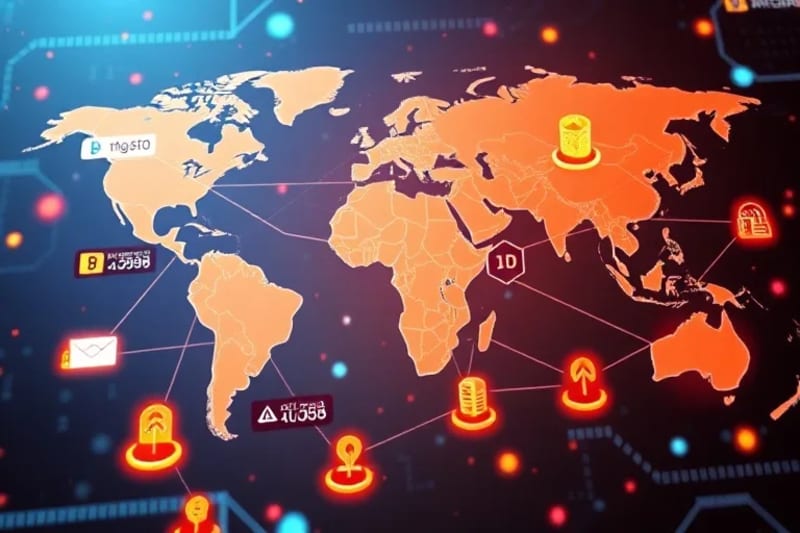
The intricate web of blockchain technology facilitating financial flows and access for underserved populations.
Key Blockchain Applications in Financial Inclusion
Blockchain's versatility allows for a wide range of applications that directly address the needs of the financially excluded. These applications are not merely theoretical but are being piloted and implemented in various emerging markets globally.
- Remittances: One of the most impactful applications. Blockchain-based remittance services reduce transfer fees and speed up transaction times from days to minutes, allowing migrant workers to send more money home to their families. This directly boosts household incomes and local economies.
- Microfinance and Peer-to-Peer Lending: Decentralized finance (DeFi) platforms built on blockchain can connect borrowers in emerging markets directly with lenders worldwide, bypassing traditional banks. This opens up access to microloans and credit for individuals and small businesses that would otherwise be excluded.
- Digital Currencies (CBDCs and Stablecoins): Central Bank Digital Currencies (CBDCs) and stablecoins offer a digital alternative to cash, providing a stable, secure, and easily transferable form of money. These can facilitate transactions for the unbanked, especially in regions with volatile local currencies.
- Supply Chain Finance: Blockchain can bring transparency and efficiency to supply chains, enabling small farmers and producers in emerging markets to access financing based on verified transactions and contracts. This helps them secure better terms and expand their operations.
- Property Rights and Land Registries: In many emerging economies, land ownership records are often paper-based, insecure, and prone to corruption. Blockchain can create immutable, transparent land registries, securing property rights and enabling individuals to use their land as collateral for loans.
- Insurance and Parametric Contracts: Blockchain can power parametric insurance products, where payouts are automatically triggered by predefined events (e.g., drought, flood) without lengthy claims processes. This offers critical protection to vulnerable populations, particularly farmers.
These applications demonstrate blockchain's potential to create a more equitable and efficient financial ecosystem. The ability to track and verify transactions securely also has implications for understanding consumer behavior, a topic explored in Online Consumer Psychology and Neuromarketing.
Benefits for Individuals and Economies
The widespread adoption of blockchain for financial inclusion can yield profound benefits, not just for individuals but for the broader economic landscape of emerging markets.
- Economic Empowerment: Access to affordable financial services empowers individuals to save, invest in education or small businesses, and manage their finances more effectively, breaking cycles of poverty.
- Increased Economic Growth: By bringing more people into the formal financial system, blockchain can unlock new economic potential, stimulate local economies, and foster entrepreneurial activity.
- Reduced Corruption and Fraud: The transparency and immutability of blockchain transactions make it harder for corrupt practices to thrive, leading to more trustworthy financial systems and better governance.
- Greater Financial Stability: Decentralized systems can be more resilient to local economic shocks, providing a stable alternative in regions prone to financial instability.
- Enhanced Data Security and Privacy: While transparent, blockchain also offers robust cryptographic security for individual data, giving users more control over their financial information.
- Improved Efficiency and Speed: Faster transaction processing and reduced bureaucracy mean quicker access to funds and services, which is vital in fast-paced economic environments.
These benefits underscore blockchain's potential as a powerful tool for achieving several Sustainable Development Goals (SDGs), particularly those related to poverty reduction, economic growth, and reduced inequalities. The strategic use of technology to improve lives is also seen in efforts like Family Digital Minimalism, aiming for better quality of life.

The underlying technological architecture of blockchain, symbolizing trust, immutability, and decentralized power.
Challenges and Risks of Blockchain Adoption
Despite its immense promise, the path to widespread blockchain adoption for financial inclusion is not without its hurdles. Addressing these challenges is crucial for successful implementation and long-term sustainability.
- Regulatory Uncertainty: Many emerging markets lack clear regulatory frameworks for blockchain and cryptocurrencies, creating legal ambiguities and hindering innovation. Governments must develop balanced regulations that protect consumers without stifling technological progress.
- Technological Literacy and Education: A significant portion of the unbanked population may lack the digital literacy or access to devices needed to interact with blockchain-based financial services. Educational initiatives are essential to bridge this knowledge gap.
- Scalability Issues: Public blockchains can sometimes face scalability challenges, meaning they struggle to process a high volume of transactions quickly and efficiently, which is critical for mass adoption.
- Energy Consumption: Certain blockchain consensus mechanisms, like Proof-of-Work, are energy-intensive, raising environmental concerns and potentially increasing operational costs in regions with unstable power grids.
- Interoperability: Different blockchain networks often operate in silos, making it difficult for them to communicate and exchange value. Achieving interoperability is vital for creating a cohesive global financial ecosystem.
- Security Risks (Smart Contract Vulnerabilities): While blockchain itself is secure, smart contracts built on it can have vulnerabilities if not coded correctly, leading to potential exploits and financial losses.
Overcoming these challenges requires a concerted effort from governments, technology developers, financial institutions, and international organizations. Collaborative approaches are necessary to build robust, user-friendly, and secure blockchain solutions tailored to the unique contexts of emerging markets.
Future Outlook and Recommendations
The future of blockchain in financial inclusion for emerging markets looks promising, albeit complex. As technology evolves and regulatory landscapes mature, its potential to uplift billions will become increasingly evident. The ongoing research into advanced biohacking strategies, such as Epigenetic Biohacking, also highlights the broader trend of leveraging cutting-edge science for human betterment, mirroring blockchain's role in finance.
For blockchain to truly fulfill its promise, several key areas require focus:
- Policy and Regulation: Governments must create clear, supportive, and adaptive regulatory frameworks that foster innovation while ensuring consumer protection and financial stability.
- Infrastructure Development: Investment in digital infrastructure, including affordable internet access and mobile devices, is paramount to enable widespread adoption of blockchain-based services.
- Education and Awareness: Comprehensive educational programs are needed to improve digital literacy and build trust in new financial technologies among underserved populations.
- Collaboration: Partnerships between blockchain innovators, traditional financial institutions, NGOs, and governments are crucial for developing scalable and impactful solutions.
- User-Centric Design: Solutions must be designed with the end-users in mind, ensuring simplicity, accessibility, and relevance to their specific needs and cultural contexts.
In conclusion, blockchain technology offers a powerful paradigm shift for financial inclusion in emerging markets. By addressing fundamental barriers such as high costs, lack of trust, and limited infrastructure, it can empower millions, drive economic growth, and contribute to a more equitable global financial system. While challenges remain, the collaborative efforts of stakeholders can pave the way for a future where financial services are truly accessible to all.
Explore More Relevant Content
- Biohacking Longevity Extremes: Genomic & Cellular Strategies
- Generative AI & Sleep Personalization: Biohacking for Brain Longevity
- Neuromorphic Computing: Ethical Regulation & Legal Dilemmas
- Point of Fortune in Astrology: Source of Natal Prosperity
- Healing Prayers, Ecological Footprint & Planetary Custody
- Sound Healing: Vibrations for Wellness & Inner Peace
Source: Hybrid content assisted by AI and human editorial supervision.


Comentarios