
Templar Legacy: Myths, Wealth, Historical Influence
The Enduring Legacy of the Knights Templar: Unraveling Myths, Wealth, and Historical Influence
The Knights Templar, officially known as the Poor Fellow-Soldiers of Christ and of the Temple of Solomon, stand as one of history's most enigmatic and enduring orders. Founded in the early 12th century, their initial purpose was to protect European pilgrims traveling to the Holy Land following the First Crusade. However, their influence rapidly expanded far beyond military protection, intertwining with the political, economic, and spiritual fabric of medieval Europe.
This article delves into the multifaceted legacy of the Templars, exploring the foundational myths that surround them, the immense wealth they accumulated, and the profound historical impact they left on the continent. From their rise as a formidable military force to their controversial dissolution, the Templar story is a captivating blend of fact and legend that continues to fascinate scholars and the public alike.

Precursors intellectuales, diagramas fundamentales y representaciones conceptuales que forjaron la visión de los Caballeros Templarios sobre la protección y el desarrollo de la Europa medieval.
Fuente visual sujeta a disponibilidad del ecosistema: Wikimedia Commons bajo licencia CC BY-SA 4.0 o renderizado conceptual IA.
Table of Contents
- Origin and Rise of the Knights Templar
- The Immense Wealth and Financial Power
- Enduring Myths and Legends
- Profound Historical Influence in Medieval Europe
- The Downfall and Dissolution
- The Modern Legacy and Interpretations
Origin and Rise of the Knights Templar
The Order of the Temple was founded in 1119 by Hugh de Payens, a French knight, and eight companions. Their initial mission, sanctioned by King Baldwin II of Jerusalem and the Patriarch Warmund, was to safeguard pilgrims on the dangerous roads leading to the Holy City. This small group, living in poverty and relying on alms, quickly gained recognition for their piety and martial prowess.
A pivotal moment in their establishment was the Council of Troyes in 1129, where they received formal recognition from the Church. Saint Bernard of Clairvaux, a highly influential abbot, championed their cause, drafting their Rule, which blended monastic vows with military duties. This unique combination of spiritual devotion and martial skill set them apart from other religious orders and secular knights.
The papal bull *Omne Datum Optimum*, issued by Pope Innocent II in 1139, granted the Templars extraordinary privileges. These included exemption from local laws and taxes, direct allegiance to the Pope, and the right to build their own oratories. These privileges significantly contributed to their rapid expansion and growing autonomy, laying the groundwork for their immense power.
The Immense Wealth and Financial Power
Beyond their military role, the Knights Templar evolved into a sophisticated financial institution, effectively becoming the world's first multinational bank. Their extensive network of commanderies and castles across Europe and the Middle East facilitated the secure transfer of funds. Pilgrims could deposit money in one Templar house and withdraw it from another, a revolutionary concept for the time, using letters of credit.
Their wealth stemmed from various sources, including donations from grateful monarchs and nobles, war spoils, and extensive landholdings. They managed vast estates, engaged in agriculture, manufacturing, and international trade. This economic prowess allowed them to finance crusades, lend money to kings, and even manage royal treasuries, making them indispensable to European powers.
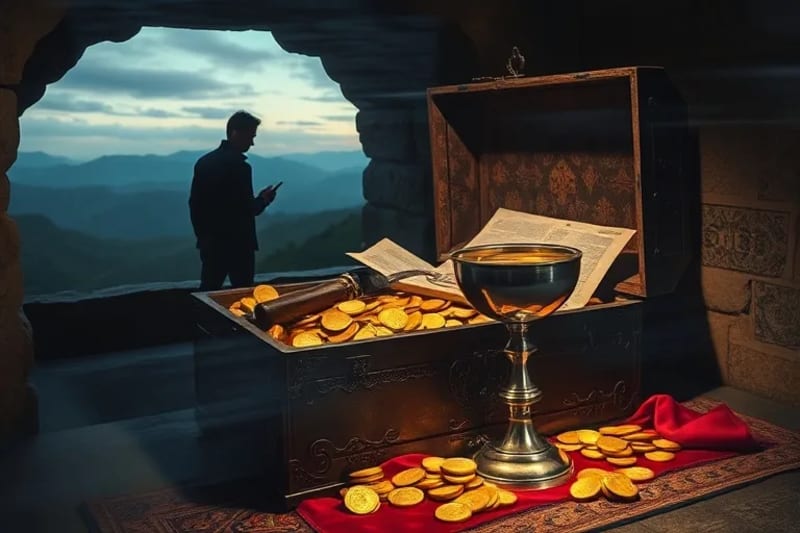
A conceptual still-life evoking the legendary wealth and financial innovations attributed to the medieval Templar Order.
The Templars' financial innovations included a rudimentary form of checks and balances, safeguarding assets, and even acting as tax collectors for various kingdoms. Their meticulous record-keeping and trustworthy reputation made them the go-to financial agents of their era. This immense economic power, however, would eventually contribute to their downfall, as it attracted the envy and greed of powerful rulers like King Philip IV of France.
The Templar's influence extended to the very infrastructure of medieval commerce. Their well-maintained roads and secure strongholds provided safe passage for merchants, fostering trade and economic growth across regions. This financial acumen is a testament to their administrative capabilities, showcasing a level of organization rarely seen in the medieval period.
Enduring Myths and Legends
Centuries after their dissolution, the Knights Templar remain shrouded in a veil of mystery, giving rise to numerous myths and legends. Perhaps the most famous is their supposed discovery and safeguarding of the Holy Grail, the cup used by Christ at the Last Supper. This myth gained traction through medieval romances and continues to be a popular theme in modern fiction.
Another persistent legend involves the Ark of the Covenant, the biblical chest said to contain the tablets of the Ten Commandments. Some theories suggest the Templars unearthed it during their time in Jerusalem, specifically beneath the Temple Mount, where their headquarters were located. These tales often link the Templars to ancient secrets and esoteric knowledge, implying they possessed wisdom far beyond their military and financial roles.
The notion of the Templars as guardians of a secret lineage or a hidden treasure persists today, fueled by various conspiracy theories. From claims of their involvement in the construction of Gothic cathedrals to their alleged survival as a clandestine organization, these narratives underscore the enduring fascination with the order. While many of these stories lack historical evidence, they contribute significantly to the Templars' mystique.
Profound Historical Influence in Medieval Europe
The Templars' influence extended across various facets of medieval European society. Militarily, they were considered among the most formidable fighting forces of their time, renowned for their discipline, bravery, and distinctive white mantles with a red cross. Their participation in the Crusades was crucial, often forming the vanguard in battles and the rearguard in retreats, earning them both admiration and fear.
Architecturally, their numerous castles, commanderies, and churches dotted the European landscape, showcasing advanced engineering and defensive strategies. These structures served not only as military strongholds but also as administrative centers for their vast estates and financial operations. The architectural legacy of the Templars can still be observed in various regions, reflecting their widespread presence.

An abstract visualization of the intricate economic and cultural networks established by the Templar Order across medieval Europe.
Culturally, their image as pious warrior-monks left an indelible mark on chivalric ideals. They embodied a new form of knighthood, combining spiritual devotion with military service, which resonated deeply within the Christian world. This fusion of roles contributed to the evolving concept of the "Christian knight" and influenced subsequent military orders.
Their involvement in politics was also significant. As trusted advisors and financiers, they often played a role in diplomatic negotiations and state affairs. Kings and popes alike sought their counsel and relied on their resources, making them powerful players on the European stage. The Templars' unique position, answerable only to the Pope, gave them a degree of independence that was both a strength and, ultimately, a vulnerability.
The Downfall and Dissolution
The Templars' immense power and wealth eventually became their undoing. By the early 14th century, the Crusades were largely over, and the Holy Land had been lost. The Order's original purpose diminished, making them a target for those who coveted their assets. King Philip IV of France, heavily indebted to the Templars, saw an opportunity to seize their wealth and consolidate his power.
On Friday, October 13, 1307, Philip ordered the arrest of all Templars in France, accusing them of heresy, idolatry, sodomy, and other blasphemous acts. Under torture, many confessed to these fabricated charges. Despite initial resistance from Pope Clement V, Philip's relentless pressure, combined with the confessions, led to the eventual dissolution of the Order by papal bull *Vox in excelso* in 1312.
“...Considerando que no podemos, sin grave escándalo de la Iglesia, sin ofensa a la divina Majestad y sin peligro para nuestras almas, dejar pasar sin castigo un crimen tan grande. Por lo tanto, por la presente, con la aprobación del Sagrado Concilio, abolimos la Orden del Templo, sus reglas, hábitos y nombre, por medio de un decreto irrevocable y perpetuo, y la sometemos a perpetua prohibición, prohibiendo a cualquiera que en adelante entre en dicha Orden o use su hábito o se comporte como Templario.”
— Extracto de la Bula Papal *Vox in excelso*, 1312
The last Grand Master, Jacques de Molay, and other senior Templars were burned at the stake in 1314, maintaining their innocence to the end. The Templar assets were largely transferred to the Knights Hospitaller, though Philip IV managed to seize a significant portion for the French crown. The dramatic end of the Order cemented their place in history as both victims and symbols of immense power.
The Modern Legacy and Interpretations
The legacy of the Knights Templar continues to resonate in contemporary culture. Their story has inspired countless books, films, and video games, often portraying them as guardians of ancient secrets or as a precursor to modern secret societies. The allure of their supposed hidden treasures and mystical knowledge remains a powerful narrative force.
Academically, the study of the Templars provides valuable insights into medieval military orders, the development of early banking systems, and the complex relationship between secular and ecclesiastical power. Recent historical research, including the Chinon Parchment, has shed new light on the papal investigation, suggesting that Pope Clement V may have absolved the Templars of heresy in secret, though this did not prevent their official suppression.
Furthermore, various modern organizations claim a lineage or spiritual connection to the original Knights Templar, though these claims are generally not recognized by historians. These groups often focus on charitable work, historical preservation, or the promotion of chivalric ideals, keeping the Templar name alive in a new context. To understand their influence on modern thought, one might also consider the broader impact of historical figures like Michael Jackson's cultural effect, demonstrating how historical and cultural icons continue to shape contemporary narratives.
The Templars' story serves as a cautionary tale about the dangers of unchecked power and the vulnerability of even the most formidable institutions to political machinations. Their rise and fall offer a compelling narrative that continues to inform our understanding of medieval history and the enduring power of myth. Their financial innovations, for example, paved the way for modern banking practices and are a fascinating parallel to contemporary discussions on decentralized finance and sustainability.
In conclusion, the Knights Templar were far more than just warrior-monks; they were pioneers in finance, influential political actors, and the subject of an enduring tapestry of myths. Their legacy, though complex and often debated, undeniably shaped the course of medieval European history and continues to captivate imaginations worldwide. Their story is a testament to the profound impact a single organization can have across centuries, echoing even in discussions about ethical artificial intelligence and robotics, where power and responsibility intersect.
Explore More Historical Insights
Rhinoceros in Culture and Science: Abada and Philip II's Conservation
Past Life Regression: Uncovering Karmic Lessons, Gifts
Source: Hybrid content assisted by AI and human editorial supervision.


Comentarios