
Rhinoceroses Cultural Scientific Journey Conservation
The rhinoceros, a creature of immense power and ancient lineage, has captivated human imagination for millennia. Its presence spans across diverse cultures, influencing art, mythology, and scientific inquiry. From its earliest depictions in prehistoric cave paintings to its role as a symbol of resilience in modern conservation, the rhino's journey is a testament to its enduring impact on both human society and the natural world.
This article delves into the fascinating trajectory of rhinoceroses, exploring their cultural significance through history and their evolving scientific understanding. We will trace their path from being exotic curiosities in royal courts, such as the famous Abada of Philip II, to becoming a focal point of critical global conservation efforts today. Understanding this rich history is crucial for appreciating the complex challenges and innovative solutions currently being deployed to secure the future of these magnificent animals.
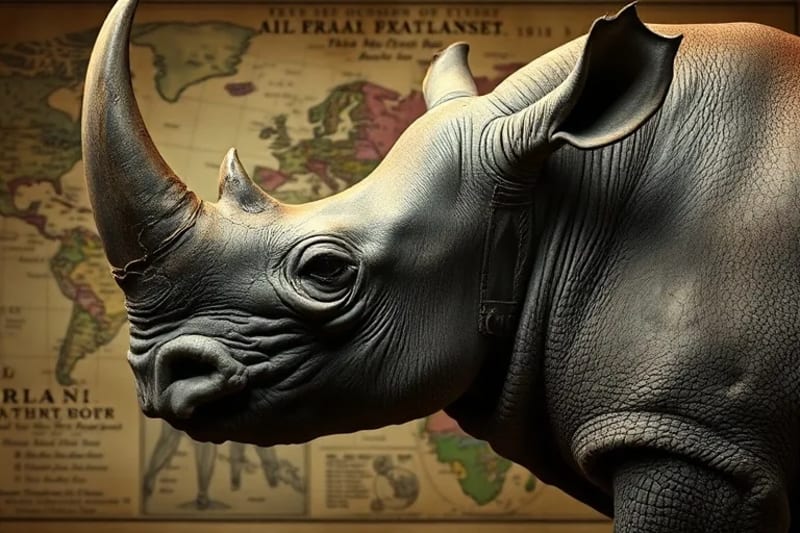
Fuente visual sujeta a disponibilidad del ecosistema: Wikimedia Commons bajo licencia CC BY-SA 4.0 o renderizado conceptual IA.
Table of Contents
- The Rhinoceros in Ancient Cultures and Early Encounters
- Abada: Philip II's Royal Rhinoceros and European Fascination
- Rhinoceros in Art, Literature, and Symbolism
- Scientific Understanding and Taxonomy of Rhinoceros Species
- Modern Conservation Challenges and Strategies
- The Future of Rhinoceros Conservation: Hope and Innovation
- Conclusion: A Legacy Worth Protecting
The Rhinoceros in Ancient Cultures and Early Encounters
The rhinoceros has been a creature of awe and mystery since antiquity. Early human civilizations, particularly in Asia and Africa, encountered these magnificent beasts and incorporated them into their belief systems and artistic expressions. Evidence of rhinoceroses appears in ancient cave art, demonstrating their long-standing presence in human consciousness.
In various Asian cultures, the rhino's horn was revered for its perceived medicinal properties and symbolic power. This belief, though scientifically unfounded, led to its high value and unfortunate exploitation. Ancient texts and folklore often depicted the rhino as a powerful, sometimes mythical, creature, embodying strength and resilience.
The first recorded rhinoceros in Europe arrived in Lisbon in 1515, a gift from the Sultan of Gujarat to King Manuel I of Portugal. This event sparked immense curiosity and became the subject of famous artworks. This initial encounter laid the groundwork for future European fascination with these exotic animals, influencing both scientific study and cultural representation.
Abada: Philip II's Royal Rhinoceros and European Fascination
One of the most famous rhinoceroses in European history was "Abada," a female Indian rhinoceros gifted to Philip II of Spain in the late 16th century. Abada's journey from India to Spain was a monumental undertaking, highlighting the logistical challenges and immense value placed on such exotic animals during the Renaissance. Her arrival in Madrid caused a sensation, drawing crowds and fueling public imagination.
Abada lived in the royal menagerie, becoming a symbol of Philip II's power and the vast reach of the Spanish Empire. Her presence in Europe contributed significantly to the continent's understanding, albeit often distorted, of the natural world beyond its borders. The fascination with Abada and other exotic animals spurred early forms of zoological study and collection, paving the way for modern natural history museums and scientific classification.
The cultural impact of these royal beasts extended beyond mere spectacle. They inspired artists, writers, and naturalists, shaping the European perception of distant lands and their fauna. This era marked a shift from purely mythical interpretations to a more observational, though still often romanticized, view of the rhinoceros.
Rhinoceros in Art, Literature, and Symbolism
The rhinoceros has left an indelible mark on art and literature across various cultures. Perhaps the most iconic artistic representation is Albrecht Dürer's 1515 woodcut, "Rhinoceros." Despite never having seen a live rhino, Dürer's detailed, though anatomically inaccurate, depiction became the standard image of the animal in Europe for centuries. This work exemplifies how cultural narratives can shape scientific understanding.
In literature, the rhinoceros often symbolizes strength, stubbornness, or an untamed wildness. Eugene Ionesco's play "Rhinoceros" uses the animal as a metaphor for conformity and totalitarianism, showcasing its versatility as a symbolic figure. These artistic and literary interpretations reflect humanity's ongoing dialogue with the natural world and its powerful inhabitants.
Beyond Western art, rhinoceroses feature prominently in Asian mythology and decorative arts, often associated with protection and good fortune. Their unique appearance and formidable nature have ensured their place as potent symbols in the collective human imagination, transcending geographical and temporal boundaries.
Scientific Understanding and Taxonomy of Rhinoceros Species
Scientifically, rhinoceroses belong to the family Rhinocerotidae, an ancient group of perissodactyls (odd-toed ungulates). There are five extant species, each with distinct characteristics and geographical distributions. These include the Black Rhinoceros and White Rhinoceros in Africa, and the Indian, Javan, and Sumatran Rhinoceroses in Asia.

Each species faces unique challenges and possesses specific adaptations to its environment. For instance, the White Rhinoceros is a grazer with a broad, flat mouth, while the Black Rhinoceros is a browser with a prehensile upper lip. Understanding these biological nuances is fundamental for effective conservation strategies, as highlighted in discussions around ecosystem health and biodiversity.
Modern scientific research employs advanced techniques, such as genetic analysis and behavioral studies, to gain deeper insights into rhino biology and population dynamics. This scientific rigor helps inform conservationists about breeding programs, habitat requirements, and disease prevention. The study of their evolutionary history also provides context for their current ecological roles.
Modern Conservation Challenges and Strategies
Despite their iconic status, all five rhinoceros species are critically endangered or vulnerable, primarily due to poaching for their horns and habitat loss. The illegal wildlife trade, driven by demand in certain Asian markets for perceived medicinal benefits or status symbols, poses the most significant threat. This crisis underscores the need for robust security measures and international cooperation.
Conservation efforts encompass a multi-faceted approach. Anti-poaching units, often equipped with advanced technology and trained personnel, work tirelessly to protect rhinos in their natural habitats. These efforts are sometimes supported by innovative solutions like advanced biometrics for wildlife tracking and surveillance. Community engagement programs are also crucial, aiming to educate local populations and provide alternative livelihoods to reduce poaching incentives.
Habitat protection and restoration are equally vital. Conservation organizations work to establish protected areas, create wildlife corridors, and manage ecosystems to ensure rhinos have sufficient space and resources to thrive. Translocation programs, moving rhinos to safer areas, are also employed to establish new populations and reduce local extinction risks.
The Future of Rhinoceros Conservation: Hope and Innovation
The future of rhinoceros conservation relies heavily on continued innovation and global commitment. Scientific advancements, such as genetic research and assisted reproductive technologies, offer new hope for boosting population numbers, especially for critically endangered species like the Sumatran and Javan rhinos. Biohacking approaches, while controversial, also explore new avenues for species preservation, mirroring discussions in human genomic longevity.
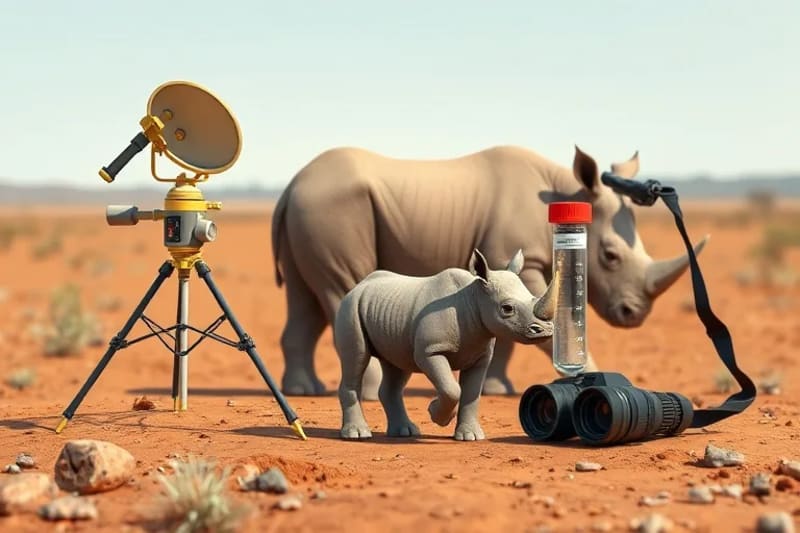
Technological solutions, including drones for surveillance, advanced data analytics for tracking poaching patterns, and even artificial intelligence for monitoring vast protected areas, are becoming increasingly sophisticated. These tools enhance the effectiveness of ground teams and provide real-time intelligence to counter threats. The integration of cybersecurity measures is also paramount to protect sensitive conservation data.
Public awareness campaigns play a crucial role in reducing demand for rhino horn and fostering a global conservation ethic. Education, advocacy, and responsible tourism can shift perceptions and mobilize support for these endangered animals. The collective efforts of governments, NGOs, local communities, and individuals are essential to ensure that rhinoceroses continue to roam the Earth for generations to come.
Conclusion: A Legacy Worth Protecting
The rhinoceros's journey from an ancient cultural icon to a modern symbol of conservation encapsulates humanity's evolving relationship with the natural world. From the exotic curiosity of Philip II's Abada to the urgent scientific efforts of today, the rhino's story is a powerful reminder of biodiversity's intrinsic value and fragility. Its cultural resonance, combined with its ecological importance, makes its preservation a global imperative.
Protecting rhinoceroses is not merely about saving a single species; it is about safeguarding entire ecosystems and maintaining the delicate balance of our planet. The ongoing commitment to scientific research, robust anti-poaching initiatives, and comprehensive habitat management offers a beacon of hope. By continuing to innovate and collaborate, we can ensure that these magnificent creatures endure, enriching both our natural heritage and our collective human spirit.
Related Articles
- Tokenized Real Estate Investments: Unlocking Global Opportunities
- Wangari Maathai: Environmental Activist Nobel Laureate
- DES Encryption: History, Security, and Cryptographic Legacy
- Circular Business Models for Green Startups: Regenerative Economy
- Urban Personal Security: Prevention Strategies and Situational Awareness
- Hedy Lamarr: Hollywood Star, Wi-Fi Pioneer, Disruptive Innovation
- Behavioral Addictions and VR: Personalized Therapies
- Future of Food: 3D Printing Proteins for Sustainability
- E-box Antivirus Features: Comprehensive Overview
- Michael Jackson: Music Video, Revolution, and Technological Legacy
- Ultramarathon: Scientific Training and Nutrition for Extreme Endurance
Cross-Blog Insights
- Solar Lunar Archetypes: Integrating Shadow and Light Psychologically
- Derived Houses in Astrology: Complex Relationships and Future Events
- Shadow Zodiacal Archetypes: Unconscious Aspects of Your Sign
- Biblical Prophecies and Artificial Intelligence: Digital Age Signs
- Domestic Sacramentals: Protection, Faith, Times of Uncertainty
- Saint Michael's Protection: Prayer Strategies in Spiritual Battle
- Palmistry Hand Analysis Destiny Unlocking: Your Guide
- Moon's Nodes Aspects: Karmic Connections in Synastry
- Planetary Aspects Inner Child Healing Jungian Archetypes
Source: Hybrid content assisted by AI and human editorial supervision.


Comentarios