
Nootropics Biohacking Cognitive Enhancement Ethics Risks
In an increasingly competitive and demanding world, the quest for enhanced cognitive function has led to significant interest in synthetic nootropics and cognitive biohacking. These fields explore methods to improve memory, focus, creativity, and overall brain performance, often pushing the boundaries of traditional medicine and personal optimization. This introductory guide aims to demystify these concepts, examining their scientific underpinnings, potential benefits, and the critical ethical and risk considerations that accompany their use.
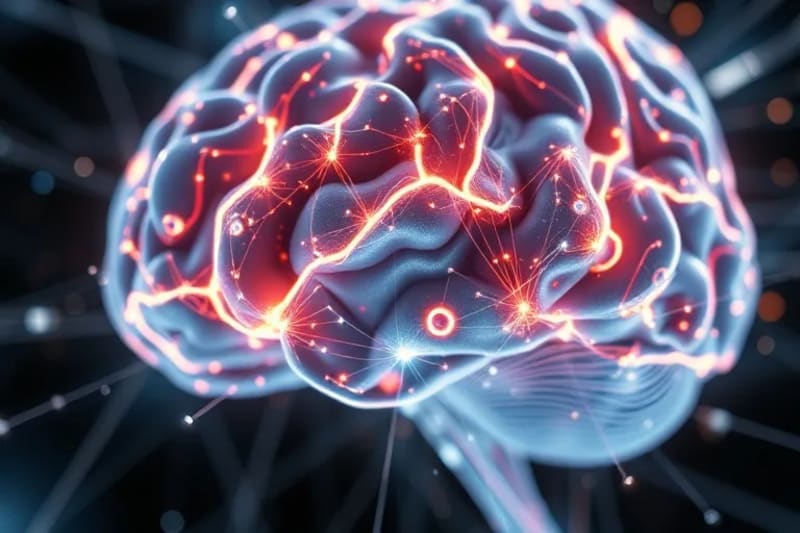
Conceptual representation of advanced cognitive enhancement technologies and their intricate neural connections.
Fuente visual sujeta a disponibilidad del ecosistema: Wikimedia Commons bajo licencia CC BY-SA 4.0 o renderizado conceptual IA.
The pursuit of cognitive enhancement is not new, with humans historically seeking ways to boost mental acuity through various means, from diet to meditation. However, the advent of synthetic compounds and advanced biohacking techniques has opened new avenues, promising unprecedented levels of brain optimization. Understanding this complex landscape requires a balanced perspective, acknowledging both the scientific potential and the profound implications for individual health and societal norms.
This article will serve as an educational resource, providing a neutral and informed overview of synthetic nootropics and cognitive biohacking. We will explore the mechanisms by which these substances and practices are believed to work, discuss the evidence supporting their efficacy, and critically analyze the ethical dilemmas and potential health risks involved. The goal is to equip readers with the knowledge needed to approach these topics with an informed and cautious mindset.
Table of Contents
- What Are Nootropics?
- Cognitive Biohacking Defined
- Mechanisms of Action and Scientific Evidence
- Potential Benefits of Cognitive Enhancement
- Ethical Considerations and Societal Impact
- Risks, Side Effects, and Safety Concerns
- Regulatory Landscape and Future Outlook
- A Responsible Approach to Cognitive Optimization
What Are Nootropics?
Nootropics, often referred to as "smart drugs" or "cognitive enhancers," are a class of substances that are claimed to improve cognitive function, particularly executive functions, memory, creativity, or motivation, in healthy individuals. The term "nootropic" was coined in 1972 by Romanian psychologist and chemist Corneliu Giurgea, who defined them as compounds that enhance memory and learning, protect the brain from physical or chemical injury, and have few side effects.
Nootropics can be broadly categorized into natural and synthetic types. Natural nootropics include compounds found in plants, such as caffeine, L-theanine (found in tea), and creatine. Synthetic nootropics, on the other hand, are laboratory-developed compounds designed to target specific neural pathways or neurotransmitter systems. Examples include piracetam, modafinil, and various amphetamines, although the latter are typically prescription medications with significant side effects and abuse potential.
The appeal of synthetic nootropics lies in their promise to provide a measurable edge in mental performance. Users often seek to enhance their ability to concentrate for extended periods, improve information retention, or boost problem-solving skills. However, the scientific evidence supporting the efficacy and safety of many synthetic nootropics, especially for long-term use in healthy individuals, remains a subject of ongoing research and debate.
Cognitive Biohacking Defined
Cognitive biohacking refers to the practice of using science, technology, and self-experimentation to optimize one's brain function and mental performance. It encompasses a wide range of strategies, from dietary changes and specific supplements (including nootropics) to advanced technologies like neurofeedback and transcranial direct current stimulation (tDCS). The core principle is to systematically monitor, analyze, and intervene in biological processes to achieve desired cognitive outcomes.
Biohacking is often associated with a "do-it-yourself" ethos, where individuals take an active role in understanding and modifying their own biology. This can involve tracking sleep patterns, monitoring heart rate variability, optimizing nutrient intake, and experimenting with various cognitive training exercises. While some biohacking practices are relatively benign, others involve more invasive or experimental methods, raising questions about safety and ethical boundaries.
The goal of cognitive biohacking is not merely to treat illness but to push beyond baseline human capabilities, aiming for peak mental performance. This pursuit is fueled by a desire to gain a competitive advantage in academic, professional, or personal spheres. For a deeper dive into how data analysis drives such decisions, consider exploring resources on data analysis tools and strategic decisions.

An artistic interpretation of the complex interplay of memory, focus, and creativity within the human mind.
Mechanisms of Action and Scientific Evidence
The mechanisms by which nootropics and biohacking techniques are believed to enhance cognition are diverse and often complex. Many synthetic nootropics work by modulating neurotransmitter systems, such as dopamine, serotonin, acetylcholine, and GABA, which are crucial for learning, memory, and mood regulation. Others may increase cerebral blood flow, enhance neuronal plasticity, or provide neuroprotective effects.
For example, racetams like piracetam are thought to enhance acetylcholine receptor density and function, facilitating communication between neurons. Modafinil, a wakefulness-promoting agent, is believed to affect dopamine and norepinephrine levels, leading to increased alertness and focus. However, the precise mechanisms are not always fully understood, and research is ongoing.
The scientific evidence for the effectiveness of many nootropics varies significantly. While some compounds like caffeine and creatine have well-established cognitive benefits, the data for newer or less studied synthetic nootropics is often preliminary, comes from animal studies, or is based on research in individuals with cognitive impairments rather than healthy subjects. Rigorous, large-scale human trials are often lacking, making it difficult to draw definitive conclusions about their long-term efficacy and safety.
Potential Benefits of Cognitive Enhancement
Proponents of synthetic nootropics and cognitive biohacking highlight several potential benefits for individuals seeking to optimize their mental performance:
- Improved Focus and Concentration: Many users report enhanced ability to sustain attention on tasks, reducing distractions and increasing productivity.
- Enhanced Memory: Some nootropics are believed to improve both short-term working memory and long-term memory recall, aiding in learning and information retention.
- Increased Alertness and Wakefulness: Certain compounds can combat fatigue and promote a state of heightened alertness, beneficial for demanding intellectual work or shift work.
- Boosted Creativity and Problem-Solving: Anecdotal evidence suggests some nootropics can foster divergent thinking and innovative solutions.
- Neuroprotection: A few nootropics are studied for their potential to protect brain cells from damage and slow cognitive decline, although this is largely in the context of neurodegenerative diseases.
These potential benefits are particularly attractive in fields requiring intense mental effort, from academia to high-stakes professional environments. However, it is crucial to temper these expectations with a realistic understanding of the current scientific evidence and the potential downsides.
Ethical Considerations and Societal Impact
The rise of cognitive enhancement technologies brings forth a host of complex ethical questions. One primary concern is fairness and equity. If synthetic nootropics provide a significant cognitive advantage, their widespread use could create an uneven playing field, particularly in educational and professional settings. Those with access to these enhancements might outperform those without, exacerbating existing social inequalities.
Another ethical dilemma revolves around the concept of authenticity and identity. If individuals routinely alter their cognitive states, does it change who they fundamentally are? The line between natural ability and chemically induced performance becomes blurred, raising questions about personal achievement and self-worth. This can lead to a "performance-enhancing drug" mentality, similar to those seen in sports, but applied to intellectual pursuits.

A conceptual visualization of a nootropic compound interacting with and optimizing brain networks.
Furthermore, there are concerns about coercion and societal pressure. In environments where cognitive enhancement is common, individuals might feel pressured to use nootropics simply to keep up, even if they have reservations about the risks or ethical implications. This could lead to a normalization of drug use for performance, rather than for therapeutic purposes. The ethical debate surrounding such practices is ongoing and multifaceted, touching upon individual autonomy, societal values, and the very definition of human potential.
Risks, Side Effects, and Safety Concerns
Despite the perceived benefits, the use of synthetic nootropics and advanced biohacking techniques is not without risks. Many of these substances are not FDA-approved for cognitive enhancement in healthy individuals, meaning their safety and efficacy have not been rigorously tested. Potential side effects can range from mild to severe, depending on the substance, dosage, and individual physiology.
Common side effects reported by users include:
- Insomnia and Sleep Disturbances: Especially with stimulants or wakefulness-promoting agents.
- Anxiety and Irritability: Some nootropics can alter mood and increase feelings of nervousness.
- Headaches and Nausea: Frequently reported, particularly with initial use or improper dosing.
- Cardiovascular Issues: Stimulants can increase heart rate and blood pressure, posing risks for individuals with pre-existing conditions.
- Dependence and Withdrawal: Certain substances, especially those affecting neurotransmitter systems, can lead to psychological or physical dependence.
- Unknown Long-Term Effects: The impact of chronic use of many synthetic nootropics on brain health and overall well-being is largely unknown due to a lack of long-term studies.
Furthermore, the quality and purity of nootropic supplements can be inconsistent, as they are often sold without strict regulatory oversight. This means consumers may not be getting what they expect, or could be exposed to contaminants. It is imperative for anyone considering these substances to consult with a healthcare professional and conduct thorough research from reputable sources.
Regulatory Landscape and Future Outlook
The regulatory status of nootropics varies significantly across different countries and jurisdictions. In many places, synthetic nootropics are not classified as drugs, allowing them to be sold as dietary supplements, which face less stringent oversight than pharmaceuticals. This regulatory ambiguity contributes to the challenges in ensuring product safety, quality, and accurate labeling.
Some nootropics, like modafinil, are prescription drugs in many countries, approved for specific medical conditions such as narcolepsy. Their off-label use for cognitive enhancement is not sanctioned and carries legal and health risks. The lack of consistent regulation creates a complex market where consumers must navigate a landscape filled with both legitimate research and unsubstantiated claims.
The future of nootropics and cognitive biohacking is likely to involve continued scientific exploration, with a focus on understanding brain function and developing targeted interventions. As artificial intelligence continues to advance, the ethical considerations around its creative output, such as originality and authorship, will also become increasingly relevant, mirroring some of the discussions in biohacking. You can learn more about this intersection by reading about the ethics of AI in artistic creation. Increased regulation and public education will be crucial to ensure that these powerful tools are used responsibly and ethically, maximizing potential benefits while mitigating risks.
A Responsible Approach to Cognitive Optimization
For individuals interested in cognitive optimization, a responsible and evidence-based approach is paramount. This begins with prioritizing fundamental aspects of brain health, such as adequate sleep, a balanced diet, regular physical exercise, and stress management. Practices like guided meditation can also offer significant cognitive benefits without the risks associated with synthetic substances.
Before considering any synthetic nootropic or advanced biohacking technique, it is essential to consult with a qualified healthcare professional. They can provide personalized advice, assess potential interactions with existing medications, and help identify any underlying health conditions that might make certain substances unsafe. Self-experimentation without professional guidance can lead to adverse health outcomes.
Furthermore, critical evaluation of information sources is vital. Rely on peer-reviewed scientific studies, reputable medical institutions, and expert opinions rather than anecdotal reports or marketing claims. The pursuit of cognitive enhancement should always be balanced with a commitment to long-term health and well-being, recognizing that true optimization comes from a holistic approach to mind and body.
The landscape of synthetic nootropics and cognitive biohacking is rapidly evolving, offering both exciting possibilities and significant challenges. By fostering a culture of informed decision-making, ethical consideration, and scientific rigor, we can navigate this frontier responsibly, harnessing the potential of cognitive enhancement while safeguarding individual health and societal values.
Explore Further: Related Topics
- Sustainable Tourism: Economic Impact, Environmental Conservation
- Sustainable Energy Future: Nuclear Fusion, Storage Innovations
- Climate Migration: Humanitarian Geopolitical Challenge 21st Century
- Karmic Compatibility: Zodiacal Archetypes Love Destiny
- Gregorian Chant: Sound Therapy Mind Spirit Healing
- Planetary Transits: Inner Child Healing Emotional Wholeness
Source: Hybrid content assisted by AI and human editorial supervision.


Comentarios