
Biohacking Hormonal Male Longevity Optimal Performance 2.0
The pursuit of optimal health and extended longevity has propelled the field of biohacking into a new era, particularly concerning male hormonal balance. Advanced male hormonal biohacking, often referred to as "Longevity and Optimal Performance 2.0," represents a sophisticated, data-driven approach to understanding and manipulating the endocrine system for peak physiological function and disease prevention. This discipline moves beyond conventional hormone replacement therapies, integrating cutting-edge diagnostics, personalized interventions, and lifestyle optimization to achieve a synergistic effect on well-being.
The "2.0" designation signifies a shift towards a holistic, integrated strategy that leverages advancements in genomics, metabolomics, and wearable technology. It emphasizes not just restoring hormones to "normal" ranges, but optimizing them for individual genetic predispositions, environmental factors, and specific performance goals. This comprehensive framework aims to enhance physical vitality, cognitive clarity, sexual health, and overall resilience against age-related decline, offering a proactive pathway to sustained high performance throughout life.
Table of Contents
- 1. Hormonal Foundations for Male Health
- 2. Advanced Biohacking Methodologies
- 3. Precision Diagnostics and Data Integration
- 4. Personalized Interventions: Nutrition, Exercise, Sleep
- 5. Emerging Technologies and Future Directions
- 6. Ethical Considerations and Medical Oversight
- 7. Conclusion: The Future of Male Health Optimization

A dedicated individual engages with cutting-edge diagnostics, symbolizing the future of personalized health optimization.
1. Hormonal Foundations for Male Health
At the core of male biohacking lies a deep understanding of key hormones and their intricate interplay. Testosterone, often considered the cornerstone of male vitality, influences muscle mass, bone density, libido, mood, and cognitive function. Its natural decline with age, known as andropause, can lead to a myriad of undesirable symptoms, making its optimization a primary focus.
Beyond testosterone, other hormones play crucial roles. Growth Hormone (GH) is vital for cellular repair, metabolism, and body composition, while insulin sensitivity dictates energy regulation and fat storage. Cortisol, the primary stress hormone, can disrupt the entire endocrine system if chronically elevated, impacting sleep, immunity, and other hormonal axes. Balancing these, alongside thyroid hormones and even estrogen (which, in appropriate levels, is critical for male health), forms the foundation of advanced biohacking.
The goal is not merely to achieve "normal" lab values but to reach optimal physiological ranges that support peak performance and longevity. This requires a nuanced approach, considering individual variations in genetics, lifestyle, and environmental exposures, moving away from a one-size-fits-all model. Understanding these foundational elements is paramount before embarking on any biohacking journey.
2. Advanced Biohacking Methodologies
Advanced hormonal biohacking integrates a spectrum of methodologies, from ancient practices to modern technological innovations. This multi-faceted approach ensures that all aspects of a man's physiology are addressed, creating a robust system for health and performance. The synergy between these methods often yields results far greater than any single intervention alone.
Key areas include precision nutrition, tailored exercise protocols, optimized sleep hygiene, and stress management techniques. Furthermore, specific nutraceuticals and targeted supplementation play a significant role, chosen based on individual deficiencies and desired outcomes. The emphasis is always on evidence-based practices, ensuring safety and efficacy in every step of the biohacking process.
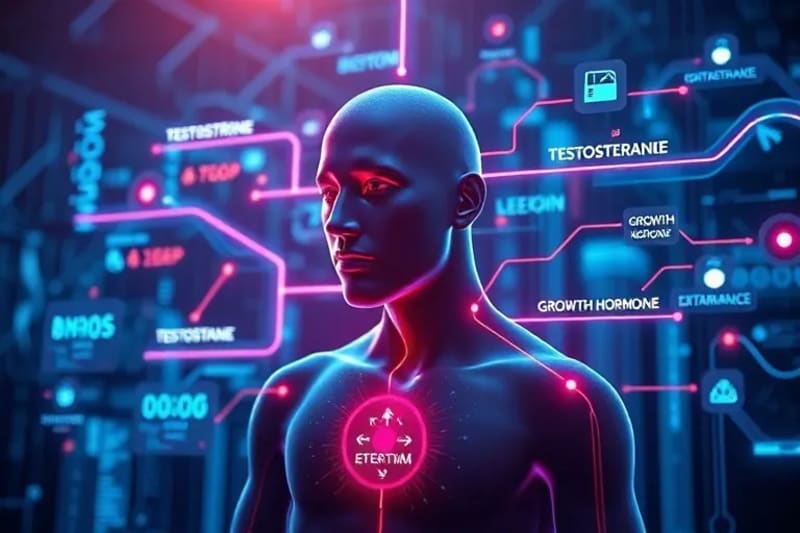
A visual representation of the complex interplay between hormones and lifestyle elements.
3. Precision Diagnostics and Data Integration
The cornerstone of Biohacking 2.0 is precision diagnostics. This involves comprehensive blood panels that go far beyond standard lipid and glucose checks, including detailed hormonal profiles (total and free testosterone, SHBG, DHT, estradiol, DHEA-S, cortisol rhythms), inflammatory markers, micronutrient status, and heavy metal screening. Genetic testing provides insights into predispositions for certain conditions, metabolic pathways, and optimal dietary responses.
Advanced diagnostics also encompass microbiome analysis, which can reveal gut health imbalances impacting hormone production and detoxification. Data from these tests are integrated with lifestyle metrics collected from wearables (sleep patterns, heart rate variability, activity levels) to create a holistic physiological blueprint. This data-driven approach allows for highly personalized interventions, moving away from generalized recommendations towards truly individualized protocols.
Understanding the value of these detailed insights is crucial for effective biohacking. Just as businesses analyze pricing strategies for optimal returns, individuals must assess the data from their bodies to implement the most impactful health strategies. This analytical rigor ensures that interventions are not only effective but also cost-efficient in the long run, maximizing health dividends.
4. Personalized Interventions: Nutrition, Exercise, Sleep
With a clear diagnostic picture, tailored interventions can be implemented. Precision nutrition involves dietary plans customized to genetic profiles, metabolic needs, and hormonal goals. This might include specific macronutrient ratios, intermittent fasting protocols, or targeted food choices to support gut health and reduce inflammation. Supplementation is also highly individualized, focusing on correcting deficiencies and enhancing specific pathways, such as adaptogens for stress resilience or specific compounds to support testosterone synthesis, drawing parallels with the careful selection of pharmacological compounds in medicine.
Exercise regimens are designed to optimize hormonal responses, emphasizing resistance training for muscle anabolism and growth hormone release, coupled with strategic cardiovascular work. Recovery is paramount, with protocols incorporating active recovery, stretching, and mobility work to prevent overtraining and support hormonal balance. Sleep architecture optimization is another critical pillar, focusing on enhancing sleep quality and duration through environmental controls, consistent circadian rhythms, and advanced sleep tracking.
Stress modulation techniques, including mindfulness, meditation, and Heart Rate Variability (HRV) training, are integrated to mitigate the detrimental effects of chronic cortisol elevation. Furthermore, practices like cold exposure (e.g., ice baths) and heat exposure (e.g., saunas) are leveraged for their proven benefits on inflammation, metabolism, and hormonal resilience, much like how thermal regulation is crucial for species adaptation. These interventions are constantly monitored and adjusted based on ongoing biometric data and subjective well-being reports.

A conceptual rendering of a wearable device providing real-time physiological data.
5. Emerging Technologies and Future Directions
The landscape of biohacking is continuously evolving with the advent of new technologies. Wearable devices are becoming increasingly sophisticated, offering real-time insights into glucose levels, sleep stages, HRV, and even early detection of physiological stress. Smart home environments are being designed to optimize light exposure, air quality, and temperature for enhanced sleep and circadian rhythm regulation.
Artificial Intelligence (AI) and machine learning are poised to revolutionize personalized health, processing vast amounts of individual data to identify patterns, predict risks, and recommend highly specific interventions. This AI-driven approach promises to make biohacking even more precise and accessible, transforming raw data into actionable insights for continuous optimization. The integration of these technologies allows for a dynamic and responsive biohacking protocol, adapting as the individual's physiology and environment change.
Furthermore, research into novel compounds, peptide therapies, and gene-editing technologies holds immense potential for future hormonal optimization. While many of these are still in experimental stages, they underscore the rapid pace of innovation in the field. The future of male hormonal biohacking is likely to be characterized by even greater personalization, predictive analytics, and preventative strategies, fostering a regenerative economy of health.
6. Ethical Considerations and Medical Oversight
While the promise of advanced hormonal biohacking is compelling, it is imperative to approach it with caution and ethical consideration. The line between optimization and abuse can be thin, especially when dealing with powerful compounds like synthetic hormones. Unsupervised use of certain substances can lead to significant health risks, including cardiovascular issues, liver damage, and psychological disturbances.
Professional medical oversight is not just recommended but absolutely crucial. A qualified physician specializing in functional medicine, endocrinology, or anti-aging should guide any hormonal intervention. They can interpret complex diagnostic data, prescribe necessary medications responsibly, and monitor for potential side effects. The long-term effects of many biohacking practices are still being studied, necessitating a cautious and evidence-based approach.
Transparency, informed consent, and a commitment to scientific rigor are essential to ensure that biohacking remains a tool for genuine health improvement rather than a risky endeavor. Education is key, empowering individuals to make informed decisions while understanding the potential benefits and pitfalls of these advanced strategies.
7. Conclusion: The Future of Male Health Optimization
Advanced male hormonal biohacking, or Longevity and Optimal Performance 2.0, represents a paradigm shift in how men approach their health. By combining sophisticated diagnostics with personalized interventions and leveraging emerging technologies, it offers a powerful framework for optimizing hormonal balance, enhancing performance, and extending healthspan. This is not merely about treating symptoms but about proactively building a resilient and high-functioning physiological system.
The journey into hormonal biohacking requires dedication, continuous learning, and, most importantly, responsible engagement with medical professionals. As our understanding of human biology deepens and technology advances, the potential for men to take control of their health trajectory and achieve unprecedented levels of vitality and longevity will only continue to grow. This integrated, scientific approach is paving the way for a future where optimal health is not just a dream, but an achievable reality.
Related Insights & Navigation
Source: Hybrid content assisted by AI and human editorial supervision.


Comentarios