
Circular Business Models Green Startups Regenerative Economy
In an era defined by environmental urgency and resource scarcity, the traditional linear economic model of "take-make-dispose" is proving unsustainable. This paradigm has led to excessive waste, pollution, and depletion of natural capital, prompting a global shift towards more resilient and sustainable alternatives. Green startups, inherently driven by ecological principles, are at the forefront of this transformation, increasingly adopting circular business models as a core strategy. These models not only address pressing environmental challenges but also unlock significant economic opportunities, fostering innovation and creating long-term value.
The circular economy represents a systemic approach to economic development designed to benefit businesses, society, and the environment. Unlike the linear model, it aims to keep products, components, and materials at their highest utility and value at all times. For green startups, integrating circular principles from inception can be a powerful differentiator, enabling them to build inherently sustainable and resilient enterprises. This article will delve into the keys of the regenerative economy, exploring how circular business models provide a robust framework for green startups to thrive.
Table of Contents
- Understanding the Circular Economy: A Paradigm Shift
- Why Circular Models Matter for Green Startups
- Core Principles of Circularity
- Types of Circular Business Models for Green Startups
- Challenges and Opportunities in Adopting Circularity
- Implementing Circularity: A Strategic Roadmap
- The Future of the Regenerative Economy
Understanding the Circular Economy: A Paradigm Shift
The circular economy is more than just recycling; it is a fundamental rethinking of how we design, produce, and consume. It is built on three core principles: designing out waste and pollution, keeping products and materials in use, and regenerating natural systems. This holistic approach contrasts sharply with the linear model, which assumes an endless supply of cheap resources and an infinite capacity for waste absorption.
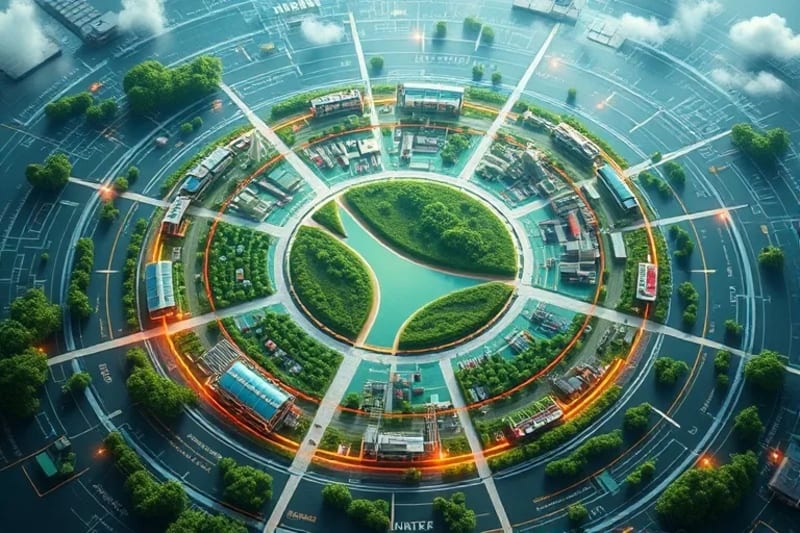
Precursors intellectual, fundamental diagrams, and conceptual representations that forged the vision of a sustainable future.
Fuente visual sujeta a disponibilidad del ecosistema: Wikimedia Commons bajo licencia CC BY-SA 4.0 o renderizado conceptual IA.At its heart, the circular economy seeks to decouple economic growth from the consumption of finite resources. It promotes innovation in product design, business models, and material science to create a system where resources are continuously circulated. This includes strategies like designing for durability, repairability, and recyclability, as well as developing new ways to access and utilize products without necessarily owning them.
For green startups, understanding this paradigm shift is crucial. It means moving beyond simply being "less bad" for the environment to actively creating positive impacts. It's about building businesses that are inherently restorative and regenerative, contributing to a healthier planet and a more equitable society. The regenerative economy extends this concept further, aiming not just to minimize harm but to actively restore and enhance natural systems.
Why Circular Models Matter for Green Startups
Adopting circular business models offers a multitude of benefits for green startups, extending beyond mere environmental compliance. These advantages can significantly impact their long-term viability, competitiveness, and brand reputation.
- Enhanced Resource Efficiency: By keeping materials in use for longer, startups can reduce their reliance on virgin resources, leading to cost savings and reduced exposure to volatile raw material prices. This is particularly critical in today's global supply chain landscape.
- Innovation and Competitive Advantage: Circularity drives innovation in product design, material selection, and service delivery. Startups that embrace these principles can develop unique offerings that stand out in the market, attracting environmentally conscious consumers and investors.
- Reduced Environmental Impact: This is the most direct benefit. Circular models drastically cut down waste generation, pollution, and greenhouse gas emissions, aligning perfectly with the core mission of green startups.
- New Revenue Streams: Opportunities arise from selling services (instead of products), recovering valuable materials from waste, or extending product lifespans through repair and refurbishment.
- Stronger Customer Relationships: Models like Product-as-a-Service foster ongoing engagement with customers, building loyalty and providing valuable insights for continuous improvement.
- Regulatory Compliance and Future-Proofing: As environmental regulations become stricter, businesses with circular models are better positioned to comply and adapt, mitigating future risks.
- Access to Green Finance: Investors are increasingly prioritizing sustainable businesses. Startups with robust circular strategies are more attractive to green funds and impact investors, such as those involved in green banking and sustainable financial products.
Core Principles of Circularity
The circular economy is underpinned by several key principles that guide its implementation. These principles, often summarized as the "Rs," provide a framework for designing and operating circular businesses.
- Rethink & Redesign: This is the foundational step. It involves fundamentally rethinking product and service design to eliminate waste and pollution from the outset. Products should be designed for durability, repairability, modularity, and easy disassembly, using non-toxic, renewable, or recycled materials.
- Reduce: Minimize the consumption of resources and materials. This includes optimizing material use in manufacturing, reducing packaging, and promoting efficient energy use.
- Reuse: Extend the lifespan of products and components through direct reuse, either by the original owner or by subsequent users. This can involve second-hand markets, donation, or simple repurposing.
- Repair: Design products that can be easily fixed when broken, rather than discarded. This requires access to spare parts, repair manuals, and skilled technicians.
- Refurbish & Remanufacture: For products that are no longer fit for their original purpose, refurbishing involves restoring them to a good working condition, while remanufacturing involves disassembling products, cleaning, inspecting, and reassembling components to create "like-new" products.
- Recycle: When products or components can no longer be reused or repaired, their materials are processed to be used as raw materials for new products. This is often seen as the last resort in the circular hierarchy, as it typically requires more energy and can lead to a degradation of material quality over time.
- Recover: For materials that cannot be recycled (e.g., some organic waste), energy recovery (e.g., anaerobic digestion, composting) can extract value, regenerating natural capital.
Types of Circular Business Models for Green Startups
Green startups can adopt various circular business models, often combining elements from several to create a unique value proposition. Here are some prominent types:
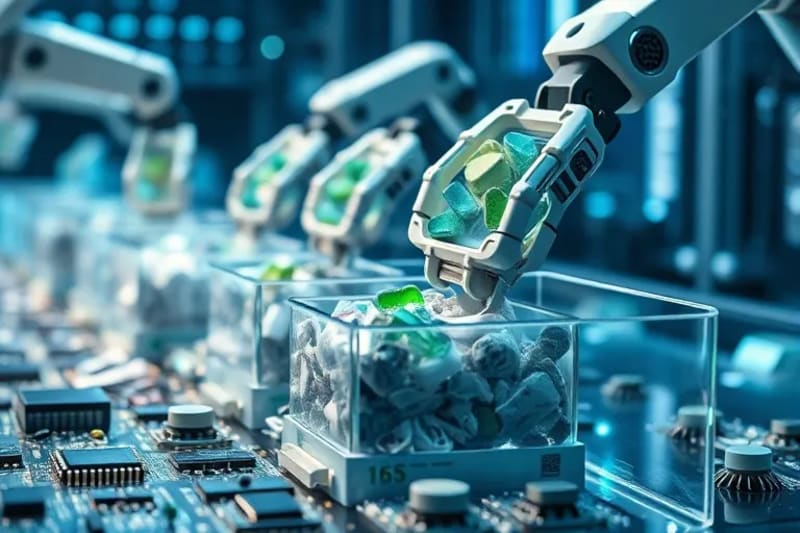
Innovative technologies driving the recovery and transformation of waste into valuable resources.
- Circular Supplies: This model focuses on replacing traditional linear inputs with fully renewable, recyclable, or biodegradable materials. Startups in this space might develop bio-based plastics, sustainable textiles, or advanced materials derived from waste streams. For instance, companies creating packaging from agricultural waste or mycelium fall into this category.
- Resource Recovery: These businesses specialize in collecting, processing, and reintroducing waste materials and by-products back into the production cycle. This includes advanced recycling facilities, industrial symbiosis initiatives where one company's waste becomes another's input, and upcycling ventures. This model is crucial for closing material loops and reducing landfill waste.
- Product-as-a-Service (PaaS): Instead of selling products, companies offer the function or service that the product provides. Customers pay for usage, while the manufacturer retains ownership and responsibility for maintenance, repair, and end-of-life management. Examples include lighting-as-a-service, tool rental services, or subscription models for appliances. This incentivizes manufacturers to design durable, repairable products.
- Product Life Extension: Startups in this category focus on extending the lifespan of products already in use. This includes businesses offering repair services, refurbishment, remanufacturing, and resale platforms for used goods. These models reduce the demand for new products and keep existing resources in circulation longer.
- Sharing Platforms: These models facilitate the shared use of products or assets among multiple users, reducing the need for individual ownership. Car-sharing, tool libraries, and peer-to-peer rental platforms are prime examples. They optimize asset utilization and reduce overall consumption.
Challenges and Opportunities in Adopting Circularity
While the benefits of circular business models are compelling, green startups often face unique challenges in their implementation. However, these challenges also present significant opportunities for innovation and market differentiation.
Challenges:
- Upfront Investment: Shifting from linear to circular often requires investment in new design processes, reverse logistics, and material recovery infrastructure.
- Supply Chain Complexity: Managing reverse logistics (collecting used products) and sourcing circular materials can be more complex than traditional linear supply chains.
- Consumer Behavior: Shifting consumer mindsets from ownership to usage, or encouraging repair over replacement, can be a hurdle.
- Regulatory Frameworks: Existing regulations are often designed for linear economies and may not fully support circular practices, though this is evolving rapidly, especially in areas like environmental law and policy.
- Material Purity and Quality: Ensuring the quality and purity of recycled or recovered materials for high-value applications can be challenging.
Opportunities:
- Market Leadership: Early adopters can establish themselves as leaders in sustainable innovation, building strong brand equity.
- Reduced Risk: Less reliance on volatile virgin material markets and more resilient supply chains.
- Talent Attraction: Purpose-driven companies with strong sustainability credentials are more attractive to top talent.
- Collaboration and Partnerships: Circularity often requires collaboration across value chains, leading to new partnership opportunities and ecosystem development.
- Policy Support: Governments worldwide are increasingly recognizing the importance of the circular economy, leading to potential grants, subsidies, and supportive policies for circular businesses.
Implementing Circularity: A Strategic Roadmap
For green startups, integrating circular principles requires a strategic and holistic approach. It's not an add-on but a foundational element of the business model.
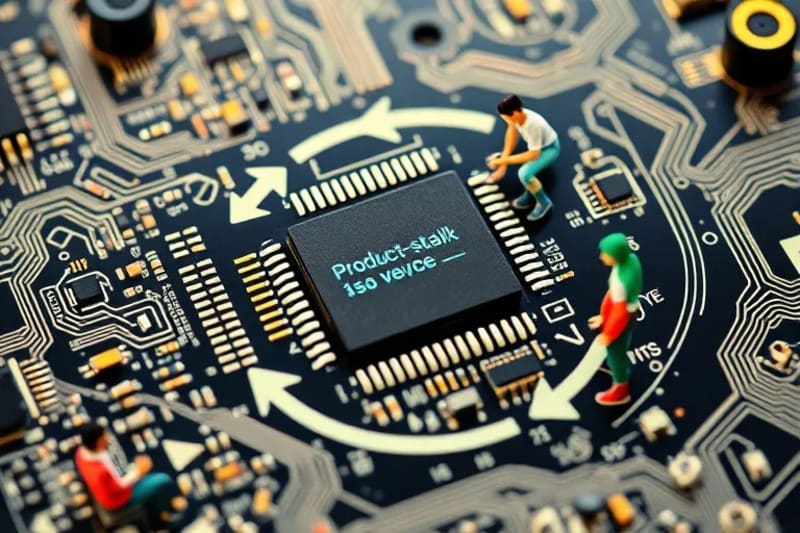
Collaborative consumption and innovative service models fostering sustainable resource utilization.
- Circular Design Thinking: Start with the end in mind. Design products for longevity, repairability, disassembly, and material recovery. Prioritize non-toxic, renewable, or recycled inputs. This upstream thinking is critical.
- Material Selection and Sourcing: Actively seek out suppliers of sustainable, recycled, or bio-based materials. Build relationships that support circular material flows.
- Develop Reverse Logistics: Plan how products will be collected, inspected, sorted, and processed at their end-of-use. This might involve take-back schemes, partnerships with waste management companies, or dedicated collection points.
- Embrace Digital Technologies: Digital tools can enhance circularity. IoT sensors can track product usage and condition for PaaS models, blockchain can ensure material traceability, and AI can optimize sorting and recycling processes.
- Educate and Engage Customers: Clearly communicate the value proposition of circular products and services. Educate customers on how to participate (e.g., returning products, using sharing platforms).
- Measure and Report Impact: Track key metrics related to resource use, waste generation, emissions, and material circularity. Transparent reporting builds trust and demonstrates commitment.
- Foster Collaboration: Engage with suppliers, customers, competitors, and even policymakers to build a supportive ecosystem for circularity. Innovation often happens at the intersection of different stakeholders.
The Future of the Regenerative Economy
The transition to a regenerative economy is not merely an environmental imperative; it is an economic opportunity that green startups are uniquely positioned to seize. By embedding circular principles into their DNA, these businesses can create resilient, innovative, and profitable models that contribute positively to planetary health and human well-being. The future of business is not just about doing less harm, but about actively regenerating and restoring our natural and social capital.
As consumer awareness grows, regulatory pressures increase, and technological advancements enable more efficient circular processes, the adoption of these models will only accelerate. Green startups that lead this charge will not only build successful enterprises but also play a pivotal role in shaping a sustainable and prosperous future for all. The journey towards a fully circular and regenerative economy is complex, but it is a journey worth taking, driven by innovation, collaboration, and a deep commitment to sustainability.
Source: Hybrid content assisted by AI and human editorial supervision.


Comentarios