
Metaverse Intellectual Property Legal Virtual Assets Challenges
The metaverse, an expansive and persistent virtual world, promises to redefine human interaction, commerce, and creativity. As this digital frontier rapidly expands, it brings forth unprecedented legal complexities, particularly concerning intellectual property (IP). Understanding how existing IP laws apply, or fail to apply, to virtual assets is crucial for creators, businesses, and users navigating this nascent digital realm. This article explores the foundational aspects of intellectual property within the metaverse, examining the challenges and potential solutions for safeguarding digital creations.
Table of Contents:
- 1. What is Intellectual Property in the Metaverse?
- 2. Copyright and Virtual Assets: A New Frontier
- 3. Trademarks and Digital Identities: Brand Protection in Virtual Worlds
- 4. Patents and Metaverse Technology: Protecting Innovation
- 5. Key Challenges: Ownership, Jurisdiction, and Enforcement
- 6. NFTs and the Evolution of Digital Ownership
- 7. Towards Future Regulatory Frameworks
- 8. Conclusion: Navigating the Virtual Legal Landscape
 Intellectual precursors, fundamental diagrams, and conceptual representations that shaped the vision of Intellectual Property in the Metaverse.
Fuente visual sujeta a disponibilidad del ecosistema: Wikimedia Commons bajo licencia CC BY-SA 4.0 o renderizado conceptual IA.
The metaverse is not a single entity but a collection of interconnected virtual spaces, each with its own rules, economies, and user-generated content. From virtual fashion and art to digital real estate and unique avatars, the spectrum of virtual assets is vast. The legal implications of these assets, particularly regarding ownership and usage rights, are still largely uncharted territory, posing significant questions for traditional legal paradigms.
1. What is Intellectual Property in the Metaverse?
Intellectual property (IP) in the metaverse refers to the legal rights associated with creations of the mind—inventions, literary and artistic works, designs, and symbols, names, and images used in commerce—that exist within or are related to virtual environments. This encompasses a broad range of digital assets, including:
- Virtual Goods: Digital clothing, accessories, vehicles, and other items used by avatars.
- Digital Art and Collectibles: Non-fungible tokens (NFTs) representing unique pieces of art, music, or other digital media.
- Avatars and Digital Identities: The unique designs and characteristics of user representations.
- Virtual Real Estate: Plots of land or buildings within metaverse platforms.
- Software and Code: The underlying programming that creates and operates metaverse platforms and experiences.
- Brands and Logos: Trademarks used by companies to establish presence and identity in virtual spaces.
The core challenge lies in applying established IP laws, designed for the physical world, to the fluid and often decentralized nature of the metaverse. This requires careful consideration of how concepts like originality, fixation, and public display translate into a purely digital context.
2. Copyright and Virtual Assets: A New Frontier
Copyright protects original works of authorship fixed in a tangible medium of expression. In the metaverse, this extends to a vast array of digital creations. For example, a unique virtual sculpture created within a metaverse platform could be subject to copyright protection, just like its physical counterpart.
However, the application is not always straightforward. Questions arise regarding:
- Ownership: Who owns the copyright when multiple users collaborate on a digital creation, or when AI generates content?
- Infringement: How is copyright infringement detected and prosecuted when digital assets can be easily copied, modified, or distributed across various platforms and jurisdictions?
- Licensing: What are the best practices for licensing virtual goods for use across different metaverse environments?
The ease of replication in digital spaces makes copyright enforcement particularly challenging. Creators must consider robust digital rights management (DRM) solutions and clear terms of service within metaverse platforms to assert their rights effectively. This also touches upon broader discussions around Metaverse Ethics: Legal Challenges, Social Privacy, as the boundaries of digital ownership and personal data intertwine.
3. Trademarks and Digital Identities: Brand Protection in Virtual Worlds
Trademarks protect brand names, logos, and slogans used to identify and distinguish goods and services. As brands establish a presence in the metaverse, protecting their trademarks becomes paramount. This includes virtual storefronts, branded digital products, and even the use of brand names within user-generated content.
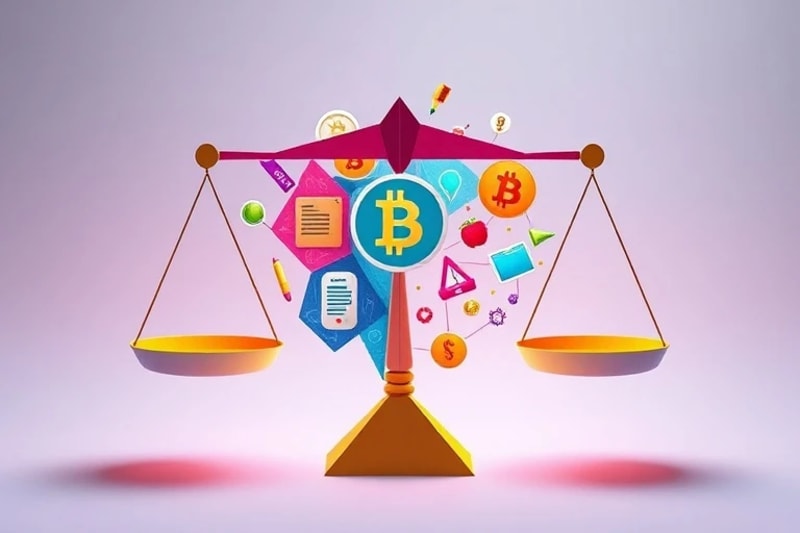 Conceptual representation of the interconnection between intellectual property, blockchain technology, and legal frameworks in the metaverse.
One significant issue is trademark squatting, where individuals register well-known brand names or logos in the metaverse before the actual brand does, with the intent to sell them at a profit. Another challenge is counterfeiting, where unauthorized virtual goods bearing famous trademarks are sold. Brands are increasingly filing trademark applications specifically for virtual goods and services to preempt these issues.
The principle of "use in commerce" is central to trademark law. Determining what constitutes "use in commerce" within a purely virtual economy, where transactions may occur with cryptocurrencies or platform-specific tokens, adds another layer of complexity. Furthermore, the global nature of the metaverse means that brands must consider trademark protection across multiple jurisdictions, often requiring a comprehensive international strategy.
4. Patents and Metaverse Technology: Protecting Innovation
Patents protect inventions, including processes, machines, manufactures, and compositions of matter. In the context of the metaverse, patents are crucial for protecting the underlying technologies that power these virtual worlds. This includes innovations in:
- Virtual Reality (VR) and Augmented Reality (AR) Hardware: Headsets, haptic feedback devices, and other peripherals.
- Software Algorithms: For rendering realistic graphics, managing complex interactions, or facilitating decentralized operations.
- Blockchain and NFT Technologies: Novel methods for securing digital assets and transactions.
- User Interface (UI) and User Experience (UX) Designs: Innovative ways users interact with the virtual environment.
Protecting these foundational technologies through patents is vital for fostering innovation and ensuring competitive advantage. However, the rapid pace of technological development in the metaverse space means that patent applications must be strategic and forward-looking. The intersection of these advanced technologies with data security measures also highlights the importance of robust Encryption Standards: From DES to Post-Quantum and Security, ensuring that patented methods remain secure from unauthorized access or replication.
5. Key Challenges: Ownership, Jurisdiction, and Enforcement
The metaverse presents several unique challenges to traditional IP enforcement:
- Ambiguity of Ownership: Who truly owns a digital asset? Is it the creator, the platform, or the user who "purchases" it? The terms of service of each metaverse platform play a critical role here, but often lack clarity or are subject to change.
- Jurisdictional Issues: The metaverse is borderless. If an infringement occurs between users in different physical countries, which country's laws apply? This creates a complex web of international legal challenges.
- Enforcement Difficulties: Identifying infringers, especially in decentralized metaverse environments, can be extremely difficult. The anonymous or pseudonymous nature of many metaverse interactions further complicates enforcement actions.
- Valuation of Virtual Assets: Determining damages for IP infringement in the metaverse requires establishing the economic value of virtual assets, which can be highly volatile and speculative.
These challenges necessitate a re-evaluation of existing legal frameworks and potentially the development of new international agreements or specialized metaverse courts. The concept of digital rights, including the protection of consciousness and personal data in these immersive environments, is also gaining prominence, as discussed in topics like Neuro-Rights Cybersecurity Protecting Consciousness Digital Age.
6. NFTs and the Evolution of Digital Ownership
 3D illustration of an ethereal digital contract alongside virtual currency elements, symbolizing ownership and agreements in the digital realm.
Non-fungible tokens (NFTs) have emerged as a pivotal technology for establishing unique digital ownership in the metaverse. An NFT is a unique digital identifier recorded on a blockchain, used to certify ownership and authenticity of a digital asset. While an NFT can prove ownership of a specific digital file, it does not automatically transfer the underlying intellectual property rights (like copyright) to the buyer.
This distinction is critical. When you buy an NFT of a digital artwork, you own that specific token and its associated digital file, but the artist typically retains the copyright. This means you might not have the right to reproduce, modify, or commercially exploit the artwork without a separate license. The terms of sale for NFTs often specify the scope of rights granted to the buyer, which can vary widely.
The rise of NFTs has highlighted the need for clearer legal frameworks around digital licensing and the transfer of IP rights in virtual spaces. It also underscores the importance of due diligence for both creators and purchasers of NFTs to understand exactly what rights are being bought and sold.
7. Towards Future Regulatory Frameworks
As the metaverse evolves, so too must its legal and regulatory landscape. Several approaches are being considered to address the IP challenges:
- Platform-Specific Terms: Metaverse platforms are developing their own terms of service and content policies to govern IP. While useful, these can be inconsistent and lack universal enforceability.
- International Cooperation: Given the borderless nature of the metaverse, international treaties and agreements may be necessary to harmonize IP laws and facilitate cross-border enforcement.
- Technological Solutions: Blockchain-based solutions, smart contracts, and advanced digital watermarking could offer more robust ways to track ownership and prevent infringement.
- Hybrid Legal Systems: A combination of traditional legal principles adapted for the digital realm, alongside new regulations specifically tailored for the metaverse, might be the most effective path forward.
The development of these frameworks will require collaboration among legal experts, technologists, policymakers, and metaverse stakeholders to create a fair and innovative environment. The goal is to protect creators while fostering a vibrant and open digital economy, ensuring that the metaverse becomes a space for genuine innovation and not a haven for infringement.
8. Conclusion: Navigating the Virtual Legal Landscape
The metaverse represents a paradigm shift, not just in how we interact digitally, but also in how we conceive of ownership and intellectual property. While existing IP laws provide a starting point, their application to virtual assets is fraught with complexities. The challenges of defining ownership, navigating jurisdictional ambiguities, and effectively enforcing rights in a borderless digital realm are significant.
As the metaverse continues to evolve, a proactive and adaptive approach to intellectual property will be essential. This includes developing clear platform policies, fostering international legal cooperation, and leveraging technological innovations like NFTs and blockchain for robust digital rights management. For creators, businesses, and users alike, understanding and actively engaging with these evolving legal landscapes will be key to unlocking the full potential of the metaverse while safeguarding digital creations and fostering a fair, innovative, and secure virtual future.
Explore Further: Related Digital Frontiers
- Metaverse Ethics: Legal Challenges, Social Privacy
Dive deeper into the ethical considerations and privacy concerns that shape the digital landscape of the metaverse. - Encryption Standards: From DES to Post-Quantum and Security
Understand the evolution of data protection and its critical role in securing virtual assets and communications. - Neuro-Rights Cybersecurity Protecting Consciousness Digital Age
Explore the emerging legal and ethical discussions around protecting individual consciousness and mental privacy in advanced digital environments. - Biohacking Longevity Genomic Cellular Strategies Prolonged Life
Discover how cutting-edge biological and technological advancements are pushing the boundaries of human potential and longevity. - Nanotechnology Medicine Advances Future Applications Guide
Learn about the revolutionary impact of nanotechnology on medicine and its potential to transform future healthcare solutions.
Source: Hybrid content assisted by AI and human editorial supervision.


Comentarios