
AI Generative Art Ethics: Authorship, Property Debates
The rapid advancements in artificial intelligence (AI), particularly in generative models, have opened unprecedented avenues for creativity across various domains, including art, music, and literature. Generative AI refers to algorithms capable of producing novel content, often indistinguishable from human-created works, based on extensive training data. This technological leap has sparked an intense and multifaceted debate, especially concerning the ethical implications for artistic creation, authorship, and intellectual property rights.
As AI tools become more sophisticated and accessible, artists, legal scholars, and policymakers grapple with fundamental questions about who owns the art generated by machines and what constitutes originality in a world where algorithms can mimic, combine, and innovate. This exploration delves into the core ethical dilemmas posed by generative AI in the art world, examining the concepts of authorship, intellectual property, the role of training data, and the broader societal impact on creative industries.
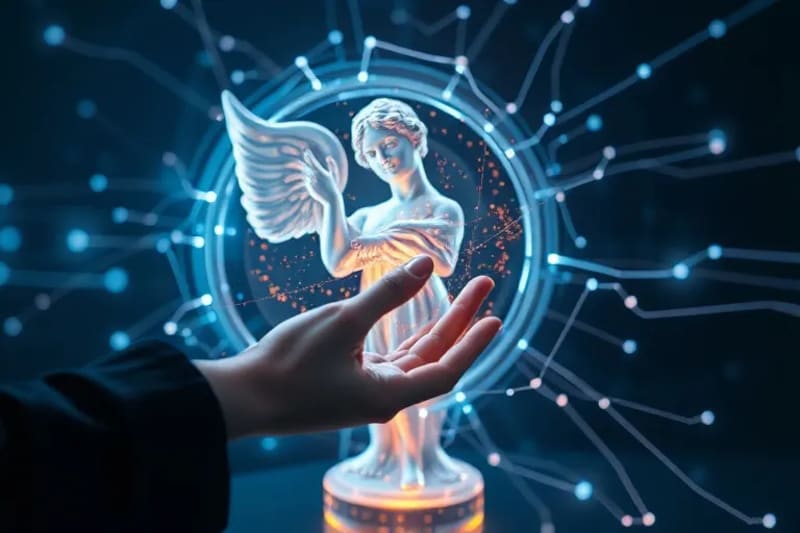
Conceptual representation of AI-generated art interacting with human artistic principles.
Table of Contents
- Defining Authorship in the Age of AI
- Intellectual Property Challenges and Legal Frameworks
- The Role of Training Data and Copyright Infringement
- Economic Implications and Fair Compensation
- Future Perspectives and Regulatory Needs
Defining Authorship in the Age of AI
Traditionally, authorship has been unequivocally attributed to human creators, individuals who conceive, design, and execute a work. This concept is central to copyright law, which grants exclusive rights to authors for their original works. However, generative AI blurs these lines significantly. When an AI system produces a painting, a musical piece, or a written text, the question arises: who is the author?
Several perspectives emerge in this debate. One view suggests that the human programmer or developer of the AI system should be considered the author, as they created the tool that made the art possible. This perspective often likens the AI to a sophisticated paintbrush or camera, with the human retaining ultimate creative control. However, this analogy falters when AI models exhibit emergent behaviors and generate outputs that were not explicitly programmed or foreseen by their creators, demonstrating a degree of "autonomy."
Another perspective posits that the user who prompts or guides the AI should be recognized as the author. In many generative AI applications, the human user provides specific instructions, parameters, or even initial sketches, effectively steering the AI towards a desired outcome. This interaction can be seen as a collaborative process, where the human's creative intent is paramount. Yet, the AI's contribution is often more than just execution; it involves complex algorithms that interpret and transform the input in ways that might exceed simple tool-use.
Some even argue for the AI itself to be considered a co-author or even the sole author, particularly in cases where the AI operates with minimal human intervention. While current legal frameworks do not recognize non-human entities as authors, this philosophical debate challenges the very definition of creativity and consciousness. The absence of a clear human author complicates the application of existing copyright laws, which are designed to protect human intellectual endeavors. The discussion around neuro-rights and AI privacy further underscores the need for new legal and ethical considerations in this rapidly evolving landscape.
Intellectual Property Challenges and Legal Frameworks
The core of the intellectual property (IP) debate lies in whether AI-generated art can be copyrighted at all. Most copyright laws, including those in the United States and Europe, require a work to be "original" and to have a "human author." The U.S. Copyright Office, for instance, has explicitly stated that it will only register works created by a human being, denying copyright to works solely generated by AI.
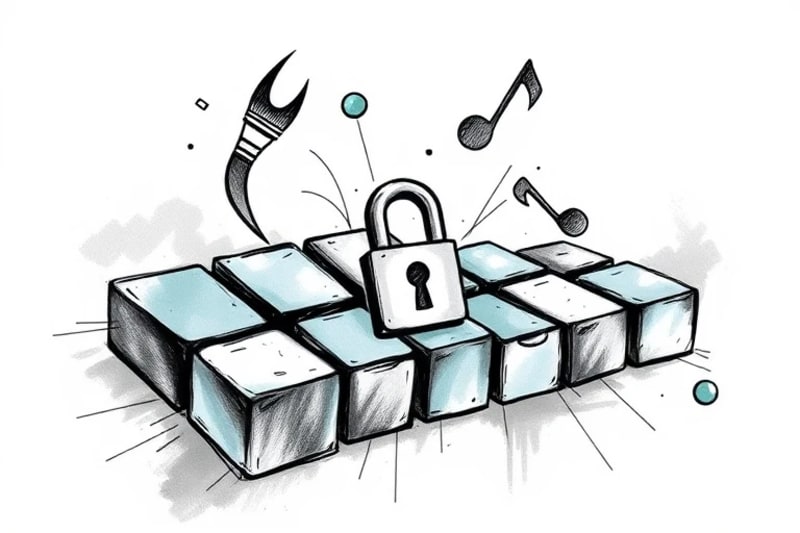
Visualizing the intersection of digital ownership and creative rights.
This stance creates a legal vacuum for AI-generated art. If such works cannot be copyrighted, they fall into the public domain immediately upon creation, meaning anyone can use them without permission or compensation. This could disincentivize investment in AI art tools and could devalue the creative output itself. Conversely, if copyright were granted to the human user or developer, it would need clear guidelines on the degree of human input required for originality.
Some proposed solutions include creating a new category of "AI-assisted copyright" or establishing sui generis rights, similar to database rights, specifically for AI-generated content. These new frameworks would acknowledge the unique nature of AI's creative contribution while still providing a mechanism for protection and commercialization. The legal community is actively exploring these options, recognizing the need for adaptation in an era where technology constantly outpaces legislation.
Moreover, the concept of "fair use" or "fair dealing" also comes into play, particularly when AI models are trained on existing copyrighted works. The legal interpretation of whether such training constitutes copyright infringement is a contentious issue, with significant implications for the development and deployment of generative AI. This is a complex area, similar to the legal considerations surrounding commercial trusts or the assignment of goodwill, where established legal principles must be re-evaluated for new contexts.
The Role of Training Data and Copyright Infringement
Generative AI models, especially large language models (LLMs) and image generation models, are trained on vast datasets comprising billions of existing texts, images, and other media. A significant portion of this training data is copyrighted material. The ethical and legal question here is whether the act of training an AI on copyrighted works constitutes infringement.
Proponents of AI development often argue that training an AI is akin to a human artist studying existing works to learn and develop their style. They contend that the AI does not copy the original works but rather learns patterns, styles, and concepts, which it then uses to generate new, transformative content. This argument often leans on the concept of "fair use" (in the U.S.) or "text and data mining" exceptions (in Europe), which permit the use of copyrighted material for research, criticism, or transformation under certain conditions.
However, many artists and copyright holders argue that their work is being used without permission or compensation, potentially devaluing their creations and undermining their livelihoods. They fear that AI-generated art, derived from their original works, could flood the market, making it harder for human artists to compete. Lawsuits have already been filed against AI companies by artists and stock photo agencies, alleging copyright infringement based on the use of their works in training datasets.
The debate also extends to the "output" of generative AI. If an AI generates an image or text that is substantially similar to an existing copyrighted work, even if unintentionally, it could still be considered infringement. This raises questions about the traceability of AI outputs to specific training data inputs and the responsibility of AI developers and users to ensure their creations do not infringe on existing rights. The ethical implications are profound, touching upon the very foundation of creative ownership and the rights of original creators.
Economic Implications and Fair Compensation
Beyond legal frameworks, the rise of generative AI art has significant economic implications for the creative industries. There are concerns about job displacement for artists, illustrators, writers, and musicians, as AI tools can produce content faster and often at a lower cost. This could lead to a devaluation of human creative labor and a shift in the economic landscape for freelance and professional artists.
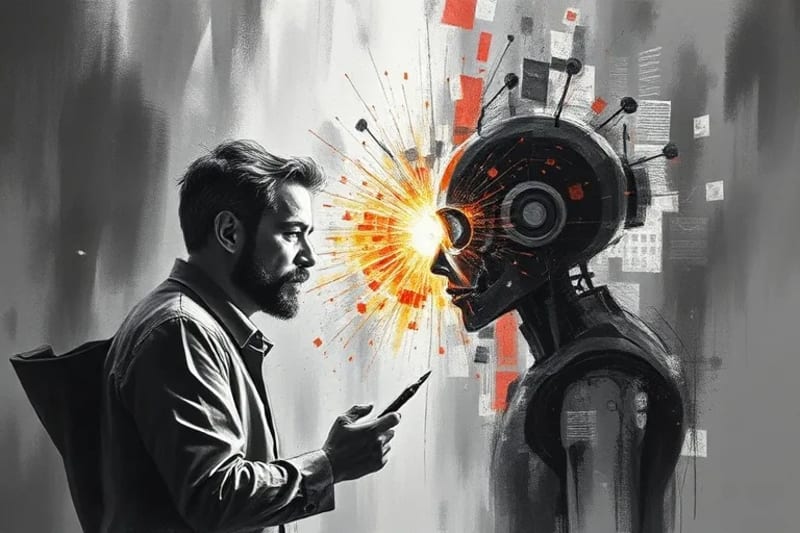
An artistic interpretation of the ethical and creative tensions between humans and AI.
However, generative AI also presents new opportunities. It can serve as a powerful tool for human artists, enabling them to explore new styles, accelerate their workflow, or generate ideas. AI could democratize art creation, allowing individuals without traditional artistic skills to express themselves creatively. The "creator economy" is already seeing new business models emerge around AI-assisted content, where artists leverage these tools to enhance their output and reach new audiences. This evolution mirrors the broader changes seen in fields like the creator economy and digital business.
The question of fair compensation is paramount. If AI models are trained on copyrighted works, should the original creators receive royalties or some form of payment when the AI generates new content? Various models are being explored, including licensing agreements for training data, micro-payments to original artists, or even a universal basic income for creatives. Finding a balance that fosters innovation while protecting the rights and livelihoods of human artists is a critical challenge.
Future Perspectives and Regulatory Needs
The ethical and legal landscape surrounding generative AI in art is still in its nascent stages, with rapid technological development often outpacing regulatory efforts. Future perspectives suggest a need for comprehensive and adaptive legal frameworks that can address the unique challenges posed by AI. This might involve international cooperation to harmonize laws, as AI-generated content transcends national borders.
Transparency in AI development is another crucial aspect. Knowing what data an AI model was trained on and how it processes information could help mitigate copyright infringement concerns and establish clearer lines of responsibility. Ethical guidelines for AI developers and users, promoting responsible creation and deployment of AI art, are also essential. This includes ensuring that AI is not used to generate harmful, discriminatory, or misleading content, aligning with broader ethical considerations in AI development, such as those discussed in the ethics of human genetic editing.
Ultimately, the integration of generative AI into the art world is not merely a technological shift but a cultural and philosophical one. It forces society to re-evaluate what it means to be creative, what constitutes art, and how human ingenuity interacts with artificial intelligence. The debates around authorship and intellectual property are not just legal technicalities; they reflect deeper questions about human value, economic justice, and the future of creative expression in an increasingly automated world. Engaging in these discussions proactively will be vital to shaping a future where AI enhances, rather than diminishes, human creativity.
Further Exploration
- AI in Preventive Medicine: Early Diagnosis and Personalized Treatments
Discover how artificial intelligence is revolutionizing healthcare, offering new pathways for disease prevention and customized medical interventions. - Female Business Leadership: Breaking the Glass Ceiling
Explore the challenges and triumphs of women in leadership roles, and their impact on shaping inclusive and innovative business environments. - Urban Geomancy: Harmonizing Modern Sustainable Spaces
Delve into the ancient practice of geomancy and its modern application in designing urban spaces that promote well-being and sustainability. - Gaia Consciousness: Earth Grids and Planetary Healing
Uncover the concept of Earth's energetic grids and their connection to global consciousness and healing, as explored in esoteric traditions.
Source: Hybrid content assisted by AI and human editorial supervision.


Comentarios