
Hedy Lamarr Hollywood Inventor Wi-Fi Pioneer Legacy
Hedy Lamarr, often celebrated as "the most beautiful woman in film," was far more than a Hollywood icon. Her captivating presence on screen belied a brilliant mind that conceived one of the most pivotal inventions of the 20th century: a frequency-hopping spread spectrum communication system. This innovation, initially designed to guide torpedoes during World War II, laid the foundational groundwork for modern wireless technologies such as Wi-Fi, Bluetooth, and GPS. Her story is a compelling narrative of overlooked genius, demonstrating how profound intellectual contributions can emerge from unexpected places, challenging conventional perceptions of talent and beauty.
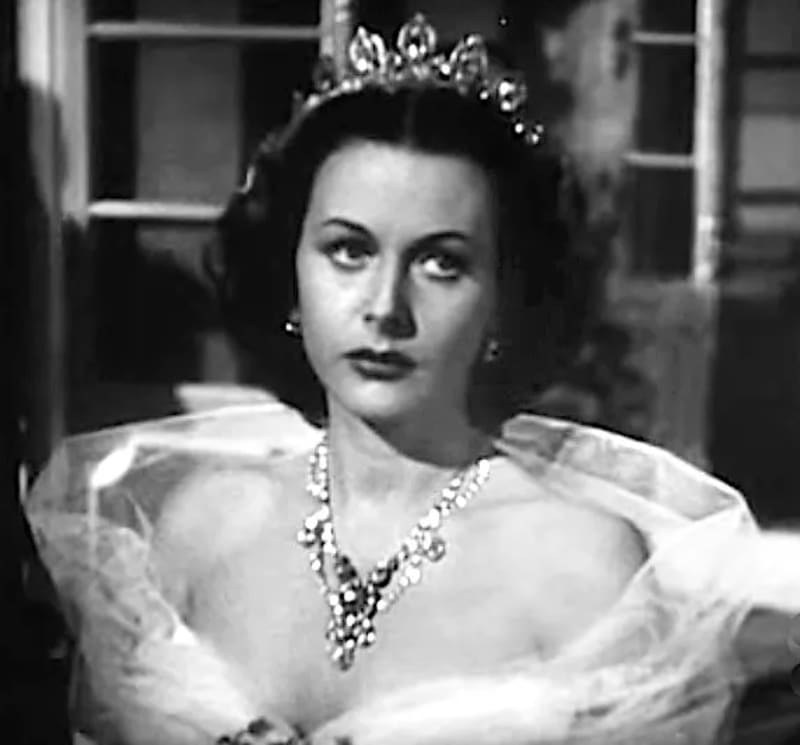
Precursors intellectuales, diagramas fundamentales y representaciones conceptuales que forjaron la visión de Hedy Lamarr sobre la comunicación inalámbrica.
Fuente visual sujeta a disponibilidad del ecosistema: Wikimedia Commons bajo licencia CC BY-SA 4.0 o renderizado conceptual IA.
Born Hedwig Eva Maria Kiesler in Vienna, Austria-Hungary, in 1914, Lamarr's early life was marked by both privilege and an inquisitive spirit. Her father, a successful bank director, encouraged her curiosity, explaining the inner workings of machines and fostering a love for innovation. This early exposure to technical concepts would prove crucial decades later. Her striking beauty, however, quickly propelled her into the world of acting, leading to a controversial role in the 1933 Czech film Ecstasy, which brought her international notoriety.
Escaping an unhappy first marriage to an Austrian arms manufacturer, Friedrich Mandl, she moved to Hollywood in the late 1930s, where she signed with Metro-Goldwyn-Mayer and adopted the stage name Hedy Lamarr. She quickly became one of the biggest stars of the era, captivating audiences with her exotic allure in films such as Algiers (1938), Boom Town (1940), and Samson and Delilah (1949). Despite her cinematic success, Lamarr found the roles intellectually unfulfilling and dedicated her spare time to inventing, driven by a genuine passion for problem-solving.
Beyond the Silver Screen: Hedy Lamarr's Unseen Genius
While the public admired her beauty, Lamarr's mind was often engaged in complex scientific and engineering problems. She tinkered with various inventions, from an improved traffic light to a dissolvable tablet that could turn water into a carbonated drink. Her true genius, however, emerged during World War II. Deeply concerned by the Nazi threat and wishing to contribute to the Allied war effort, she sought ways to apply her intellect to military technology. Her previous marriage to Mandl, which exposed her to discussions about weapons and military technology, provided a unique, albeit unsettling, background.
Lamarr's primary concern was the vulnerability of radio-controlled torpedoes to jamming. Enemy forces could easily intercept and disrupt the radio signals guiding these weapons, rendering them ineffective. She envisioned a system where the radio signal could "hop" between different frequencies, making it virtually impossible for adversaries to detect or jam. This concept was revolutionary and required a sophisticated method for synchronizing the transmitter and receiver.
From Viennese Origins to Hollywood Stardom
Hedy Lamarr's journey from a privileged Viennese upbringing to the dazzling lights of Hollywood is a tale of transformation. Her early life instilled in her a keen observational sense and a desire for knowledge, which she carried into her acting career. Despite her fame, she often felt constrained by the superficiality of her public image, yearning for intellectual engagement beyond the scripts and sets. This internal conflict fueled her pursuit of scientific endeavors, often in secret, away from the prying eyes of the press and the expectations of her studio.
Her Hollywood years, while defining her public persona, also provided her with resources and connections, albeit indirectly. Her exposure to the entertainment industry, with its rapid technological advancements in sound and film, might have subconsciously influenced her thinking about communication systems. The stark contrast between her glamorous life and her serious scientific pursuits highlights the multifaceted nature of human potential, often hidden beneath societal labels.
The Genesis of an Idea: Wartime Innovation
The urgency of World War II provided the catalyst for Lamarr's most significant invention. Witnessing the devastation caused by the conflict, she felt compelled to contribute her talents. It was during a dinner party that she met George Antheil, an avant-garde composer and inventor known for his mechanical musical compositions, including the Ballet Mécanique. Antheil's work involved synchronizing multiple player pianos, a concept that immediately resonated with Lamarr's idea of frequency hopping.
Together, Lamarr and Antheil developed a system that used synchronized piano rolls to change frequencies rapidly and randomly. This "secret communication system" would prevent enemy forces from jamming radio signals, particularly those used to guide torpedoes. Their collaboration was an extraordinary blend of artistic and scientific minds, demonstrating the power of interdisciplinary thinking. The initial inspiration came from Lamarr's understanding of radio communication vulnerabilities, coupled with Antheil's expertise in mechanical synchronization.

A visual metaphor for the profound, yet often unacknowledged, influence of a creative mind on both popular culture and scientific progress.
Frequency Hopping: The Core of Her Invention
The core principle of Lamarr and Antheil's invention, patented in 1942 as "Secret Communication System" (U.S. Patent No. 2,292,387), was frequency hopping spread spectrum (FHSS). This technique involves transmitting radio signals over a rapidly changing sequence of radio frequencies. Both the transmitter and receiver must know the sequence of frequencies and jump between them in perfect synchronicity. If an enemy tries to jam the signal on one frequency, the signal quickly moves to another, making it extremely difficult to intercept or disrupt.
The original patent described a system using 88 frequencies, corresponding to the 88 keys of a piano, controlled by a paper roll similar to those used in player pianos. This mechanical approach was ingenious for its time, offering a robust solution to a critical wartime problem. The concept was not entirely new in military communications, but Lamarr and Antheil's application and detailed mechanism were groundbreaking. Their work demonstrated an early understanding of secure communication principles that would later become indispensable.
The patent itself is a testament to their foresight, detailing a method that could protect sensitive military communications from interception. While the immediate application was for torpedo guidance, the underlying principles had far broader implications for any form of wireless communication requiring security and resilience against interference. This innovative approach to signal transmission paved the way for future developments in wireless technology, highlighting the importance of advanced computational methods in secure data transfer.
Patent, Secrecy, and Delayed Recognition
Despite the patent, the U.S. Navy initially dismissed the invention. The technology was considered too complex and impractical to implement during the war, particularly given its mechanical nature. Instead of developing it, the Navy classified the patent, effectively burying it for years. Lamarr and Antheil even offered to donate the patent to the government for free, but their offer was largely ignored. This lack of immediate adoption was a significant setback, and Lamarr returned to her film career, her inventive genius largely forgotten by the public and military alike.
It wasn't until the 1950s, when the patent expired, that the principles of frequency hopping began to be explored more seriously. Engineers at Sylvania Electronic Systems rediscovered the concept and developed solid-state electronic versions of the technology. These modern implementations were crucial for secure military communications during the Cuban Missile Crisis and later for the development of the Joint Tactical Information Distribution System (JTIDS).

A detailed rendering of the underlying technical principles that enabled secure wireless communication, a testament to forward-thinking engineering.
The Modern Legacy: Wi-Fi, Bluetooth, and Beyond
The true impact of Lamarr's invention became evident decades later with the advent of digital communication technologies. The fundamental principles of frequency hopping spread spectrum are now integral to a wide array of wireless applications. Bluetooth technology, which enables short-range wireless connections between devices, relies heavily on FHSS to ensure robust and secure communication. Similarly, early versions of Wi-Fi (IEEE 802.11) utilized spread spectrum techniques, including FHSS, though later versions transitioned to direct sequence spread spectrum (DSSS) and orthogonal frequency-division multiplexing (OFDM).
Beyond these common technologies, the concept of spread spectrum is also crucial in GPS systems, providing resilience against interference and enhancing signal integrity. The ability to transmit data securely and reliably, even in noisy or hostile environments, is a direct descendant of Lamarr and Antheil's wartime innovation. Her foresight in recognizing the need for secure wireless communication has profoundly shaped our connected world, making her an unsung hero of the digital age. This technological evolution continues to influence fields like augmented reality in art, where seamless wireless data transfer is paramount.
A Pioneer for Women in STEM
Hedy Lamarr's story is a powerful testament to the often-overlooked contributions of women in science, technology, engineering, and mathematics (STEM). For many years, her invention was either unknown or attributed solely to Antheil, perpetuating a common historical pattern of women's intellectual achievements being marginalized. Her experience highlights the systemic barriers and biases that women faced, and often still face, in traditionally male-dominated fields.
Her posthumous recognition serves as an inspiration for future generations, encouraging young women to pursue their scientific curiosities regardless of societal expectations. In 2014, Lamarr was inducted into the National Inventors Hall of Fame, finally receiving the widespread recognition she deserved. This acknowledgment not only celebrated her specific invention but also her broader role as a symbol of ingenuity and resilience against gender stereotypes. Her legacy underscores the importance of fostering an inclusive environment where all talents are recognized and nurtured, irrespective of background or public image.
Hedy Lamarr: A Dual Legacy of Beauty and Brilliance
Hedy Lamarr passed away in 2000, having lived a life that spanned the golden age of Hollywood and the dawn of the digital era. Her story is a poignant reminder that appearances can be deceiving, and true genius often resides beneath the surface. She was a woman who, despite being typecast by her beauty, harbored an insatiable drive to innovate and contribute to the world in a meaningful way. Her frequency-hopping technology, once dismissed, now underpins the very fabric of our interconnected lives.
From secure military communications to the everyday convenience of Wi-Fi, Lamarr's intellectual footprint is undeniable. Her journey from the silver screen to the patent office encapsulates a unique blend of glamour and intellect, making her a truly remarkable figure in both cinematic and technological history. Her legacy continues to inspire, urging us to look beyond superficialities and recognize the profound impact that diverse minds can have on shaping our future.
U.S. Patent No. 2,292,387
Inventors: Hedy Kiesler Markey (Hedy Lamarr) and George Antheil
Title: Secret Communication System
Date of Patent: August 11, 1942
Abstract: A secret communication system which is relatively immune to jamming. The system involves the use of a plurality of frequencies for transmitting messages, with the frequencies being changed in a predetermined sequence known only to the transmitter and receiver. This makes it difficult for unauthorized parties to intercept or interfere with the communication.
The story of Hedy Lamarr is a powerful narrative about the intersection of art, science, and the human spirit. It challenges us to reconsider how we define and value contributions, reminding us that innovation can arise from the most unexpected sources. Her work continues to resonate, not just in the technologies we use daily, but also in the ongoing conversation about recognizing talent and breaking down stereotypes in all fields.
Related Searches and Further Reading
Explore more about the pioneers of technology and the evolution of communication systems:
- ➤ Quantum Computing: Energy Optimization in Renewable Energies
- ➤ Augmented Reality Art: Interaction, Creation, and Future
- ➤ Mixed Reality Architecture: Immersive Design Visualization
- ➤ Neurofeedback Mindfulness Brainwaves: Deeper Meditation Hacking
- ➤ Ethics of Privacy in Virtual Reality: Critical Analysis
Source: Hybrid content assisted by AI and human editorial supervision.


Comentarios