
Circular Business Models Green Startups Regenerative Economy Keys
The global economy faces unprecedented challenges, from resource depletion and climate change to burgeoning waste streams. In response, a paradigm shift is underway, moving away from the traditional linear "take-make-dispose" model towards more sustainable alternatives. Central to this evolution are circular business models and the broader concept of a regenerative economy, particularly championed by agile green startups.
This article delves into the core principles of these innovative approaches, exploring how new ventures can integrate them to create both environmental and economic value. Understanding these frameworks is not merely an ethical choice but a strategic imperative for long-term viability and competitive advantage in the 21st century business landscape.
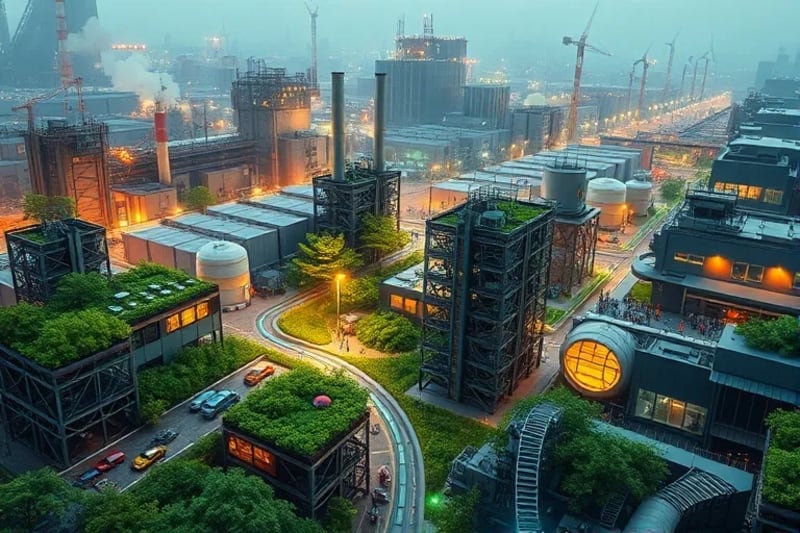
Conceptual illustration of a thriving circular economy where resources are continuously reused and regenerated.
Table of Contents
- Understanding the Circular Economy
- The Regenerative Economy: Beyond Circularity
- Core Principles for Green Startups
- Innovative Business Models in Practice
- Benefits and Challenges for Startups
- Case Studies and Future Outlook
Understanding the Circular Economy
The circular economy is an economic system aimed at eliminating waste and the continual use of resources. It is based on three core principles, as defined by the Ellen MacArthur Foundation, which guide its implementation across various industries.
Unlike the linear economy, where products are made, used, and then discarded, the circular model seeks to keep products, components, and materials at their highest utility and value at all times. This involves designing products for durability, reuse, and recycling, minimizing the extraction of virgin resources.
- Design out waste and pollution: This principle emphasizes that waste is not an accidental byproduct but a design flaw. Products and processes should be conceived from the outset to prevent waste and pollution.
- Keep products and materials in use: This involves strategies like repair, reuse, remanufacturing, and recycling. The goal is to extend the lifespan of products and components, ensuring materials circulate within the economy.
- Regenerate natural systems: Beyond minimizing harm, the circular economy aims to actively improve environmental quality. This includes returning biological materials to the earth safely and restoring ecosystems.
For green startups, adopting these principles means rethinking every stage of their value chain, from raw material sourcing to product end-of-life. It encourages innovation in material science, process optimization, and service delivery.
The Regenerative Economy: Beyond Circularity
While the circular economy focuses on minimizing negative impacts, the regenerative economy takes this a step further. It is an economic system that not only reduces harm but actively restores, renews, and revitalizes natural and social capital. It's about creating net positive impacts.
This approach draws inspiration from natural ecosystems, which are inherently regenerative. For instance, soil health is not merely maintained but improved through natural processes, leading to richer biodiversity and greater resilience. Similarly, a regenerative business aims to leave the environment and communities better than it found them.
Key aspects of a regenerative economy include:
- Ecological Restoration: Investing in projects that restore degraded ecosystems, such as reforestation, soil regeneration, and water purification.
- Social Equity: Ensuring fair labor practices, community empowerment, and equitable distribution of benefits.
- Holistic Design: Integrating environmental, social, and economic considerations from the very beginning of any project or product development.
- Local Resilience: Fostering local supply chains and economies to reduce reliance on distant resources and enhance community self-sufficiency.
Green startups have a unique opportunity to embed these regenerative principles into their DNA, creating models that are not just sustainable but actively restorative. This can lead to deeper customer loyalty and a stronger purpose-driven brand identity.
Core Principles for Green Startups
For green startups aiming to thrive in the regenerative economy, several core principles must guide their operations and strategic decisions. These principles ensure that sustainability is not an afterthought but an integral part of their business model.
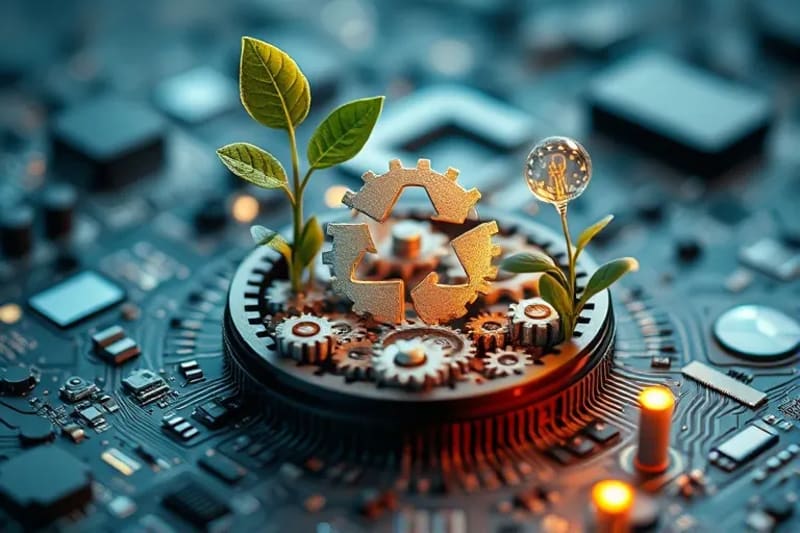
An artistic representation of a closed-loop system, symbolizing continuous resource flow and regeneration.
One fundamental aspect is sustainable design and innovation. This goes beyond simply using recycled materials; it involves designing products for longevity, ease of repair, disassembly, and eventual recycling or composting. Concepts like "cradle-to-cradle" design, where materials are conceived as nutrients in either biological or technical cycles, are paramount. Biomimicry, drawing inspiration from nature's designs and processes, also plays a crucial role in developing truly sustainable solutions.
Another critical principle is resource optimization. This involves strategies such as maximizing material utilization, minimizing energy consumption, and adopting renewable energy sources. Startups should explore opportunities for reuse, repair, and remanufacturing of their products or components, extending their useful life. This not only reduces waste but also lowers production costs and enhances resource independence.
Digitalization and transparency are also key enablers. Technologies like the Internet of Things (IoT) can monitor resource flows and product performance, while blockchain can provide unprecedented traceability for materials and supply chains. This transparency builds trust with consumers and allows for more efficient resource management. For instance, understanding the origin and journey of materials can help companies comply with evolving regulations, as seen in discussions around cybersecurity for IoT devices in homes.
Finally, collaboration and ecosystem thinking are vital. No single startup can create a fully circular or regenerative system alone. Partnerships with suppliers, customers, competitors, and even local governments can foster industrial symbiosis, where one company's waste becomes another's resource. This collaborative spirit is essential for building robust and resilient green economies.
Innovative Business Models in Practice
The shift towards circularity and regeneration necessitates the adoption of new business models that challenge conventional ownership and consumption patterns. Green startups are at the forefront of pioneering these innovative approaches.
One prominent model is Product-as-a-Service (PaaS). Instead of selling products, companies lease them to customers, retaining ownership and responsibility for maintenance, repair, and end-of-life management. This incentivizes manufacturers to design durable, upgradeable products, as their profitability is tied to the product's longevity and performance. Examples include lighting-as-a-service or tire-as-a-service models.
The sharing economy also plays a significant role. Platforms that enable the sharing of goods (e.g., tools, vehicles) or services reduce the need for individual ownership and maximize asset utilization. This model aligns perfectly with circular principles by promoting efficiency and reducing overall consumption of new products.
Reverse logistics and take-back schemes are crucial for closing the loop. Startups design systems to collect used products from consumers, facilitating their return for repair, refurbishment, or recycling. This requires robust infrastructure and efficient processes, often supported by digital platforms. This contrasts sharply with traditional models that lack such mechanisms, often contributing to issues like those addressed in geopolitics of water due to resource strain.
Another emerging model is waste-to-value, where startups specialize in transforming discarded materials into new, high-value products. This could involve upcycling textiles, converting food waste into energy or fertilizers, or processing electronic waste to recover precious metals. These ventures demonstrate that waste is a resource in disguise, unlocking new revenue streams.
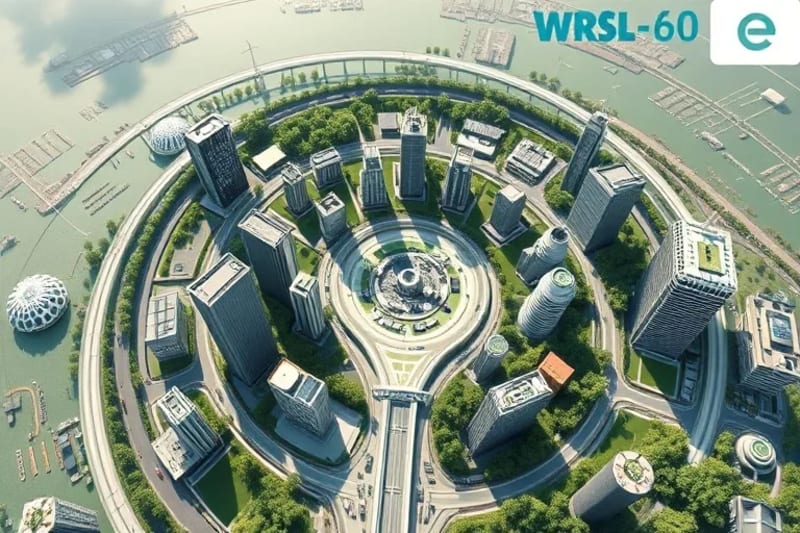
A visionary 3D render of a city designed around circular principles, emphasizing sustainability.
Benefits and Challenges for Startups
Adopting circular and regenerative business models offers numerous advantages for green startups, but also presents a unique set of challenges that require careful navigation.
Key Benefits:
- Competitive Advantage: Differentiating from linear competitors by offering more sustainable, durable, and often cost-effective solutions in the long run.
- Reduced Costs: Lower reliance on virgin materials, waste disposal fees, and potentially more efficient use of energy can lead to significant operational cost savings over time.
- Enhanced Brand Reputation: Consumers are increasingly conscious of environmental impact. A strong commitment to circularity and regeneration can build trust and brand loyalty.
- Access to New Markets and Funding: Growing demand for sustainable products and services opens new market segments. Additionally, impact investors and green funds are specifically looking for businesses with strong environmental and social credentials, similar to the focus on green investments in emerging markets.
- Increased Resilience: Reduced dependency on volatile raw material markets and diversified revenue streams (e.g., from repair services) make businesses more resilient to economic shocks.
- Innovation Opportunities: The need to design for circularity fosters creativity and leads to the development of novel technologies, materials, and processes.
Challenges to Overcome:
- Initial Investment: Setting up circular systems, such as reverse logistics or advanced recycling facilities, can require substantial upfront capital.
- Consumer Behavior: Shifting consumer mindsets from ownership to access (PaaS) or encouraging participation in take-back schemes can be challenging. Education and incentives are often necessary.
- Supply Chain Complexity: Managing intricate supply chains that involve collection, sorting, and reprocessing of materials adds layers of complexity compared to linear models.
- Regulatory Landscape: Existing regulations are often designed for linear economies, which can create barriers or lack of incentives for circular practices. Advocacy for policy changes is often required.
- Quality Control: Ensuring consistent quality in recycled or remanufactured products can be more demanding than using virgin materials.
Despite these hurdles, the long-term benefits and growing market demand for sustainable solutions make circular and regenerative models an increasingly attractive path for entrepreneurial ventures.
Case Studies and Future Outlook
Numerous green startups are already demonstrating the viability and profitability of circular and regenerative business models across diverse sectors. These examples provide valuable insights and inspire further innovation.
In the fashion industry, companies are developing models for textile recycling, clothing rental, and repair services to combat fast fashion waste. Startups are also innovating with bio-based materials and designing garments for complete biodegradability or infinite recyclability. This addresses a critical need, as the fashion industry is a major contributor to global pollution.
The electronics sector sees startups focusing on refurbished devices, modular designs for easy upgrades and repairs, and advanced material recovery from e-waste. These efforts extend product lifespans and reduce the environmental impact associated with the extraction of rare earth metals and other components.
In food systems, startups are tackling food waste through innovative composting solutions, upcycling food byproducts into new ingredients, and developing localized, regenerative agriculture practices. These initiatives not only reduce waste but also improve soil health and food security.
The future of circular and regenerative economies looks promising, driven by increasing consumer awareness, technological advancements, and supportive policy frameworks. Governments and international bodies are increasingly recognizing the importance of these models for achieving sustainability goals, leading to new incentives and regulations.
The scalability of these models will be key. As more startups demonstrate success, larger corporations are likely to follow suit, further accelerating the transition. Education and public engagement will also play a crucial role in fostering a culture of reuse, repair, and regeneration. The convergence of these factors suggests a future where economic growth is decoupled from resource depletion and environmental degradation, leading to a more sustainable and equitable world for all.
Explore Further
Related Insights
Source: Hybrid content assisted by AI and human editorial supervision.


Comentarios