
Blockchain Circular Economy: Sustainable Supply Chains Optimization
The global economy faces unprecedented challenges related to resource depletion, waste generation, and environmental degradation. Traditional linear economic models, characterized by a "take-make-dispose" approach, are no longer sustainable in the long term. This pressing need for change has propelled the concept of the circular economy to the forefront of global discussions on sustainability.
Simultaneously, blockchain technology has emerged as a transformative force, promising unparalleled transparency, security, and efficiency across various industries. Its decentralized and immutable ledger system offers a unique solution to many of the complexities inherent in managing sustainable supply chains. By integrating these two powerful paradigms, we can unlock new potentials for environmental stewardship and economic resilience.
This article explores the profound synergy between blockchain and the circular economy, detailing how this combination can optimize sustainable supply chains. We will delve into the core principles of each concept and illustrate how their convergence can drive a more responsible and efficient global economic system. Understanding this integration is crucial for businesses and policymakers aiming to build a truly sustainable future.

Conceptual visualization of an integrated, transparent supply chain network powered by blockchain for circular economy principles.
Table of Contents
- Understanding the Circular Economy
- The Power of Blockchain Technology
- Blockchain's Role in Sustainable Supply Chains
- Key Benefits and Challenges
- Real-World Applications and Case Studies
- Future Outlook
Understanding the Circular Economy
The circular economy is an economic system aimed at eliminating waste and the continual use of resources. It is a regenerative approach that contrasts sharply with the traditional linear economy, which follows a "take-make-dispose" model. The core principles of the circular economy are designing out waste and pollution, keeping products and materials in use, and regenerating natural systems.
This paradigm shift seeks to decouple economic growth from the consumption of finite resources. Instead of discarding products at the end of their life cycle, the circular economy promotes strategies like reuse, repair, refurbishment, and recycling. This approach not only conserves resources but also reduces environmental impact and creates new economic opportunities.
Key elements driving the circular economy include product design for longevity and recyclability, business models that prioritize service over ownership, and reverse logistics systems. These elements collectively aim to close material loops, ensuring that materials retain their highest value for as long as possible. The transition to this model requires significant innovation and collaboration across industries.
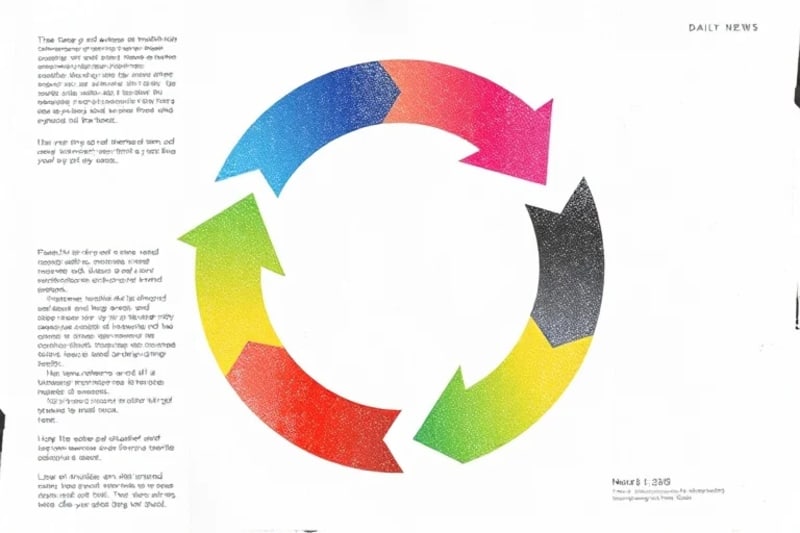
Abstract representation of the circular economy's regenerative loop, enhanced by blockchain's data integrity.
The Power of Blockchain Technology
Blockchain technology, at its core, is a decentralized, distributed ledger system that records transactions across a network of computers. Each "block" in the chain contains a timestamped batch of valid transactions, and once recorded, the data in any given block cannot be altered retroactively. This immutability is a cornerstone of its security and trustworthiness.
The key characteristics of blockchain that make it revolutionary include decentralization, transparency, immutability, and enhanced security. Decentralization means no single entity controls the network, reducing points of failure and censorship. Transparency allows all participants to view the ledger, fostering trust without the need for intermediaries. Immutability ensures that once data is recorded, it cannot be changed, providing a reliable audit trail. Additionally, cryptographic security protects data integrity.
Beyond simple transaction recording, blockchain enables "smart contracts," which are self-executing contracts with the terms of the agreement directly written into code. These contracts automatically execute when predefined conditions are met, eliminating the need for manual intervention and reducing potential disputes. This capability has significant implications for automating processes within complex supply chains. For a deeper dive into the legal challenges and governance of such automated systems, consider exploring resources on Smart Contracts Autonomous Governance: Global Legal Challenges.
Blockchain's Role in Sustainable Supply Chains
The integration of blockchain technology into sustainable supply chains offers a powerful mechanism to overcome existing limitations and foster circularity. Its inherent properties align perfectly with the need for verifiable data, transparent processes, and efficient resource management. This synergy can transform how products are designed, produced, consumed, and ultimately recycled or repurposed.
One of the most significant contributions of blockchain is its ability to provide unparalleled transparency and traceability. By recording every step of a product's journey on an immutable ledger, stakeholders can verify the origin of materials, ethical sourcing practices, and environmental impact data. This level of transparency helps combat issues like greenwashing and ensures compliance with sustainability standards.
Furthermore, blockchain can revolutionize waste management and resource recovery. Material passports, digital records of a product's components and their properties, can be stored on a blockchain. This allows recyclers to easily identify materials, optimizing sorting and processing, and maximizing the recovery of valuable resources. It also incentivizes proper disposal and recycling by creating a verifiable chain of custody for waste streams.
Supply chain optimization is another critical area where blockchain excels. Real-time data on product movement, inventory levels, and environmental metrics can be shared securely among all participants. This leads to greater efficiency, reduced waste from overproduction or spoilage, and a smaller carbon footprint across the entire supply chain. The ability to track and verify data at every stage enhances overall operational effectiveness.
Consumer trust and engagement are also significantly boosted by blockchain's capabilities. Consumers can access verifiable information about the products they purchase, including their environmental footprint, social impact, and circularity credentials. This empowers conscious purchasing decisions and strengthens brand reputation for companies committed to sustainability. The transparency offered by blockchain builds a direct connection between ethical practices and consumer choice.
Smart contracts play a pivotal role in automating circular economy processes. They can facilitate automated payments upon successful return of a product for recycling, trigger repair services based on product lifecycle data, or manage warranties and guarantees. This automation reduces administrative overhead and ensures that circular practices are consistently applied throughout the product's life cycle. The foundational concepts of computing, which underpin such advanced algorithms, can be traced back to visionaries like Ada Lovelace Computación IA: Visionaria Algoritmos Futuro.

A conceptual still-life depicting smart contracts automating the recovery and recycling of materials within a circular economy framework.
Key Benefits and Challenges
The convergence of blockchain and the circular economy offers a multitude of benefits, but also presents significant challenges that need to be addressed for widespread adoption.
Benefits:
- Enhanced Sustainability: Provides verifiable proof of sustainable practices, reducing environmental impact and promoting ethical sourcing.
- Cost Savings: Optimizes resource use, reduces waste, and streamlines logistics, leading to operational efficiencies and lower costs.
- Regulatory Compliance: Facilitates easier reporting and adherence to increasingly stringent environmental regulations.
- New Business Models: Enables innovative circular business models, such as product-as-a-service, leasing, and advanced recycling programs.
- Increased Trust: Builds confidence among consumers, investors, and partners through transparent and immutable data.
Challenges:
- Scalability: Current blockchain networks may struggle to handle the immense volume of transactions required for global supply chains.
- Interoperability: Different blockchain platforms and legacy systems need to communicate seamlessly, which is a complex technical hurdle.
- Regulatory Frameworks: The legal and regulatory landscape for blockchain and smart contracts is still evolving, creating uncertainty for businesses.
- Adoption Barriers: Resistance to change, lack of technical expertise, and significant initial investment can hinder widespread implementation.
- Energy Consumption: Some blockchain consensus mechanisms (e.g., Proof of Work) are energy-intensive, posing a sustainability paradox that needs careful consideration and the adoption of more eco-friendly alternatives.
Real-World Applications and Case Studies
While still in its nascent stages, the application of blockchain in circular economy initiatives is gaining traction across various sectors. These early implementations demonstrate the tangible benefits of integrating these technologies.
In the fashion industry, companies are using blockchain to track the provenance of materials, from organic cotton farms to garment factories. This ensures ethical labor practices and verifies the use of sustainable textiles, providing consumers with confidence in their purchases. The immutable record helps prevent counterfeiting and validates claims of sustainability.
The electronics sector is exploring blockchain for managing the lifecycle of devices, particularly for e-waste recycling. By creating digital identities for products, companies can track components, facilitate repair services, and ensure proper end-of-life disposal and material recovery. This minimizes hazardous waste and maximizes the reuse of valuable minerals.
In the food industry, blockchain is being deployed to enhance food traceability, from farm to fork. This not only improves food safety by quickly identifying contaminated batches but also verifies sustainable farming practices and reduces food waste through better inventory management. Consumers can scan QR codes to see the entire journey of their produce.
These examples highlight how blockchain provides the necessary infrastructure for transparency and accountability, crucial for the success of circular economy models. The ability to verify claims and track assets throughout their entire lifecycle is a game-changer for sustainability efforts.
Future Outlook
The future of blockchain and the circular economy is promising, with continuous advancements poised to overcome current challenges. As blockchain technology matures, issues of scalability and energy consumption are being addressed through innovative solutions like Proof of Stake and other consensus mechanisms. Interoperability standards are also under development, facilitating seamless data exchange across different platforms.
The integration of blockchain with other emerging technologies, such as Artificial Intelligence (AI) and the Internet of Things (IoT), will further amplify its impact. IoT devices can feed real-time data into blockchain ledgers, while AI can analyze this data to optimize circular processes, predict material availability, and identify new opportunities for resource recovery. This convergence creates a highly intelligent and responsive sustainable supply chain. Discussions around the ethical and regulatory implications of such advanced technologies are crucial, as highlighted in the discourse on Global AI Governance: Legal Challenges Critical Decisions.
Policy and regulatory support will be essential for accelerating the adoption of blockchain-powered circular economy models. Governments and international organizations are increasingly recognizing the potential of these technologies and are working towards creating supportive legal frameworks. This will provide the necessary certainty and incentives for businesses to invest in these transformative solutions.
Ultimately, the synergy between blockchain and the circular economy represents a powerful pathway towards a more sustainable and resilient global economic system. By fostering transparency, efficiency, and trust, these technologies can help us move beyond the linear model and embrace a future where resources are valued, waste is minimized, and natural systems are regenerated.
The journey towards a fully circular economy is complex, but with the innovative capabilities of blockchain, we are better equipped to navigate this transition. It offers a robust framework for tracking, verifying, and optimizing the flow of materials and products, paving the way for a truly regenerative future.
Further Exploration
- Music Therapy: Benefits for Mental and Physical Health in Various Contexts - Explore the therapeutic applications of music.
- Colombian Commercial Code: Transport Insurance - Delve into legal frameworks for commerce.
- CRISPR-Cas9 Gene Therapy: Advances for Rare Diseases in Medicine - Understand cutting-edge biotechnologies.
- Silent Mysticism: Inner Peace in a Hyperconnected World - Discover paths to spiritual well-being.
- Active Meditation and Planetary Transits: Synchronizing Mind and Cosmos - Explore astrological and meditative practices.
- Alchemical Tarot Spreads: Transform Shadow into Gold - Learn about esoteric practices and self-transformation.
Source: Hybrid content assisted by AI and human editorial supervision.


Comentarios