
Cryptoassets Generation Z Savings Retirement Financial Future
Cryptoassets for Generation Z: Strategies for Savings, Retirement, and Financial Future
Generation Z, comprising individuals born roughly between the mid-1990s and early 2010s, stands at a unique crossroads in financial history. Faced with unprecedented economic challenges such as rising student debt, escalating living costs, and an increasingly uncertain job market, traditional financial pathways often appear less appealing or even insufficient for securing a prosperous future.
In this context, cryptoassets have emerged as a compelling, albeit complex, alternative. This article delves into how this digitally native generation can strategically leverage the burgeoning world of cryptocurrencies and blockchain technology to build robust savings, plan for retirement, and cultivate a resilient financial future.

Precursors intellectuales, diagramas fundamentales y representaciones conceptuales que forjaron la visión de la Generación Z sobre el futuro financiero digital.
Fuente visual sujeta a disponibilidad del ecosistema: Wikimedia Commons bajo licencia CC BY-SA 4.0 o renderizado conceptual IA.The journey into crypto for Gen Z is not merely about chasing quick gains; it's about understanding a paradigm shift in finance, embracing decentralization, and taking proactive steps towards financial autonomy. This guide aims to provide an educational and informed perspective, helping to demystify cryptoassets and outline practical strategies.
Table of Contents
- 1. Understanding Cryptoassets for Gen Z
- 2. The Allure of Crypto for Digital Natives
- 3. Crypto Strategies for Savings
- 4. Integrating Crypto into Retirement Plans
- 5. Building a Resilient Financial Future with Crypto
- 6. Navigating Risks and Regulatory Landscapes
- 7. Ethical Considerations and Future Outlook
1. Understanding Cryptoassets for Gen Z
At their core, cryptoassets are digital or virtual currencies that employ cryptography for security. They operate on decentralized networks known as blockchains, which are distributed ledgers maintained by a network of computers rather than a central authority. This decentralization is a fundamental aspect that distinguishes them from traditional financial systems.
The most well-known cryptoassets include Bitcoin (BTC) and Ethereum (ETH), but the ecosystem extends far beyond these. It encompasses stablecoins, which are pegged to fiat currencies like the US dollar (e.g., USDT, USDC) to minimize price volatility, and a vast array of altcoins, each with unique use cases and technological underpinnings. Understanding these different categories is crucial for any Gen Z investor.
Beyond mere currencies, cryptoassets also include Non-Fungible Tokens (NFTs), which represent ownership of unique digital items, Decentralized Finance (DeFi) protocols offering lending and borrowing services without intermediaries, and Decentralized Autonomous Organizations (DAOs) that enable community-led governance. These innovations collectively represent a new frontier for finance and digital ownership.
2. The Allure of Crypto for Digital Natives
Gen Z's inherent familiarity with digital environments makes cryptoassets a natural fit. Having grown up with the internet and mobile technology, they are accustomed to digital interactions and value innovation. This digital fluency translates into a greater willingness to explore and adopt new technologies, including blockchain.
Furthermore, many members of this generation harbor a significant distrust in traditional financial institutions, a sentiment often rooted in the aftermath of the 2008 financial crisis and ongoing concerns about economic inequality. Cryptoassets, with their promise of decentralization and transparency, offer an appealing alternative that bypasses these established systems.
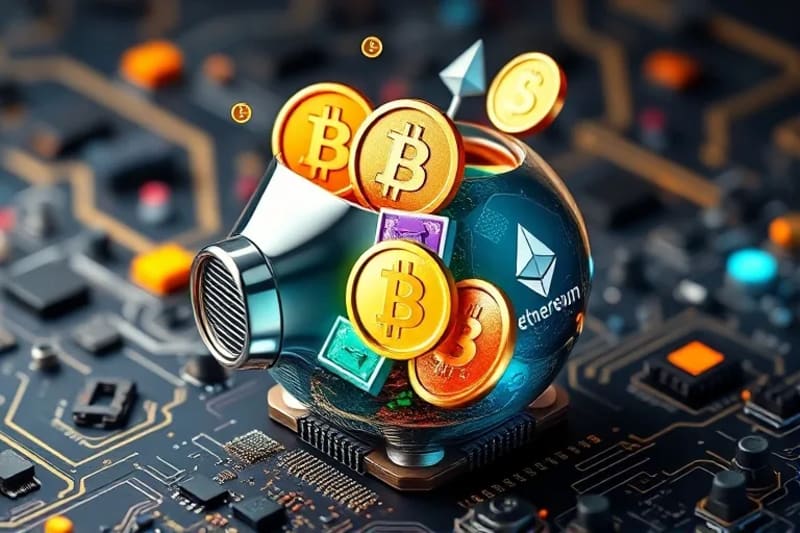
A conceptual representation of digital savings growing within the crypto ecosystem.
The potential for higher returns, especially when compared to the historically low-interest rates offered by traditional savings accounts, also acts as a powerful draw. While this potential comes with increased risk, the allure of significant wealth creation resonates strongly with a generation seeking to overcome economic hurdles. The community aspect and the fear of missing out (FOMO) on a transformative technology also play a role in driving adoption.
3. Crypto Strategies for Savings
For Gen Z looking to build savings with cryptoassets, a thoughtful and disciplined approach is essential. One of the most widely recommended strategies is Dollar-Cost Averaging (DCA). This involves investing a fixed amount of money into a chosen cryptoasset at regular intervals, regardless of its price fluctuations. DCA helps mitigate the impact of market volatility by averaging out the purchase price over time, reducing the risk of buying in at a market peak.
Another strategy involves utilizing stablecoins for short-term savings or as a safe haven during volatile market periods. Stablecoins, such as USDC or Tether, are designed to maintain a stable value, typically pegged to the US dollar. This makes them suitable for parking funds without exposure to extreme price swings, while still being part of the crypto ecosystem.
For those willing to undertake higher risk for potentially higher rewards, Decentralized Finance (DeFi) offers opportunities for earning yield. Through DeFi protocols, users can lend their cryptoassets or provide liquidity to decentralized exchanges, earning interest or trading fees in return. However, it is crucial to understand the inherent risks, including smart contract vulnerabilities and impermanent loss, before engaging in DeFi activities. Diversification across different cryptoassets and traditional investments remains a cornerstone of sound financial planning.
4. Integrating Crypto into Retirement Plans
When considering cryptoassets for retirement, the concept of "hodling" takes center stage. This term, originating from a misspelling of "holding," refers to the strategy of buying and holding onto cryptoassets for an extended period, often years or even decades, with the expectation of significant long-term appreciation. Bitcoin and Ethereum are often considered prime candidates for this long-term strategy due to their established networks and market capitalization.
However, the extreme volatility of crypto markets means that this approach carries substantial risk. While the potential for exponential growth exists, there is also the possibility of significant drawdowns. Therefore, integrating crypto into a retirement plan should ideally involve a balanced portfolio, where cryptoassets represent a smaller, albeit growth-oriented, portion alongside more stable traditional investments like stocks, bonds, and real estate.
Tax implications are another critical consideration. Capital gains taxes on cryptoassets can vary significantly by jurisdiction, and understanding these regulations is vital for effective retirement planning. Consulting with a financial advisor who specializes in digital assets can provide invaluable guidance on how to structure crypto investments within existing retirement vehicles such as 401(k)s or IRAs, where permitted, to optimize tax efficiency and long-term growth.
5. Building a Resilient Financial Future with Crypto
Beyond mere investment, cryptoassets can be a cornerstone of a resilient financial future for Gen Z, provided it's built on a foundation of continuous learning and robust security practices. The rapidly evolving nature of blockchain technology demands ongoing education about new protocols, market dynamics, and emerging use cases. Staying informed helps in making intelligent investment decisions and adapting to market changes.

An abstract visualization of decentralized finance fostering long-term financial growth and stability.
Security is paramount in the crypto space. Implementing strong, unique passwords, enabling two-factor authentication (2FA) on all accounts, and using hardware wallets (cold storage) for significant holdings are non-negotiable practices to protect assets from cyber threats. The digital nature of these assets makes them susceptible to various forms of attack, emphasizing the need for vigilance and robust security measures. This is a critical aspect of protecting digital consciousness and privacy in an increasingly interconnected world.
Furthermore, understanding the global regulatory landscape is crucial. As governments worldwide grapple with how to classify and regulate cryptoassets, compliance requirements can change, impacting investment strategies and tax obligations. A well-diversified portfolio that balances crypto with traditional assets remains the most prudent approach. Gen Z can also explore ethical investing within crypto, supporting projects aligned with sustainable practices or positive social impact, much like the principles of economy, happiness, and well-being in labor.
6. Navigating Risks and Regulatory Landscapes
While the opportunities in cryptoassets are vast, Gen Z must approach this space with a clear understanding of its inherent risks. The most prominent risk is price volatility; cryptocurrencies can experience dramatic price swings in short periods, leading to substantial gains or losses. This volatility makes them unsuitable for funds that might be needed in the short term.
Another significant concern is the prevalence of scams and fraud. The unregulated nature of some parts of the crypto market makes it a fertile ground for "rug pulls," phishing attacks, and fraudulent projects. Thorough due diligence, including researching project teams, technology, and community sentiment, is essential before any investment. Cybersecurity risks, such as exchange hacks and personal wallet compromises, also pose a constant threat, underscoring the need for robust security practices.
The regulatory landscape for cryptoassets is still evolving and varies significantly across different countries and regions. Regulatory uncertainty can introduce risks related to market access, taxation, and the legality of certain crypto activities. Staying informed about these developments and adhering to local laws is crucial for responsible participation in the crypto economy. This dynamic environment highlights the challenges, similar to those faced in generative AI and copyright law, where new technologies outpace existing legal frameworks.
7. Ethical Considerations and Future Outlook
Beyond personal finance, cryptoassets present several ethical and social implications that Gen Z should consider. The environmental impact of certain cryptoassets, particularly those using Proof-of-Work (PoW) consensus mechanisms like Bitcoin, has been a significant point of debate due to their high energy consumption. However, the industry is rapidly shifting towards more energy-efficient alternatives like Proof-of-Stake (PoS), which aims to mitigate these concerns.
On the positive side, cryptoassets have the potential to foster greater financial inclusion, offering banking and financial services to unbanked populations worldwide. Their decentralized nature can empower individuals in regions with unstable traditional financial systems. The ongoing debate between decentralization and centralization within the crypto space also touches upon fundamental questions of power, control, and autonomy.
The future outlook for cryptoassets is one of continued innovation, increased institutional involvement, and gradual regulatory clarity. As the technology matures, it is expected to become more integrated into mainstream finance and daily life. For Gen Z, engaging with cryptoassets responsibly means not only understanding the financial mechanics but also considering the broader societal and ethical implications of this transformative technology. This mirrors the complex ethical decisions explored in fields like autonomous robotics and moral dilemmas.
Explore More Financial Insights
- Economy Happiness Well-being Productivity
- Ethical Software Development Principles
- Neuro-rights Privacy Digital Consciousness
- Generative AI Copyright Challenges
- Bioengineering Ethical Implications
- Autonomous Robotics Moral Dilemmas
- Understanding Value and Price Dynamics
- Annual Profections Astrological Themes
Source: Hybrid content assisted by AI and human editorial supervision.


Comentarios