
Synthetic Biology Sustainable Business: Regenerative Innovation
Synthetic biology stands at the forefront of a new industrial revolution, offering unprecedented opportunities to reshape business models towards sustainability. This interdisciplinary field, merging biology, engineering, and computer science, enables the design and construction of new biological parts, devices, and systems, as well as the redesign of existing natural biological systems for useful purposes. Its application in business is not merely about incremental improvements but about fostering truly regenerative innovation, moving beyond damage mitigation to actively restore and enhance natural systems. As global challenges like climate change, resource depletion, and pollution intensify, synthetic biology provides a powerful toolkit for developing solutions that are both economically viable and environmentally responsible.
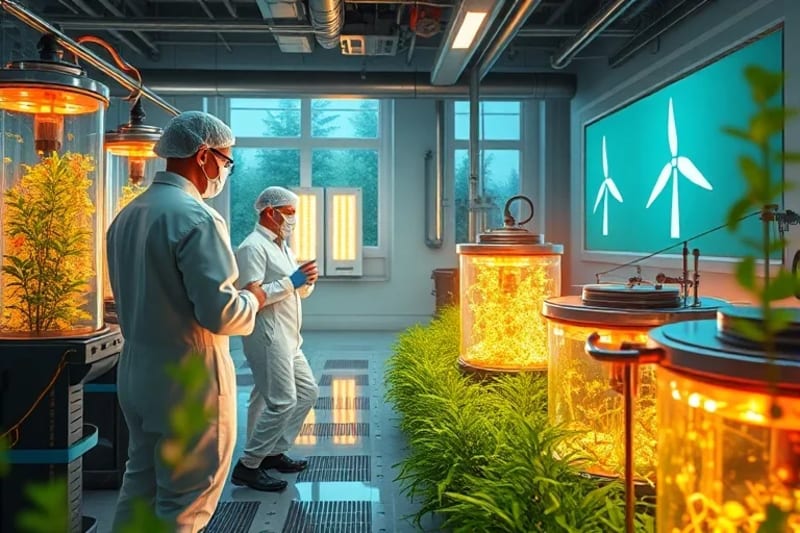 Conceptual representation of advanced biological engineering and its integration with natural ecosystems for sustainable industrial development.
The promise of synthetic biology lies in its ability to harness the molecular machinery of life to produce materials, chemicals, and energy with unprecedented precision and efficiency. Unlike traditional manufacturing, which often relies on finite resources and generates significant waste, bio-based production systems can be designed to be circular, utilizing renewable feedstocks and minimizing environmental impact. This paradigm shift is crucial for businesses aiming to thrive in a future where sustainability is not just a regulatory requirement but a core competitive advantage. The integration of biological design principles into industrial processes paves the way for a more resilient and regenerative global economy.
This article explores the foundational principles of synthetic biology, its diverse applications in sustainable business, the concept of regenerative innovation it champions, and the critical ethical and regulatory considerations that accompany its rapid advancement. We will delve into how this cutting-edge science is poised to transform various sectors, from manufacturing and energy to agriculture and healthcare, offering a glimpse into an industrial future that is both innovative and inherently sustainable.
Table of Contents
- What is Synthetic Biology?
- Pillars of Sustainable Business
- Industrial Applications of Synthetic Biology
- Driving Regenerative Innovation
- Economic and Environmental Impact
- Ethical Considerations and Regulatory Frameworks
- The Road Ahead for Bio-Industrial Growth
What is Synthetic Biology?
Synthetic biology is a rapidly evolving field that applies engineering principles to biology. It involves the design and construction of new biological parts, devices, and systems, and the redesign of existing natural biological systems for useful purposes. This often includes creating synthetic genes, circuits, and organisms with novel functions. Essentially, scientists and engineers are learning to "program" biological systems much like one would program a computer, enabling them to perform specific tasks, such as producing complex chemicals, sensing environmental toxins, or even self-assembling materials.
The core tenets of synthetic biology include standardization of biological parts, abstraction of biological complexity, and modularity in design. This approach allows for predictable and reproducible outcomes, making it possible to scale up bio-based solutions for industrial applications. By leveraging genetic engineering, metabolic engineering, and computational design, synthetic biology offers a powerful platform for innovation that transcends the limitations of traditional chemical synthesis and manufacturing processes.
Pillars of Sustainable Business
Sustainable business practices are built upon several key pillars, all of which can be significantly enhanced by synthetic biology. These include resource efficiency, waste reduction, circular economy principles, and the development of environmentally benign products and processes. Synthetic biology directly addresses these areas by offering pathways to:
- Minimize Resource Consumption: Engineering microorganisms to produce high-value compounds from abundant, low-cost feedstocks or even waste streams.
- Reduce Pollution and Waste: Designing biodegradable materials, developing bioremediation solutions, and creating closed-loop production systems that generate minimal byproducts.
- Promote Circularity: Enabling the biological recycling of materials and nutrients, transforming waste into new resources.
- Innovate Green Products: Creating products that are inherently sustainable from their inception, such as bio-based fuels, plastics, and textiles.
The shift towards these practices is not just an environmental imperative but also an economic opportunity, driving efficiency and fostering new markets. Businesses that embrace these principles are better positioned for long-term growth and resilience in a rapidly changing global landscape.
Industrial Applications of Synthetic Biology
The versatility of synthetic biology allows for its application across a wide array of industries, each benefiting from its capacity for sustainable innovation. These applications are transforming how we produce goods, manage resources, and interact with our environment.
 Abstract visualization of bio-integrated circular economic models, emphasizing resource regeneration and sustainable cycles.
Materials Science and Manufacturing
Synthetic biology is revolutionizing material production by enabling the bio-manufacturing of sustainable alternatives to conventional materials. This includes the creation of biodegradable plastics from renewable resources, self-healing concrete that uses bacteria to repair cracks, and bio-fabricated textiles like spider silk proteins for high-performance fabrics. These innovations reduce reliance on fossil fuels, decrease waste generation, and offer materials with superior properties. The potential for custom-designed materials with specific functions opens up new avenues for product development and industrial sustainability.
Energy Production and Storage
In the energy sector, synthetic biology is contributing to the development of next-generation biofuels, such as bio-isobutanol and advanced biodiesels, which can be produced from non-food biomass or even waste. Beyond biofuels, researchers are exploring microbial fuel cells that generate electricity from organic matter and genetically engineered algae for enhanced hydrogen production. These advancements aim to provide cleaner, more sustainable energy sources, reducing our carbon footprint and dependence on finite fossil fuels. For more on how technology is shaping financial futures, consider exploring topics like Digital Banking Fintech: Future Financial Services.
Food and Agriculture
Synthetic biology offers solutions to enhance food security and agricultural sustainability. This includes engineering crops for increased yield, improved nutritional value, and enhanced resistance to pests and diseases, thereby reducing the need for chemical pesticides and fertilizers. The development of alternative proteins, such as lab-grown meat and precision fermentation-derived dairy proteins, addresses environmental concerns associated with traditional livestock farming. Furthermore, engineered microbes can improve soil health and nutrient cycling, leading to more sustainable farming practices.
Healthcare and Pharmaceuticals
In healthcare, synthetic biology is enabling the more sustainable and ethical production of pharmaceuticals. For example, artemisinin, a crucial antimalarial drug, is now produced in engineered yeast, reducing reliance on plant extraction and ensuring a stable supply. This approach can also lead to the development of novel diagnostics, vaccines, and therapies with improved efficacy and reduced environmental impact during manufacturing. The ability to precisely engineer biological systems promises a future of personalized medicine and more accessible healthcare solutions.
Driving Regenerative Innovation
Regenerative innovation goes beyond merely reducing negative impacts; it aims to create systems that actively restore and enhance environmental and social well-being. Synthetic biology is uniquely positioned to drive this type of innovation. By designing biological systems that mimic natural processes, we can develop industrial cycles that are inherently restorative. For instance, engineered microbes can be used for bioremediation, cleaning up polluted sites by breaking down contaminants into harmless substances. This turns environmental damage into an opportunity for biological restoration.
The concept extends to creating products that, at the end of their life cycle, biodegrade safely or can be biologically recycled back into new resources. This contrasts sharply with the linear "take-make-dispose" model that dominates much of modern industry. Synthetic biology facilitates a shift towards a truly circular economy, where waste is minimized, resources are continually reused, and ecological systems are supported rather than depleted. This approach not only benefits the environment but also creates new value streams and business opportunities within the regenerative framework.
 A visionary depiction of an integrated bio-industrial landscape, where advanced manufacturing harmonizes with ecological principles.
Economic and Environmental Impact
The economic implications of synthetic biology for sustainable business are profound. By enabling more efficient production processes, reducing reliance on volatile raw material markets, and creating new high-value products, it fosters economic growth and competitiveness. Companies adopting these technologies can achieve significant cost savings through optimized resource utilization and reduced waste disposal expenses. Furthermore, the development of novel bio-based products opens up entirely new markets and consumer demands for sustainable alternatives.
Environmentally, the impact is equally significant. Synthetic biology offers solutions to mitigate climate change by developing carbon-negative processes, reducing greenhouse gas emissions from industrial activities, and enhancing carbon sequestration. It can also address biodiversity loss by providing sustainable alternatives to products derived from endangered species or environmentally destructive practices. The ability to monitor and remediate pollution using engineered organisms further underscores its potential to heal and protect our planet. For a broader perspective on environmental monitoring, consider how Earth Observation Satellites: Climate Monitoring provide crucial data.
Ethical Considerations and Regulatory Frameworks
As with any powerful technology, synthetic biology presents a range of ethical considerations and necessitates robust regulatory frameworks. Concerns include biosecurity (the potential for misuse of engineered organisms), environmental release of modified organisms, and equitable access to these technologies. Public perception and acceptance are also critical, requiring transparent communication and engagement to build trust and address concerns about "designer organisms" or unintended consequences.
The Cartagena Protocol on Biosafety to the Convention on Biological Diversity, adopted in 2000, is an international agreement that aims to ensure the safe handling, transport and use of living modified organisms (LMOs) resulting from modern biotechnology that may have adverse effects on biological diversity, taking also into account risks to human health.
Many countries have also developed national regulations, often adapting existing frameworks for genetically modified organisms (GMOs) to encompass the broader scope of synthetic biology. These regulations typically focus on risk assessment, containment measures, and labeling requirements to ensure consumer safety and environmental protection.
Developing clear, adaptive, and internationally harmonized regulations is essential to foster responsible innovation and prevent potential harm. This involves ongoing dialogue among scientists, policymakers, industry leaders, and the public. The ethical implications of altering life forms, even for beneficial purposes, must be carefully weighed against the potential for solving pressing global problems. Similar discussions are vital in other emerging tech fields, such as the Regulation of AI Content: Rights, Disinformation, Ethics.
The Road Ahead for Bio-Industrial Growth
The future of sustainable business is inextricably linked with the advancements in synthetic biology. Continued investment in research and development, coupled with robust public-private partnerships, will be crucial for translating laboratory breakthroughs into scalable industrial solutions. Education and workforce development are also key to building the talent pipeline needed to drive this sector forward. As the technology matures, we can expect to see an increasing number of bio-based products and processes entering the market, offering consumers and industries more sustainable choices.
The journey towards a fully regenerative industrial future powered by synthetic biology will require ongoing collaboration, interdisciplinary expertise, and a commitment to ethical innovation. The potential benefits—from a cleaner environment and more efficient resource use to improved human health and economic prosperity—make this an endeavor well worth pursuing. Synthetic biology is not just a scientific discipline; it is a blueprint for a more sustainable and resilient future for all.
Explore More Sustainable Innovations
Source: Hybrid content assisted by AI and human editorial supervision.


Comentarios