
Sustainable Energy Future: Nuclear Fusion, Storage Innovations
The quest for sustainable energy represents one of humanity's most pressing challenges and greatest opportunities. As global energy demands continue to escalate and the imperative to mitigate climate change intensifies, the focus shifts towards innovative solutions that can provide clean, abundant, and reliable power. Two fields stand at the forefront of this revolution: nuclear fusion and advanced energy storage technologies. These areas, once confined to the realms of science fiction or niche research, are now rapidly advancing, promising to reshape our energy landscape in profound ways.
This article delves into the current state and future prospects of these pivotal technologies. We will explore the scientific principles underpinning nuclear fusion, the breakthroughs that bring it closer to commercial viability, and the diverse array of energy storage solutions emerging to complement intermittent renewable sources. Understanding these innovations is crucial for grasping the trajectory of our energy future and the potential for a truly sustainable world.
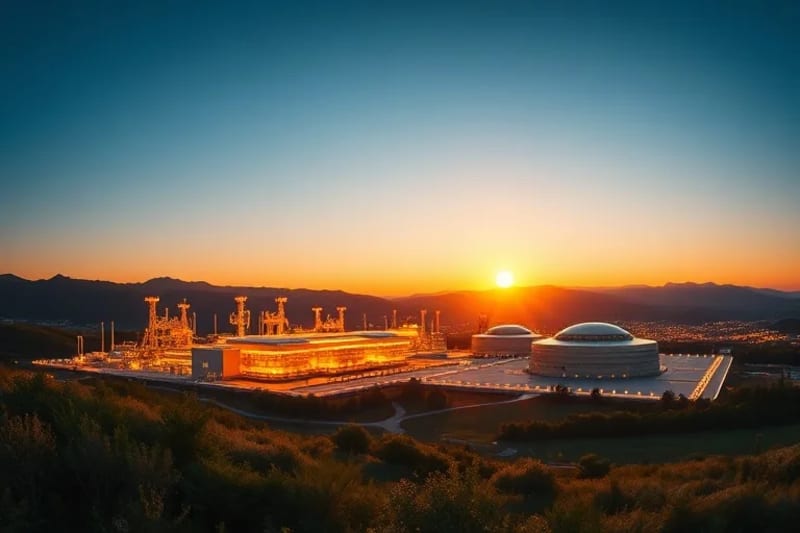 Conceptual vision of a future powered by advanced fusion and integrated energy storage systems, symbolizing global energy independence.
Fuente visual sujeta a disponibilidad del ecosistema: Wikimedia Commons bajo licencia CC BY-SA 4.0 o renderizado conceptual IA.
Table of Contents
- The Promise of Nuclear Fusion: Powering the Future
- Overcoming Challenges and Recent Breakthroughs in Fusion
- The Critical Role of Advanced Energy Storage
- Evolution of Energy Storage Technologies
- Synergy: Integrating Fusion and Storage for Grid Stability
- Environmental and Economic Impact of These Innovations
- The Future Outlook: A Sustainable Energy Horizon
The Promise of Nuclear Fusion: Powering the Future
Nuclear fusion, the process that powers the sun and stars, involves combining light atomic nuclei to form heavier ones, releasing immense amounts of energy in the process. Unlike nuclear fission, which splits heavy atoms and produces long-lived radioactive waste, fusion uses abundant fuels like isotopes of hydrogen (deuterium and tritium) and produces minimal, short-lived radioactive byproducts. This makes it an inherently safer and cleaner energy source.
The primary appeal of fusion energy lies in its potential for virtually limitless, carbon-free power. Deuterium can be extracted from seawater, and tritium can be bred from lithium, a relatively common element. A small amount of these fuels could power a city for decades, drastically reducing reliance on fossil fuels and mitigating greenhouse gas emissions. The dream of a fusion-powered world has captivated scientists for decades, driving significant international collaboration and investment.
Overcoming Challenges and Recent Breakthroughs in Fusion
Achieving controlled nuclear fusion on Earth is an extraordinary scientific and engineering challenge. It requires heating plasma to extreme temperatures—over 100 million degrees Celsius—and containing it long enough for fusion reactions to occur and generate net energy. Historically, the challenge has been to achieve "ignition," where the fusion reactions themselves produce more energy than is required to heat and confine the plasma. This threshold has been elusive, but recent advancements are changing the landscape.
One of the most significant breakthroughs occurred in December 2022, when the National Ignition Facility (NIF) at Lawrence Livermore National Laboratory announced achieving net energy gain using inertial confinement fusion. This milestone, while still far from commercial application, demonstrated the fundamental scientific feasibility of fusion energy. Another monumental project, ITER (International Thermonuclear Experimental Reactor) in France, is building the world's largest tokamak, a magnetic confinement device designed to demonstrate the scientific and technological feasibility of fusion power on a large scale. ITER is expected to begin operation in the mid-2020s, paving the way for future demonstration power plants.
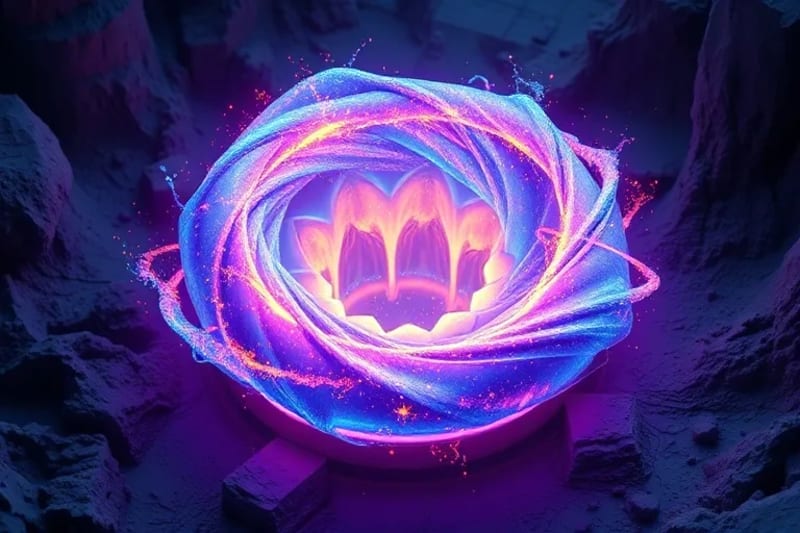 Dynamic depiction of superheated plasma, the fuel for nuclear fusion, contained within a magnetic field.
Beyond large-scale government projects, a vibrant ecosystem of private companies is pursuing innovative approaches to fusion. Companies like Commonwealth Fusion Systems (CFS) with their SPARC tokamak, using high-temperature superconducting magnets, and Helion, exploring pulsed non-tokamak designs, are accelerating the timeline for commercial fusion. These private ventures often focus on smaller, more modular reactor designs, aiming for quicker deployment and lower costs. The collaborative spirit, encompassing both public and private initiatives, underscores the global commitment to unlocking fusion's potential. For more on how advanced computational methods are driving scientific progress, consider exploring topics like Algoritmos Cuánticos: Modelado Climático Sostenibilidad.
The Critical Role of Advanced Energy Storage
While nuclear fusion promises a steady, base-load supply of clean energy, the broader sustainable energy transition relies heavily on renewable sources like solar and wind, which are inherently intermittent. This intermittency creates a significant challenge for grid stability and reliability. This is where advanced energy storage technologies become indispensable. They act as buffers, storing excess energy when production exceeds demand and releasing it when demand outstrips supply, thus balancing the grid and ensuring continuous power delivery.
The need for robust and scalable energy storage is not just about integrating renewables; it's also about enhancing grid resilience, supporting electric vehicle adoption, and enabling energy independence for communities. Without efficient storage, the full potential of renewable energy sources cannot be realized, making storage a cornerstone of any comprehensive sustainable energy strategy. The ethical implications of technological advancements, particularly in areas like environmental AI, also play a crucial role in ensuring responsible development, as discussed in IA Ambiental Ética: Desafíos y Futuro 2026.
Evolution of Energy Storage Technologies
The landscape of energy storage is diverse and rapidly evolving. Traditional methods like pumped-hydro storage have long provided large-scale grid support, but their geographical constraints limit widespread adoption. Chemical battery technologies, particularly lithium-ion, have seen exponential growth, driven by the electric vehicle market and consumer electronics. However, lithium-ion batteries face challenges related to raw material availability, environmental impact of mining, safety concerns, and degradation over time.
 Illustration of advanced, scalable energy storage modules designed for grid-level integration and efficiency.
Emerging storage technologies are addressing these limitations:
- Solid-State Batteries: Offering higher energy density, faster charging, and improved safety compared to liquid electrolyte lithium-ion batteries.
- Flow Batteries: Utilizing liquid electrolytes stored in external tanks, allowing for independent scaling of power and energy capacity, and longer lifespans.
- Thermal Energy Storage: Storing energy as heat in materials like molten salt, which can then be converted back to electricity, ideal for concentrated solar power plants or industrial applications.
- Hydrogen Storage: Producing green hydrogen via electrolysis using surplus renewable electricity, which can then be stored and used as fuel or converted back to electricity via fuel cells.
- Gravity-Based Storage: Innovative systems that lift heavy blocks or use underground shafts to store potential energy, offering long-duration storage with minimal material degradation.
Synergy: Integrating Fusion and Storage for Grid Stability
The true power of these innovations lies in their potential synergy. While fusion reactors could provide a constant, high-power output, advanced energy storage systems can complement this by absorbing any excess generation during low-demand periods or providing backup during maintenance. This integrated approach ensures optimal utilization of energy resources, minimizes waste, and maximizes grid stability.
Consider a scenario where fusion power plants serve as the primary base-load electricity providers, offering a reliable, always-on source of clean energy. Simultaneously, large-scale battery banks, flow batteries, and thermal storage facilities would manage the fluctuations from vast solar and wind farms, ensuring that electricity is available exactly when and where it's needed. This creates a resilient, diverse, and truly sustainable energy mix, capable of powering a modern society without environmental compromise.
Environmental and Economic Impact of These Innovations
The environmental benefits of widespread nuclear fusion and advanced energy storage are monumental. A clean energy grid powered by these technologies would virtually eliminate carbon emissions from electricity generation, a major contributor to climate change. Fusion, in particular, produces no greenhouse gases and has a minimal environmental footprint compared to fossil fuel plants. Advanced storage enables greater penetration of renewables, further reducing reliance on polluting sources.
Economically, these innovations promise long-term stability and growth. While initial investments in fusion research and advanced storage infrastructure are substantial, the operational costs of fusion are expected to be low due to abundant fuel. Furthermore, a stable, clean energy supply reduces energy price volatility and enhances national energy security. The development and deployment of these technologies will also spur job creation in high-tech manufacturing, engineering, and research sectors, fostering economic prosperity. The shift towards such localized and resilient energy systems also aligns with broader trends of Desglobalización: Comercio Mundial, Regionalización y Futuro, emphasizing regional self-sufficiency.
The Future Outlook: A Sustainable Energy Horizon
The path to a fully sustainable energy future is complex, but the rapid progress in nuclear fusion and energy storage provides immense optimism. While commercial fusion power is still decades away, the scientific and engineering hurdles are being systematically overcome. Simultaneously, energy storage technologies are maturing at an accelerated pace, offering increasingly efficient and cost-effective solutions for grid integration and beyond.
Continued investment in research and development, coupled with supportive policy frameworks, will be critical to accelerate the deployment of these transformative technologies. The synergy between a constant, clean power source like fusion and flexible, resilient storage solutions holds the key to unlocking a future where energy is not only abundant and affordable but also environmentally benign. This vision of a sustainable energy horizon is no longer a distant dream but an achievable reality, driven by human ingenuity and scientific dedication.
Explore More on Sustainable Technologies
Source: Hybrid content assisted by AI and human editorial supervision.


Comentarios