
Quantum Cybersecurity Energy Infrastructure Resilience
In an increasingly interconnected world, the security of critical energy infrastructures stands as a paramount concern. These complex systems, ranging from power grids to oil and gas pipelines, form the backbone of modern society, providing essential services that drive economies and sustain daily life. However, their growing digitalization also exposes them to sophisticated cyber threats, a challenge that is set to intensify with the advent of quantum computing. Quantum cybersecurity emerges as a vital, forward-looking discipline designed to fortify these essential assets against the unprecedented capabilities of future quantum adversaries.
This article delves into the intricate relationship between quantum cybersecurity and the resilience of critical energy infrastructures. We will explore the current vulnerabilities inherent in these systems, the impending threats posed by quantum computing, and the innovative quantum-based solutions being developed to counteract them. Understanding these concepts is crucial for policymakers, industry leaders, and cybersecurity professionals striving to build a secure and sustainable energy future.
 Depiction of a futuristic energy grid fortified by advanced quantum cybersecurity measures, ensuring robust data flow and infrastructure resilience.
Table of Contents
- Understanding Quantum Cybersecurity
- The Vulnerability of Critical Energy Infrastructures
- The Quantum Threat Landscape
- Quantum Cryptography: A New Paradigm for Security
- Strategies for Quantum-Resilient Energy Grids
- Challenges and the Path Forward
- The Future of Energy Security in the Quantum Era
Understanding Quantum Cybersecurity
Quantum cybersecurity is a rapidly evolving field that applies the principles of quantum mechanics to secure digital communications and data. Unlike traditional cybersecurity, which relies on mathematical complexity that classical computers struggle to break, quantum cybersecurity leverages phenomena like superposition, entanglement, and the no-cloning theorem to create fundamentally more secure systems. Its primary goal is to protect against both classical and quantum-enabled cyberattacks.
The field encompasses several key areas, including quantum cryptography, which provides unbreakable encryption methods, and post-quantum cryptography (PQC), which develops algorithms resistant to quantum computer attacks but can run on classical computers. These advancements are crucial because current encryption standards, such as RSA and ECC, are vulnerable to Shor's algorithm, a theoretical quantum algorithm capable of factoring large numbers exponentially faster than any classical computer.
The unique properties of quantum mechanics offer a new paradigm for security. For example, any attempt to eavesdrop on a quantum communication channel inevitably disturbs its quantum state, immediately alerting the legitimate users. This inherent detection mechanism provides a level of security unattainable with classical cryptographic methods, making quantum cybersecurity a game-changer for sensitive data protection.
The Vulnerability of Critical Energy Infrastructures
Critical energy infrastructures are increasingly digitized and interconnected, relying on Supervisory Control and Data Acquisition (SCADA) systems, Industrial Control Systems (ICS), and smart grid technologies. While these advancements enhance efficiency and operational control, they also introduce significant cybersecurity vulnerabilities. Attack vectors include ransomware, denial-of-service attacks, and sophisticated state-sponsored cyber espionage aimed at disrupting services or stealing sensitive information.
The consequences of a successful cyberattack on energy infrastructure can be catastrophic, ranging from widespread power outages and economic disruption to environmental damage and even loss of life. The Stuxnet attack on Iranian nuclear facilities and the cyberattack on Ukraine's power grid in 2015 serve as stark reminders of the real-world impact of such vulnerabilities. These incidents highlight the need for robust and future-proof security measures.
Many of these systems still rely on legacy hardware and software, making them difficult to update and patch against emerging threats. Furthermore, the convergence of IT (Information Technology) and OT (Operational Technology) networks, while beneficial for management, creates new entry points for attackers. Protecting these complex and often geographically dispersed systems requires a multi-layered approach that anticipates future threats, including those from quantum computing. For broader insights into protecting digital assets, consider exploring resources on Cloud Cybersecurity: Data and Application Protection.
The Quantum Threat Landscape
The development of powerful quantum computers represents a significant paradigm shift in the cybersecurity landscape. While still in their nascent stages, quantum computers promise computational power far beyond that of classical supercomputers. This power, if harnessed maliciously, could render current cryptographic standards obsolete, posing an existential threat to digital security worldwide. The primary concern for critical infrastructure is the ability of quantum computers to break public-key cryptography.
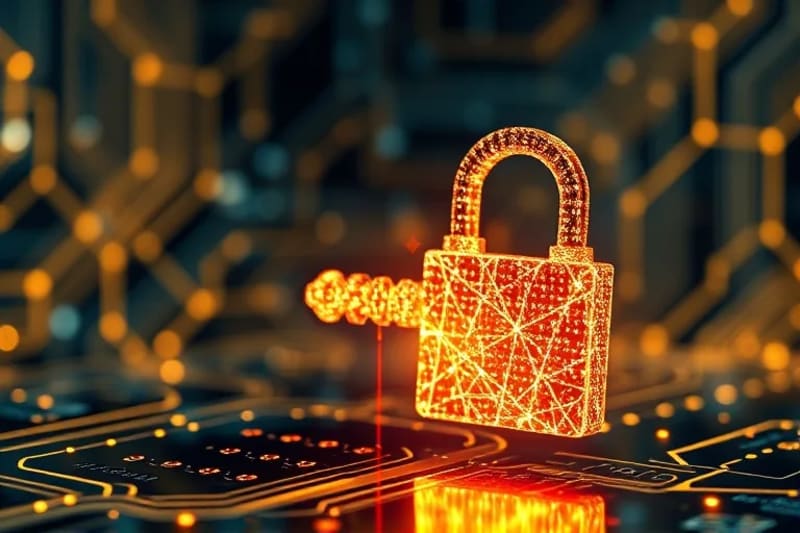 A conceptual representation of quantum encryption, where a key made of entangled light particles secures a digital padlock.
Shor's algorithm, for instance, can efficiently factor large numbers, directly undermining RSA encryption. Grover's algorithm can significantly speed up brute-force attacks on symmetric-key encryption and hash functions. These capabilities mean that sensitive data encrypted today could be decrypted by a sufficiently powerful quantum computer in the future, a concept known as "harvest now, decrypt later." This poses a particular risk for long-term confidential data, such as national security communications or intellectual property related to energy systems.
The threat is not merely theoretical. Governments and major corporations are investing heavily in quantum computing research, and while beneficial applications are numerous, the potential for misuse cannot be ignored. Critical energy infrastructures, with their high value and potential for widespread disruption, are prime targets. The need to transition to quantum-resistant security protocols is therefore urgent, requiring proactive measures rather than reactive responses. Even basic digital protection like Per Antivirus: Pioneer, Evolution, and Digital Protection highlights the continuous need for evolving security measures.
Quantum Cryptography: A New Paradigm for Security
Quantum cryptography offers a robust defense against quantum threats by leveraging the fundamental laws of physics. The most prominent application is Quantum Key Distribution (QKD), which enables two parties to establish a shared secret key with provable security. QKD protocols, such as BB84, ensure that any attempt by an eavesdropper to intercept the key will inevitably alter its quantum state, immediately detectable by the legitimate users. This "eavesdropping detection" is a cornerstone of QKD's security.
Beyond QKD, the development of Post-Quantum Cryptography (PQC) is equally critical. PQC algorithms are designed to run on classical computers but are resistant to attacks from quantum computers. The National Institute of Standards and Technology (NIST) has been leading an extensive standardization process for PQC algorithms, with several candidates now moving towards finalization. These algorithms are based on different mathematical problems that are believed to be hard for both classical and quantum computers, offering a practical path to quantum resistance.
The combination of QKD for ultra-secure key exchange and PQC for broader data encryption and digital signatures forms a comprehensive strategy for quantum-resistant cybersecurity. While QKD requires specialized hardware and is currently limited by distance, PQC offers software-based solutions that can be integrated into existing infrastructure, providing a versatile approach to safeguarding critical energy systems. The strategic implementation of these technologies is vital for securing sensitive data and operational communications.
Strategies for Quantum-Resilient Energy Grids
Achieving quantum resilience in energy grids requires a multi-faceted strategy that integrates technological upgrades, policy frameworks, and workforce development. The first step involves a thorough inventory and risk assessment of all cryptographic assets within the energy infrastructure. Identifying where current classical cryptography is used and what data needs long-term protection is crucial for prioritizing migration efforts.
Migration to PQC algorithms is a significant undertaking, often referred to as "crypto-agility." This involves updating software, hardware, and protocols across the entire operational technology (OT) and information technology (IT) stack. Energy companies must work closely with vendors to ensure that new equipment and systems are PQC-compatible or quantum-safe. This transition will be gradual and complex, requiring careful planning and execution to avoid disrupting essential services.
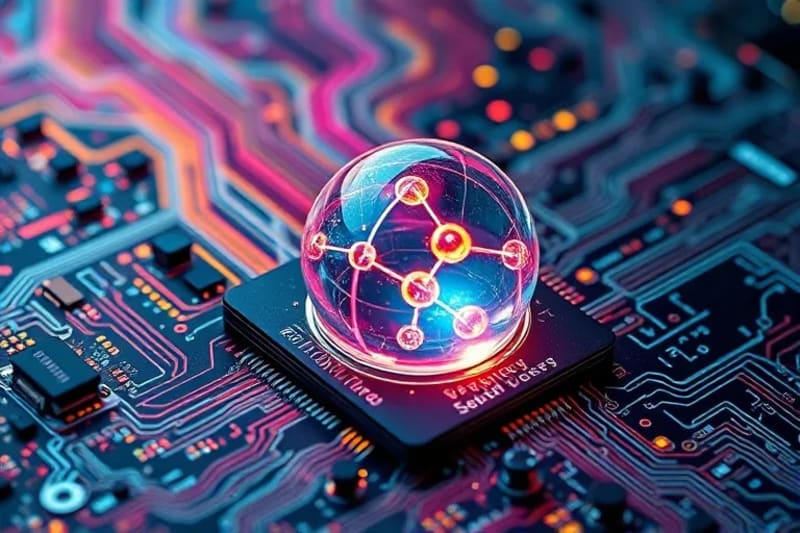 An abstract oil painting depicting vibrant data streams protected by a quantum shield, with qubits deflecting cyber threats.
For highly sensitive communications and critical control systems, QKD can provide an additional layer of security. Deploying QKD links in strategic locations, such as between control centers and substations, can create unhackable communication channels. While QKD is more expensive and complex to implement, its unparalleled security makes it suitable for the most critical components of the energy grid. This comprehensive approach ensures that both existing and future threats are adequately addressed, building true resilience. The careful management of information and data is also a key aspect of the Data Economy: Business Models Ethical Information Monetization, underscoring the value of secure data.
Challenges and the Path Forward
The journey towards quantum-resilient energy infrastructures is fraught with challenges. One of the primary hurdles is the significant investment required for research, development, and deployment of new quantum technologies. The cost of upgrading legacy systems and integrating new hardware for QKD can be substantial. Furthermore, there is a shortage of skilled professionals with expertise in both cybersecurity and quantum technologies, necessitating significant investment in education and training.
Standardization is another critical challenge. While NIST is making progress with PQC algorithms, the global adoption of these standards and the interoperability of different quantum security solutions are still evolving. International collaboration and harmonized regulatory frameworks will be essential to ensure a coherent and effective global response to quantum threats. Without common standards, fragmentation could undermine the overall security posture.
Despite these challenges, the path forward is clear: proactive engagement and continuous adaptation. Energy sector stakeholders must collaborate with governments, academia, and technology providers to accelerate the development and deployment of quantum-safe solutions. Pilot projects, testbeds, and public-private partnerships can help validate new technologies and build practical experience. The goal is not just to react to quantum threats but to anticipate and mitigate them before they materialize, ensuring the long-term stability and security of energy supplies.
The Future of Energy Security in the Quantum Era
The future of energy security will be defined by its ability to adapt to the quantum era. As quantum computing advances, so too will the methods of cyber warfare and espionage. Energy infrastructures must evolve into "quantum-proof" systems, capable of withstanding the most sophisticated attacks. This involves not only implementing quantum-resistant cryptography but also fostering a culture of continuous security improvement and innovation.
Beyond cryptographic solutions, future energy security will also benefit from quantum-enhanced detection and response mechanisms. Quantum sensors could potentially offer unprecedented precision in detecting anomalies within critical infrastructure, providing early warnings of potential attacks. Machine learning and artificial intelligence, when combined with quantum computing capabilities, could revolutionize threat intelligence and predictive analytics, enabling energy operators to anticipate and neutralize threats with greater efficiency.
Ultimately, building resilient energy infrastructures in the quantum era is a marathon, not a sprint. It requires sustained commitment, strategic investment, and a collaborative spirit across all sectors. By embracing quantum cybersecurity now, nations can safeguard their critical energy assets, ensure uninterrupted service, and secure their economic prosperity and national security for decades to come. This proactive stance is essential for navigating the complex and rapidly changing technological landscape.
Related Topics & Further Reading
- » The Anti-Racist Legacy of 'Black White': Social and Political Impact
- » Data Economy: Business Models and Ethical Information Monetization
- » Spanish Commercial Code: Book I, Merchants, Agents
- » Elizabeth Taylor as an Entrepreneur: Legacy in Perfumes and Jewelry
- » Neuroscience of Optical Illusions: Deceiving the Brain to Understand It Better
- » Per Antivirus: Pioneer, Evolution, and Digital Protection
- » Behavioral Finance: Psychology and Investment Decisions
- » Eddie Van Halen's Guitar: Analysis of 'Beat It' and His Legacy
- » Colombian Commercial Code: Collateral Bond Collection
- » Ship Mortgage Regulations: Colombian Commercial Code
- » Color Language in Marketing: Psychological and Strategic Impact
- » Cloud Cybersecurity: Data and Application Protection
- » Colombian Commercial Code: Balances, Surveillance, and Legal Evolution
- » Sustainable Tourism in Latin America: Regional Successes and Challenges
- » Poppy in Traditional and Modern Medicine: Pharmacology, Uses, Ethics
- » Chinese Horoscope Dog: Unconscious Archetypes, Modern Life
- » Esoteric Metaverse: Guided Astral Journeys, Virtual Reality, Cosmic Chart
- » Annual Chinese Horoscope Predictions: General Guide for Signs
- » Ecumenical Prophecies: Convergences of the End Times
- » Rosary of Holiness: Advanced Guide to Marian Devotion
- » Minor Exorcisms in the Church: Practical Protection Guide
- » Tao Chinese Zodiac Animal Harmony: Nature's Path
- » Pet Chinese Zodiac: Understanding Personality, Needs
- » Chinese Zodiac Goat 2024: Forecast, Love, Career, Health
Source: Hybrid content assisted by AI and human editorial supervision.


Comentarios