
Haptic Technology Remote Education Immersive Experiential
The landscape of education has undergone a profound transformation, with remote learning emerging as a cornerstone of modern pedagogy. While digital platforms have broadened access and flexibility, they often struggle to replicate the tactile and experiential dimensions crucial for deep learning, especially in subjects requiring practical skills. This is where haptic technology steps in, offering a revolutionary pathway to bridge the gap between virtual instruction and tangible experience, promising an unprecedented level of immersion and engagement in remote educational settings.
Haptic technology, derived from the Greek word 'haptikos' meaning "pertaining to the sense of touch," refers to any technology that can create an experience of touch by applying forces, vibrations, or motions to the user. Its integration into remote education is not merely an enhancement; it represents a paradigm shift, enabling students to "feel" and interact with digital content in ways previously confined to physical classrooms. This article delves into the potential of haptic feedback to redefine immersive and experiential learning, exploring its mechanisms, applications, benefits, and future implications for a truly global and accessible education.
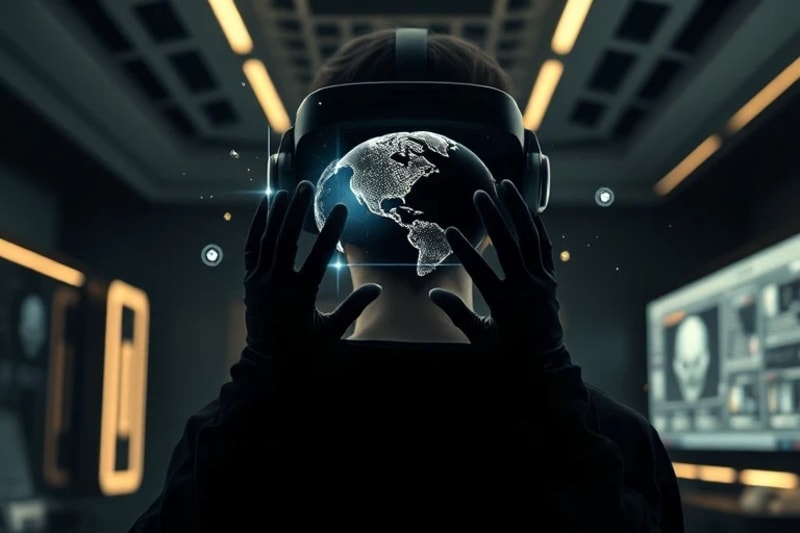
A student engages with a complex digital model using advanced haptic gloves, illustrating the future of immersive remote education.
What is Haptic Technology?
Haptic technology encompasses a range of devices and software that simulate the sense of touch. These systems typically provide feedback to the user through various physical sensations, allowing for a more intuitive and realistic interaction with virtual environments. The core principle involves translating digital data into mechanical forces or vibrations that a user can perceive.
There are several categories of haptic feedback, each with distinct capabilities and applications. Force feedback haptics, for instance, uses motors and actuators to generate resistance or pressure, mimicking the weight, texture, or rigidity of virtual objects. This is particularly useful in scenarios where physical manipulation and understanding of material properties are critical.
Another common type is vibrotactile haptics, which employs small eccentric rotating mass (ERM) motors or linear resonant actuators (LRAs) to produce vibrations. These vibrations can simulate various textures, impacts, or even the feeling of a pulse, adding a layer of realism to digital interactions. More advanced forms include thermal haptics, which can simulate temperature changes, and electro-tactile haptics, which use electrical stimuli to create sensations on the skin.
The sophistication of haptic devices ranges from simple vibrating controllers found in game consoles to highly specialized surgical simulators that replicate the resistance of human tissue. The goal across all these applications remains consistent: to enhance user immersion and provide a richer, multi-sensory experience that goes beyond visual and auditory cues.
Addressing Remote Education Challenges
Remote education, while offering unparalleled accessibility, often faces significant hurdles in delivering comprehensive learning experiences. The absence of physical interaction can lead to a disconnect for students, particularly in subjects that traditionally rely on hands-on practice. This includes fields such as medicine, engineering, chemistry, and vocational training, where manipulating objects, conducting experiments, or performing procedures are fundamental to skill acquisition.
Key challenges include the difficulty in conveying complex spatial relationships, the inability to practice fine motor skills, and a general lack of engagement due to the passive nature of screen-based learning. Students may struggle to grasp abstract concepts without the reinforcing feedback of physical interaction. This can hinder the development of critical thinking, problem-solving abilities, and practical proficiency.

Stylized hands demonstrating the nuanced tactile feedback possible with haptic interfaces in a virtual learning environment.
Moreover, the digital divide, encompassing disparities in internet access and device availability, exacerbates these issues, creating unequal learning opportunities. While haptics introduces new hardware requirements, its potential to democratize high-quality, experiential learning by overcoming geographical barriers is immense. By providing a tangible link to virtual content, haptic technology can significantly alleviate these educational limitations, making remote learning more effective and equitable.
The integration of haptic feedback can transform passive observation into active participation. For instance, a medical student can practice suturing on a virtual patient, feeling the tension of the thread and the resistance of the tissue, without needing a physical cadaver. This not only enhances learning outcomes but also reduces costs and increases safety in training environments. The ability to simulate real-world scenarios with tactile precision is a game-changer for skill-based education.
Haptic Technology in Action Across Disciplines
The applications of haptic technology in remote education are vast and continually expanding, touching upon various academic and vocational fields. Its ability to simulate physical interaction opens doors to experiential learning that was previously impossible outside a dedicated lab or workshop.
In medical education, haptic simulators are revolutionizing surgical training. Students can practice complex procedures, such as laparoscopic surgery or dental operations, feeling the resistance of tissues, the texture of organs, and the precision required for each incision. This allows for repeated practice in a safe, controlled environment, reducing the learning curve and improving patient outcomes. For example, virtual dissection tables with haptic feedback allow students to explore human anatomy with a sense of touch, enhancing their understanding beyond mere visual inspection.
For engineering and design students, haptic devices enable virtual prototyping and product testing. They can manipulate 3D models, feel the stresses on virtual structures, or assemble complex machinery components remotely. This facilitates a deeper understanding of material science, mechanics, and ergonomics, allowing for iterative design improvements before physical fabrication. The tactile feedback helps in identifying design flaws that might be missed in purely visual simulations.
In the arts and humanities, haptics can offer unique learning experiences. Music students can feel the vibrations of virtual instruments, while art students can sculpt digital clay with tactile feedback, mimicking the sensation of working with real materials. Even in history, students could potentially "feel" the textures of ancient artifacts or the resistance of historical tools, bringing abstract concepts to life. This interactive approach fosters creativity and a more profound connection to the subject matter.
Vocational training, from welding to operating heavy machinery, also benefits immensely. Trainees can practice dangerous or expensive tasks in a virtual environment, receiving realistic tactile feedback without risk. This not only accelerates skill development but also ensures safety and reduces material waste. The fidelity of these simulations, enhanced by haptics, makes the transition to real-world tasks much smoother.
Key Benefits of Haptic Integration
The integration of haptic technology into remote education offers a multitude of benefits that extend beyond mere novelty, fundamentally enhancing the learning process. These advantages contribute to more effective, engaging, and accessible educational experiences for students worldwide.
- Enhanced Comprehension and Retention: By engaging the sense of touch, haptics facilitates multi-sensory learning, which is proven to improve understanding and memory retention. Students can literally "feel" abstract concepts, making them more concrete and memorable.
- Development of Motor Skills: For subjects requiring fine motor control, such as surgery, dentistry, or intricate assembly, haptic feedback provides the necessary tactile cues for practicing and refining these skills in a virtual setting. This is crucial for practical proficiency.
- Increased Engagement and Motivation: Interactive, tactile experiences are inherently more engaging than passive learning. Haptics can transform tedious theoretical lessons into exciting, hands-on explorations, boosting student motivation and participation.
- Safe and Cost-Effective Training: Simulating dangerous or expensive procedures with haptic feedback eliminates risks associated with real-world practice and reduces the need for costly physical resources, such as cadavers, specialized equipment, or hazardous materials.
- Personalized Learning Paths: Haptic systems can be tailored to individual learning paces and needs, providing immediate and specific tactile feedback that guides students through complex tasks. This allows for adaptive learning environments.
- Accessibility for Diverse Learners: Haptics can provide alternative modes of interaction for students with visual or auditory impairments, opening up new avenues for inclusive education. Tactile cues can convey information that might otherwise be inaccessible.
These benefits collectively pave the way for a more dynamic and effective remote learning paradigm. The ability to simulate real-world interactions with high fidelity allows for a deeper, more intuitive understanding of complex subjects, moving beyond the limitations of traditional screen-based instruction. The immersive nature of haptic feedback also aligns well with the growing trend of experiential marketing, where engaging multiple senses creates stronger connections, as explored in the article on Virtual Reality Experiential Marketing: Emotional Connections to Brands.
Technical Considerations and Implementation
Implementing haptic technology in remote education involves navigating several technical considerations, from hardware selection to software integration and network infrastructure. The effectiveness of haptic feedback heavily relies on the seamless interplay of these components.
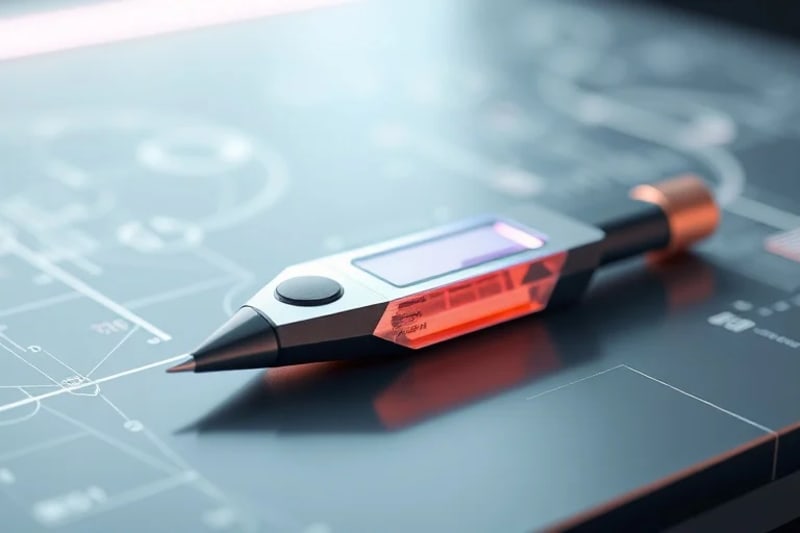
A high-fidelity 3D render of a haptic device, emphasizing its intricate design and the precision of its tactile output.
Hardware: Haptic devices vary widely in complexity and capability. They range from simple wearable gloves with vibrotactile actuators to sophisticated robotic arms that provide force feedback. The choice of hardware depends on the specific learning objectives and the type of tactile sensation to be simulated. High-fidelity haptic devices, while more expensive, offer a wider range of sensations and greater precision, crucial for delicate tasks like surgery.
Software and Content Development: Creating haptic-enabled educational content requires specialized software development. This involves designing virtual environments that respond to tactile input, modeling physical properties of virtual objects (e.g., stiffness, texture, friction), and programming the haptic device to deliver appropriate feedback. Game engines like Unity and Unreal Engine, combined with haptic SDKs, are commonly used for this purpose. The challenge lies in accurately translating real-world physics into digital haptic sensations.
Latency and Network Infrastructure: For remote haptic interactions, latency is a critical factor. Any delay between a user's action and the haptic feedback can break immersion and hinder effective learning. Low-latency network connections are essential to ensure real-time responsiveness. This often necessitates robust internet infrastructure and optimized data transmission protocols, which can be a significant hurdle in regions with limited connectivity. Research into neuromorphic computing could potentially offer solutions for faster processing of complex sensory data, as discussed in the article on Neuromorphic Computing: Brain-Inspired Hardware and AI.
Integration with VR/AR: Haptic technology often works hand-in-hand with Virtual Reality (VR) and Augmented Reality (AR) systems to create fully immersive learning environments. VR provides the visual context, while haptics adds the tactile dimension, making virtual experiences feel more real. This synergy is particularly powerful for complex simulations where both visual and tactile cues are vital for comprehensive understanding.
Future Outlook and Ethical Implications
The future of haptic technology in remote education is bright, with ongoing advancements promising even more realistic and nuanced tactile experiences. As devices become more affordable, portable, and sophisticated, their integration into mainstream educational platforms will likely accelerate. We can anticipate the development of more versatile haptic interfaces capable of simulating a broader spectrum of sensations, from subtle textures to complex force fields.
One significant area of growth is the combination of haptics with advanced AI and machine learning. AI can personalize haptic feedback, adapting to a student's performance and learning style, providing more effective and targeted interventions. Imagine an AI tutor that not only sees your mistakes but also guides your hand with precise tactile cues to correct them. This could revolutionize skill-based learning.
However, as with any transformative technology, haptics in education also raises important ethical considerations. Accessibility and Equity remain paramount. While haptics can democratize access to experiential learning, the cost of specialized hardware could create a new form of digital divide, excluding students from less privileged backgrounds. Ensuring equitable access to these advanced tools will be crucial to prevent exacerbating existing educational inequalities.
Data Privacy and Security are another concern. Haptic devices, especially those integrated with biometric sensors, could collect sensitive data about user interactions, motor skills, and even physiological responses. Robust ethical guidelines and legal frameworks will be necessary to protect student privacy and prevent misuse of this data. The legal challenges and privacy concerns surrounding smart home devices and cybersecurity, as discussed in the article on Cybersecurity for Smart Homes: Legal Challenges and Manufacturer Privacy, offer valuable parallels.
Furthermore, the potential for over-reliance on virtual experiences needs careful consideration. While haptics can simulate reality, it cannot fully replace genuine physical interaction and human connection. Educators must strike a balance, leveraging haptic technology to augment learning without diminishing the value of real-world experiences and social interaction. The psychological impact of prolonged immersion in virtual environments also warrants further research and ethical oversight.
In conclusion, haptic technology holds immense promise for revolutionizing remote education, offering a tangible bridge to immersive and experiential learning. By enabling students to touch, feel, and interact with digital content, it addresses many of the limitations of traditional online instruction. While technical and ethical challenges persist, ongoing innovation and thoughtful implementation can unlock a future where education is truly boundless, tactile, and deeply engaging for all.
Source: Hybrid content assisted by AI and human editorial supervision.


Comentarios