
Extreme Longevity: Genomic Strategies, Biohacking Human Survival
The quest for extended human lifespan, once confined to mythology and science fiction, is rapidly transitioning into the realm of scientific possibility. Extreme longevity, defined as living significantly beyond the average human lifespan, is no longer a distant dream but an active field of research driven by advancements in genomics and biohacking. This article delves into the intricate scientific strategies and cutting-edge technologies that promise to redefine the limits of human existence, exploring the genomic underpinnings of aging and the biohacking interventions designed to slow, halt, or even reverse its effects.
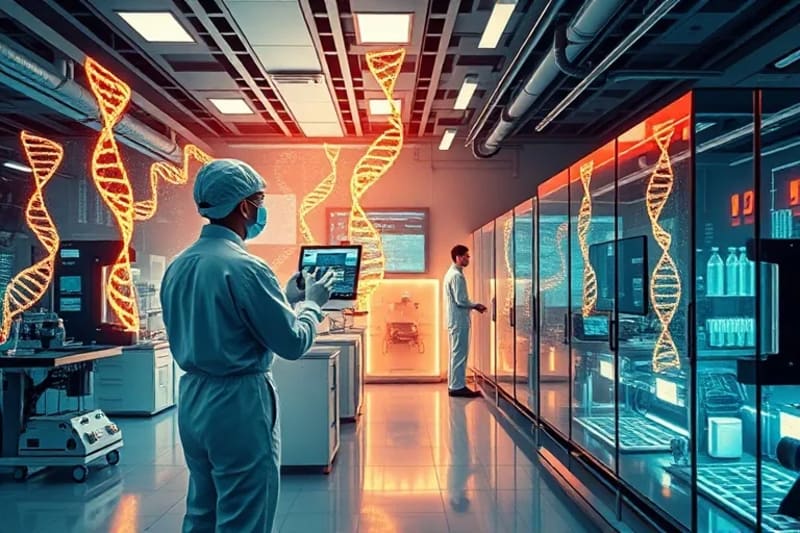
A glimpse into a futuristic laboratory, where genomic strategies are meticulously applied to unravel the secrets of human longevity.
The pursuit of extreme longevity is underpinned by a profound understanding of the biological mechanisms that govern aging. At its core, aging is a complex process influenced by genetic predispositions, environmental factors, and lifestyle choices. Modern science, particularly in the fields of genomics and molecular biology, is beginning to unravel these intricate pathways, identifying key targets for intervention. This scientific endeavor aims not merely to extend life, but to extend healthspan – the period of life spent in good health, free from chronic diseases.
Genomic Foundations of Human Aging
Aging is a multifaceted biological process characterized by progressive decline in physiological function and increased susceptibility to disease. At the cellular level, this decline is driven by several hallmarks, many of which have strong genomic components. Understanding these fundamental mechanisms is crucial for developing effective anti-aging strategies.
- Telomeres and Telomerase: Telomeres are protective caps at the ends of chromosomes that shorten with each cell division. Once they reach a critical length, cells enter senescence or undergo apoptosis. The enzyme telomerase can counteract this shortening, and its activation is a significant area of research for longevity.
- Sirtuins and NAD+ Metabolism: Sirtuins are a family of proteins that play a vital role in cellular health, metabolism, and DNA repair. Their activity is dependent on nicotinamide adenine dinucleotide (NAD+), a coenzyme whose levels decline with age. Boosting NAD+ levels is a popular biohacking strategy.
- mTOR Pathway: The mechanistic target of rapamycin (mTOR) pathway is a central regulator of cell growth, proliferation, and survival. Overactivity of mTOR is linked to accelerated aging and various age-related diseases. Modulating this pathway, often through dietary interventions, is a key focus.
- AMPK Pathway: Adenosine monophosphate-activated protein kinase (AMPK) is an enzyme that plays a crucial role in cellular energy homeostasis. Activation of AMPK promotes cellular repair processes, reduces inflammation, and can extend lifespan in various organisms.
Advanced Genomic Interventions for Longevity
The advent of sophisticated genomic technologies has opened new avenues for directly manipulating the genetic blueprint to combat aging. These interventions move beyond lifestyle changes, aiming for more precise and profound biological alterations.
An abstract visualization of the complex cellular regeneration and repair pathways crucial for maintaining youthful biological function.
- CRISPR-Cas9 and Gene Editing: CRISPR-Cas9 technology allows for precise editing of DNA sequences, offering the potential to correct age-related genetic mutations, activate longevity genes, or silence genes associated with disease. While still largely experimental for human longevity, its therapeutic potential is immense.
- Gene Therapy Approaches: Gene therapy involves introducing new genetic material into a patient's cells to treat or prevent disease. For longevity, this could mean delivering genes that enhance DNA repair, boost antioxidant defenses, or increase telomerase activity.
- Epigenetic Reprogramming: Epigenetics refers to heritable changes in gene expression that do not involve alterations to the underlying DNA sequence. As we age, our epigenome changes, contributing to cellular dysfunction. Researchers are exploring ways to "reset" the epigenome to a more youthful state, potentially reversing biological age.
These genomic strategies represent the cutting edge of longevity research, moving towards a future where aging itself might be treated as a disease. The precision and specificity of these tools offer unprecedented control over biological processes, promising a deeper understanding and more effective interventions against age-related decline.
Biohacking Modalities for Lifespan Extension
Biohacking encompasses a diverse range of self-experimentation and lifestyle interventions aimed at optimizing human performance and biology. For longevity, biohacking often involves leveraging scientific insights to implement dietary, supplemental, and therapeutic strategies.
- Dietary Strategies: Caloric Restriction and Intermittent Fasting: Reducing overall caloric intake without malnutrition (caloric restriction) and cycling between periods of eating and fasting (intermittent fasting) have been shown to extend lifespan in various organisms by activating cellular repair pathways and improving metabolic health. These approaches modulate key longevity pathways like mTOR and AMPK. For more insights into advanced nutritional approaches, consider exploring Future Nutrition: Personalization, Genomics, Bio-Designed Foods.
- Nutraceuticals and Supplements: A growing number of compounds are being investigated for their anti-aging properties. These include NAD+ precursors (like NMN and NR), sirtuin activators (resveratrol), and senolytics (compounds that selectively destroy senescent "zombie" cells, such as fisetin and quercetin).
- Stem Cell Therapies and Regenerative Medicine: Stem cells have the unique ability to differentiate into various cell types and repair damaged tissues. Stem cell therapies hold promise for regenerating aged organs and tissues, potentially reversing age-related decline and restoring youthful function.

A sophisticated arrangement of bio-sensors and personalized medicine tools, symbolizing the future of health interventions for extreme longevity.
Beyond these direct biological interventions, a holistic approach to well-being is also critical. The intricate connection between physical activity and mental health, for instance, plays a significant role in overall longevity and quality of life. Understanding this synergy is as important as any genomic strategy. For further reading on this, explore the topic of Sport Mental Health: Indispensable Connection Well-being.
Ethical, Societal, and Economic Implications
The prospect of extreme longevity, while exciting, raises profound ethical, societal, and economic questions that demand careful consideration. As science progresses, these discussions become increasingly urgent.
- Access and Equity: If extreme longevity treatments become available, who will have access to them? There is a significant risk of exacerbating existing inequalities, creating a divide between those who can afford extended life and those who cannot. This could lead to new forms of social stratification.
- Overpopulation and Resource Management: A dramatically extended average lifespan could place immense pressure on global resources, including food, water, and energy. Addressing these challenges will require innovative solutions and sustainable practices. The ongoing Water Crisis: Global Challenges, Sustainable Solutions, for example, highlights the urgency of resource management even before widespread longevity.
- Identity and Psychological Impact: What would it mean to live for centuries? Questions about personal identity, purpose, and the psychological impact of such an extended existence would become central. Society would need to adapt to new family structures, career paths, and educational models.
These are not merely theoretical concerns but practical challenges that must be addressed concurrently with scientific advancements. A future of extreme longevity requires not only biological breakthroughs but also thoughtful societal planning and ethical frameworks.
The Future Landscape of Extreme Longevity
The trajectory of longevity research points towards an increasingly integrated and personalized approach. The future will likely see a convergence of various technologies and scientific disciplines to achieve unprecedented control over the aging process.
- Artificial Intelligence and Personalized Medicine: AI will play a pivotal role in analyzing vast datasets from genomic sequencing, proteomics, and metabolomics to identify personalized longevity interventions. This will enable precision medicine tailored to an individual's unique biological profile. The advancements in Neurotechnology: Brain-Machine Interfaces and Human Future also hint at the profound impact of technology on human capabilities and lifespan.
- Integration of Multi-Omics Data: Combining genomics, transcriptomics, proteomics, and metabolomics will provide a holistic view of an individual's biological age and health status, allowing for highly targeted and dynamic interventions.
- Space Exploration and Human Adaptation: The challenges of long-duration space travel are already pushing the boundaries of human physiology and longevity research. Understanding how the human body adapts to extreme environments could yield insights applicable to extending lifespan on Earth.
The journey towards extreme longevity is a marathon, not a sprint. It demands continuous innovation, interdisciplinary collaboration, and a willingness to confront complex ethical dilemmas. While the promise of a longer, healthier life is compelling, the path forward requires careful navigation to ensure that these advancements benefit all of humanity.
In conclusion, extreme longevity is an evolving frontier at the intersection of genomics, biohacking, and regenerative medicine. From understanding the fundamental genomic hallmarks of aging to implementing cutting-edge interventions, humanity is on the cusp of a revolution in lifespan extension. However, the true success of this endeavor will depend not only on scientific breakthroughs but also on our collective ability to address the profound ethical and societal challenges that accompany such transformative power.
Related Searches and Further Reading
- Biomechanics Marathon Runner: Injury Prevention, Performance | Althox
- Vaccines: History, Function, Public Health Challenges | Althox
- Universe Mysteries: Black Holes, Dark Matter, Dark Energy | Althox
- Jupiter Transits: Expansion, Opportunities, Growth | AstroFuturo
- Predictive Horoscopes: Transits, Progressions Explained | StarPluto
Source: Hybrid content assisted by AI and human editorial supervision.


Comentarios