
Extraterrestrial Life Search: Astronomy, Philosophy, Existential Impact
The search for extraterrestrial life represents one of humanity's most profound scientific and philosophical endeavors. It transcends the boundaries of astronomy, delving into fundamental questions about our place in the universe and the very nature of existence. This quest challenges our anthropocentric views and pushes the limits of our understanding of life itself.
From ancient philosophical musings to modern astrobiological research, the idea of life beyond Earth has captivated thinkers for millennia. Today, with advanced telescopes and sophisticated scientific methods, this once speculative notion has become a tangible field of scientific inquiry, yielding exciting discoveries and deepening our existential reflections.
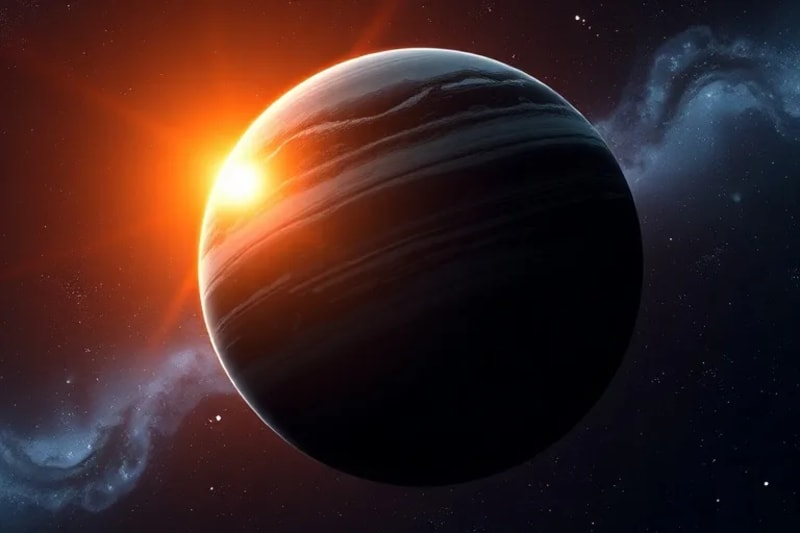 A distant exoplanet with atmospheric glow, suggesting potential for life.
Fuente visual sujeta a disponibilidad del ecosistema: Wikimedia Commons bajo licencia CC BY-SA 4.0 o renderizado conceptual IA.
Table of Contents
- The Scientific Quest for Extraterrestrial Life
- The Exoplanet Revolution and Biosignatures
- SETI: Listening for Cosmic Neighbors
- The Fermi Paradox: Where Are They?
- The Great Filter and Rare Earth Hypothesis
- Philosophical Implications of First Contact
- Existential Recalibration: Our Place in the Cosmos
- Ethical and Societal Considerations
- Future Prospects and Continued Exploration
The Scientific Quest for Extraterrestrial Life
The scientific search for life beyond Earth is primarily driven by astrobiology, an interdisciplinary field that combines astronomy, biology, geology, and chemistry. Astrobiologists seek to understand the origins, evolution, distribution, and future of life in the universe. Their work involves studying extremophiles on Earth, analyzing meteorites for organic compounds, and exploring potential habitable environments in our solar system and beyond.
Key areas of focus include the search for liquid water, a fundamental requirement for life as we know it, and the identification of energy sources. Missions to Mars, Europa (a moon of Jupiter), and Enceladus (a moon of Saturn) are prime examples of this direct exploration, as these bodies are believed to harbor subsurface oceans or past environments conducive to life.
The Exoplanet Revolution and Biosignatures
The discovery of thousands of exoplanets, planets orbiting stars other than our Sun, has revolutionized the search for extraterrestrial life. Thanks to missions like Kepler and TESS, astronomers have identified numerous exoplanets, including many within their stars' habitable zones – regions where temperatures could allow for liquid water on the surface. This monumental shift in our understanding of planetary abundance suggests that the universe might be teeming with potential abodes for life.
The next frontier involves detecting biosignatures: chemical indicators in a planet's atmosphere that suggest the presence of life. Gases like oxygen, methane, and ozone, especially in combination, could be strong evidence. Future telescopes, such as the James Webb Space Telescope and upcoming observatories, are designed to analyze the atmospheric compositions of these distant worlds, offering unprecedented opportunities to sniff out signs of life. The study of ancient giant millennial forests on Earth provides a terrestrial analogue for how life can dramatically alter a planet's atmosphere over geological timescales, a concept crucial for understanding potential exoplanetary biosignatures.
SETI: Listening for Cosmic Neighbors
The Search for Extraterrestrial Intelligence (SETI) focuses on detecting intelligent life by listening for artificial signals, primarily radio waves, emanating from other star systems. While the discovery of microbial life would be groundbreaking, finding intelligent civilizations would have an even more profound impact on humanity's self-perception and future trajectory. Projects like Breakthrough Listen scan millions of star systems for any anomalous patterns that could indicate technology.
SETI's approach is based on the assumption that advanced civilizations might use radio communication, similar to our own early methods, to transmit information across vast cosmic distances. The challenges are immense, given the sheer scale of the universe and the potential diversity of communication methods. However, the potential reward of making "first contact" makes these efforts invaluable, as explored in philosophical discussions about optical illusions and perception, which highlight how our interpretation of reality can be shaped by unexpected stimuli.
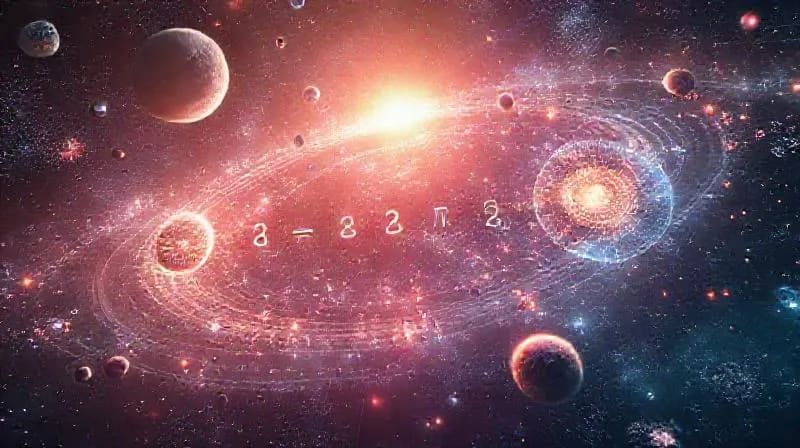 A conceptual visualization of the Drake Equation, illustrating factors for intelligent life.
The Fermi Paradox: Where Are They?
Despite the vastness of the universe and the high probability suggested by the sheer number of stars and planets, we have yet to find conclusive evidence of extraterrestrial life, especially intelligent civilizations. This contradiction is known as the Fermi Paradox, famously posed by physicist Enrico Fermi: "Where is everybody?" The paradox highlights the discrepancy between the high probability of extraterrestrial life and the lack of observational evidence.
Several potential solutions have been proposed:
- The Great Filter: Some catastrophic event or series of events makes the emergence of intelligent, space-faring life extremely rare. This filter could be in our past (e.g., the origin of life itself) or in our future (e.g., self-destruction).
- Rare Earth Hypothesis: The conditions necessary for complex life to evolve on Earth are exceptionally unique and unlikely to be replicated elsewhere.
- Zoo Hypothesis: Advanced civilizations exist but choose not to interfere with or reveal themselves to less developed civilizations like ours, observing us from afar.
- They are too far away: The distances between civilizations are so vast that communication or travel is practically impossible.
- Different forms of life/communication: Extraterrestrial life might be so fundamentally different from us that we wouldn't recognize it, or their communication methods are beyond our current detection capabilities.
The Great Filter and Rare Earth Hypothesis
The Great Filter concept is particularly unsettling. If the filter is behind us, it suggests humanity has overcome immense hurdles to reach its current stage, making us rare and perhaps special. However, if the filter lies ahead, it implies that most civilizations eventually encounter an insurmountable obstacle, such as environmental collapse, nuclear war, or technological singularity leading to self-destruction. This perspective underscores the fragility of complex life and the critical challenges facing humanity.
The Rare Earth Hypothesis, on the other hand, posits that the combination of factors leading to Earth's habitability – a stable star, a large moon, plate tectonics, a protective magnetic field, and a precise planetary neighborhood – is exceedingly rare. This hypothesis suggests that while microbial life might be common, complex multicellular life and intelligent species are far less so. Both concepts provide sobering philosophical reflections on our existence and the potential uniqueness of life on Earth.
Philosophical Implications of First Contact
The discovery of extraterrestrial life, whether microbial or intelligent, would undoubtedly trigger a profound philosophical shift. It would challenge many human-centric beliefs and potentially redefine our understanding of consciousness, morality, and purpose. The nature of this impact would depend heavily on the characteristics of the discovered life.
If microbial life is found, it would confirm that life is not unique to Earth, suggesting a universal biological imperative. This would broaden our scientific understanding of life's origins and adaptability. If intelligent life is discovered, the implications would be far more dramatic. It could lead to a reevaluation of religious doctrines, philosophical frameworks, and even our political systems. The very concept of "human nature" might need to be re-examined in a cosmic context, perhaps akin to how Michael Jackson's "Human Nature" explores universal human emotions.
Existential Recalibration: Our Place in the Cosmos
Encountering extraterrestrial intelligence would force humanity into an existential recalibration. It would challenge the notion of human exceptionalism, potentially fostering a sense of cosmic humility or, conversely, inspiring a new era of unity and cooperation on Earth. The realization that we are not alone could either diminish our perceived significance or elevate our collective identity as participants in a larger cosmic drama.
Philosophers have long debated the implications of such a discovery. Would it lead to fear and xenophobia, or to an unprecedented expansion of knowledge and culture? The answer likely lies in humanity's own capacity for empathy, adaptability, and critical thinking. This quest for understanding, both of ourselves and the universe, is a continuous journey, much like the ongoing evolution of Michael Jackson's vocal stylistic transitions throughout his career, reflecting constant adaptation and growth.
 A human hand reaching towards an alien artifact, symbolizing humanity's quest for cosmic understanding.
Ethical and Societal Considerations
Beyond the scientific and philosophical, the search for extraterrestrial life raises significant ethical questions. How should humanity respond to a confirmed detection? What protocols should govern first contact? The potential for contamination, both biological and cultural, must be carefully considered. The Outer Space Treaty, for example, outlines basic principles for space exploration, but specific guidelines for interacting with alien life are still being developed.
The impact on society would be multifaceted. Economically, it could spur new industries and technologies. Sociologically, it might foster global unity or exacerbate existing divisions. Psychologically, it could lead to awe, fear, or profound re-evaluation of human identity. Preparing for such an event requires interdisciplinary dialogue and careful foresight, ensuring that any contact is handled responsibly and ethically.
Future Prospects and Continued Exploration
The future of the search for extraterrestrial life is bright, driven by continuous advancements in technology and scientific understanding. New generations of telescopes, both ground-based and space-based, will offer unprecedented observational capabilities. Artificial intelligence and machine learning are increasingly being used to analyze vast datasets from SETI projects and exoplanet observations, helping to identify subtle patterns that human eyes might miss.
Furthermore, robotic missions to potentially habitable moons within our solar system, such as Europa Clipper and Dragonfly to Titan, promise direct exploration of environments where life could exist. These missions represent a tangible step towards answering one of humanity's oldest questions. The ongoing quest is not just about finding life elsewhere, but also about understanding ourselves and our cosmic heritage.
The intersection of astronomy and philosophy in the search for extraterrestrial life is a testament to humanity's insatiable curiosity. It is a journey that continually expands our scientific horizons while simultaneously challenging and enriching our philosophical perspectives on life, intelligence, and our unique place in the grand tapestry of the cosmos.
Explore Further
Source: Hybrid content assisted by AI and human editorial supervision.


Comentarios