
Ethnobotany Medicinal Ancestral Bio-innovation Power Plants
Ethnobotany, the scientific study of the relationships between people and plants, stands as a crucial bridge between ancient wisdom and modern scientific inquiry. It delves into how different cultures have traditionally used plants for food, medicine, shelter, and spiritual practices, offering invaluable insights into biodiversity and potential therapeutic agents. This discipline is not merely an academic pursuit; it is a dynamic field that holds immense promise for bio-innovation, sustainable development, and the preservation of indigenous knowledge systems.
The ancestral power of plants, meticulously documented and passed down through generations by indigenous communities, forms the bedrock of ethnobotanical research. As we face global challenges such as emerging diseases and environmental degradation, understanding these deep-rooted connections becomes more vital than ever. This article explores the rich tapestry of medicinal ethnobotany, from its historical foundations to its contemporary role in drug discovery and ethical considerations.
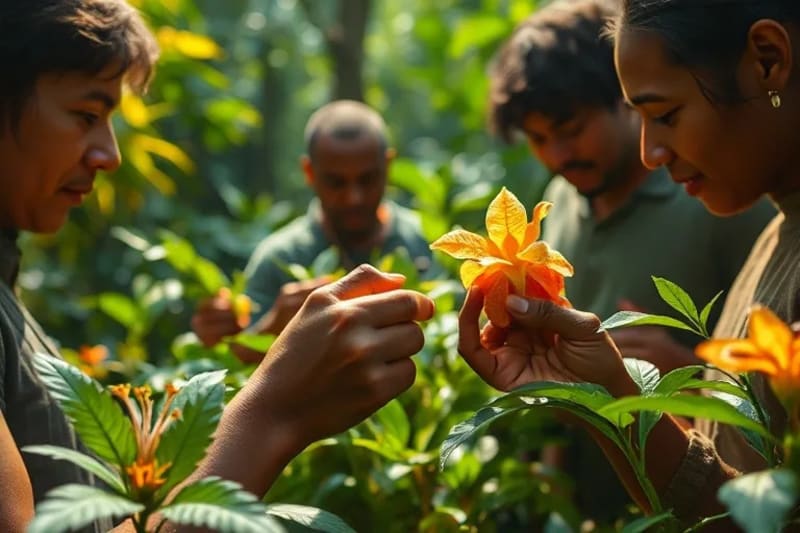
Collaborative research in ethnobotany combines traditional knowledge with scientific methods to uncover new plant-based medicines.
Fuente visual sujeta a disponibilidad del ecosistema: Wikimedia Commons bajo licencia CC BY-SA 4.0 o renderizado conceptual IA.Table of Contents
- Historical Foundations of Plant Medicine
- Indigenous Knowledge and Traditional Healing Systems
- Bio-innovation and Modern Drug Discovery
- Ethical Challenges and Sustainability in Ethnobotany
- Key Medicinal Plants and Their Contributions
- Future Directions: Integrating Ethnobotany and Science
Historical Foundations of Plant Medicine
The use of plants for medicinal purposes dates back tens of thousands of years, forming the earliest known form of healthcare. Archaeological evidence, such as fossilized plant remains in Neanderthal burial sites, suggests that even early hominids possessed a rudimentary understanding of plant properties. Ancient civilizations across the globe, from Mesopotamia to Egypt, China, and India, developed sophisticated systems of herbal medicine, meticulously documenting their findings on papyri, clay tablets, and scrolls.
The Ebers Papyrus from ancient Egypt, dating back to 1550 BC, lists over 700 medicinal remedies, many derived from plants. Similarly, traditional Chinese medicine (TCM) and Ayurvedic medicine from India have millennia-old traditions of using complex herbal formulations to treat a wide array of ailments. These ancient practices were not based on chance; they were the result of extensive observation, experimentation, and the accumulation of empirical knowledge over countless generations, often interwoven with spiritual beliefs and cultural rituals.
In Europe, figures like Hippocrates and Dioscorides laid the groundwork for Western herbal medicine, with Dioscorides' "De Materia Medica" serving as the primary pharmacological text for over 1,500 years. This historical trajectory underscores the universal human reliance on the plant kingdom for healing and well-being, setting the stage for modern ethnobotanical investigations that seek to understand and validate these age-old remedies.
Indigenous Knowledge and Traditional Healing Systems
Indigenous communities worldwide are the primary custodians of ethnobotanical knowledge, possessing an unparalleled understanding of their local flora and its medicinal applications. Shamans, healers, and elders in these societies often undergo years of rigorous training, learning to identify plants, understand their properties, and prepare remedies. This knowledge is holistic, encompassing not just the physical effects of plants but also their spiritual and ecological significance, viewing health as an intricate balance within the environment.
The Amazon rainforest, for instance, is a biodiversity hotspot where countless indigenous groups have developed sophisticated medicinal systems. Their knowledge has led to the discovery of drugs like quinine (from Cinchona bark for malaria) and curare (a muscle relaxant from various plants). However, this invaluable knowledge is increasingly threatened by deforestation, cultural erosion, and the loss of traditional languages. Ethnobotanists work closely with these communities to document and preserve this heritage, often through collaborative research that respects intellectual property rights and promotes benefit-sharing.
The intricate relationship between indigenous cultures and their plant environments is a testament to sustainable living and deep ecological wisdom. Efforts to integrate this traditional knowledge with modern scientific approaches are crucial for future healthcare innovations. For example, the cultural significance of plants like the poppy, as explored in Inteligencia Artificial Generativa: Ética Creación Artística, highlights how plants are deeply embedded in human narratives and healing practices across diverse cultures.
Bio-innovation and Modern Drug Discovery
The transition from traditional plant use to modern pharmaceuticals represents a significant leap in bio-innovation. Many of today's most effective drugs have their origins in plants identified through ethnobotanical research. Aspirin (from willow bark), digoxin (from foxglove), and vincristine (from the Madagascar periwinkle for cancer treatment) are just a few prominent examples. Ethnobotanical leads often provide a starting point for pharmaceutical companies to isolate active compounds, synthesize analogues, and develop new therapeutic agents.
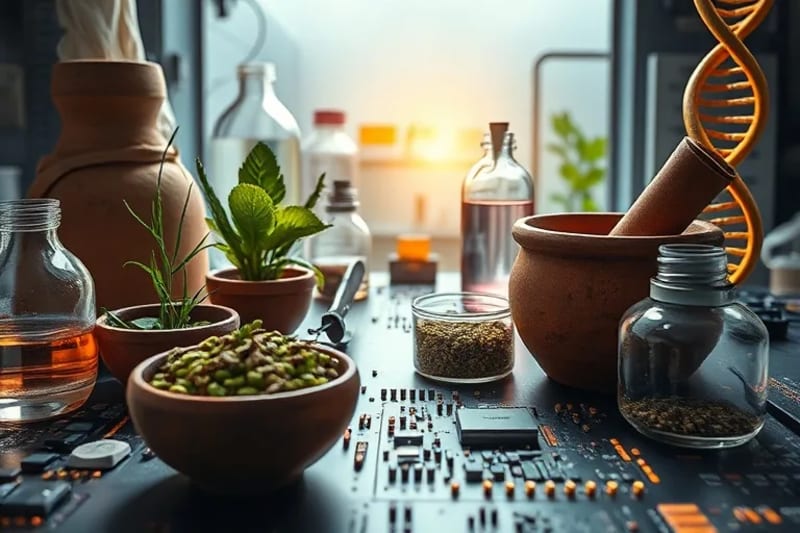
Bio-innovation often stems from the synthesis of traditional plant knowledge and advanced scientific methodologies.
The process typically involves several stages: ethnobotanical surveys to identify plants used by local healers, collection of plant samples, extraction and fractionation of compounds, bioassays to test for pharmacological activity, and finally, lead optimization and clinical trials. This systematic approach allows scientists to validate traditional claims and develop new drugs for conditions ranging from infectious diseases to chronic illnesses. The field also contributes to specialized areas like Nutrición Personalizada Ultramaratón: Adaptación Metabólica Lesiones, where specific plant-derived compounds can aid in recovery and performance.
Advancements in analytical chemistry, genomics, and bioinformatics have revolutionized drug discovery from natural products. High-throughput screening allows for rapid testing of numerous plant extracts, while genomic sequencing helps identify genes responsible for producing valuable secondary metabolites. This synergy between traditional knowledge and cutting-edge technology is vital for unlocking the full therapeutic potential of the plant kingdom.
Ethical Challenges and Sustainability in Ethnobotany
While ethnobotany offers immense benefits, it also presents significant ethical and sustainability challenges. The historical practice of "biopiracy," where pharmaceutical companies or researchers exploit traditional knowledge without fair compensation or recognition for indigenous communities, remains a contentious issue. This exploitation undermines the rights of indigenous peoples and disincentivizes the sharing of valuable information.
International agreements, such as the Nagoya Protocol on Access and Benefit-Sharing, aim to establish fair and equitable frameworks for the utilization of genetic resources and associated traditional knowledge. These protocols emphasize prior informed consent, mutually agreed terms, and the sharing of benefits arising from the commercialization of plant-derived products. Adherence to these principles is crucial for fostering trust and ensuring that indigenous communities are partners, not just sources, in the drug discovery process.
Sustainability is another critical concern. Over-harvesting of medicinal plants, often driven by commercial demand, can lead to species endangerment and ecosystem degradation. Ethnobotanical research must therefore go hand-in-hand with conservation efforts, promoting sustainable harvesting practices, cultivation of medicinal plants, and habitat protection. The role of women in these conservation and knowledge transmission efforts is often central, reflecting themes explored in Longevity Startups: Biohacker Business Models for Active Aging, where diverse perspectives enrich scientific and ethical approaches.
Key Medicinal Plants and Their Contributions
A multitude of plants have contributed significantly to modern medicine, each with a unique history and chemical profile. Understanding these examples highlights the enduring relevance of ethnobotanical inquiry.
- Willow Bark (Salix spp.): Traditionally used for pain and fever, it led to the isolation of salicylic acid, the precursor to aspirin.
- Foxglove (Digitalis purpurea): Its leaves contain cardiac glycosides (e.g., digoxin) used to treat heart failure, a discovery rooted in traditional European herbalism.
- Madagascar Periwinkle (Catharanthus roseus): This plant yields vincristine and vinblastine, powerful anti-cancer drugs used in chemotherapy for leukemia and lymphoma.
- Cinchona Tree (Cinchona officinalis): The bark is the source of quinine, a historical and still important antimalarial compound, first recognized by indigenous Andean communities.
- Opium Poppy (Papaver somniferum): While controversial due to its addictive properties, it is the source of morphine and codeine, vital pain relievers and cough suppressants.
- Turmeric (Curcuma longa): Widely used in Ayurvedic medicine, curcumin, its active compound, is studied for its anti-inflammatory and antioxidant properties.
These examples represent a fraction of the plant kingdom's medicinal bounty. Ongoing research continues to explore new species, especially from underexplored regions, promising future breakthroughs in healthcare.
Future Directions: Integrating Ethnobotany and Science
The future of medicinal ethnobotany lies in stronger interdisciplinary collaboration and a renewed commitment to ethical practices. Integrating traditional ecological knowledge with modern scientific methodologies can accelerate the discovery of new drugs and sustainable solutions. This includes not only pharmaceutical development but also applications in functional foods, cosmetics, and agricultural pest control.

The intricate chemical compositions within plants hold immense potential for future medicinal advancements.
Digital technologies, such as databases for traditional knowledge and advanced mapping tools, can aid in preserving and accessing ethnobotanical information. However, the ethical implications of such digital preservation, particularly concerning intellectual property and data sovereignty, must be carefully navigated, echoing discussions around Derecho Identidad Digital Soberana: Blockchain, IA, Privacidad. The emphasis must always be on empowering indigenous communities and ensuring their active participation in research and development.
Moreover, public education about the value of biodiversity and traditional knowledge is essential to foster a global appreciation for ethnobotany. By supporting research, promoting ethical partnerships, and advocating for conservation, we can ensure that the ancestral power of plants continues to enrich human health and well-being for generations to come. The ongoing dialogue between ancient practices and modern science promises a future where nature's pharmacy is both respected and sustainably utilized.
Explore Further: Related Insights
Source: Hybrid content assisted by AI and human editorial supervision.


Comentarios