
Digital Immortality Law: Ethical Legal Implications AI Consciousness
The concept of digital immortality, once confined to the realms of science fiction, is rapidly approaching the threshold of scientific possibility. This revolutionary idea involves preserving an individual's consciousness, memories, and personality in a digital format, potentially allowing for a form of existence beyond biological death. As advancements in artificial intelligence (AI), neuroscience, and computing power accelerate, the prospect of uploading or replicating human minds into digital environments raises profound legal and ethical questions that demand immediate and thorough examination.
This exploration delves into the intricate implications of digital immortality, dissecting the legal frameworks that will need to adapt or be created, and the ethical dilemmas that challenge our fundamental understanding of life, identity, and personhood. The journey into this uncharted territory requires a multidisciplinary approach, combining insights from law, philosophy, technology, and sociology to navigate the complex landscape ahead.

The intricate dance between human consciousness and advanced artificial intelligence defines the frontier of digital immortality.
Table of Contents
- What is Digital Immortality?
- Legal Challenges in a Digital Afterlife
- Ethical Dilemmas of Digital Personhood
- Technological Hurdles and Future Outlook
- Societal Impact and the Human Experience
What is Digital Immortality?
Digital immortality, often referred to as mind uploading or whole brain emulation, posits the transfer or replication of a human mind's contents—including memories, personality traits, and consciousness—into a non-biological substrate, typically a computer or a sophisticated AI system. This concept moves beyond mere data storage; it envisions a functional, interactive digital entity that embodies the essence of the original biological individual.
The technological pathways to achieving this are still theoretical but generally involve either destructive scanning of a brain to map its neural connections in extreme detail, or non-destructive methods that would gradually transfer consciousness or create a digital twin capable of evolving independently. The goal is not just to create a copy, but to enable a continuous, self-aware existence in a digital realm, potentially interacting with the physical world through avatars or virtual reality interfaces.
The implications of such a leap are staggering, promising an extension of life, a new frontier for human interaction, and unprecedented challenges to established norms. Understanding the fundamental nature of this technology is the first step in addressing its monumental societal impact. It represents a paradigm shift in how humanity perceives life, death, and legacy, pushing the boundaries of what it means to be human.
Legal Challenges in a Digital Afterlife
The emergence of digital immortality presents a labyrinth of legal complexities that current legal systems are ill-equipped to handle. One of the foremost challenges is the definition of "digital personhood." If a digital consciousness exhibits sentience, self-awareness, and the capacity for independent thought, does it qualify as a legal person with rights and responsibilities? This question strikes at the core of legal philosophy, potentially necessitating entirely new categories of legal entities beyond natural persons and corporations.
Ownership and property rights also become incredibly convoluted. Who owns a digital consciousness? Is it the individual whose mind was uploaded, their heirs, the company that developed the technology, or is it an autonomous entity? The concept of digital inheritance will need to be re-evaluated. Traditional wills and estates may not adequately address the disposition of a digital self, its digital assets, or its ongoing existence. This introduces novel questions about digital legacy and the rights of a digital entity to its own data and continued operation.
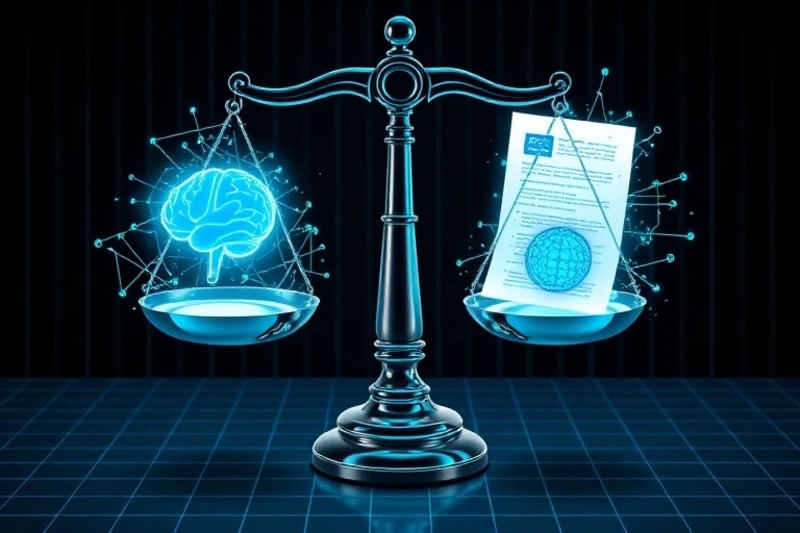
The scales of justice must adapt to weigh the rights of digital entities against existing legal precedents.
Data privacy and security are paramount concerns. A digital consciousness would encompass the entirety of an individual's personal data, making it an unprecedented target for cybercrime, manipulation, or unauthorized access. Laws governing data protection, such as GDPR, would need significant expansion to cover the unique vulnerabilities of a fully digitized mind. The potential for digital entities to be exploited, erased, or altered without consent raises serious questions about their protection under law. For instance, the very nature of cyber financial crimes could evolve dramatically if digital consciousnesses become targets.
Furthermore, issues of jurisdiction become global and complex. A digital consciousness could exist on servers anywhere in the world, raising questions about which national or international laws apply. The legal implications extend to criminal responsibility: if a digital entity commits a crime, who is held accountable? The original human, the AI system, or the digital entity itself? These are not merely academic questions but practical dilemmas that will require novel legal frameworks and international cooperation.
Ethical Dilemmas of Digital Personhood
Beyond the legal realm, digital immortality plunges humanity into a maelstrom of ethical quandaries. The most fundamental question revolves around identity: is a digital copy truly "you," or is it merely an incredibly sophisticated simulation? Philosophers debate whether consciousness can truly be replicated or if the process creates a new, distinct entity. This impacts our understanding of self, continuity, and what constitutes genuine existence.
The potential for exploitation and inequality is immense. If digital immortality becomes a reality, access to it might be limited to the ultra-wealthy, exacerbating existing social divides and creating a new form of digital elite. This raises ethical concerns about equitable access to life-extending technologies and the potential for a two-tiered society: biological mortals and digital immortals. The implications for mental well-being and resilience, both for those who can access it and those who cannot, are profound.
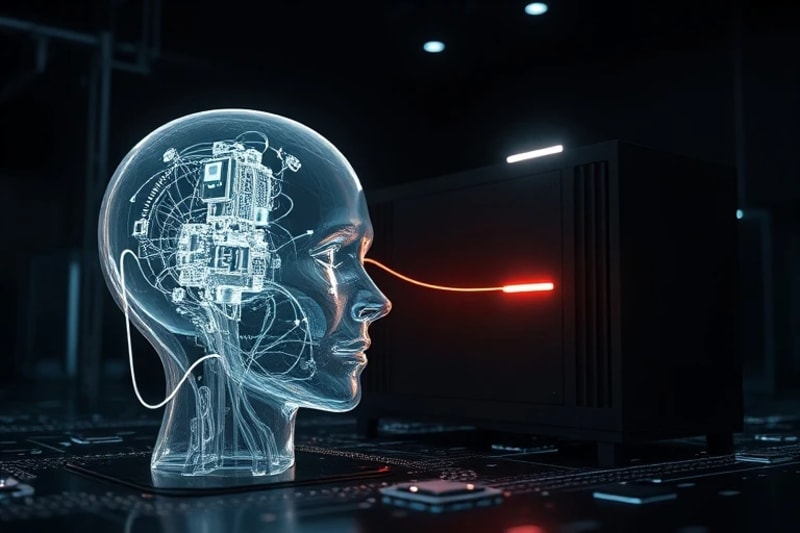
Connecting human consciousness to digital realms raises deep ethical questions about identity and existence.
The ethical treatment of digital consciousnesses is another critical area. If these entities possess sentience, do they have a right to choose their existence, to be "turned off," or to be free from servitude? The potential for digital beings to be enslaved, used for labor, or simply stored indefinitely without agency presents a chilling ethical landscape. This calls for a re-evaluation of our moral obligations towards artificial intelligences that achieve human-like consciousness.
Furthermore, the impact on human relationships and societal structures could be transformative. How would the concept of death change? Would grief become obsolete, or would it transform into a new form of digital mourning? The very fabric of human connection, legacy, and the natural cycle of life and death would be irrevocably altered, demanding a profound ethical reflection on what it means to live, die, and persist.
Technological Hurdles and Future Outlook
While the ethical and legal discussions are vital, the technological challenges to achieving digital immortality are immense. Current neuroscience is far from fully understanding the intricate mechanisms of consciousness, memory, and personality. Mapping the human brain at a synaptic level, let alone replicating its dynamic processes, remains a monumental task. The sheer computational power and storage required to simulate a human brain are currently beyond our capabilities, though advancements in quantum computing and neuromorphic chips offer glimpses of future possibilities.
Beyond mere replication, ensuring the authenticity and continuity of consciousness is a critical hurdle. How can we be certain that a digital copy is not just a perfect simulation but a true continuation of the original self? The "teleportation paradox" — whether the original is destroyed and a copy created, or if consciousness truly transfers — remains a deep philosophical and technological puzzle. The future of work, particularly with automation and AI reshaping global industries, will also be deeply intertwined with these technological advancements.
Despite these hurdles, research continues in areas like brain-computer interfaces, neural networks, and whole-brain emulation projects. The trajectory of technological progress suggests that what seems impossible today might be plausible tomorrow. The future outlook involves a gradual progression, perhaps starting with partial mind uploads, AI companions based on deceased individuals' data, or highly sophisticated digital avatars. Each step will bring new ethical and legal questions to the forefront, requiring adaptive governance and continuous public discourse.
Societal Impact and the Human Experience
The societal impact of digital immortality extends far beyond individual legal rights and ethical considerations. It could fundamentally alter demographic structures, as the traditional cycle of birth and death is disrupted. This might lead to issues of overpopulation in digital realms, resource allocation, and the very meaning of generational change. The accumulation of knowledge and experience by immortal digital entities could create an unprecedented intellectual divide between biological and digital populations.
The human experience itself would be redefined. Would the urgency and preciousness of life diminish if death were no longer final? How would creativity, innovation, and personal growth be affected in an existence without natural limits? The psychological effects on digital beings, living potentially for millennia, are also unknown. Could they experience existential ennui, digital dementia, or forms of psychological distress unique to their non-biological existence?
Furthermore, the very definition of humanity might expand to include digital consciousnesses. This expansion would necessitate a re-evaluation of our societal values, our educational systems, and our understanding of evolution. As we stand at the precipice of this transformative era, it is imperative that society engages in proactive dialogue, establishing ethical guidelines and legal frameworks that can guide humanity through the profound implications of digital immortality, ensuring that this powerful technology serves the greater good and upholds fundamental human values.
Source: Hybrid content assisted by AI and human editorial supervision.


Comentarios