
Digital Cryptozoology: Rare Creatures Internet Era Search
Digital cryptozoology represents a fascinating evolution in the age-old human quest for the unknown. While traditional cryptozoology involves expeditions into remote wildernesses in search of elusive creatures like Bigfoot or the Loch Ness Monster, its digital counterpart shifts the hunting grounds to the vast, intricate landscapes of the internet. This modern discipline leverages advanced technology, including artificial intelligence and big data analytics, to scour online realms for evidence, patterns, and anomalies that might indicate the existence of previously undocumented or mythical beings within digital ecosystems or reflected in online human behavior. It's a field that blurs the lines between folklore, technology, and collective online consciousness, offering a fresh perspective on how we perceive and search for the mysterious in our increasingly connected world.

Exploring the digital frontier for elusive entities, where data streams converge with myth.
Table of Contents
- What is Digital Cryptozoology?
- The Evolution of the Hunt: From Field to Screen
- AI and Machine Learning: New Tools for the Digital Cryptozoologist
- Famous Digital Cryptids and Unexplained Phenomena
- Challenges and Ethical Considerations
- The Future of Digital Cryptozoology
What is Digital Cryptozoology?
Digital cryptozoology is an emerging interdisciplinary field that applies the core principles of cryptozoology—the study of hidden animals—to the digital realm. Instead of tracking footprints in the mud, practitioners analyze digital footprints, data anomalies, viral content, and collective online narratives. This involves scrutinizing vast amounts of user-generated content, scientific databases, forums, social media, and even dark web discussions for recurring patterns or unexplained phenomena that might point to the existence of cryptids, either as real-world entities leaving digital traces or as purely digital constructs born from collective imagination and technological interaction. It’s a unique blend of folklore, data science, and cultural studies.
The scope of digital cryptozoology is broad, encompassing several key areas. It investigates alleged sightings or photographic evidence shared online, analyzes linguistic patterns in discussions about cryptids, and explores the emergence of new "digital cryptids" that exist primarily as internet phenomena, such as viral hoaxes or emergent AI-generated entities. The field also touches upon the psychological and sociological aspects of belief in the unknown in a hyper-connected society, where information spreads rapidly and can be amplified or distorted by algorithms. Understanding these dynamics is crucial for any digital cryptid hunter.
The Evolution of the Hunt: From Field to Screen
Historically, cryptozoology has been characterized by intrepid explorers venturing into uncharted territories, relying on eyewitness accounts, anecdotal evidence, and often rudimentary tools. The transition to the digital age has fundamentally transformed this methodology. The internet provides an unprecedented repository of information, making it possible to conduct global investigations from a desktop. Researchers can now access satellite imagery, analyze geological data, cross-reference historical records, and communicate with potential witnesses across continents in real-time. This shift has democratized the search, allowing enthusiasts and academics worldwide to contribute to the collective effort.
The tools of the trade have also evolved dramatically. Where once binoculars and notebooks were paramount, today's digital cryptozoologist employs sophisticated software for image analysis, natural language processing (NLP) for text mining, and network analysis to map the spread of information. This allows for a more systematic and data-driven approach to identifying potential cryptids. For instance, analyzing large datasets of environmental changes alongside reported sightings can reveal correlations that were previously impossible to detect. The digital realm offers both a challenge and an opportunity to redefine the boundaries of discovery, moving beyond physical limitations to explore the vastness of human knowledge and belief as expressed online.
AI and Machine Learning: New Tools for the Digital Cryptozoologist
Artificial Intelligence (AI) and Machine Learning (ML) are rapidly becoming indispensable assets in the digital cryptozoologist's toolkit. These technologies can process and analyze vast quantities of data far beyond human capabilities, identifying subtle patterns, anomalies, and correlations that might otherwise go unnoticed. For example, AI-powered image recognition algorithms can be trained to detect specific features in user-submitted photos or videos, helping to filter out hoaxes or identify potential genuine evidence more efficiently. Similarly, NLP models can sift through millions of forum posts, social media comments, and articles to identify recurring themes, geographical hotspots, or linguistic markers associated with cryptid sightings.
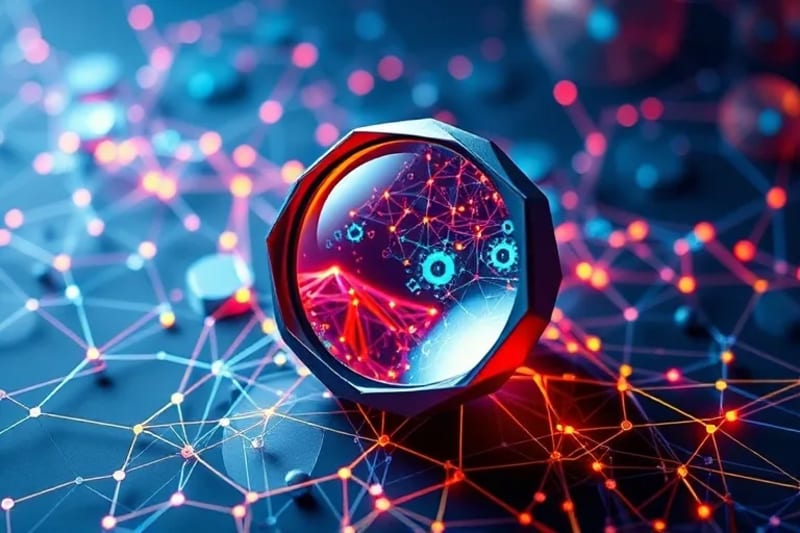
AI algorithms meticulously scan the digital landscape, seeking the faintest signals of the unknown.
Beyond mere detection, AI can also be used for predictive modeling. By analyzing historical data on cryptid sightings, environmental factors, and human behavior, AI could potentially predict areas or conditions where new evidence might emerge. This predictive capability could guide both digital and traditional investigations, making the search more targeted and efficient. However, the application of AI also introduces new challenges, such as the risk of algorithmic bias or the generation of convincing but false evidence, which necessitates careful human oversight and critical evaluation. The intersection of AI and digital threats is also a relevant consideration, as sophisticated AI could be used to create highly believable hoaxes.
Machine learning models can also be employed in the realm of biohacking and metabolic resilience by analyzing vast biological datasets. In a similar vein, digital cryptozoology leverages ML to analyze patterns in ecological data, satellite imagery, and even acoustic recordings shared online, looking for anomalies that could correspond to unknown species. The ability of AI to learn and adapt makes it a powerful ally in the continuous, evolving search for cryptids in the digital age.
Famous Digital Cryptids and Unexplained Phenomena
The internet has given birth to its own pantheon of cryptids, some of which are purely digital constructs, while others are traditional cryptids whose legends have been amplified and transformed by online culture. Perhaps the most famous example of a purely digital cryptid is Slender Man, a fictional character created in an online forum that quickly spread across the internet, inspiring creepypastas, fan art, and even real-world incidents. This phenomenon highlights how collective online storytelling can create entities that feel real within the digital sphere, demonstrating the power of shared narratives in the internet age.
Other digital phenomena include viral videos of alleged sightings that spark global debates, such as blurry images of "UFOs" or strange creatures captured on trail cameras. While many are debunked as hoaxes or misidentifications, their rapid dissemination online creates a temporary reality where the cryptid is very much "alive" in public consciousness. The search for evidence of these entities often involves digital forensics, analyzing metadata, image manipulation detection, and cross-referencing claims with known geographical or scientific data. The internet also acts as a global repository for unexplained phenomena, from mysterious sounds to strange lights, all cataloged and discussed by a global community of amateur investigators.
Challenges and Ethical Considerations
Despite its potential, digital cryptozoology faces significant challenges. The sheer volume of data on the internet makes it difficult to distinguish genuine leads from noise, hoaxes, and misinformation. The ease of digital manipulation means that photographic and video evidence must be treated with extreme skepticism and subjected to rigorous verification processes. Furthermore, the anonymity of the internet can complicate source verification and witness credibility. These factors necessitate a highly critical and analytical approach, often drawing on principles from cybersecurity and digital forensics to validate claims.

Dispersed digital fragments may hold the key to uncovering hidden online mysteries.
Ethical considerations are also paramount. The pursuit of digital cryptids can sometimes lead to the inadvertent harassment of individuals, the spread of unverified claims that cause distress, or the invasion of privacy. Researchers must be mindful of the impact of their investigations on individuals and communities, adhering to strict ethical guidelines regarding data collection, privacy, and the responsible dissemination of information. The line between genuine inquiry and sensationalism can be thin, and maintaining scientific integrity is crucial. The field must also grapple with the philosophical implications of what constitutes "proof" in a digital age where reality can be easily simulated or distorted.
The Future of Digital Cryptozoology
The future of digital cryptozoology is likely to be characterized by increasing sophistication in both its tools and its understanding of online phenomena. As AI and machine learning technologies advance, they will become even more adept at sifting through vast datasets, identifying subtle patterns, and distinguishing between genuine anomalies and deliberate fabrications. The integration of blockchain technology could also play a role in verifying the authenticity of digital evidence, providing immutable timestamps and provenance for images and videos. Furthermore, the rise of virtual and augmented reality might create new spaces for digital cryptids to manifest, blurring the boundaries between the physical and the purely digital.
This field will continue to evolve as our relationship with technology deepens, reflecting humanity's enduring fascination with the unknown. It offers a unique lens through which to study collective human psychology, the spread of information, and the creation of shared realities in the digital age. Whether it leads to the discovery of a new species leaving digital traces or simply provides deeper insights into the nature of belief and myth-making in the 21st century, digital cryptozoology promises to remain a captivating and intellectually stimulating area of exploration for years to come. The digital wilderness is vast, and the hunt for its hidden inhabitants has only just begun.
Related Explorations
- Investing in Emerging Markets: Sustainable Funds Strategies - Explore how data analysis informs investment decisions.
- Archaeoastrology: Planetary Cycles & Ancient Civilizations - Delve into historical mysteries and patterns.
- Vedic Astrology vs. Western Astrology: Core Differences - Understand different frameworks for interpreting the unknown.
- Cognitive Biases in Investment: Optimal Financial Decisions - Learn about human perception and decision-making in complex data environments.
Source: Hybrid content assisted by AI and human editorial supervision.


Comentarios