
Circular Business Models: Regenerative Startups, Sustainability
The global economy faces unprecedented challenges, from resource depletion and climate change to social inequality. In response, a new paradigm is emerging: circular business models within regenerative startups. These innovative enterprises are not merely aiming for sustainability but actively striving to restore and revitalize natural and social systems. This approach moves beyond the traditional linear "take-make-dispose" model, fostering an economy where waste is minimized, resources are kept in use for as long as possible, and natural systems are regenerated.
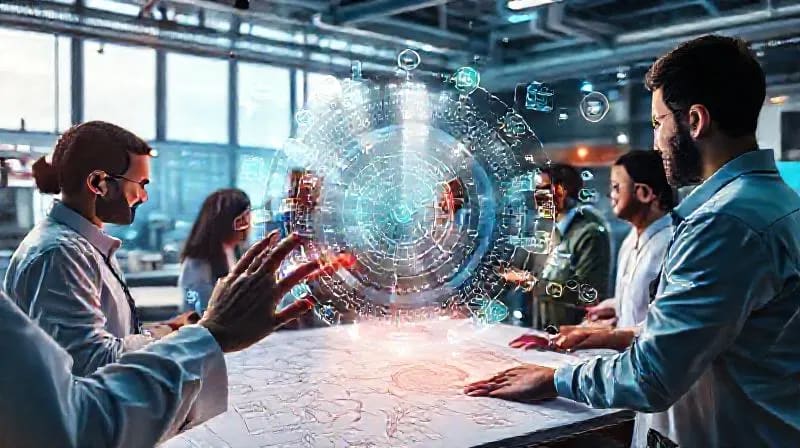 Innovators and scientists collaborating on advanced circular economy models, integrating sustainable design and resource management.
Regenerative startups are at the forefront of this transformation, embedding circular principles into their core operations from inception. They seek to create positive impacts across environmental, social, and economic dimensions, demonstrating that profitability and planetary health are not mutually exclusive. This article delves into the foundational concepts, benefits, challenges, and practical applications of circular business models for these forward-thinking ventures.
Table of Contents
- Understanding the Circular Economy
- Core Principles of Regenerative Startups
- Benefits of Circular Business Models
- Common Circular Strategies for Startups
- Challenges and Solutions in Implementation
- Future Outlook and Innovation
Understanding the Circular Economy
The circular economy is an economic system aimed at eliminating waste and the continual use of resources. It is based on three fundamental principles: design out waste and pollution, keep products and materials in use, and regenerate natural systems. Unlike the linear model, which extracts resources, produces goods, and then disposes of them, the circular model envisions a continuous loop.
This concept is gaining traction globally as businesses recognize the finite nature of resources and the environmental costs of traditional production. It encourages innovation in product design, manufacturing processes, and business models to maximize resource value and minimize ecological footprint. The shift requires a systemic change in how we perceive value, ownership, and consumption.
For startups, adopting circular principles from the outset offers a competitive advantage. It allows them to build resilience against supply chain disruptions, reduce material costs, and appeal to a growing market of environmentally conscious consumers. This proactive approach can also unlock new revenue streams through services like repair, refurbishment, and recycling.
Core Principles of Regenerative Startups
Regenerative startups go a step further than mere sustainability; they aim to actively repair and restore ecosystems and communities. Their core principles are deeply rooted in ecological and social well-being, often inspired by natural systems that are inherently circular and self-sustaining. These principles guide their strategic decisions and operational practices.
- Holistic Design: Products and services are designed with their entire lifecycle in mind, from sourcing raw materials to end-of-life, ensuring minimal environmental impact and maximum resource recovery.
- Systemic Thinking: Recognizing that businesses operate within larger ecological and social systems, regenerative startups consider the broader impact of their activities and seek to create positive ripple effects.
- Value Creation Beyond Profit: While profitable, these startups prioritize creating value for all stakeholders, including employees, communities, and the environment, aligning with the principles of an Economy of Well-being.
- Collaboration and Transparency: They often engage in open innovation, collaborating with suppliers, customers, and even competitors to foster a more circular ecosystem and maintain transparent practices.
- Adaptability and Resilience: Building business models that can adapt to changing environmental conditions and market demands, emphasizing flexibility and robust supply chains.
These principles guide every aspect of a regenerative startup, from product development to marketing. They represent a fundamental shift in business philosophy, moving from extraction to regeneration, and from competition to collaboration. This approach is not just ethical but also increasingly recognized as a pathway to long-term economic viability.
Benefits of Circular Business Models
Adopting circular business models offers a multitude of benefits for regenerative startups, extending beyond environmental stewardship to encompass significant economic and social advantages. These benefits contribute to a more resilient, innovative, and competitive enterprise.
- Reduced Resource Dependency: By reusing, repairing, and recycling materials, startups lessen their reliance on virgin resources, mitigating risks associated with price volatility and supply chain disruptions.
- Cost Savings: Efficient resource use, waste reduction, and extended product lifecycles can lead to substantial operational cost savings in materials, energy, and waste disposal.
- Enhanced Brand Reputation: Consumers are increasingly valuing sustainability. Circular practices can significantly boost a startup's brand image, attracting loyal customers and top talent.
- New Revenue Streams: Services like product-as-a-service, repair, and remanufacturing open up new avenues for income that are not available in linear models.
- Innovation and Competitive Advantage: The necessity of circular design fosters innovation, leading to unique products, processes, and business models that differentiate startups in the market.
- Regulatory Compliance and Future-Proofing: As environmental regulations become stricter, circular models help startups stay ahead of compliance requirements and adapt to future policy changes.
These advantages position regenerative startups not just as environmentally responsible entities but as leaders in a rapidly evolving economic landscape. The shift towards circularity is not merely a trend but a fundamental re-evaluation of how businesses create and capture value.
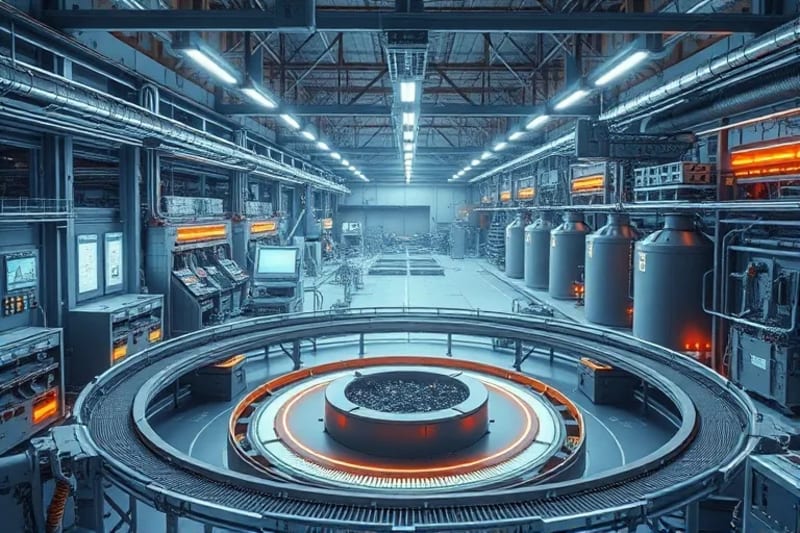 A state-of-the-art facility where waste materials are transformed into valuable resources through advanced robotic and human-led processes.
Common Circular Strategies for Startups
Regenerative startups employ various strategies to implement circularity, each tailored to their specific industry and product. These strategies often overlap and can be combined to create comprehensive circular systems. Understanding these approaches is crucial for any new venture aiming for sustainability.
- Product-as-a-Service (PaaS): Instead of selling products, companies lease them to customers, retaining ownership and responsibility for maintenance, repair, and end-of-life management. This incentivizes durable, repairable design.
- Extended Product Life: Designing products for durability, repairability, and upgradability. This includes offering repair services, spare parts, and modular designs that allow for component replacement.
- Resource Recovery and Recycling: Implementing systems to collect, sort, and process used products and materials, turning them back into raw materials for new production.
- Upcycling and Remanufacturing: Transforming discarded materials into new products of higher quality or environmental value (upcycling) or restoring used products to like-new condition (remanufacturing).
- Sharing Platforms: Creating platforms that enable users to share products, resources, or services, maximizing utilization and reducing the need for individual ownership.
- Bio-based and Regenerative Materials: Utilizing materials that are renewable, biodegradable, or actively contribute to ecosystem health, such as regenerative agriculture products.
These strategies require innovative thinking in product design, supply chain management, and customer engagement. They often involve a shift from transactional sales to long-term relationships with customers, fostering greater loyalty and value creation.
Challenges and Solutions in Implementation
While the benefits of circular business models are compelling, startups often face significant challenges in their implementation. These can range from initial investment costs to consumer behavior and regulatory hurdles. However, with strategic planning and innovative solutions, these obstacles can be overcome.
| Challenge | Description | Potential Solutions for Startups |
|---|---|---|
| High Upfront Investment | Developing circular processes, new technologies, and reverse logistics can be capital-intensive initially. | Seek impact investors, green grants, crowdfunding, or strategic partnerships; start with smaller, scalable circular initiatives. |
| Supply Chain Complexity | Managing reverse logistics, material collection, and processing requires robust and often new supply chain infrastructure. | Collaborate with existing recycling networks, leverage digital platforms for tracking, and design for local loops where possible. |
| Consumer Behavior | Shifting consumer mindsets from ownership to access, or from disposal to return, can be difficult. | Educate consumers on benefits, offer incentives for returns, make circular options convenient, and emphasize product value over ownership. |
| Lack of Standardized Infrastructure | Inadequate recycling facilities, sorting technologies, or regulatory frameworks can hinder circular efforts. | Advocate for policy change, partner with municipalities, or develop proprietary collection/processing solutions if scalable. |
| Data and Traceability | Tracking materials throughout their lifecycle requires sophisticated data management and transparency. | Implement blockchain or IoT solutions for material tracking; utilize digital product passports to ensure digital intellectual property and material flow. |
Addressing these challenges requires a combination of technological innovation, strategic partnerships, and effective communication. Startups, with their inherent agility and capacity for disruption, are uniquely positioned to pioneer these solutions and demonstrate their viability.
 A thriving, green urban landscape illustrating integrated local production, sharing economies, and renewable energy infrastructure.
Future Outlook and Innovation
The future of business is undeniably circular and regenerative. As resource scarcity intensifies and environmental awareness grows, the demand for products and services that align with these principles will only increase. Regenerative startups are not just adapting to this future; they are actively shaping it through continuous innovation.
Emerging technologies like advanced materials science, artificial intelligence, and blockchain are playing a pivotal role in accelerating the transition to circularity. AI can optimize sorting and recycling processes, while blockchain can ensure transparency and traceability of materials across complex supply chains. Furthermore, the rise of powerful AI tools, such as those discussed in ChatGPT SEO Future: AI Tools for Content Optimization, can help these startups communicate their value proposition more effectively to a global audience.
The focus is shifting towards "design for disassembly," "materials passports," and "regenerative by design" philosophies. This involves creating products that are not only durable but also easily deconstructed into their constituent components, each with its own identified value and reuse potential. The integration of biological and technical cycles, as proposed by the Ellen MacArthur Foundation, will become increasingly sophisticated.
Ultimately, the success of circular business models in regenerative startups will depend on a collaborative ecosystem involving consumers, businesses, governments, and investors. By working together, we can build an economy that is not only prosperous but also restorative and equitable for all.
Explore Further: Related Insights
- Estrellas Fijas Eclipses Impacto Eventos Mundiales: Destino Colectivo - Understand broader systemic influences.
- Exploración Espacio Profundo: Misiones, Desafíos, Futuro - Learn about ambitious explorations, mirroring regenerative business innovation.
- Serafines Biblia Significado Profundo: Mensajeros Divinos - Delve into profound meanings and guiding principles.
- Crystal Grids Protection: Shielding Space Energy Advanced Guide - Discover advanced methods for creating protective and harmonious environments.
- Cavernas Subterráneas: Explorando las Maravillas Ocultas del Planeta - Explore hidden wonders, much like uncovering new sustainable business opportunities.
Source: Hybrid content assisted by AI and human editorial supervision.


Comentarios