
AI Music Reconstruction: Michael Jackson, Virtual Artists Future
The intersection of artificial intelligence and musical artistry has opened unprecedented avenues for creation, preservation, and even resurrection. In an era where digital innovation constantly pushes boundaries, the concept of reconstructing the musical essence of legendary figures, such as the iconic King of Pop, has transitioned from science fiction to tangible reality. This profound technological shift not only redefines how we interact with past masterpieces but also casts a visionary gaze upon the future of virtual artists.
AI-driven musical reconstruction involves sophisticated algorithms that analyze vast datasets of an artist's work, learning their unique stylistic nuances, vocal characteristics, and compositional patterns. The goal is to generate new content that is indistinguishable from the original artist's output, or to enhance existing recordings with a level of fidelity previously unimaginable. This deep dive explores the technical underpinnings, ethical dilemmas, and transformative potential of this burgeoning field, using the unparalleled legacy of a global music phenomenon as a compelling case study.

The dynamic stage presence of a legendary performer, whose influence continues to resonate through generations, during an iconic world tour.
Table of Contents
- The Genesis of AI in Music Production
- Deconstructing the King of Pop's Sound through AI
- The Technology Behind Virtual Artists: A Deep Dive
- Legal and Ethical Labyrinths of Posthumous AI Creations
- The Economic Landscape: New Revenue Streams and Market Disruptions
- The Future of Music: Co-creation, Immersion, and the Metaverse
The Genesis of AI in Music Production
The integration of artificial intelligence into music production is not a recent phenomenon, but its capabilities have evolved exponentially. Early attempts in the mid-20th century involved rule-based systems that could generate simple melodies or harmonies. These systems, while foundational, lacked the nuanced understanding of musical expression that defines human creativity.
The advent of machine learning, particularly deep learning, transformed this landscape. Algorithms could now process vast amounts of musical data, identifying complex patterns, structures, and emotional cues. This shift allowed AI to move beyond mere rule-following to genuinely "learn" and "understand" musical styles, paving the way for sophisticated generative models capable of creating original compositions or emulating specific artists.
Modern AI in music production encompasses a wide array of applications, from automatic mastering and mixing to algorithmic composition and performance generation. Tools leveraging neural networks can now analyze timbre, rhythm, and harmony with unprecedented precision, offering producers and artists powerful new avenues for exploration. This technological progression forms the bedrock for the advanced reconstruction techniques now being applied to iconic musical figures.
Deconstructing the King of Pop's Sound through AI
Reconstructing the sound of a musical legend like Michael Jackson presents a unique challenge and opportunity for AI. His distinctive vocal range, intricate harmonies, signature ad-libs, and groundbreaking production techniques are all elements that AI models strive to analyze and replicate. The process typically begins with extensive data collection, feeding the AI system with every available recording, from studio albums to unreleased demos and live performances.
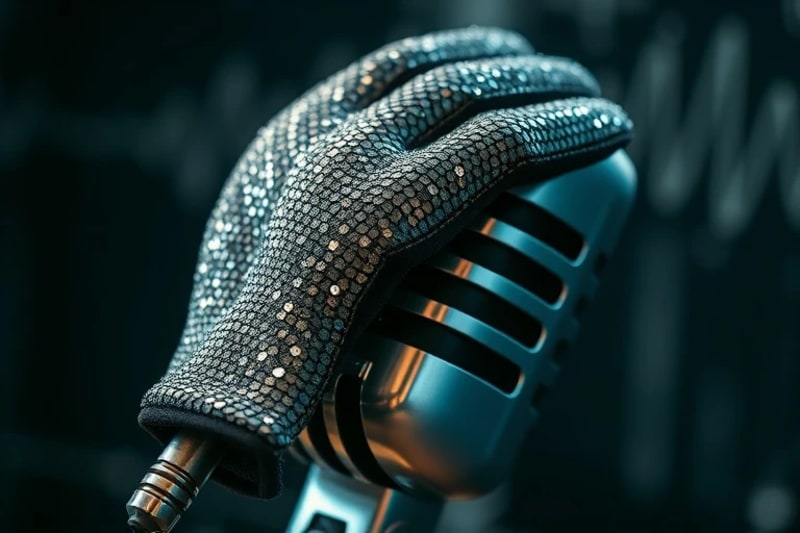
A glistening sequined glove resting on a vintage microphone, illuminated by digital sound waves, symbolizing the enduring impact of a pop icon.
Key techniques involved include:
- Source Separation: AI can isolate individual tracks from mixed recordings, allowing for a granular analysis of vocals, drums, bass, and other instruments. This is crucial for understanding the intricate layers of his productions.
- Timbre Analysis and Vocal Synthesis: Advanced algorithms analyze the unique tonal qualities (timbre) of his voice, including pitch, vibrato, and vocal fry. This data is then used to train vocal synthesis models capable of generating new vocal lines in his likeness.
- Rhythmic and Melodic Pattern Recognition: AI identifies recurring rhythmic patterns in his drumming and basslines, as well as characteristic melodic motifs and harmonic progressions. This helps in understanding his compositional style.
- Production Style Emulation: Beyond the notes, AI can learn the specific effects, mixing techniques, and spatialization used in his recordings, allowing for the creation of new tracks that sound authentically "produced" by his team.
The application of these techniques can be seen in projects aiming to complete unfinished tracks or create entirely new compositions that extend his musical universe. For instance, understanding the intricate details of his performance in tracks like "Smooth Criminal" goes beyond just the music; it involves analyzing the entire creative process, including post-production techniques that defied gravity and captivated audiences. Similarly, the study of his iconic choreographies provides further insight into his holistic artistic vision, which AI now attempts to encapsulate.
The Technology Behind Virtual Artists: A Deep Dive
The rise of virtual artists, whether they are AI-generated extensions of deceased legends or entirely new digital entities, relies on sophisticated machine learning architectures. Two of the most prominent are Generative Adversarial Networks (GANs) and Variational Autoencoders (VAEs).
GANs consist of two neural networks: a generator and a discriminator. The generator creates new data (e.g., music, vocals), while the discriminator tries to distinguish between real data and data generated by the generator. Through this adversarial process, the generator learns to produce increasingly realistic output. VAEs, on the other hand, learn a compressed representation of the input data and can then generate new data by sampling from this learned distribution, offering more control over the generated content's characteristics.
Beyond these core architectures, other models like recurrent neural networks (RNNs) and transformers are employed for sequential data like music. These models excel at understanding temporal dependencies, crucial for generating coherent melodies, rhythms, and vocal performances. The quality of the generated output is heavily dependent on the size and diversity of the training datasets, often comprising thousands of hours of music, vocals, and associated metadata. The integration of these technologies also extends to visual arts, where AI is transforming how we experience virtual reality art, creating immersive and interactive digital experiences.
Legal and Ethical Labyrinths of Posthumous AI Creations
While the technological prowess of AI in music is undeniable, it ushers in a complex array of legal and ethical questions, particularly concerning deceased artists. The primary concerns revolve around copyright, intellectual property, and the "right of publicity." When AI generates new music in the style of a deceased artist, who owns the copyright to this new work? Is it the AI developer, the estate of the original artist, or a combination?
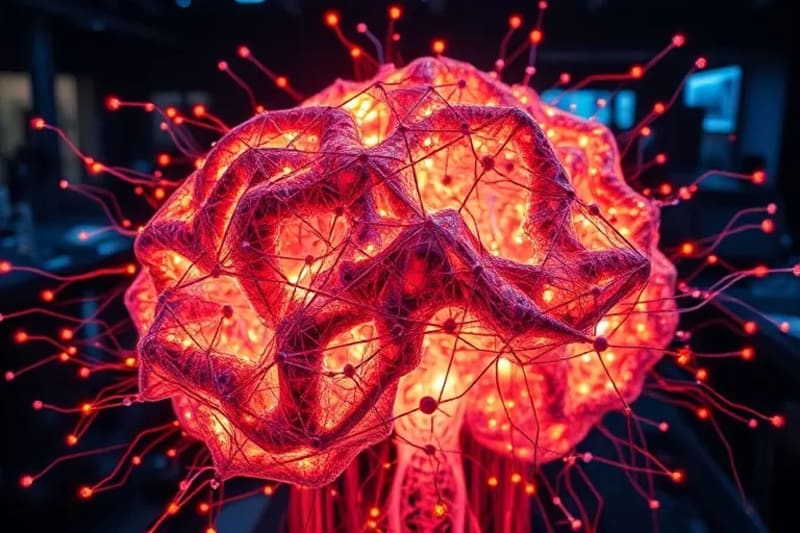
A glowing neural network sculpture intertwined with musical notes and abstract data streams, symbolizing the intricate relationship between AI and artistic creation.
The right of publicity, which protects an individual's right to control the commercial use of their identity, often extends beyond death. This means that using an artist's voice or likeness, even if AI-generated, typically requires permission from their estate. However, existing legal frameworks are often ill-equipped to handle the nuances of AI-generated content, leading to a legal gray area. The debate often pits artistic innovation against the preservation of an artist's original intent and legacy.
Ethical considerations also touch upon authenticity and exploitation. Is an AI-generated song truly "by" the artist? Does it dilute their artistic integrity or offer a respectful extension of their work? These questions become even more pertinent when considering the potential for AI to generate content that might not align with the artist's known values or artistic direction during their lifetime. The emerging legal challenges surrounding generative AI and copyright in multimedia content highlight the urgent need for new legislation and industry standards.
The Economic Landscape: New Revenue Streams and Market Disruptions
The economic implications of AI musical reconstruction and virtual artists are vast and multi-faceted. For artist estates, it represents a potential new revenue stream, allowing for the release of "new" material or the staging of virtual concerts featuring digital avatars. This can extend the commercial life of an artist's brand far beyond their physical presence, generating income for heirs and rights holders.
However, this also poses significant disruptions to the traditional music industry. The rise of virtual artists could potentially shift consumer preferences, impacting living artists, composers, and session musicians. If AI can generate high-quality, commercially viable music at a fraction of the cost, it could lead to a devaluation of human-created content. Conversely, it could also democratize music creation, providing tools for aspiring artists to produce professional-sounding tracks without extensive training or expensive equipment.
The market for virtual concerts and digital merchandise is also rapidly expanding, creating entirely new economic ecosystems. These virtual experiences can reach global audiences without the logistical constraints of physical tours, offering a scalable model for entertainment. Understanding these economic shifts is crucial for all stakeholders in the music industry, from record labels to independent artists.
The Future of Music: Co-creation, Immersion, and the Metaverse
Looking ahead, the future of music will likely be characterized by a symbiotic relationship between human creativity and artificial intelligence. AI will increasingly serve as a powerful co-creator, assisting artists in composition, arrangement, and sound design, rather than merely replacing them. This collaboration could unlock new genres, sonic textures, and artistic expressions previously unattainable.
The integration of AI with immersive technologies like virtual and augmented reality will also redefine how audiences experience music. Imagine attending a concert in the metaverse where a virtual Michael Jackson performs alongside AI-generated visuals, interacting with the audience in real-time. These experiences promise a level of immersion and personalization that traditional concerts cannot offer.
The rise of purely virtual artists, with no human counterpart, is also a significant trend. These digital entities can be designed from the ground up, with unique personalities, backstories, and musical styles, cultivated entirely by AI and digital artists. They offer limitless creative possibilities, free from the physical and temporal constraints of human performers. This evolving landscape necessitates a thoughtful approach, balancing technological advancement with ethical considerations and the enduring value of human artistry.
In conclusion, AI's role in musical reconstruction and the emergence of virtual artists marks a pivotal moment in the history of music. While it offers exciting prospects for extending artistic legacies and creating novel experiences, it also demands careful navigation of legal, ethical, and economic challenges. The journey ahead will undoubtedly reshape our understanding of authorship, performance, and the very essence of musical creativity.
Related Discoveries & Insights
- Freemium SaaS Startups: Conversion, Retention Strategies
- History of Photography: Camera Obscura to Digital Image
- NGOs and Artificial Intelligence: Optimizing Logistics in Humanitarian Crises
- Papal Prophecies and Schism: Historical Analysis, Current Prospects
- Saturn Transits in Composite Houses: Karmic Lessons in Relationships
- Conscious Consumerism: Planetary Ethics, Spiritual Living
Source: Hybrid content assisted by AI and human editorial supervision.


Comentarios