
3D Organoids Bioprinting Regenerative Medicine Longevity Future
The landscape of medicine is undergoing a profound transformation, driven by groundbreaking innovations that promise to redefine human health and longevity. Among the most exciting advancements are 3D organoids and bioprinting, two synergistic technologies poised to revolutionize regenerative medicine. These fields are moving us closer to a future where personalized treatments, disease modeling, and even organ replacement are not just theoretical possibilities but tangible realities.
This exploration delves into how these cutting-edge technologies are converging to create unprecedented opportunities for personalized longevity. We will uncover the science behind miniature organs grown in labs and the art of constructing biological tissues with precision, ultimately examining their immense potential to extend healthy human lifespans and improve quality of life.
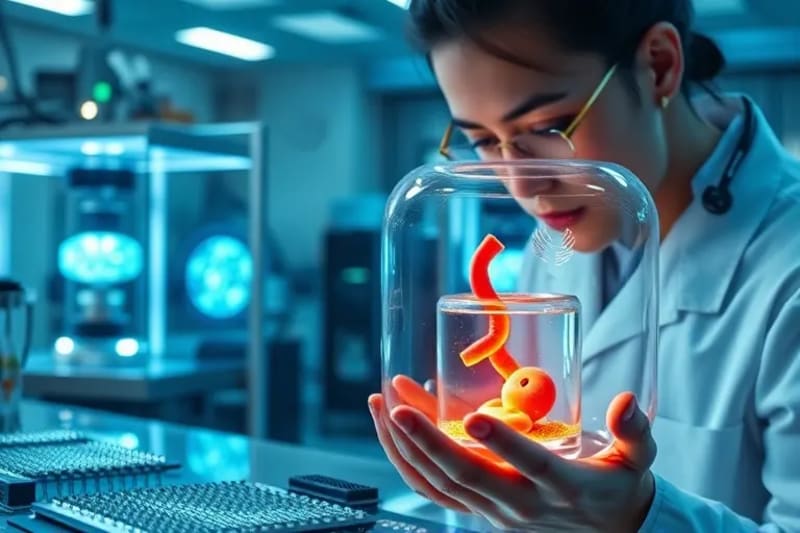
A glimpse into the future of medicine, where advanced bioprinting and organoid technology converge to create personalized health solutions.
Table of Contents
- What Are 3D Organoids? Miniature Models of Life
- The Power of Bioprinting: Building Tissues Layer by Layer
- Synergy in Action: How Organoids and Bioprinting Intersect
- Applications in Regenerative Medicine: Beyond Organ Transplants
- Personalized Longevity: Tailoring Treatments for a Healthier Future
- Challenges and Ethical Considerations in This Frontier
- The Future Landscape: What's Next for 3D Organoids and Bioprinting?
What Are 3D Organoids? Miniature Models of Life
3D organoids are self-assembling, three-dimensional tissue cultures derived from stem cells that mimic the structure and function of full-sized organs. These miniature organs, typically ranging from a few millimeters to a centimeter in size, offer an unprecedented window into human biology and disease. Unlike traditional 2D cell cultures, organoids recapitulate the complex cellular architecture and functional characteristics of their in vivo counterparts more accurately.
The process begins with pluripotent stem cells (either embryonic stem cells or induced pluripotent stem cells, iPSCs) which possess the remarkable ability to differentiate into any cell type in the body. By providing specific growth factors and environmental cues, scientists can guide these stem cells to self-organize into structures resembling various organs, including brains, kidneys, livers, and intestines. This self-organization is a key feature, allowing organoids to develop complex cell-to-cell interactions and tissue organization.
Organoids have become invaluable tools for understanding organ development, modeling diseases, and testing new drugs. For instance, brain organoids can help researchers study neurological disorders like Alzheimer's or autism, offering insights that were previously impossible to obtain without direct human tissue. This capability significantly accelerates the pace of biomedical research and drug discovery, reducing reliance on animal models and improving the translatability of findings to human patients.
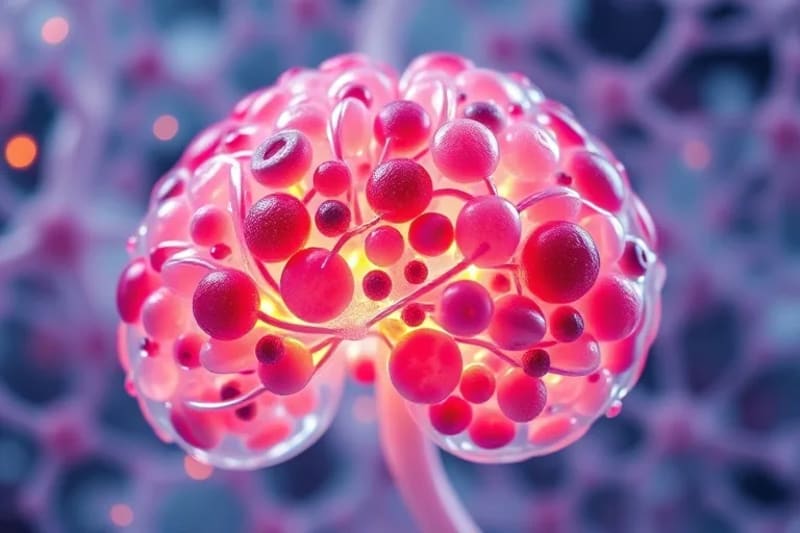
A highly detailed view of a 3D organoid, showcasing its complex cellular architecture and potential for disease modeling.
The Power of Bioprinting: Building Tissues Layer by Layer
Bioprinting is an additive manufacturing technique that uses biomaterials, cells, and growth factors to create tissue-like structures layer by layer. Much like a 3D printer builds objects from plastic or metal, a bioprinter builds biological constructs from "bio-ink," a mixture of living cells and biocompatible materials. This technology offers unparalleled control over the placement of cells and biomaterials, allowing for the precise fabrication of complex tissues with specific architectures.
There are several bioprinting techniques, each with its advantages. Inkjet bioprinting uses thermal or piezoelectric forces to eject cell-laden droplets, similar to an office printer. Extrusion bioprinting pushes continuous filaments of bio-ink through a nozzle, allowing for the creation of larger structures. Laser-assisted bioprinting uses a laser to deposit cells with high precision. The choice of technique depends on the desired resolution, cell viability requirements, and the complexity of the tissue being printed.
The ultimate goal of bioprinting is to create functional tissues and organs for transplantation, replacing damaged or diseased ones. Beyond this ambitious long-term vision, bioprinting is already being used to create tissue models for drug testing, toxicology screening, and disease research. For example, bioprinted skin models are used in the cosmetic industry to test product safety, reducing the need for animal testing. The precision offered by bioprinting is also crucial in fields like neuromorphic computing, where intricate biological structures inspire new computational architectures.
Synergy in Action: How Organoids and Bioprinting Intersect
While organoids and bioprinting are powerful on their own, their true potential unfolds when they are combined. Organoids provide the cellular building blocks and the blueprint for tissue organization, while bioprinting offers the means to assemble these components into larger, more complex, and precisely structured constructs. This synergy addresses some of the limitations of each individual technology.
Organoids, despite their complexity, often lack the vascularization (blood vessel networks) and stromal support necessary for long-term survival and full functionality in vivo. Bioprinting can be used to engineer these missing components, creating perfusable vascular networks within organoid structures or providing a supportive extracellular matrix. This integration can lead to the development of more mature and functional tissue models, bridging the gap between simple organoids and complete organs.
Conversely, bioprinting alone can struggle to achieve the intricate cellular self-organization that organoids naturally exhibit. By bioprinting organoids or organoid-derived cells into specific arrangements, researchers can guide their development while leveraging their intrinsic ability to form complex tissues. This hybrid approach is paving the way for "organ-on-a-chip" systems that more accurately mimic human physiology, allowing for sophisticated drug testing and disease modeling.
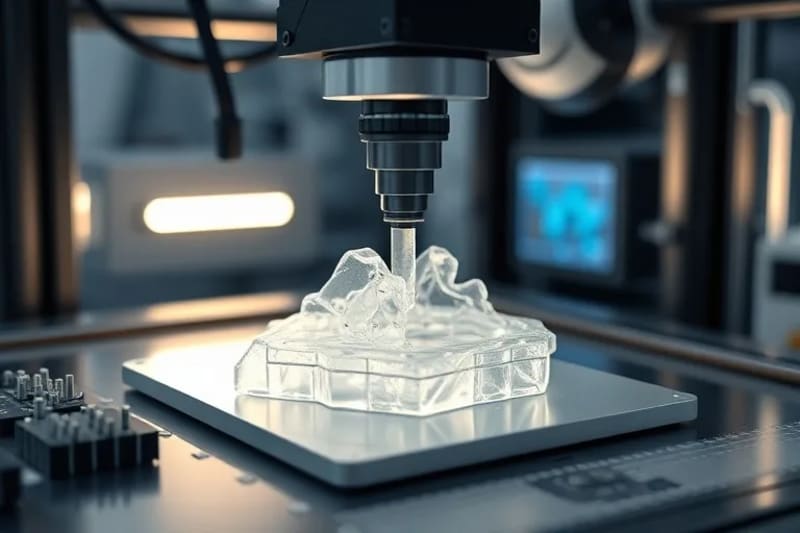
A bioprinter meticulously constructing biological tissues, layer by layer, showcasing the precision required for regenerative medicine.
Applications in Regenerative Medicine: Beyond Organ Transplants
The applications of 3D organoids and bioprinting in regenerative medicine are vast and extend far beyond the ultimate goal of printing entire organs for transplantation. These technologies are fundamentally changing how we approach treatment for a wide range of conditions.
- Disease Modeling: Organoids derived from patient-specific iPSCs allow researchers to create "disease in a dish" models. This enables the study of disease progression, identification of underlying mechanisms, and testing of potential therapies in a highly relevant human context. For neurological conditions, neuroeducation principles can be applied to understand how brain organoids respond to various stimuli, mimicking learning and memory processes.
- Drug Discovery and Toxicology: By providing more accurate human tissue models, organoids and bioprinted tissues can significantly improve the efficiency and safety of drug development. Drugs can be screened for efficacy and toxicity on these models before clinical trials, reducing costs and the risk of adverse effects in humans.
- Personalized Medicine: Patient-derived organoids can be used to test different drugs and dosages to determine the most effective treatment for an individual's specific condition, especially in oncology. This "avatar" approach promises to revolutionize cancer therapy, moving away from a one-size-fits-all model.
- Tissue Repair and Regeneration: Bioprinting can create patches or scaffolds that promote the regeneration of damaged tissues, such as cartilage, bone, or skin. These constructs can be implanted to guide the body's natural healing processes, offering new hope for patients with severe injuries or chronic conditions.
- Organ-on-a-Chip Systems: These microfluidic devices integrate organoids or bioprinted tissues to mimic the functions of human organs and their interactions. They can simulate physiological conditions, allowing for complex studies on drug metabolism, disease progression, and even multi-organ interactions, providing a more holistic view of human biology.
Personalized Longevity: Tailoring Treatments for a Healthier Future
The quest for personalized longevity is at the heart of many advancements in regenerative medicine. The ability to create patient-specific tissue models and engineer new tissues has profound implications for extending not just lifespan, but also "healthspan" – the period of life spent in good health. This approach moves beyond generic anti-aging strategies to highly customized interventions.
Imagine a future where an individual's own cells are used to grow replacement tissues or even organs as they age or develop disease. This eliminates the problem of immune rejection, a major hurdle in traditional organ transplantation. Furthermore, by understanding how an individual's specific tissues respond to various environmental factors, drugs, or genetic predispositions, highly targeted preventative and therapeutic strategies can be developed.
For example, if an individual is predisposed to a certain age-related degenerative disease, organoids derived from their cells could be used to screen for protective compounds or gene therapies long before symptoms appear. This proactive, personalized approach could significantly delay or even prevent the onset of many chronic conditions associated with aging, thereby enhancing the quality and duration of healthy life.
| Aspect | Contribution to Longevity |
|---|---|
| Disease Prevention | Early detection and intervention for age-related diseases through patient-specific models. |
| Personalized Therapies | Tailored drug regimens and treatments based on individual cellular responses, maximizing efficacy and minimizing side effects. |
| Organ/Tissue Replacement | Availability of bioengineered tissues and organs that are immunologically compatible, reducing failure rates and extending life. |
| Drug Development | Faster and safer development of new drugs targeting age-related pathologies, improving treatment options. |
| Healthspan Extension | Maintaining functional independence and quality of life for longer periods by preventing or reversing age-related decline. |
Challenges and Ethical Considerations in This Frontier
Despite their immense promise, 3D organoids and bioprinting face significant scientific, technological, and ethical challenges. Scientifically, replicating the full complexity of human organs, including their intricate vascularization, innervation, and immune components, remains a formidable task. Scaling up production of functional tissues and ensuring their long-term viability and integration into the body are also ongoing research areas.
Technologically, bioprinters need to achieve even higher resolution and speed, and bio-inks must be further developed to perfectly mimic the extracellular matrix of native tissues. The cost of these advanced technologies also presents a barrier to widespread adoption, particularly in personalized medicine applications.
Ethical considerations are paramount, especially as these technologies advance. Questions arise regarding the moral status of complex organoids, particularly brain organoids that may develop some level of consciousness or sensory perception. The use of human embryonic stem cells, though increasingly supplemented by iPSCs, also raises ethical debates. Furthermore, the equitable access to these life-extending technologies must be addressed to prevent exacerbating health disparities. Discussions around ethics and privacy in smart cities provide a relevant framework for considering the responsible deployment of cutting-edge biotechnologies.
The Future Landscape: What's Next for 3D Organoids and Bioprinting?
The future of 3D organoids and bioprinting is dynamic and rapidly evolving. We can anticipate several key developments:
- Enhanced Complexity: Researchers will continue to develop more complex organoid models, incorporating multiple cell types, vascular networks, and even immune cells to better mimic in vivo physiology.
- Clinical Translation: As the technologies mature, we will see more clinical trials involving bioprinted tissues for repair and regeneration, particularly for less complex structures like skin, cartilage, and bone.
- Drug Development Acceleration: Organoid and bioprinted tissue platforms will become standard tools in pharmaceutical research, significantly shortening drug discovery timelines and improving success rates.
- AI and Automation: Artificial intelligence and robotics will play an increasingly crucial role in designing, fabricating, and analyzing organoids and bioprinted tissues, optimizing processes and accelerating discovery.
- Personalized Health Monitoring: In the long term, patient-specific organoids might be used not just for treatment but also for continuous health monitoring, predicting disease onset, and optimizing lifestyle interventions.
The convergence of 3D organoids and bioprinting represents a paradigm shift in medicine. These technologies hold the key to unlocking personalized treatments, understanding complex diseases with unprecedented clarity, and ultimately, extending a healthy, vibrant life for humanity. While challenges remain, the relentless pace of innovation in this field promises a future where regenerative medicine truly transforms our approach to health and longevity.
Source: Hybrid content assisted by AI and human editorial supervision.


Comentarios