
Human Genetic Bioengineering Ethics: Navigating Enhancement vs. Therapy
The Ethics of Human Genetic Bioengineering: Navigating Enhancement vs. Therapy
Human genetic bioengineering stands as one of the most transformative scientific frontiers of our era, holding immense promise for alleviating suffering and potentially reshaping human capabilities. This field encompasses a range of technologies designed to modify an organism's genetic material, with applications spanning from treating diseases to enhancing human traits. As our ability to manipulate the very blueprint of life advances, profound ethical questions arise, particularly concerning the distinction between using these technologies for therapeutic purposes and employing them for enhancement. Understanding this intricate balance is crucial for navigating the societal implications of such powerful scientific tools.
The debate between therapy and enhancement is not merely semantic; it delves into fundamental questions about human nature, equity, and the kind of society we wish to build. While gene therapy aims to correct genetic defects causing disease, genetic enhancement seeks to improve capacities beyond what is considered typical or healthy. This distinction, however, is often blurry and subject to societal perceptions of what constitutes "normal" human function. As we explore the nuances of human genetic bioengineering, it becomes clear that responsible innovation requires careful ethical deliberation, robust public discourse, and thoughtful regulatory frameworks.

Exploring the intricate ethical landscapes and scientific frontiers of human genetic bioengineering, where profound discoveries meet societal responsibility.
Conceptual AI rendering, created with advanced algorithms to visualize the complex interplay between scientific innovation and ethical considerations in genetic engineering.Table of Contents
- Gene Therapy: A Medical Revolution
- Genetic Enhancement: Redefining Human Potential
- The Blurry Line: Therapy vs. Enhancement
- CRISPR-Cas9: A Game Changer and Its Ethical Amplification
- Germline vs. Somatic Editing: Different Ethical Stakes
- Profound Social Implications: Equity, Access, and Identity
- Navigating Regulatory and Governance Challenges
- Public Perception and the Future of Genetic Engineering
Gene Therapy: A Medical Revolution
Gene therapy represents a groundbreaking approach to treating, preventing, or potentially curing diseases by correcting underlying genetic problems. Instead of managing symptoms, it aims to address the root cause of genetic disorders by introducing new genetic material into a patient's cells. This can involve replacing a faulty gene with a healthy one, inactivating a problematic gene, or introducing a new gene to help fight disease. Early applications have focused on severe monogenic disorders, such as cystic fibrosis, sickle cell anemia, and certain types of inherited blindness.
The promise of gene therapy is immense, offering hope to individuals with conditions for which conventional treatments are limited or nonexistent. For instance, treatments like Luxturna for a specific form of inherited retinal dystrophy have demonstrated the tangible benefits of gene therapy, restoring vision in patients. However, even within the therapeutic realm, ethical considerations are paramount. These include ensuring patient safety, managing potential off-target effects, guaranteeing equitable access to expensive treatments, and rigorously assessing long-term outcomes. The development of gene therapies also raises questions about informed consent, especially when dealing with novel and complex interventions.
- Safety Concerns: Potential for unintended immune responses or insertional mutagenesis (where the new gene inserts into an undesirable location in the genome).
- Efficacy: Ensuring the introduced genes function correctly and durably without causing harm.
- Accessibility and Cost: High development and treatment costs raise concerns about who will benefit from these life-changing therapies.
- Off-Target Effects: Modern gene-editing tools, while precise, can still make unintended changes elsewhere in the genome.
Genetic Enhancement: Redefining Human Potential
Genetic enhancement, in contrast to therapy, involves using genetic technologies to improve human capabilities beyond the typical range of health. This could include traits like increased intelligence, enhanced athletic ability, improved memory, or even resistance to common diseases that do not currently pose an immediate threat. The concept often conjures images of "designer babies" or a future where human traits are selected and optimized for non-medical reasons. While largely theoretical in many advanced forms, the ethical debate surrounding enhancement is robust due to its profound implications for society and human identity.
The ethical concerns surrounding genetic enhancement are multifaceted. One primary worry is the potential for exacerbating social inequalities. If only the wealthy can afford to enhance their offspring, it could create a genetically stratified society, deepening existing divides and creating new forms of discrimination based on genetic makeup. There are also concerns about the impact on human diversity and the potential erosion of what it means to be human. Critics argue that pursuing enhancement could lead to a devaluation of those who do not undergo such modifications, fostering a culture of perfectionism and intolerance for natural variation.

A visual metaphor illustrating the delicate balance and intricate differences between genetic therapy and enhancement.
Furthermore, the long-term consequences of altering complex human traits are largely unknown. Traits like intelligence are influenced by a myriad of genes and environmental factors, making targeted enhancement incredibly complex and potentially risky. Unforeseen side effects or unintended consequences could arise, affecting not just the individual but future generations if germline enhancements are pursued. The philosophical implications also question whether such interventions diminish human autonomy and the value of inherent human dignity. For a deeper understanding of how technology shapes our perception and capabilities, one might explore concepts like Neuroaesthetics in Digital Art: Brain Processes and AI Creativity, which touches upon the intersection of human perception and technological influence.
The Blurry Line: Therapy vs. Enhancement
The distinction between therapy and enhancement, while conceptually clear, often becomes ambiguous in practice. What constitutes a "disease" or a "normal" human function can be subjective and culturally influenced. For example, treating short stature caused by a growth hormone deficiency is generally considered therapy. However, using growth hormone to make a healthy child taller than average might be seen as enhancement. Similarly, genetic modifications to prevent Alzheimer's disease in someone with a high genetic predisposition could be viewed as therapy, but enhancing memory beyond typical human capacity would be enhancement.
This ambiguity creates ethical dilemmas. If a genetic intervention can both treat a condition and enhance a trait, where do we draw the line? The concept of "normal functioning" is dynamic and evolves with medical understanding and societal expectations. What was once considered a disability, such as certain forms of deafness, is now sometimes viewed as a cultural identity by some communities, complicating the therapeutic imperative. This fluidity demands ongoing ethical dialogue and a nuanced approach to policy-making, rather than rigid classifications.
| Aspect | Gene Therapy | Genetic Enhancement |
|---|---|---|
| Primary Goal | To treat or prevent disease; restore normal function. | To improve capabilities beyond normal health; optimize traits. |
| Medical Necessity | High, addresses a medical condition or risk. | Low or none, aims for "better than well." |
| Ethical Consensus | Generally accepted, with safety and access caveats. | Highly contentious, significant ethical objections. |
| Societal Impact | Improved health outcomes, reduced suffering. | Potential for inequality, altered human identity, new forms of discrimination. |
CRISPR-Cas9: A Game Changer and Its Ethical Amplification
The advent of CRISPR-Cas9 technology has dramatically reshaped the landscape of genetic engineering. This revolutionary gene-editing tool, derived from a bacterial immune system, allows scientists to precisely cut and edit DNA with unprecedented ease, accuracy, and affordability. Before CRISPR, gene editing was a complex, time-consuming, and often inefficient process. CRISPR has democratized access to gene editing, making it a staple in research labs worldwide and accelerating the pace of discovery.
While CRISPR offers immense potential for developing new gene therapies, its simplicity and power have also amplified ethical concerns, particularly regarding genetic enhancement. The ease with which genes can now be modified brings the prospect of human genetic enhancement closer to reality, intensifying debates about its implications. The infamous case of He Jiankui, who used CRISPR to modify the genes of human embryos to confer HIV resistance, sparked global condemnation and highlighted the urgent need for international ethical guidelines and regulatory oversight. This event underscored that the scientific capability now often outpaces ethical consensus and regulatory frameworks.
Germline vs. Somatic Editing: Different Ethical Stakes
A critical distinction in genetic engineering is between somatic gene editing and germline gene editing. This difference carries significant ethical weight:
- Somatic Gene Editing: This involves altering genes in somatic cells (non-reproductive cells) of an individual. Changes made are confined to the treated individual and are not passed on to their offspring. Most current gene therapies fall into this category. While ethical concerns exist (safety, efficacy, access), they are generally viewed as similar to other medical interventions.
- Germline Gene Editing: This involves altering genes in germ cells (sperm, egg) or early embryos. Changes made are heritable, meaning they would be passed down to all future generations. This type of editing raises profound ethical concerns because it affects the human gene pool and has irreversible, intergenerational consequences. Many countries and international bodies have called for a moratorium or outright ban on germline editing for reproductive purposes due to these far-reaching implications and the current lack of understanding of long-term effects.
The ethical debate around germline editing is particularly intense. Proponents argue it could eliminate inherited diseases for good, preventing suffering across generations. Opponents highlight the unknown risks, the potential for unintended consequences on future generations, and the slippery slope towards enhancement that could fundamentally alter human nature without consent from those affected. The ethical responsibility associated with making permanent changes to the human genome is immense and requires extreme caution and global consensus.
Profound Social Implications: Equity, Access, and Identity
Beyond the immediate ethical considerations of safety and intent, human genetic bioengineering carries profound social implications that demand careful consideration. The potential for these technologies to exacerbate existing social inequalities is a major concern. If advanced gene therapies or, more controversially, genetic enhancements become available, they are likely to be expensive and accessible primarily to the wealthy. This could create a "genetically privileged" class, widening the gap between the rich and the poor and potentially leading to new forms of discrimination based on genetic makeup.
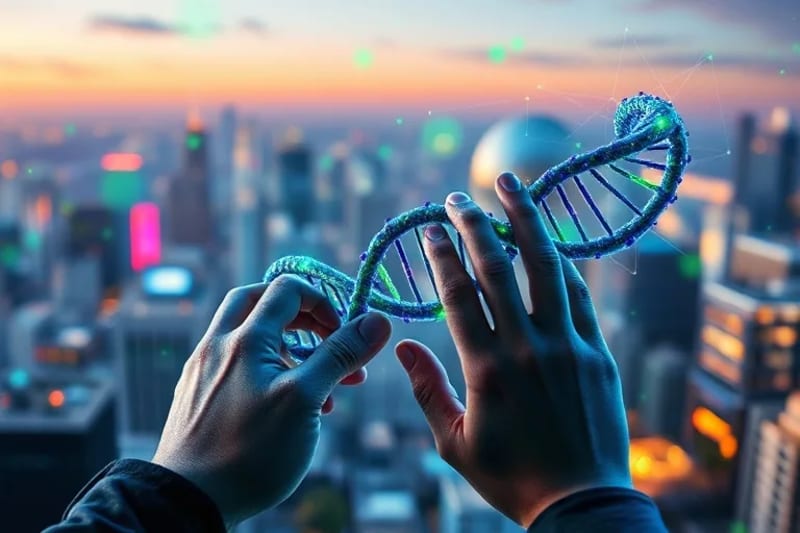
An abstract representation of DNA's intricate network and its far-reaching implications for urban societies and human future.
The impact on human identity and diversity is another critical social aspect. If society begins to value certain genetically engineered traits over others, it could diminish the acceptance of natural human variation and lead to pressures for parents to enhance their children. This could erode the concept of inherent human dignity and the value of each individual, regardless of their genetic makeup. Moreover, the long-term effects on human evolution are unknown. While some argue that humans have always sought to improve themselves, direct genetic manipulation represents a new and powerful means to do so, with potentially unpredictable consequences for the species.
The discussion around these technologies also touches upon disability rights. Some disability advocates express concern that widespread genetic screening and editing aimed at "curing" conditions could imply that certain lives are less valuable or desirable, undermining the rich diversity of human experience. Ethical leadership and inclusive dialogue are essential to navigate these complex social terrains. Understanding how to foster growth and resilience in the face of such transformative technologies is key, much like the principles discussed in Transformational Leadership: Fostering Growth, Resilience, Innovation.
Navigating Regulatory and Governance Challenges
The rapid pace of innovation in genetic bioengineering presents significant regulatory and governance challenges. Existing legal and ethical frameworks often struggle to keep pace with scientific advancements. There is a pressing need for robust national and international regulations that can guide responsible research and application. These frameworks must balance the potential benefits of gene editing with the imperative to protect human rights, ensure safety, and prevent misuse.
Key aspects of effective governance include:
- International Collaboration: Genetic technologies transcend national borders, necessitating global consensus and cooperation on ethical guidelines and regulatory standards, especially for germline editing.
- Public Engagement: Fostering informed public debate and engagement is crucial to ensure that societal values are reflected in policy decisions.
- Independent Oversight: Establishing independent ethical review boards and regulatory bodies with the authority to oversee research and clinical applications.
- Adaptive Regulation: Developing flexible regulatory frameworks that can adapt as scientific understanding evolves, rather than rigid rules that quickly become outdated.
- Transparency: Ensuring transparency in research, clinical trials, and decision-making processes to build public trust.
Public Perception and the Future of Genetic Engineering
Public perception plays a significant role in shaping the trajectory of genetic bioengineering. While many people are hopeful about the potential of gene therapy to cure diseases, there is often considerable apprehension regarding genetic enhancement, fueled by science fiction narratives and concerns about unintended consequences. Misinformation and a lack of public understanding can hinder constructive dialogue and lead to fear-driven policies. Therefore, clear, accurate, and accessible communication from scientists, ethicists, and policymakers is essential to foster an informed public.
The future of human genetic bioengineering will depend not only on scientific breakthroughs but also on our collective ability to navigate its complex ethical and social dimensions. As we move forward, society must grapple with fundamental questions: What are the limits of human intervention in the genome? How do we ensure these powerful technologies benefit all of humanity, not just a select few? And what does it mean to be human in an age where our biological blueprint can be rewritten? The answers to these questions will shape not just the future of medicine, but the very essence of human existence.
Explore More on Advanced Topics
- Modern Spirituality Celestial Mechanics Cosmic Order Guide
- Digital Dream Weaving: AI Subconscious Exploration
- Biblical Prophecies AI: Signs of Times in the Digital Era
- Black Holes and AI: Unraveling Cosmic Computational Mysteries
Source: Hybrid content assisted by AI and human editorial supervision.


Comentarios