
Water Geopolitics: Startups Driving Global Security
Water, often referred to as "blue gold," is a finite and indispensable resource that underpins all life, economic activity, and environmental stability. Its uneven distribution, coupled with increasing demand from population growth, industrialization, and agriculture, has elevated water from a local commodity to a critical geopolitical issue. This intricate relationship between water resources and international power dynamics is known as water geopolitics, and it is becoming an increasingly significant factor in global stability.
As climate change exacerbates droughts and floods, and transboundary rivers become flashpoints for conflict, the need for innovative solutions has never been more pressing. This article explores the evolving landscape of water geopolitics and highlights the pivotal role that water startups are playing in pioneering new technologies and business models to foster global water security.
Table of Contents
- The Geopolitical Landscape of Water
- Drivers of Water Scarcity and Conflict
- The Rise of Water Startups and Innovation
- Key Technologies and Solutions for Water Security
- Investment and Policy Frameworks
- Challenges and Future Outlook
The Geopolitical Landscape of Water
The concept of water geopolitics examines how water resources influence political power, international relations, and potential conflicts or cooperation between states. Rivers, lakes, and aquifers often cross national borders, making their management a complex diplomatic challenge. Countries downstream depend on the actions of those upstream, creating inherent tensions and opportunities for leverage.

A conceptual visualization of global water dynamics, highlighting the interplay between resource distribution, technological innovation, and international collaboration for sustainable water management.
This image is a conceptual AI rendering, illustrating the complex global challenges and innovative solutions in water resource management, designed to foster a deeper understanding of the topic.Historical examples abound, from disputes over the Nile River affecting Egypt, Sudan, and Ethiopia, to the Jordan River basin impacting Israel, Palestine, and Jordan. These scenarios underscore that water is not merely an environmental concern but a strategic asset, influencing national security, economic development, and regional stability. The equitable sharing and sustainable management of transboundary water resources are paramount for preventing future conflicts and fostering peace.
Drivers of Water Scarcity and Conflict
Several interconnected factors contribute to the escalating global water crisis, intensifying geopolitical tensions. Understanding these drivers is crucial for developing effective mitigation strategies.
- Climate Change: Altered precipitation patterns, increased frequency of extreme weather events like droughts and floods, and glacier melt directly impact water availability. This leads to unpredictable water supplies, affecting agriculture and urban centers.
- Population Growth and Urbanization: A rapidly growing global population, particularly in urban areas, places immense pressure on existing water infrastructure and resources. Megacities often outstrip their local water supplies, necessitating complex and costly solutions.
- Agricultural Demand: Agriculture is the largest consumer of freshwater globally, accounting for approximately 70% of withdrawals. Inefficient irrigation practices and water-intensive crops exacerbate scarcity, especially in arid regions.
- Industrialization and Pollution: Industrial processes require significant amounts of water, and often discharge polluted wastewater, further reducing the availability of clean water. This pollution can cross borders, creating interstate environmental disputes.
- Infrastructure Deficiencies: Many regions suffer from aging or inadequate water infrastructure, leading to significant water losses through leaks and inefficient distribution systems. Lack of investment in modern infrastructure hinders effective water management.
These drivers collectively create a complex web of challenges, pushing water security to the forefront of international policy agendas. The interplay of these factors can be seen in various regions, highlighting the urgent need for innovative approaches to resource management. For instance, discussions around Renewable Energies in Latin America: Opportunities, Challenges and Sustainable Development often intersect with water management, as hydropower is a significant source of energy in the region, and its viability is directly tied to water availability.
The Rise of Water Startups and Innovation
In response to the escalating water crisis, a vibrant ecosystem of water technology startups has emerged, driven by a mission to innovate and provide sustainable solutions. These companies are leveraging cutting-edge science and technology to address various aspects of water management, from purification and conservation to data analytics and infrastructure optimization. Their agility and focus on specific problems allow them to develop targeted, scalable solutions that traditional approaches might overlook.
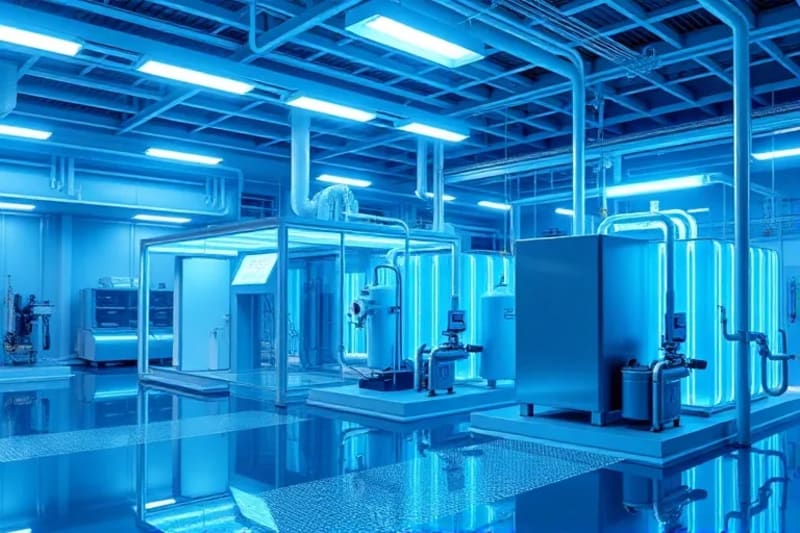
A 3D render illustrating a cutting-edge water treatment plant, symbolizing the technological advancements and innovative solutions being developed by water startups to address global scarcity.
This image, a conceptual 3D render, highlights the potential of advanced engineering and design in creating efficient and sustainable water infrastructure, reflecting the future of water management.These startups are not only developing new technologies but also challenging existing paradigms in water governance and commercialization. They often operate with a dual focus: achieving financial viability while also delivering significant social and environmental impact. Their entrepreneurial spirit is critical for disrupting the status quo and accelerating the adoption of more sustainable water practices globally. This innovative drive is reminiscent of the dynamic shifts seen in other emerging sectors, such as the Orange Economy in Latin America: Opportunities and Challenges, where creativity and technology converge to create new value.
Key Technologies and Solutions for Water Security
Water startups are at the forefront of developing and deploying a wide array of technologies designed to enhance water security. These innovations span various stages of the water cycle, from source to tap and back again.
| Technology Area | Description and Startup Impact |
|---|---|
| Desalination & Purification | New membrane technologies, low-energy desalination, and advanced filtration systems are making previously unusable water sources viable. Startups are reducing the cost and energy footprint of these processes, making them accessible to more communities. |
| Smart Irrigation & Agriculture | IoT sensors, AI-driven analytics, and precision irrigation techniques optimize water use in agriculture. Startups offer solutions that monitor soil moisture, weather forecasts, and crop needs, leading to significant water savings. |
| Water Recycling & Reuse | Innovative systems for treating greywater and blackwater for non-potable uses (e.g., irrigation, industrial processes). These technologies reduce demand on freshwater sources and promote a circular water economy. |
| Leak Detection & Infrastructure Monitoring | Acoustic sensors, satellite imagery, and AI algorithms identify leaks in water distribution networks, minimizing losses. Startups provide real-time monitoring and predictive maintenance tools for aging infrastructure. |
| Data Analytics & Management | Platforms that collect and analyze vast amounts of water data to inform decision-making, improve forecasting, and optimize resource allocation. These tools are crucial for effective water governance and policy. |
These technological advancements are not only providing solutions to immediate water challenges but are also laying the groundwork for a more resilient and sustainable water future. The integration of these technologies requires forward-thinking policies and investment, much like the strategic planning involved in Advanced Quantum Cybersecurity: Shielding Infrastructures, where proactive measures are essential for long-term security.
Investment and Policy Frameworks
For water startups to truly scale and make a global impact, robust investment and supportive policy frameworks are essential. Venture capital, impact investors, and philanthropic organizations are increasingly recognizing the potential of the water sector. However, the unique challenges of water infrastructure—long investment cycles, regulatory complexities, and public ownership—require tailored financial mechanisms.

A vector art visualization contrasting areas of water scarcity with regions of abundance, connected by abstract data flows and technological symbols, representing the innovative solutions bridging these divides.
This conceptual vector art piece visually interprets the global challenge of water distribution and the role of data-driven innovation in achieving balanced water security across diverse environments.Governments and international bodies play a crucial role in creating an enabling environment for water innovation. This includes developing clear regulatory guidelines, offering subsidies or tax incentives for sustainable water technologies, and fostering public-private partnerships. Collaborative efforts, such as those seen in the development of Microfinance for Female Entrepreneurship: Empowerment in Latin America, can provide models for supporting nascent water enterprises in developing regions. Furthermore, international agreements on transboundary water management are vital for ensuring that technological solutions are implemented within a cooperative geopolitical context.
Challenges and Future Outlook
Despite the promising innovations, water startups face significant hurdles. Scaling solutions in diverse geographical and socio-economic contexts, navigating complex regulatory landscapes, and overcoming entrenched interests in traditional water management are major challenges. Ensuring equitable access to new technologies, especially in vulnerable communities, is also paramount to prevent a widening "water divide."
The future of water security will depend on a multi-faceted approach that integrates technological innovation with sound governance, international cooperation, and community engagement. Water startups are poised to be key drivers in this transformation, but their success will hinge on sustained investment, supportive policies, and a global commitment to addressing water as a shared human right and a strategic resource. The lessons learned from the evolving Future Labor Market: Trends and Emerging Careers suggest that adaptability and interdisciplinary collaboration will be crucial for navigating these complex challenges.
As the world grapples with increasing water stress, the intersection of water geopolitics and entrepreneurial innovation offers a beacon of hope. By fostering an environment where water startups can thrive, we can collectively move towards a future where water security is a reality for all, mitigating potential conflicts and promoting global stability.
Explore More Relevant Content
- Color Psychology in Biosustainable Architecture for Cognitive Well-being
- AI in Collective Bargaining: Unions in the Digital Era
- Bio-Acoustic Feng Shui: Harmonizing Urban Spaces
- Vocational Astrology 2.0: Find Your Ideal Career
Source: Hybrid content assisted by AI and human editorial supervision.


Comentarios