
Neuroarchitecture: Brain Longevity and Cognitive Health in Design
Neuroarchitecture, an emerging interdisciplinary field, synthesizes neuroscience with architectural design to create spaces that positively influence brain function, emotional well-being, and cognitive longevity. This discipline moves beyond mere aesthetics and functionality, delving into how physical environments can actively support and enhance our neurological processes. By understanding the brain's responses to various stimuli—light, sound, texture, spatial configuration—neuroarchitecture aims to craft settings that optimize human experience, reduce stress, and foster cognitive resilience throughout life.
The quest for cognitive longevity is paramount in an aging global population, making the principles of neuroarchitecture more critical than ever. Designing environments that mitigate cognitive decline, promote neural plasticity, and support mental acuity is not just a luxury but a strategic imperative. This advanced exploration delves into the core tenets of neuroarchitecture, examining how specific design interventions can foster brain health and contribute to a more vibrant, cognitively engaged future.
Table of Contents
- Foundational Principles of Neuroarchitecture
- Environmental Influences on Cognitive Domains
- Designing for Specific Cognitive Needs
- Technological Integration in Cognitive Design
- Challenges and Future Directions
Foundational Principles of Neuroarchitecture for Brain Health
At its core, neuroarchitecture is grounded in several key principles derived from neuroscience, psychology, and environmental design. These principles guide the creation of spaces that are not only aesthetically pleasing but also neurologically beneficial. The objective is to move beyond passive habitation to active cognitive support, considering the brain as the primary user interface with the built environment.

Exploring advanced architectural paradigms that integrate natural light, organic forms, and smart technologies to foster optimal cognitive function and enhance overall human experience.
Conceptual rendering generated by AI, illustrating the harmonious blend of biophilic principles and futuristic design for cognitive enhancement.
One of the most significant principles is biophilic design, which posits that humans have an innate tendency to connect with nature and other living systems. Incorporating natural elements—such as plants, water features, natural light, and views of greenery—has been shown to reduce stress, improve mood, and enhance cognitive performance. Exposure to natural patterns and textures can lower cortisol levels and improve attentional restoration, directly supporting brain longevity.
The role of light is equally critical. Natural light, particularly its dynamic changes throughout the day, helps regulate circadian rhythms, which are fundamental to sleep quality, mood, and cognitive function. Poor lighting, especially prolonged exposure to artificial blue light at night, can disrupt melatonin production, leading to sleep disturbances and impaired cognitive processing. Neuroarchitectural design emphasizes maximizing natural light penetration and integrating tunable lighting systems that mimic natural light cycles, supporting hormonal balance and neuronal health.

Visualizing the intricate interplay between neurological activity and designed environments, highlighting how spatial elements influence cognitive processes.
Acoustics play a profound role in cognitive load and emotional states. Excessive noise, particularly unpredictable or high-frequency sounds, can elevate stress hormones, impair concentration, and negatively impact memory formation. Neuroarchitecture addresses this by designing for optimal soundscapes, employing sound-absorbing materials, strategic spatial planning to minimize noise transmission, and even incorporating therapeutic sound elements. Creating quiet zones and controlling reverberation are essential for fostering environments conducive to sustained cognitive effort and mental restoration.
Spatial layout and wayfinding are also crucial. Confusing or disorienting spaces can increase cognitive load, leading to frustration and stress. Clear sightlines, distinct landmarks, and intuitive layouts reduce the mental effort required for navigation, freeing up cognitive resources for other tasks. This is particularly important for aging populations, where spatial disorientation can be a significant challenge. Design elements that promote a sense of control and predictability contribute to perceived safety and reduced anxiety, which are vital for long-term brain health.
Finally, materiality and tactile experiences contribute to the richness of sensory input. The choice of materials—their texture, temperature, and even scent—can evoke different emotional and cognitive responses. Natural, non-toxic materials reduce exposure to volatile organic compounds (VOCs), which can negatively impact cognitive function and overall health. Engaging multiple senses through varied textures and natural finishes can create more stimulating and memorable environments, supporting neural engagement and cognitive vitality.
Environmental Influences on Specific Cognitive Domains
Neuroarchitecture directly targets specific cognitive domains, understanding that environmental design can be a powerful tool for enhancement or detriment. Each aspect of our cognitive machinery—memory, attention, problem-solving, and emotional regulation—is susceptible to the influences of the built environment.
For memory, spatial design plays a critical role. Environments that offer clear visual cues, distinct zones, and opportunities for spatial exploration can enhance spatial memory and navigation skills. Familiar and organized spaces reduce the cognitive load associated with recall, making it easier to retrieve information. Conversely, cluttered or monotonous environments can hinder memory formation and retrieval. Designing with variety and distinctiveness helps create "memory anchors" within a space.
Attention and focus are profoundly affected by environmental distractions. Neuroarchitectural strategies aim to minimize irrelevant stimuli while providing appropriate levels of engagement. This includes acoustic design to reduce noise, visual design to avoid clutter, and spatial arrangements that allow for both collaborative and focused work. Access to nature views can also aid in attentional restoration, preventing mental fatigue and improving sustained concentration. For more on advanced health strategies, consider exploring Extreme Longevity Strategies: Genomic Biohacking for a Full Life.
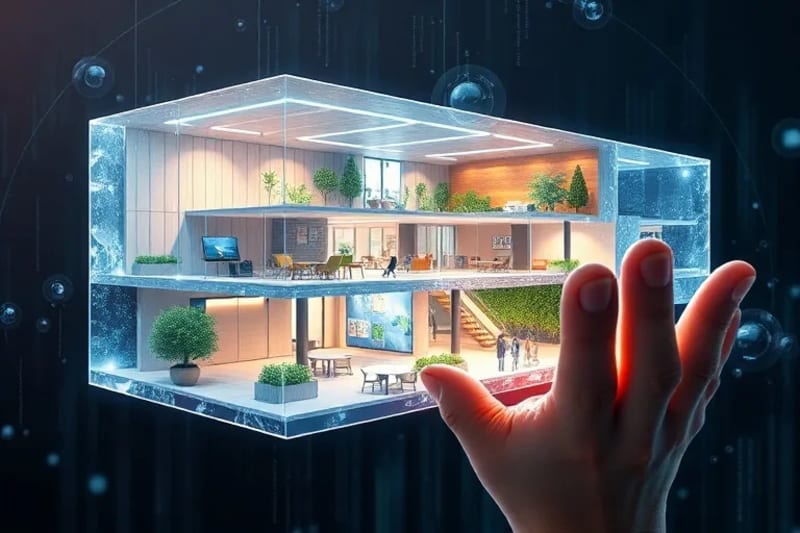
An illustrative cross-section of a building showcasing distinct zones meticulously designed to support various aspects of cognitive longevity.
Problem-solving and creativity thrive in stimulating yet non-overwhelming environments. Spaces that offer flexibility, opportunities for movement, and varied sensory input can foster divergent thinking. Access to natural light and views, as well as the incorporation of biophilic elements, has been linked to increased creativity. Design that encourages social interaction and collaboration can also stimulate innovative solutions. Environments that promote a sense of psychological safety and reduce stress are crucial for unlocking creative potential.
Emotional regulation is perhaps one of the most directly influenced cognitive functions. Environments that evoke feelings of calm, safety, and comfort can reduce stress and anxiety, thereby supporting emotional balance. Biophilic design, soft lighting, comfortable furnishings, and controlled acoustics all contribute to a soothing atmosphere. Conversely, harsh lighting, loud noises, and cluttered spaces can induce stress and negatively impact mood. Creating spaces that offer opportunities for privacy and retreat can also aid in emotional self-regulation, providing necessary respite from external stimuli. For a deeper dive into biological optimization, insights from Male Hormonal Biohacking: Genomic Performance Strategies can offer complementary perspectives on enhancing physiological well-being.
Designing for Specific Cognitive Needs and Populations
The application of neuroarchitecture is particularly impactful when tailored to the specific cognitive needs of different populations and settings. The universal principles can be refined to address unique challenges and opportunities.
Aging populations represent a critical demographic for neuroarchitectural interventions. Designing for dementia-friendly environments involves clear wayfinding, reduced visual clutter, high contrast for visibility, familiar cues, and safe access to nature. These designs aim to reduce agitation, improve orientation, and enhance the quality of life for individuals experiencing cognitive decline, supporting their remaining cognitive abilities and promoting dignity.
Workplaces benefit from neuroarchitectural principles by creating environments that boost productivity, foster innovation, and reduce burnout. This includes optimizing natural light, providing varied work settings (quiet zones, collaborative spaces), ergonomic design, and integrating biophilic elements. Such designs can improve employee focus, reduce stress, and enhance overall job satisfaction, contributing to sustained cognitive performance.
Educational settings can leverage neuroarchitecture to support learning and development. Classrooms designed with optimal lighting, controlled acoustics, flexible furniture arrangements, and access to natural views can improve student attention, reduce hyperactivity, and enhance academic performance. Creating stimulating yet calming environments is key to fostering effective learning and cognitive growth in children and adolescents.
Healthcare environments, often associated with stress and anxiety, can be transformed through neuroarchitecture to promote healing and recovery. Design elements like natural light, views of nature, calming colors, and reduced noise levels can lower patient stress, decrease pain perception, and improve sleep quality. These interventions contribute to faster recovery times and better patient outcomes, supporting both physical and cognitive restoration.
Technological Integration in Cognitive Design
The advent of smart technologies offers unprecedented opportunities to further enhance neuroarchitectural design. These technologies can create dynamic, adaptive environments that respond to individual needs and optimize cognitive support.
Smart environments can integrate adaptive lighting systems that automatically adjust color temperature and intensity based on circadian rhythms, time of day, and occupant activity. Similarly, smart acoustic systems can actively manage soundscapes, reducing noise pollution or introducing therapeutic sounds as needed. These systems can be personalized to individual preferences, creating highly responsive and cognitively supportive spaces.
Virtual Reality (VR) and Augmented Reality (AR) are becoming invaluable tools for spatial prototyping and user experience testing. Architects can simulate different design scenarios and gather feedback on cognitive and emotional responses before physical construction. This allows for iterative design improvements based on neuroscientific principles, ensuring optimal cognitive outcomes. Furthermore, VR can be used therapeutically to create calming virtual environments for stress reduction or cognitive training.
Sensors and biofeedback systems can monitor physiological markers such as heart rate variability, skin conductance, and brainwave activity to assess real-time cognitive and emotional states. This data can then be used to fine-tune environmental parameters (e.g., lighting, temperature, sound) to optimize comfort, focus, or relaxation. This closed-loop system represents the pinnacle of personalized neuroarchitecture, continuously adapting to support brain health. The ethical and legal implications of such advanced AI systems, particularly in environmental contexts, are increasingly being discussed, as highlighted in Environmental AI: Legal Challenges and Future Regulation.
Challenges and Future Directions in Neuroarchitecture
Despite its immense potential, neuroarchitecture faces several challenges that require interdisciplinary collaboration and ongoing research. The future of this field lies in overcoming these hurdles and expanding its reach.
One significant challenge is the need for more rigorous empirical evidence. While many principles are intuitively sound and supported by preliminary studies, large-scale, long-term research is required to definitively quantify the impact of specific design interventions on cognitive longevity and brain health. This demands collaboration between neuroscientists, architects, psychologists, and urban planners.
Ethical considerations also arise, particularly with the integration of advanced monitoring technologies. Issues of privacy, data security, and potential manipulation of human behavior need careful consideration and robust ethical frameworks. Ensuring that neuroarchitectural designs truly serve human well-being rather than commercial or control interests is paramount.
The cost and scalability of implementing neuroarchitectural principles can also be a barrier. High-tech solutions and specialized materials can be expensive, limiting their accessibility. Future efforts must focus on developing cost-effective and scalable solutions that can be integrated into a wider range of projects, from public housing to urban planning. Sustainable practices, such as those discussed in Blockchain and Circular Economy: Sustainable Regenerative Supply Chains, can also play a role in making these designs more accessible and environmentally friendly.
Future directions include the development of personalized neuroarchitecture, where environments dynamically adapt to individual cognitive profiles and preferences. This could involve AI-driven systems that learn from user interactions and physiological data to optimize spatial parameters. Furthermore, extending neuroarchitectural principles beyond individual buildings to urban planning—creating cognitively healthy cities with green spaces, walkable neighborhoods, and reduced noise pollution—represents a significant frontier.
Explore More on Cognitive Well-being and Advanced Design
Predictive Cybersecurity: Shielding Digital Finances from Quantum Threats
Planetary Rulers in Houses: Deeper Meanings in the Natal Chart
Spiritual Discernment in the Age of Artificial Intelligence: A Guide
In conclusion, neuroarchitecture offers a transformative approach to designing our built environment, moving beyond mere aesthetics to actively foster brain health and cognitive longevity. By integrating insights from neuroscience, psychology, and architectural design, we can create spaces that reduce stress, enhance focus, stimulate creativity, and support emotional well-being. As our understanding of the brain-environment interaction deepens, the potential for neuroarchitecture to shape healthier, more cognitively vibrant lives will only continue to grow, paving the way for a future where our surroundings actively contribute to our mental vitality.
Source: Hybrid content assisted by AI and human editorial supervision.


Comentarios