
Water Startups Geopolitics: Innovation, Scarcity, Security
Water, the most vital resource for life, has always been a cornerstone of human civilization and geopolitical strategy. In the 21st century, as climate change intensifies, populations grow, and industrial demands surge, the global water crisis has escalated into a defining challenge. This crisis is not merely an environmental concern; it is a complex issue with profound implications for international relations, economic stability, and human security, giving rise to what is known as water geopolitics.
Traditionally, water management and allocation have been the domain of national governments and large international organizations. However, a new and dynamic player has emerged on this critical stage: water startups. These agile, technology-driven companies are rapidly developing innovative solutions to address water scarcity, pollution, and inefficient usage, thereby reshaping the landscape of water governance and potentially altering geopolitical power balances.
This article explores the transformative role of these nascent enterprises, examining how their technological advancements, business models, and strategic deployments are influencing global water politics, fostering new forms of cooperation, and introducing novel challenges in an increasingly water-stressed world. Understanding their impact is crucial for anyone seeking to grasp the future of global resource management.
Table of Contents
- The Global Water Crisis: A Catalyst for Innovation
- The Rise of Water Tech Startups: Diverse Solutions
- Water Startups as Geopolitical Actors
- Economic Impact and Investment Landscape
- Regulatory Frameworks and Ethical Considerations
- Case Studies: Pioneering Water Startups
- The Future of Water Geopolitics: A Startup-Driven Landscape?
The Global Water Crisis: A Catalyst for Innovation
The 21st century has brought into sharp focus the precarious state of global water resources. Billions of people still lack access to safely managed drinking water, and even more lack adequate sanitation. This crisis is multifaceted, driven by a confluence of factors that amplify its severity and reach across continents, impacting both developed and developing nations.
Physical water scarcity, where natural water resources are insufficient to meet demand, affects arid and semi-arid regions particularly hard. Economic water scarcity, on the other hand, occurs when a population lacks the necessary infrastructure or financial means to access available water sources, often seen in regions with abundant water but lacking proper distribution systems. Both forms of scarcity contribute to social instability and hinder economic development.
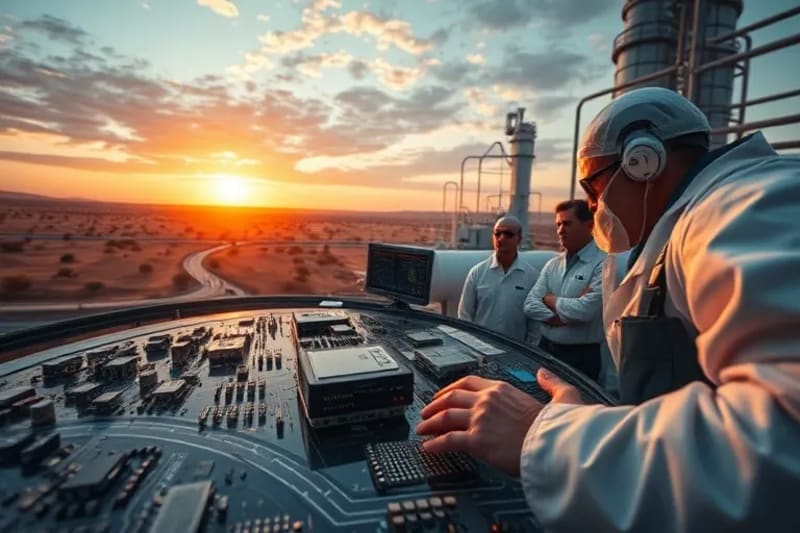
Conceptual representation of advanced water technology and human ingenuity addressing global water challenges. This visual encapsulates the spirit of innovation and collaborative effort essential for securing vital resources in a changing world.
This image is a conceptual AI render, illustrating the intersection of technology and human endeavor in solving critical resource issues.Water pollution further exacerbates the problem. Industrial discharge, agricultural runoff laden with pesticides and fertilizers, and untreated sewage contaminate freshwater sources, rendering them unusable for consumption or agriculture. This not only poses severe health risks but also damages ecosystems, leading to biodiversity loss and further ecological imbalance.
Climate change acts as a supercharger for these existing issues. It alters precipitation patterns, leading to more frequent and intense droughts in some regions and devastating floods in others. Glacial melt, a crucial source of freshwater for many river systems, is accelerating, threatening long-term water availability. These climate-induced changes disrupt traditional water cycles, making resource management increasingly unpredictable and complex.
The cumulative impact of these factors creates a pressing need for innovative solutions. Traditional methods of water management are often insufficient to cope with the scale and speed of these challenges. This urgent demand has created fertile ground for startups, which are uniquely positioned to develop and deploy novel technologies and business models with agility and focus. Their emergence is a direct response to a global crisis that demands ingenuity and rapid action.
The Rise of Water Tech Startups: Diverse Solutions
The burgeoning water technology sector is characterized by a wide array of startups, each tackling specific facets of the water crisis with specialized innovations. These companies are pushing the boundaries of what's possible, offering solutions that range from advanced purification techniques to sophisticated data analytics.
- Desalination and Advanced Purification: Startups in this area are developing more energy-efficient and cost-effective methods for removing salt and contaminants from seawater and brackish water. Technologies like advanced membrane filtration, forward osmosis, and even solar-powered desalination are making fresh water accessible in previously unviable locations.
- Smart Water Management: Leveraging the Internet of Things (IoT) and Artificial Intelligence (AI), these startups create systems that monitor water infrastructure in real-time. This includes smart sensors for leak detection in urban pipelines, AI-driven platforms for optimizing irrigation in agriculture, and predictive analytics to forecast water demand and supply, leading to significant reductions in water loss.
- Water Recycling and Reuse: Focused on circular economy principles, these companies develop technologies to treat and repurpose wastewater for various uses, from industrial processes to non-potable domestic applications and even potable reuse after extensive purification. This reduces reliance on fresh water sources and minimizes discharge into the environment.
- Data Analytics and Predictive Modeling: These startups specialize in collecting, analyzing, and interpreting vast amounts of water-related data. Their platforms provide insights into water quality, consumption patterns, aquifer levels, and climate impacts, enabling more informed decision-making for utilities, industries, and agricultural operations.
- Conservation Technologies: Beyond smart management, some startups focus on direct conservation efforts, such as developing water-saving fixtures for homes and businesses, creating drought-resistant crops through biotechnology, or designing innovative rainwater harvesting systems.
The diversity of these solutions highlights a comprehensive approach to water management, moving beyond single-point fixes to integrated systems that address the entire water cycle. These innovations are not just technological marvels; they represent potential game-changers in how societies interact with and manage their most precious resource.
Water Startups as Geopolitical Actors
The emergence of water startups introduces a new dynamic into the complex world of water geopolitics. Historically, control over water resources has been a significant source of power and, at times, conflict between nations. Large-scale infrastructure projects, such as dams and transboundary pipelines, have often been state-led initiatives with strategic implications. However, startups are beginning to disrupt these traditional power structures.
By offering decentralized and often more flexible solutions, these companies can empower communities and regions that might otherwise be dependent on distant national infrastructure or vulnerable to upstream control. For instance, a small, modular desalination unit developed by a startup can provide water independence to a coastal town without requiring massive state investment or complex international agreements. This shift can subtly alter the balance of power, moving it from large, centralized entities towards more localized and agile solutions.
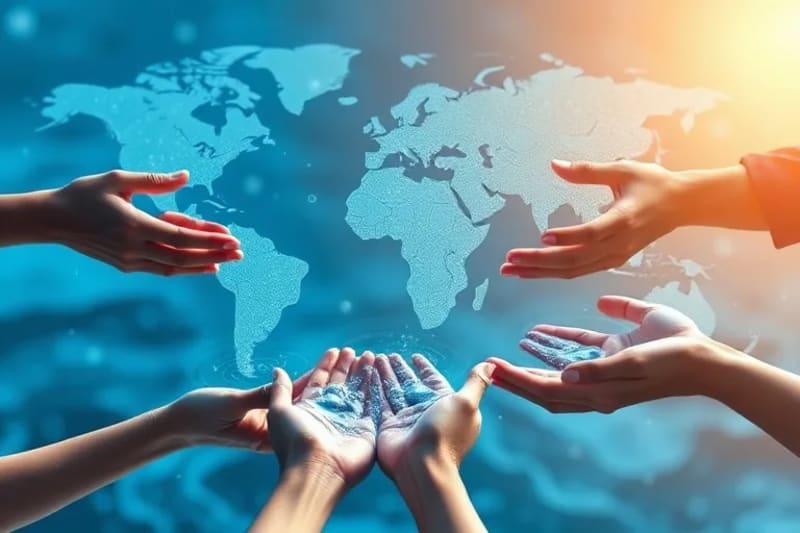
A visual representation of global water networks, highlighting innovative solutions and collaborative efforts to ensure water accessibility worldwide.
Furthermore, water startups can foster international cooperation. When a startup develops a highly effective and affordable water purification technology, it can be deployed across borders, creating shared benefits and common interests. This can lead to new forms of "water diplomacy," where technological solutions, rather than resource disputes, become the basis for international engagement. For example, a startup offering advanced leak detection using Explainable Artificial Intelligence could be adopted by multiple nations sharing a water basin, encouraging collaborative management.
However, the rise of these private actors also introduces potential for new forms of competition and even conflict. Control over proprietary water technologies, intellectual property, and market access can become strategic assets. Nations might compete to attract leading water tech companies or to develop their own domestic champions, viewing water innovation as a critical component of national security and economic competitiveness. This mirrors the strategic importance seen in other critical sectors, such as energy or advanced computing.
The dual nature of startups — as facilitators of cooperation and potential sources of competition — underscores their growing significance in the geopolitical arena. Their agility allows them to respond to crises rapidly, but their profit-driven nature also necessitates careful oversight to ensure equitable access and sustainable practices. The intersection of technological prowess and global resource management is creating a new frontier in international relations, where the private sector plays an increasingly vital role.
Economic Impact and Investment Landscape
The economic implications of the water startup ecosystem are substantial, extending beyond mere technological innovation to influence global markets, investment trends, and job creation. The global water market, already valued in the hundreds of billions of dollars, is projected to grow significantly, driven by increasing demand and the urgent need for sustainable solutions. Water tech startups are at the forefront of capturing this growth.
Investment in water technology has seen a steady increase, attracting capital from various sources. Venture capital firms are increasingly keen on the sector, recognizing the massive market potential and the critical nature of the problem being solved. Impact investors, who seek both financial returns and positive social/environmental outcomes, are particularly drawn to water startups due to their inherent alignment with sustainability goals. Governments and international bodies also provide funding through grants, subsidies, and public-private partnerships, recognizing the strategic importance of water security.
This influx of investment fuels research and development, accelerates the commercialization of new technologies, and allows startups to scale their operations globally. The economic activity generated by these companies creates new jobs, not just in engineering and R&D, but also in manufacturing, installation, maintenance, and data analysis. This contributes to the development of a skilled workforce in a burgeoning green economy sector.
Furthermore, the solutions offered by water startups can lead to significant cost savings for industries and municipalities. Efficient water use, reduced waste, and improved water quality can lower operational expenses, enhance productivity, and mitigate risks associated with water scarcity or pollution fines. For example, precision irrigation systems can drastically cut water consumption in agriculture, leading to economic benefits for farmers and contributing to regional water security.
The economic landscape shaped by water startups is one of innovation-driven growth, where addressing a critical global challenge simultaneously unlocks significant commercial opportunities. This synergy between profit and purpose is attracting a new generation of entrepreneurs and investors, positioning the water tech sector as a key driver of future economic development and resilience.
Regulatory Frameworks and Ethical Considerations
The rapid evolution of water technology and the increasing involvement of private startups necessitate robust and adaptive regulatory frameworks. Water, being a public good, requires careful governance to ensure equitable access, environmental protection, and public health. National regulations typically cover water rights, quality standards, discharge limits, and infrastructure development. However, the innovative nature of startups often pushes the boundaries of existing laws, creating both challenges and opportunities for policymakers.
International law plays a crucial role, particularly concerning transboundary water resources. Agreements like the UN Watercourses Convention aim to promote cooperation and prevent disputes over shared rivers and aquifers. As startups deploy solutions that might impact these shared resources, their activities must align with international legal principles. The development of new legal frameworks, perhaps drawing parallels from Space Law, might be necessary to address emerging issues related to water rights in new contexts, such as water harvesting from atmospheric sources or large-scale water trading.

A futuristic urban landscape showcasing advanced water management systems, illustrating the integration of technology for sustainable resource use in smart cities.
Ethical considerations are paramount. The privatization of water services, even through innovative startups, raises concerns about affordability and universal access. There is a risk that profit motives could lead to exclusionary practices, where the poor or marginalized are left without adequate water. Ensuring that technological advancements benefit all segments of society, rather than exacerbating inequalities, is a critical ethical challenge. This aligns with broader discussions on Human Rights and equitable resource distribution.
Furthermore, the environmental impact of new water technologies must be carefully assessed. While many startups aim for sustainability, some processes (like certain desalination methods) can have significant energy footprints or produce brine waste that needs responsible disposal. Regulators must strike a balance between fostering innovation and ensuring environmental protection. This requires a proactive approach to policy-making, engaging with startups, scientists, and civil society to co-create regulations that are both effective and fair.
Case Studies: Pioneering Water Startups
While specific company names are beyond the scope of this general overview, we can illustrate the impact of water startups through conceptual examples that reflect real-world innovations:
- Decentralized Desalination for Remote Communities: Imagine a startup developing compact, solar-powered desalination units that can be rapidly deployed in remote coastal villages or islands. These units provide fresh drinking water directly to communities, reducing their reliance on expensive imported water or vulnerable central infrastructure. This not only improves health outcomes but also fosters local economic development.
- AI-Powered Leak Detection in Aging Infrastructure: Another startup might specialize in deploying advanced acoustic sensors and AI algorithms to detect leaks in municipal water pipes with unprecedented accuracy. By identifying and pinpointing leaks quickly, cities can save millions of gallons of water annually, reduce maintenance costs, and improve the reliability of their water supply.
- Precision Agriculture with Smart Irrigation: Consider a startup offering integrated hardware and software solutions for farmers. Their system uses soil moisture sensors, weather data, and predictive analytics to deliver the exact amount of water needed for crops, significantly reducing water consumption in agriculture – a sector that accounts for a large percentage of global freshwater use. This innovation is crucial for regions facing drought and water scarcity.
- Industrial Wastewater-to-Resource Conversion: A startup could focus on transforming industrial wastewater from factories into reusable water and extracting valuable byproducts. This not only cleans polluted water but also creates new revenue streams for industries and reduces their environmental footprint, embodying circular economy principles.
These examples underscore the diverse ways startups are addressing the water crisis, from providing basic access to optimizing complex industrial processes. Their agility and focus on specific problems allow them to create impactful solutions that complement broader governmental and international efforts.
The Future of Water Geopolitics: A Startup-Driven Landscape?
The trajectory of global water geopolitics in the 21st century will undoubtedly be shaped by the ongoing innovation within the water startup ecosystem. As water scarcity intensifies and climate change impacts become more pronounced, the demand for novel, efficient, and scalable solutions will only grow. Startups are poised to play an increasingly central role in meeting this demand, potentially transforming how nations and communities secure their water futures.
We can anticipate a future where water technology becomes a key component of national security strategies, akin to energy independence or technological sovereignty. Countries that foster robust water tech sectors or strategically adopt advanced water solutions from leading startups may gain significant advantages in terms of resilience, economic stability, and diplomatic influence. This could lead to a new form of "water power," where technological prowess in water management translates into geopolitical leverage.
However, this future is not without its challenges. Ensuring equitable access to these advanced technologies, particularly for developing nations and vulnerable populations, will be paramount. International cooperation, robust regulatory frameworks, and ethical guidelines will be essential to prevent a widening gap between water-secure and water-insecure regions. The principles of Sustainable Architecture and resource management will need to be applied on a global scale, transcending national borders.
Ultimately, the role of water startups in geopolitics will depend on how effectively they can scale their solutions, how governments integrate these innovations into national and international strategies, and how the global community addresses the ethical and equitable distribution of these life-sustaining technologies. Their agility, innovation, and problem-solving capabilities offer a beacon of hope in addressing one of humanity's most critical challenges, forging a path towards a more water-secure and stable world.
Discover Our Content Ecosystem
Dive deeper into related topics and expand your knowledge with our curated selection of articles:
- Techno-Shamanism: Digital Tools for Modern Spiritual Practices
- Karmic Crystals and Chakra Alignment: Astrological Guide
Source: Hybrid content assisted by AI and human editorial supervision.


Comentarios