
Water Geopolitics: 21st Century Global Impact
The 21st century is increasingly defined by resource scarcity, and among the most critical is water. As populations grow, climate change intensifies, and industrial demands surge, access to clean, fresh water has become a central pillar of national security, economic stability, and international relations. This intricate web of power, politics, and precious resources is known as water geopolitics. Traditionally, this field has been dominated by nation-states, large corporations, and international bodies. However, a new, agile player is rapidly emerging: water startups.
These innovative companies, often driven by cutting-edge technology and sustainable business models, are not just solving local water problems; they are actively shaping the global water landscape, influencing diplomatic relations, and offering novel solutions to age-old conflicts. Their role extends beyond mere technological provision, subtly altering the balance of power and fostering new forms of cooperation or competition in regions grappling with water stress.
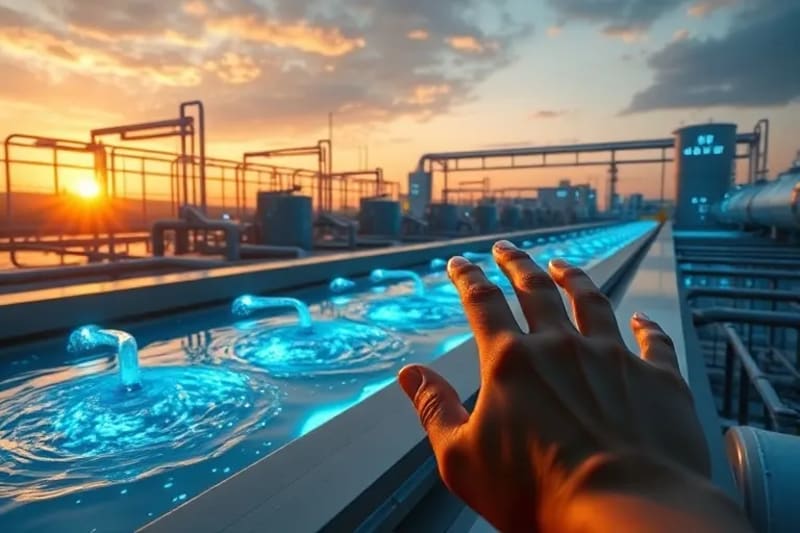
Conceptual representation of advanced water infrastructure, global resource management, and the technological diplomacy shaping the future of water security.
This visual concept is an AI-generated render, illustrating the intersection of technology, sustainability, and international cooperation in managing vital water resources.This article delves into the transformative impact of water startups on 21st-century water geopolitics, exploring their innovations, the challenges they face, and their potential to redefine global power dynamics related to Earth's most vital resource.
Table of Contents
- The Global Water Crisis: A Geopolitical Catalyst
- The Rise of Water Startups: Innovation Meets Necessity
- Key Areas of Startup Innovation and Geopolitical Impact
- Challenges and Opportunities in the Water Startup Ecosystem
- Water Startups as Diplomatic Tools and Soft Power
- The Future Outlook: Reshaping Water Geopolitics
The Global Water Crisis: A Geopolitical Catalyst
The global water crisis is a multifaceted challenge, driven by a confluence of factors including rapid urbanization, industrial growth, agricultural demands, and climate change. Billions of people still lack access to safely managed drinking water, and even more lack adequate sanitation. This scarcity is not just an environmental or humanitarian issue; it is a profound geopolitical one, often exacerbating existing tensions and creating new flashpoints.
Water-related conflicts can manifest in various forms, from localized disputes over shared rivers and aquifers to large-scale migrations driven by drought and resource depletion. Regions like the Middle East, parts of Africa, and Central Asia are particularly vulnerable, where transboundary rivers form the lifeblood of multiple nations. Control over water resources can be a tool of political leverage, a cause for military confrontation, or a driver of economic instability.
The increasing frequency of extreme weather events, such as prolonged droughts and intense floods, further complicates water management and security. These events strain existing infrastructure, disrupt food production, and displace communities, creating ripple effects that extend far beyond national borders. In this volatile environment, traditional solutions often prove too slow, too expensive, or too inflexible to address the rapidly evolving challenges.
The Rise of Water Startups: Innovation Meets Necessity
In response to the escalating global water crisis, a vibrant ecosystem of water startups has emerged. These companies differentiate themselves from established players through their agility, focus on niche technological solutions, and often a strong emphasis on sustainability and social impact. They leverage advancements in artificial intelligence, IoT, biotechnology, and material science to develop solutions that were unimaginable just a few decades ago.
Unlike large, often bureaucratic, water utilities or engineering firms, startups can quickly pivot, experiment with new technologies, and tailor solutions to specific local contexts. This adaptability is crucial in a world where water challenges are highly localized and require nuanced approaches. Their business models vary widely, from direct-to-consumer water purification systems to B2B platforms offering smart water management software or advanced wastewater treatment technologies.
The growth of these startups is also fueled by increasing investor interest in environmental, social, and governance (ESG) criteria, as well as the recognition that water scarcity presents significant market opportunities. Governments and international organizations are also looking to these innovators for scalable and cost-effective solutions, often integrating them into broader national water security strategies. The principles of growth hacking for sustainable startups are particularly relevant for these ventures, as they seek rapid expansion while maintaining a positive impact.
Key Areas of Startup Innovation and Geopolitical Impact
Water startups are innovating across the entire water value chain, with significant geopolitical implications in each area:
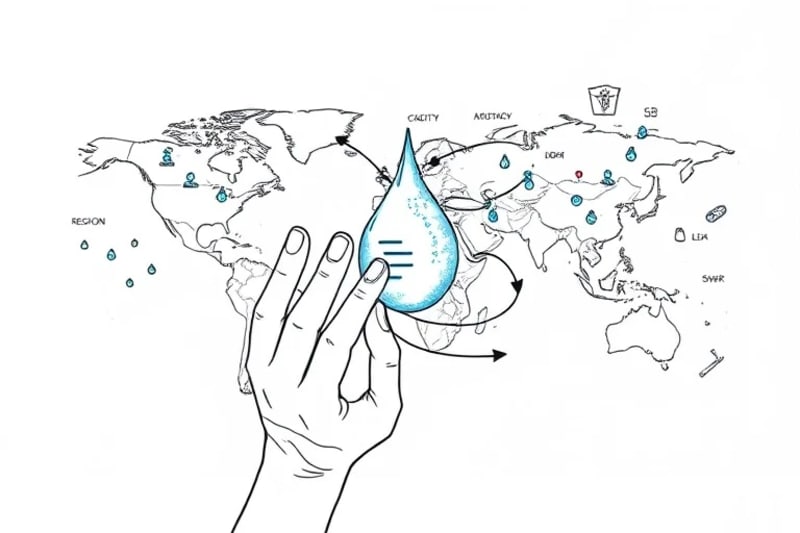
Visualizing the intricate global network of water resources, highlighting areas of scarcity and the innovative solutions being deployed.
1. Water Management and Efficiency
Smart Grids and IoT: Startups are developing IoT sensors and AI-powered platforms that monitor water flow, pressure, and quality in real-time. This allows for early detection of leaks, optimized distribution, and predictive maintenance, drastically reducing water loss in urban and agricultural settings. Geopolitically, this can reduce demand on shared water sources, mitigating potential disputes between regions or nations.
Precision Agriculture: Innovations in smart irrigation, soil moisture sensors, and drone-based monitoring help farmers use water more efficiently. This is critical in water-stressed agricultural regions, where water use often accounts for the majority of national consumption. By reducing agricultural water footprints, these technologies ease pressure on freshwater supplies, which can have significant cross-border implications.
2. Alternative Water Sources
Advanced Desalination: While desalination has existed for decades, startups are making it more energy-efficient and cost-effective through new membrane technologies, renewable energy integration, and modular designs. This offers coastal nations a more independent water supply, potentially reducing their reliance on transboundary rivers and thereby altering regional power dynamics.
Atmospheric Water Generation (AWG): These technologies extract potable water from the air, offering a decentralized water source that is independent of traditional hydrological cycles. For remote communities or regions with limited access to groundwater or surface water, AWG can provide a lifeline, reducing vulnerability and enhancing self-sufficiency.
3. Wastewater Treatment and Reuse
Circular Economy Solutions: Startups are pioneering advanced wastewater treatment processes that not only purify water for reuse (e.g., for irrigation, industrial processes, or even potable use) but also recover valuable resources like nutrients (nitrogen, phosphorus) and energy. This transforms wastewater from a liability into an asset, fostering a circular water economy. Geopolitically, this reduces the need for new freshwater abstractions, easing pressure on shared resources and promoting regional resilience.
Decentralized Treatment: Developing compact, scalable, and low-maintenance wastewater treatment units allows for localized treatment, reducing the need for extensive and costly centralized infrastructure. This is particularly beneficial for developing regions or areas with dispersed populations, empowering local communities with water independence.
4. Data and Analytics for Water Security
Predictive Analytics and AI: Startups are using AI to predict water availability, demand fluctuations, and potential contamination events based on vast datasets including climate models, satellite imagery, and sensor data. This foresight enables proactive management and crisis response, which is crucial for national water security planning and international cooperation on shared water bodies. The transparency offered by such data can also be enhanced by technologies like blockchain in supply chains, ensuring data integrity and trust.
Water Quality Monitoring: Rapid, accurate, and affordable water quality testing devices and platforms are being developed, allowing for early detection of pollutants and pathogens. This is vital for public health and environmental protection, and can also play a role in monitoring transboundary pollution, which is a frequent source of international disputes.
Challenges and Opportunities in the Water Startup Ecosystem
Despite their innovative potential, water startups face significant hurdles. The water sector is notoriously conservative, heavily regulated, and capital-intensive, with long sales cycles. Securing funding, navigating complex regulatory frameworks, and achieving market penetration against established incumbents are common challenges. Scaling solutions across diverse geographical and socio-economic contexts also presents a formidable task.

An advanced sensor capturing critical data, symbolizing the precision technology driving modern water management and geopolitical strategy.
However, the opportunities are equally vast. The sheer scale of the global water crisis ensures a massive and growing market for effective solutions. Increasing public and private investment in sustainable technologies, coupled with government incentives and international development goals, creates a fertile ground for growth. Public-private partnerships (PPPs) are becoming a crucial mechanism for startups to deploy their technologies at scale, benefiting from the infrastructure and reach of larger entities.
Impact investors, who seek both financial returns and positive social/environmental outcomes, are increasingly drawn to the water sector. This alignment between profit and purpose can accelerate the development and deployment of solutions in regions that need them most, potentially transforming areas of chronic water stress into models of sustainable water management. Effective adaptive digital leadership is key for these startups to navigate complex environments and drive their innovative solutions forward.
Water Startups as Diplomatic Tools and Soft Power
Beyond their technological contributions, water startups are emerging as instruments of soft power and diplomatic engagement. When a nation successfully develops and deploys innovative water solutions, it not only addresses its own challenges but also gains expertise and influence that can be exported. This technological diplomacy can foster goodwill, build alliances, and create shared interests in water-stressed regions.
For example, a country that provides advanced desalination technology or smart irrigation systems to a neighboring state facing water scarcity can build stronger bilateral ties and reduce the likelihood of water-related disputes. This approach promotes cooperation over confrontation, transforming potential flashpoints into arenas for shared problem-solving. This aligns with broader concepts of how technology shapes society, as explored in cosmo-sociology in the digital age.
Furthermore, the decentralized nature of many startup solutions can empower local communities and non-state actors, shifting some of the traditional power dynamics away from central governments. This can lead to more equitable water governance and greater resilience at the grassroots level, which in turn contributes to regional stability.
The Future Outlook: Reshaping Water Geopolitics
The role of water startups in 21st-century water geopolitics is set to expand significantly. As the urgency of the global water crisis intensifies, their innovative solutions will become indispensable. They are not merely service providers but active participants in shaping international relations, promoting peace, and fostering sustainable development.
However, it is crucial that the deployment of these technologies is guided by principles of equity, transparency, and sustainability. The benefits of innovation must be accessible to all, not just those with the means to pay. Ethical considerations, such as the potential for technological dependence or unintended environmental consequences, must be carefully managed.
In conclusion, water startups represent a powerful force for change in the complex world of water geopolitics. By harnessing human ingenuity and technological prowess, they offer a path towards a more water-secure and stable future, where collaboration triumphs over conflict, and innovation serves as a cornerstone of global peace and prosperity. Their ability to deliver localized, efficient, and sustainable water solutions is not just a business opportunity but a critical component of global security in the decades to come.
Explore More Content
Delve deeper into related topics that impact our global future:
Source: Hybrid content assisted by AI and human editorial supervision.


Comentarios