
Music Rhythm Melody Neuroscience: Learning Emotion Mental Health
Music is a universal language, deeply embedded in human culture and experience. From ancient tribal chants to complex symphonies and modern electronic beats, its presence is ubiquitous. Beyond mere entertainment, scientific research increasingly reveals the profound impact of musical rhythm and melody on the human brain, influencing everything from cognitive processes and learning to emotional states and mental health. This article explores the fascinating intersection of music and cognitive neuroscience, shedding light on how these auditory elements shape our minds.
The intricate structures of rhythm and melody are not just pleasant to the ear; they actively engage multiple brain regions, fostering neural connections and even promoting neuroplasticity. Understanding these mechanisms can unlock new avenues for therapeutic interventions, educational strategies, and overall well-being. We will delve into the specific ways rhythm and melody exert their influence, examining their roles in learning, emotional regulation, and their potential applications in clinical settings.
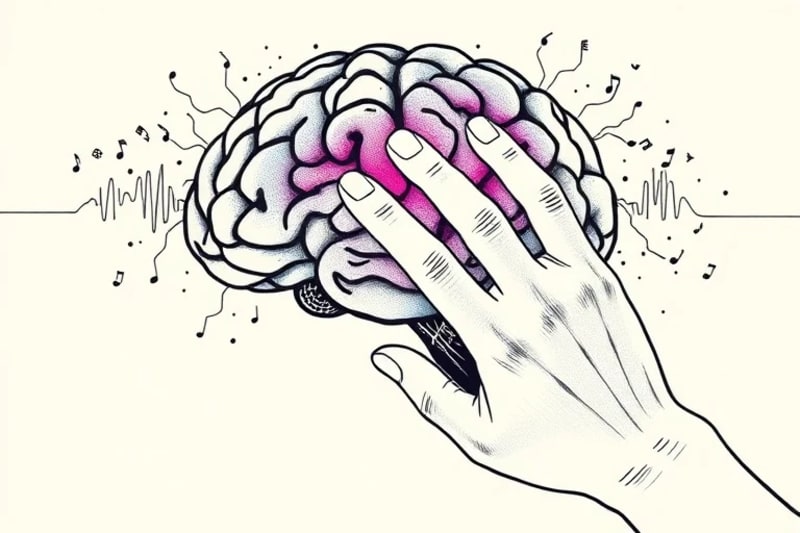
Conceptual representation of how musical elements, rhythm and melody, dynamically interact with neural pathways, shaping cognitive functions and emotional responses.
This vibrant, abstract depiction, a conceptual AI render, illustrates the complex relationship between auditory input and brain activity, highlighting music's profound influence on our internal landscape.
Table of Contents
- The Brain and Music: A Fundamental Connection
- Music's Role in Learning and Cognitive Enhancement
- Emotional Regulation and Mental Well-being
- Clinical Applications and Future Directions
- Challenges and Ethical Considerations
The Brain and Music: A Fundamental Connection
The human brain is remarkably adept at processing musical information. When we listen to music, a symphony of neural activity unfolds across various brain regions, far beyond just the auditory cortex. This complex processing involves areas associated with motor control, emotion, memory, and even language, demonstrating music's pervasive influence.
Rhythm, the temporal organization of sounds, is processed primarily in motor areas like the cerebellum and basal ganglia, even when no physical movement occurs. This intrinsic connection between rhythm and movement explains why music often makes us want to tap our feet or dance. It also plays a crucial role in our ability to predict future events in a sequence, a fundamental cognitive skill.
Melody, on the other hand, refers to the sequential arrangement of pitches that forms a recognizable tune. Its processing heavily involves the auditory cortex, but also extends to areas like the limbic system, particularly the amygdala and hippocampus, which are central to emotional processing and memory formation. This explains why certain melodies can evoke strong emotions or trigger vivid memories.
Neuroimaging studies, such as fMRI and EEG, have provided invaluable insights into these processes, showing how different musical elements activate distinct yet interconnected neural networks. The brain's ability to extract patterns from complex auditory input and assign meaning to them is a testament to its remarkable adaptability and the deep evolutionary roots of music perception. For a deeper understanding of how the brain processes sensory information, consider exploring the intricate world of Optical Illusions: Brain, Perception, Fascination, Reality, which further illustrates the brain's interpretive power.
Music's Role in Learning and Cognitive Enhancement
The cognitive benefits of music extend significantly into learning and intellectual development. Research has consistently shown that musical training and even passive listening can enhance various cognitive functions, particularly in children but also throughout adulthood.
One of the most well-documented effects is on memory. The structured nature of rhythm and melody provides a framework that can aid in encoding and retrieving information. For instance, mnemonic devices often utilize rhythmic patterns or melodic phrases to help recall facts. Studies have shown that learning new information while listening to certain types of music can improve retention, especially for verbal memory.
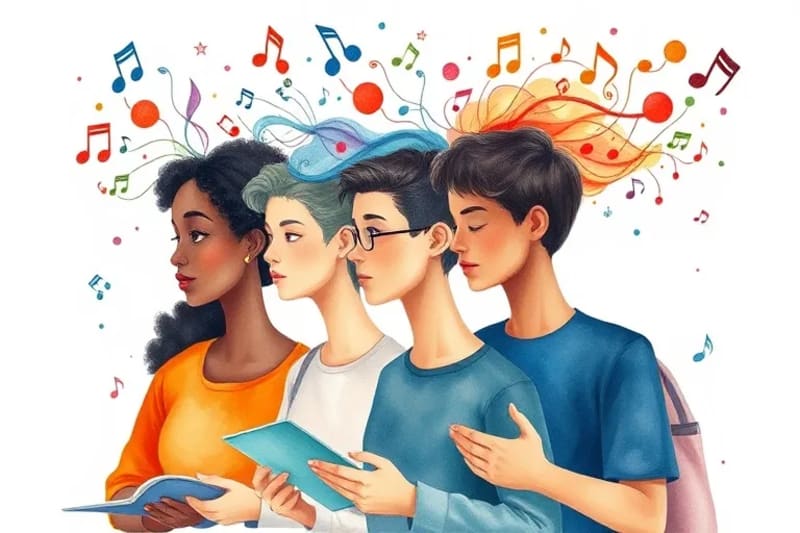
Visualizing the enhancement of cognitive functions, such as memory and attention, through the integration of musical elements in learning environments.
This artistic watercolor rendering, provided under a free-to-use license, captures the essence of music's positive influence on various learning activities and overall mental acuity.
Attention and focus are also significantly impacted by music. Background music, particularly instrumental pieces with moderate tempos, can help individuals sustain attention during tasks by reducing distractions and providing a consistent auditory environment. However, the effect is highly individual, and complex lyrical music can sometimes be distracting.
Furthermore, musical training has been linked to improved language acquisition skills. The ability to discern pitch, rhythm, and timbre in music translates to a heightened sensitivity to phonological elements in language, aiding in pronunciation, vocabulary acquisition, and even grammatical understanding. The brain regions involved in processing musical syntax often overlap with those processing linguistic syntax, suggesting a shared neural foundation.
The concept of neuroplasticity, the brain's ability to reorganize itself by forming new neural connections, is central to understanding music's long-term cognitive effects. Engaging with music, whether through listening or playing an instrument, stimulates the growth of new synapses and strengthens existing ones, leading to more efficient brain function. This is a dynamic process that continues throughout life, offering continuous opportunities for cognitive growth.
Emotional Regulation and Mental Well-being
Perhaps the most widely recognized impact of music is its profound ability to influence our emotions and contribute to mental well-being. Music acts as a powerful emotional regulator, capable of shifting moods, reducing stress, and fostering a sense of connection and belonging.
Melody, with its variations in pitch and harmony, is particularly adept at evoking a wide range of emotions. Major keys often sound joyful or uplifting, while minor keys tend to convey sadness or introspection. The interplay of consonance and dissonance, tempo, and dynamics all contribute to the emotional landscape a piece of music creates. This emotional resonance is mediated by the limbic system, a network of brain structures involved in emotion, motivation, and memory.
Listening to music can trigger the release of neurotransmitters such as dopamine, often associated with pleasure and reward, and oxytocin, linked to social bonding and trust. This neurochemical response explains why music can be so effective in reducing feelings of anxiety and depression, providing a natural mood boost. It also helps in managing stress by lowering cortisol levels and promoting relaxation.
Beyond individual emotional regulation, music plays a vital role in social cohesion. Shared musical experiences, whether at a concert or a religious gathering, can foster empathy and collective emotional states, strengthening community bonds. The rhythmic synchronization inherent in group music-making or dancing is a powerful tool for fostering social connection.
Clinical Applications and Future Directions
The therapeutic potential of music is increasingly being recognized and utilized in clinical settings. Music therapy, a well-established healthcare profession, uses music interventions to address physical, emotional, cognitive, and social needs of individuals.

A conceptual visualization of how abstract musical forms contribute to the delicate balance of emotional regulation and foster mental well-being.
This 3D rendered image, generated by AI, offers a symbolic perspective on the calming and harmonizing effects of music on our internal emotional landscape.
In neurological rehabilitation, rhythmic auditory stimulation (RAS) is used to improve gait and motor control in patients with Parkinson's disease or those recovering from stroke. The brain's natural tendency to synchronize with external rhythms can help patients regain more fluid and coordinated movements. Similarly, music can aid in speech rehabilitation for individuals with aphasia, leveraging melodic intonation therapy to improve verbal communication.
For individuals with Alzheimer's disease and other forms of dementia, familiar music can evoke memories and reduce agitation, often bypassing cognitive impairments. The emotional and personal connection to music can remain intact even as other cognitive functions decline, offering a powerful tool for engagement and improving quality of life. The principles of designing spaces for mental well-being, as explored in Neuroarchitecture Cognitive Well-being: Designing Mental Health Spaces, share a similar goal of positively influencing human experience through environmental factors, including auditory ones.
Beyond specific disorders, music therapy is also effective in managing chronic pain, reducing pre-operative anxiety, and supporting mental health in various populations. The future of this field is bright, with ongoing research exploring personalized music interventions based on individual neurological profiles and preferences. Advances in Data Analysis: Tools, Strategic Decisions are crucial for tailoring these interventions effectively, allowing for precise measurement of music's impact on brain activity and patient outcomes.
Challenges and Ethical Considerations
While the benefits of music are undeniable, it is important to acknowledge the challenges and ethical considerations in its application, particularly in therapeutic and educational contexts. The impact of music is highly subjective and culturally dependent. What is soothing to one person might be irritating to another, making generalized recommendations difficult.
Individual preferences, cultural background, and personal associations with specific songs or genres all play a significant role in how music is perceived and processed emotionally. Therefore, a "one-size-fits-all" approach to music intervention is rarely effective. Therapists and educators must consider these individual differences to maximize the positive effects of music.
Moreover, the line between beneficial background music and distracting noise can be thin. Over-reliance on music as a constant companion might also diminish its unique impact or create a dependency. Ethical considerations also arise in commercial applications, where music is often used to manipulate mood or behavior in retail environments, raising questions about consumer autonomy.
Future research needs to continue exploring the nuances of music's effects, identifying specific musical parameters (e.g., tempo, timbre, harmonic complexity) that correlate with particular cognitive and emotional outcomes. This will allow for more targeted and personalized interventions, ensuring that music is used effectively and ethically to enhance human well-being.
Explore More Topics
- Diversity Inclusion in the Workplace: Strategies, Benefits, Future
- Central Banks Cryptocurrencies Stability: Complete Guide
- Spanish Commercial Code: Merchants, Agents, and the Trade Register
- Michael Jackson's Thriller: Cultural Legacy and Pop Impact
- AstroFuturo: The Sun in Each Astrological House: Purpose and Vitality
- Prophecies of the Virgin: Unprecedented Marian Promises: Forgotten Revelations
- StarPluto: Urban Geomancy: Aligning City Dwellings for Well-being
Source: Hybrid content assisted by AI and human editorial supervision.


Comentarios