
Blockchain Identity Voting Systems: Securing the Future
In an increasingly digital world, the integrity of democratic processes hinges on the reliability and security of voting systems. Traditional methods, while familiar, often face scrutiny regarding transparency, susceptibility to fraud, and accessibility. The need for a robust, verifiable, and tamper-proof mechanism for identity verification in elections has never been more critical, especially as societies navigate complex geopolitical landscapes and technological advancements.
Blockchain technology, renowned for its security, decentralization, and immutability, presents a compelling solution to these challenges. By leveraging its core principles, it is possible to construct voting systems that not only ensure each vote is cast by an eligible individual but also that every ballot is accurately counted and cannot be altered. This article delves into how blockchain can fundamentally transform identity verification in electoral processes, fostering greater trust and participation in democracy.
Table of Contents
- The Imperative for Secure Voting Systems
- Understanding Blockchain: The Foundation of Trust
- How Blockchain Enhances Identity Verification in Voting
- Key Advantages of Blockchain-Based Voting
- Challenges and Considerations for Implementation
- Architectural Overview of a Blockchain Voting System
- The Future of Democratic Elections with Blockchain
- Explore More Relevant Content
The Imperative for Secure Voting Systems
The foundation of any democratic society rests upon the integrity of its electoral process. When citizens lose faith in the fairness or accuracy of elections, the legitimacy of governance is undermined, leading to social unrest and political instability. Traditional voting systems, whether paper-based or electronic, often grapple with inherent vulnerabilities that can erode public confidence.
These vulnerabilities include the potential for voter impersonation, duplicate voting, tampering with ballots, and opaque vote counting processes. Moreover, the logistical complexities of managing voter rolls, distributing ballots, and securing polling stations can be immense, especially in large-scale elections. The digital age introduces new threats, such as cyberattacks targeting electronic voting machines or voter databases, further complicating the landscape of electoral security.

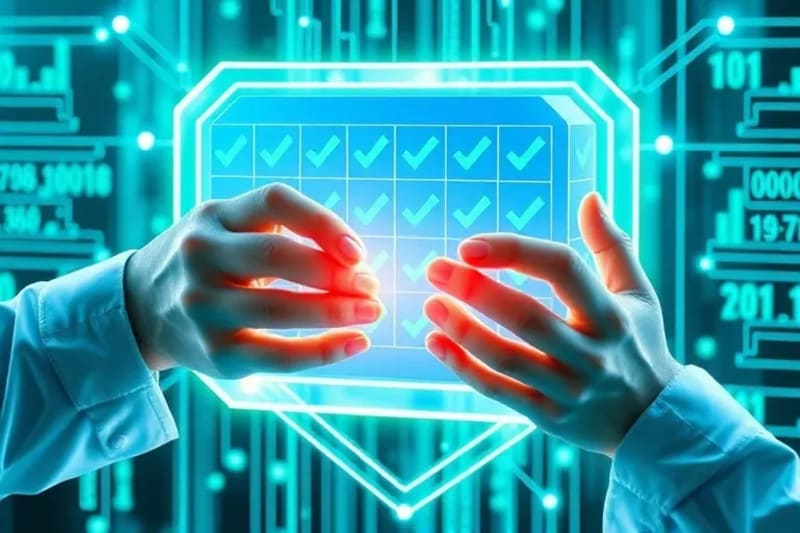
Conceptual visualization of secure digital identity verification within a blockchain-powered electoral framework, highlighting the convergence of biometric data and cryptographic security for democratic integrity.
This image is a conceptual AI render, illustrating the intricate interplay of digital security, identity, and voting processes, designed to foster transparency and trust in modern elections.Ensuring that only eligible citizens can cast a single, valid vote is paramount. This requires robust identity verification at the point of registration and during the actual voting process. Current solutions often involve physical ID checks, which can be prone to human error or manipulation, or centralized digital databases, which are single points of failure vulnerable to breaches. Therefore, exploring advanced technological solutions like blockchain becomes imperative to safeguard the democratic process against these multifaceted threats.
Understanding Blockchain: The Foundation of Trust
At its core, blockchain is a decentralized, distributed ledger technology that records transactions across many computers. Each "block" in the chain contains a timestamped list of transactions, and once a block is added to the chain, it cannot be altered or removed. This immutability is achieved through cryptographic hashing, where each new block contains a cryptographic hash of the previous block, creating an unbreakable link.
The decentralized nature means there is no central authority controlling the network; instead, participants (nodes) collectively maintain and validate the ledger. This eliminates single points of failure and makes the system highly resistant to censorship and tampering. Consensus mechanisms, such as Proof of Work (PoW) or Proof of Stake (PoS), ensure that all participants agree on the validity of transactions before they are added to the chain.
Beyond simple transaction recording, many blockchains support "smart contracts." These are self-executing contracts with the terms of the agreement directly written into code. Smart contracts automatically execute when predefined conditions are met, without the need for intermediaries, adding another layer of automation and trust to blockchain applications. This foundational technology has already proven its value in various sectors, from finance to supply chain management, demonstrating its potential for secure data handling. For instance, the application of blockchain's immutable ledger in pharmaceutical traceability ensures secure data flow and authenticity.
How Blockchain Enhances Identity Verification in Voting
Applying blockchain to identity verification in voting systems offers a paradigm shift from traditional centralized models. Instead of relying on a single, vulnerable database of voter information, blockchain can create a distributed, secure, and verifiable digital identity for each eligible voter. This digital identity can be linked to a cryptographic key, ensuring that only the legitimate voter can access and use it.
The process typically involves several stages. First, voters would register their identity with an authorized entity, which then issues a unique, cryptographically secured digital ID on the blockchain. This ID would contain only necessary information to verify eligibility (e.g., citizenship, age) without revealing personally identifiable details directly on the public ledger, thus preserving privacy. During an election, this digital ID acts as a token, allowing the voter to cast a ballot.

A visual representation of the cryptographic keys and digital tokens that underpin secure identity verification in blockchain-based voting systems.
This image is an AI-generated conceptual artwork, illustrating the complex digital security elements essential for authenticating voter identities on a distributed ledger.When a voter attempts to cast a ballot, the system verifies their digital ID against the blockchain to confirm eligibility and ensure they have not already voted. This verification happens without revealing who the voter is or how they voted, maintaining voter anonymity while preventing duplicate votes. The transaction of casting a vote is then recorded on the blockchain, creating an immutable, auditable trail.
Smart contracts can automate the entire verification and voting process. For example, a smart contract can be programmed to only accept votes from verified digital IDs, mark an ID as "voted" after submission, and automatically tally votes once the election period ends. This automation reduces human intervention, minimizes errors, and enhances the overall trustworthiness of the electoral system. The integration of such robust digital identity mechanisms is crucial for maintaining digital integrity in various domains, including intellectual property and creative works.
Key Advantages of Blockchain-Based Voting
The implementation of blockchain technology in voting systems offers a multitude of benefits that address many of the shortcomings of traditional electoral processes. These advantages collectively contribute to a more secure, transparent, and trustworthy democratic experience.
- Enhanced Security: The cryptographic nature of blockchain makes it incredibly difficult to tamper with votes or voter identities. Each transaction is encrypted and linked to previous ones, creating a secure chain that is virtually unhackable.
- Increased Transparency and Auditability: Every vote cast and verified is recorded on a public or permissioned ledger that can be independently audited. While individual votes remain anonymous, the overall process is transparent, allowing anyone to verify that all votes were counted accurately and no votes were altered.
- Fraud Prevention: The immutability of the blockchain prevents double-voting and voter impersonation. Once a digital ID is marked as having voted, it cannot be used again, and the unique cryptographic signature ensures the voter's authenticity.
- Improved Accessibility: Blockchain-based systems can facilitate remote voting securely, allowing citizens abroad, those with disabilities, or individuals in remote areas to participate more easily without compromising security.
- Reduced Costs: While initial setup might be significant, in the long run, automated blockchain systems can reduce the logistical costs associated with printing ballots, managing polling stations, and manual counting.
- Increased Trust: By providing a verifiable and transparent system, blockchain can restore public confidence in electoral outcomes, reducing disputes and fostering greater civic engagement.
Challenges and Considerations for Implementation
Despite its promising advantages, the path to widespread adoption of blockchain in voting systems is fraught with significant challenges. Addressing these issues is crucial for successful and equitable implementation.
- Scalability: National elections involve millions of voters. Current blockchain technologies, particularly public ones, can struggle with the transaction volume required for such a scale without significant performance bottlenecks.
- Regulatory and Legal Frameworks: Existing electoral laws and regulations are not designed for blockchain-based voting. New legal frameworks would be required to recognize and govern these systems, which can be a slow and complex process.
- Digital Divide and Accessibility: Not all citizens have equal access to technology or the internet. Implementing a digital voting system could disenfranchise segments of the population, exacerbating existing inequalities.
- Security Vulnerabilities (Smart Contracts): While the blockchain itself is secure, smart contracts can have bugs or vulnerabilities if not meticulously coded and audited. Exploiting these could compromise election integrity.
- User Experience and Education: The complexity of blockchain technology can be daunting for the average user. Systems must be designed to be intuitive and user-friendly, and extensive public education campaigns would be necessary.
- Cost of Implementation: Developing, deploying, and maintaining a secure, scalable blockchain voting system requires substantial investment in infrastructure, software, and cybersecurity expertise.
- Anonymity vs. Verifiability: Balancing voter privacy (anonymity) with the ability to verify that all votes are legitimate and correctly counted is a delicate technical and ethical challenge.
These challenges highlight the need for careful planning, pilot programs, and a multi-stakeholder approach involving technologists, policymakers, legal experts, and civil society. The ethical implications, particularly regarding data privacy and potential biases in algorithmic decision-making, also require rigorous consideration, similar to ethical considerations in public procurement with AI.
Architectural Overview of a Blockchain Voting System
A typical blockchain-based voting system would involve several key components and phases, designed to ensure security, transparency, and integrity from voter registration to final tally. Understanding this architecture is crucial for appreciating its robust nature.
A clear, infographic-style representation of the secure and transparent digital ballot casting process facilitated by blockchain technology.
This image is a conceptual vector art piece, designed to visually explain the streamlined and protected nature of voting within a blockchain framework.The system would typically operate on a permissioned blockchain, where authorized entities (e.g., election commissions) manage nodes, ensuring a controlled yet distributed environment. Key phases include:
- Voter Registration and Digital ID Issuance: Eligible citizens register with an official body, which verifies their identity through traditional means. Upon successful verification, a unique, anonymous digital identity (e.g., a cryptographic token or public key) is issued on the blockchain. This ID is linked to the voter's private key, known only to them.
- Ballot Generation and Distribution: When an election is announced, digital ballots are created and made accessible. Smart contracts define the election rules, candidate lists, and voting period.
- Vote Casting: Voters use their private key to sign and encrypt their ballot, which is then sent to the blockchain. The system verifies the voter's digital ID against the blockchain to ensure eligibility and that they haven't already voted. The vote is recorded as a transaction, timestamped, and added to a block.
- Vote Tallying: Once the voting period ends, a smart contract automatically decrypts and tallies the votes. Since each vote is an immutable record on the blockchain, the tallying process is transparent and verifiable by any authorized observer.
- Auditing: The entire chain of transactions, from ID issuance to vote tallying, is available for auditing. This allows for independent verification of the election results, ensuring accuracy and detecting any anomalies.
This architecture provides a robust framework that minimizes human error, prevents fraud, and maximizes transparency, offering a significant upgrade over conventional voting methods.
The Future of Democratic Elections with Blockchain
The integration of blockchain technology into electoral systems represents a profound shift towards a more secure, transparent, and accessible democratic future. While significant hurdles remain, ongoing research and pilot projects around the globe are continually refining the technology and addressing its limitations. The potential for blockchain to restore and enhance public trust in elections is immense, offering a verifiable backbone for democratic processes.
As blockchain technology matures, becoming more scalable, energy-efficient, and user-friendly, its application in critical public services like voting will likely expand. Future developments may include advanced biometric integration for identity verification, quantum-resistant cryptography to protect against future threats, and even decentralized autonomous organizations (DAOs) for managing electoral processes. Ultimately, blockchain has the power to not just secure votes, but to strengthen the very foundations of democratic governance in the digital age.
Explore More Relevant Content
Source: Hybrid content assisted by AI and human editorial supervision.


Comentarios