
Neurocomputation: The Brain-Inspired AI Future
Neurocomputation represents a groundbreaking paradigm in artificial intelligence, drawing profound inspiration from the architecture and operational principles of the biological brain. Unlike traditional AI, which often relies on symbolic logic or statistical models, neurocomputation seeks to emulate the brain's parallel processing capabilities, energy efficiency, and remarkable adaptability. This field aims to develop computational systems that can learn, adapt, and process information in ways that more closely mirror human cognition, paving the way for truly intelligent machines.
The quest to build machines that think like humans has long been a central theme in computer science and artificial intelligence. However, the limitations of conventional computing architectures, primarily based on the von Neumann model, have become increasingly apparent when tackling complex tasks that humans perform effortlessly, such as pattern recognition, natural language understanding, and decision-making in uncertain environments. Neurocomputation offers a promising alternative by shifting the focus from sequential instruction execution to massive parallelism, event-driven processing, and intrinsic learning mechanisms.
Table of Contents
- Core Principles of Neurocomputation
- Neuromorphic Hardware: The Physical Brain
- Spiking Neural Networks (SNNs): Emulating Biological Dynamics
- Advantages and Challenges of Neurocomputation
- Applications and Future Prospects
- Ethical and Societal Implications
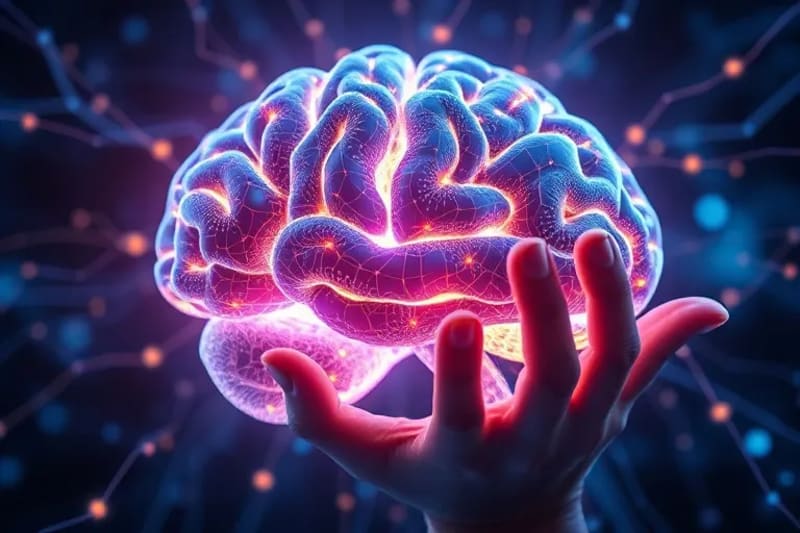
Conceptual representation of advanced neural architectures and their intricate, dynamic information flow, mirroring biological complexity.
This visual interpretation is a conceptual AI render, illustrating the abstract principles of neurocomputation through dynamic light patterns and interconnected nodes.
Core Principles of Neurocomputation
At its heart, neurocomputation is guided by several fundamental principles observed in biological brains. These include parallelism, distributed processing, plasticity, and event-driven communication. The human brain, with its estimated 86 billion neurons and trillions of synapses, operates not through a central clock but through asynchronous firing of neurons, where information is encoded not just in the firing rate but also in the precise timing of spikes.
- Parallelism and Distributed Processing: Unlike sequential processors, biological brains perform countless operations simultaneously across vast networks of neurons. Neurocomputational models aim to replicate this by distributing computational tasks across many interconnected processing units.
- Plasticity and Learning: Synaptic connections in the brain are not static; they strengthen or weaken based on activity, a phenomenon known as synaptic plasticity. This is the biological basis for learning and memory. Neurocomputational systems incorporate similar adaptive mechanisms, allowing them to learn from data and experience without explicit programming.
- Event-Driven Communication: Neurons communicate via electrical impulses, or "spikes," which are discrete events. This contrasts with continuous data streams in traditional digital systems. Event-driven communication in neurocomputation leads to significant energy efficiency, as processing only occurs when an event (spike) is detected.
- Energy Efficiency: The human brain consumes only about 20 watts of power, a fraction of what even a modest supercomputer requires for comparable tasks. This efficiency stems from its parallel, event-driven, and analog-like processing. Neurocomputational hardware strives to achieve similar levels of power efficiency.
These principles collectively enable the brain's remarkable capabilities in areas like robust pattern recognition, rapid decision-making, and continuous learning in dynamic environments. By translating these biological insights into computational models and hardware, neurocomputation seeks to overcome the limitations of current AI systems, particularly in terms of energy consumption and adaptability.
Neuromorphic Hardware: The Physical Brain
The realization of neurocomputational principles requires specialized hardware known as neuromorphic chips. These devices are designed from the ground up to mimic the physical structure and operational dynamics of biological neural networks. Instead of separate processing and memory units, neuromorphic architectures often integrate computation directly into memory, much like synapses store and process information in the brain.
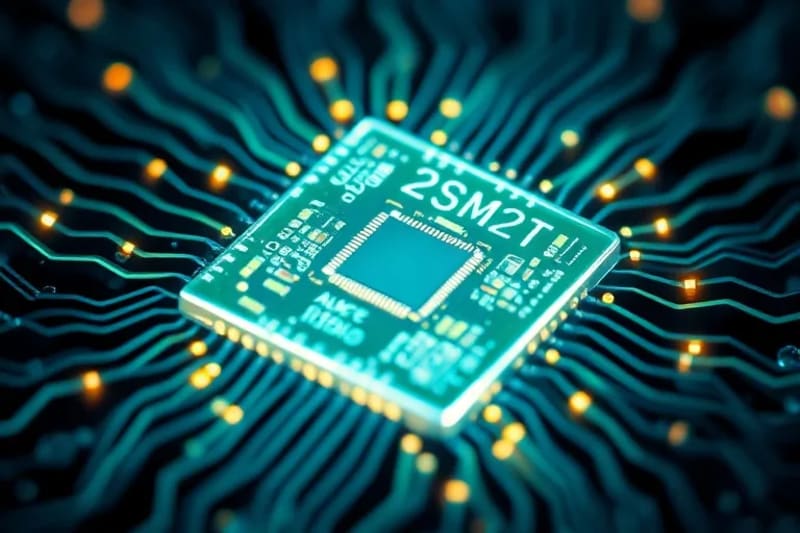
Detailed view of a neuromorphic processor, showcasing its complex, neuron-like interconnections.
This digital artwork illustrates the intricate design of neuromorphic hardware, emphasizing its bio-inspired circuitry.
Key characteristics of neuromorphic hardware include:
- In-Memory Computing: This approach reduces the "von Neumann bottleneck," where data transfer between CPU and memory becomes a limiting factor. By performing computations where data is stored, neuromorphic chips achieve higher efficiency and speed for neural network operations.
- Analog and Mixed-Signal Circuits: While digital circuits are precise, biological neurons operate with analog signals. Many neuromorphic designs incorporate analog components to better mimic neuronal dynamics, often leading to lower power consumption and higher density.
- Asynchronous Operation: Unlike synchronous digital systems that rely on a global clock, neuromorphic chips often operate asynchronously, with components processing data only when triggered by an event, further enhancing energy efficiency.
- Scalability: Neuromorphic architectures are inherently scalable, allowing for the creation of larger, more complex networks by simply adding more "neurons" and "synapses," much like the brain's modular structure.
Prominent examples of neuromorphic hardware include IBM's TrueNorth, Intel's Loihi, and various academic projects exploring memristors and other novel devices for synaptic emulation. These platforms are designed to run specific types of neural networks, particularly Spiking Neural Networks (SNNs), with unparalleled efficiency. For further insight into how AI is being decentralized, consider exploring Edge Computing: Decentralizing Artificial Intelligence for Critical Applications.
Spiking Neural Networks (SNNs): Emulating Biological Dynamics
Spiking Neural Networks (SNNs) are often considered the third generation of neural networks, building upon perceptrons and artificial neural networks (ANNs). SNNs more closely mimic the way biological neurons communicate by transmitting information not just through the strength of a signal, but also through the precise timing of discrete events called "spikes" or "action potentials."
In an SNN, a neuron accumulates input signals over time. Once its internal membrane potential reaches a certain threshold, it "fires" a spike and then resets. This event-driven nature has several implications:
- Temporal Information Encoding: SNNs can naturally process and encode information in the temporal domain, making them well-suited for dynamic data like audio, video, and sensory streams where timing is crucial.
- Energy Efficiency: Neurons in an SNN only consume power when they spike. In sparse activity scenarios, this can lead to significantly lower power consumption compared to ANNs, where all neurons typically perform computations in every forward pass.
- Biological Plausibility: SNNs align more closely with neuroscientific observations, offering a platform for exploring hypotheses about brain function and developing more biologically inspired AI.
Training SNNs remains a significant challenge compared to ANNs, primarily due to the non-differentiable nature of spike events. However, advancements in spike-timing-dependent plasticity (STDP) rules, surrogate gradient methods, and conversion techniques from ANNs to SNNs are rapidly improving their practical applicability. The philosophical implications of such advanced AI systems, especially regarding consciousness, are profound. You can delve deeper into these discussions by reading Artificial Consciousness: Can Machines Truly Feel?
Advantages and Challenges of Neurocomputation
Neurocomputation offers compelling advantages over traditional AI, but also faces significant hurdles:
| Aspect | Advantages of Neurocomputation | Challenges of Neurocomputation |
|---|---|---|
| Energy Efficiency | Significantly lower power consumption due to event-driven processing and in-memory computing, ideal for edge devices. | Hardware development is complex and costly; achieving brain-like efficiency at scale is still a research goal. |
| Learning & Adaptability | Intrinsic learning rules (e.g., STDP) enable continuous, online learning and adaptation to new data without extensive retraining. | Training algorithms for SNNs are less mature and more complex than backpropagation for ANNs. |
| Processing Dynamic Data | Naturally suited for processing temporal and sparse data streams (e.g., sensory input, video, audio) due to temporal encoding. | Lack of standardized programming models and software tools compared to established deep learning frameworks. |
| Robustness | Distributed processing and inherent redundancy can lead to greater fault tolerance and robustness against noise. | Interpreting and debugging neurocomputational models can be more challenging due to their complex, emergent behavior. |
| Scalability | Architectures are designed for massive parallelism, allowing for scaling to very large networks. | Integrating neuromorphic systems with conventional computing infrastructure remains a challenge. |
Overcoming these challenges requires interdisciplinary collaboration between neuroscientists, computer architects, material scientists, and AI researchers. The potential rewards, however, are immense, promising a new era of intelligent systems that are both powerful and sustainable.
Applications and Future Prospects
The unique capabilities of neurocomputation make it ideal for a wide range of applications, particularly those requiring real-time processing, low power consumption, and continuous learning:
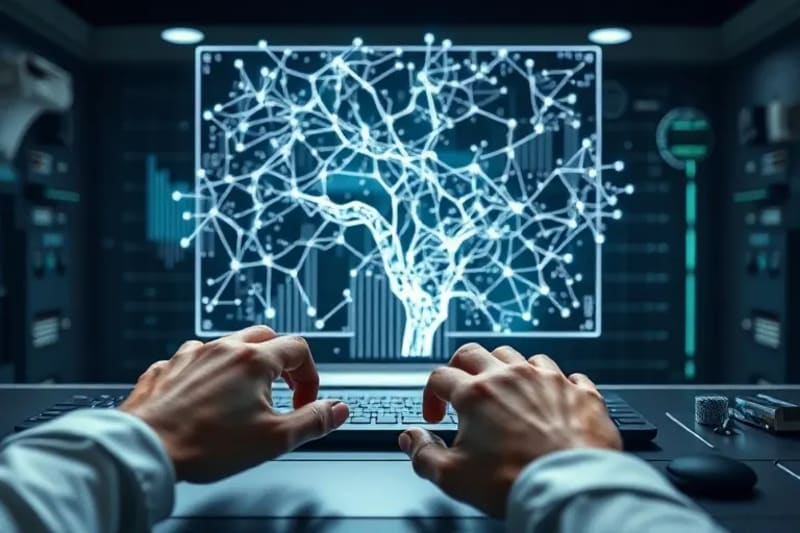
A futuristic research environment where holographic neural networks are analyzed and developed.
This 3D rendering depicts an advanced laboratory setting, symbolizing the ongoing exploration in neurocomputation.
- Edge AI Devices: From smart sensors to wearable technology, neurocomputational chips can enable complex AI tasks directly on devices without relying on cloud connectivity, due to their low power footprint. This is crucial for applications like Smart Home Security: Complete Protection Guide.
- Robotics and Autonomous Systems: The ability to process sensory data in real-time, learn from interactions, and adapt to changing environments makes neurocomputation highly valuable for robotics, autonomous vehicles, and drones.
- Brain-Computer Interfaces (BCIs) and Neuroprosthetics: By bridging the gap between biological and artificial neural systems, neurocomputation can enhance BCIs for medical applications, such as controlling prosthetic limbs or restoring sensory functions.
- Medical Diagnostics and Drug Discovery: Analyzing complex biological data, identifying subtle patterns in medical images, and accelerating drug discovery processes are areas where neurocomputational models can excel.
- Advanced Sensory Processing: Applications in computer vision, speech recognition, and natural language processing can benefit from SNNs' ability to handle temporal dynamics and sparse inputs more efficiently.
Looking further ahead, neurocomputation is a key stepping stone towards Artificial General Intelligence (AGI), systems that can perform any intellectual task that a human being can. By understanding and replicating the fundamental principles of biological intelligence, researchers hope to unlock new levels of machine intelligence that are currently unimaginable.
Ethical and Societal Implications
As neurocomputation advances, it brings forth a unique set of ethical and societal considerations. The development of AI systems that closely mimic biological brains raises questions about consciousness, sentience, and the definition of life itself. Ensuring that these powerful technologies are developed responsibly, with human values at their core, is paramount.
- Bias and Fairness: Like any AI system, neurocomputational models can inherit and amplify biases present in their training data. Robust ethical frameworks are needed to ensure fairness and prevent discrimination.
- Autonomy and Control: As AI systems become more adaptive and capable of continuous learning, questions about human oversight, control, and the potential for unintended consequences become increasingly relevant.
- Privacy and Security: The integration of neurocomputational AI into various aspects of life, from personal devices to critical infrastructure, necessitates stringent privacy protections and robust cybersecurity measures.
- Human-AI Interaction: Understanding the psychological and societal impacts of interacting with machines that exhibit human-like learning and adaptive behaviors will be crucial for harmonious coexistence.
The philosophical underpinnings of AI, particularly concerning ethics and the future of humanity, are more critical than ever. Exploring these themes, such as those discussed in Philosophy of Artificial Intelligence: Ethics, Consciousness, Future of Humanity, will guide the responsible development and deployment of neurocomputational technologies.
Explore More AI and Technology Insights
Dive deeper into the fascinating world of artificial intelligence and cutting-edge technology with our curated selection of related articles:
- Artificial Intelligence, Preventive Medicine, and Longevity
- Ambient Intelligence: Privacy and Security at Home
Discover Our Broader Content Ecosystem
Expand your knowledge across diverse topics, from advanced technology to spiritual insights, with our interconnected network of blogs:
- Psychic Protection Rituals: Energy Shields Against Negativity (AstroFuturo)
- Planetary Sound and Cymatic Therapy: Harmonizing Celestial Vibrations (AstroFuturo)
- Sacred Relics: Forensic Evidence, Faith, and Science (Profecías de la Virgen)
- Harmonic Sound Cleansing: Aura & Space Energy Rituals (StarPluto)
- Synastry Attachment Theory: Bridging Relationship Dynamics (StarPluto)
Source: Hybrid content assisted by AI and human editorial supervision.


Comentarios