
Greek Abacus: Legacy in Logic and AI Evolution
The Greek abacus, often overshadowed by its more famous Roman and Asian counterparts, represents a pivotal, yet frequently underestimated, milestone in the history of human computation and logical thought. Far from being a mere counting device, its development and widespread use in ancient Greece laid crucial groundwork for abstract mathematical reasoning, influencing fields from philosophy to early engineering. Understanding its mechanics and philosophical implications provides a unique lens through which to appreciate the evolution of numerical systems and the very foundations of what we now recognize as artificial intelligence.
This ancient tool was more than just an aid for arithmetic; it was an intellectual catalyst that shaped how the Greeks perceived numbers, order, and the systematic processing of information. Its legacy extends beyond the dusty scrolls of antiquity, subtly echoing in the algorithms and logical structures that underpin our modern digital world. By exploring the Greek abacus, we uncover a fascinating narrative of innovation, abstraction, and the enduring human quest to master complexity through structured thought.
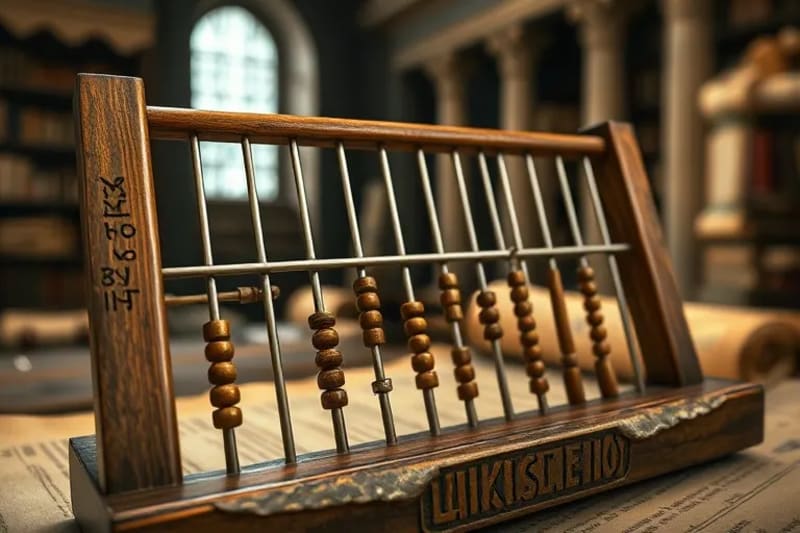
Conceptual representations of early computational devices and their intellectual context, illustrating the foundational principles that guided ancient Greek thought on numbers and logic.
This image is a conceptual AI rendering, designed to evoke the historical and intellectual atmosphere surrounding the development of the Greek abacus, drawing inspiration from classical art and scientific illustration.Table of Contents
- Historical Context and Evolution
- Mechanics and Functionality
- Impact on Greek Mathematics and Commerce
- Philosophical Implications: Logic and Abstract Thought
- Connection to Modern Computing and AI
- Comparison with Other Ancient Devices
- Legacy in Education and Cognitive Development
Historical Context and Evolution
The concept of the abacus predates the Greeks, with evidence of similar counting boards found in Mesopotamian and Egyptian civilizations. However, the Greek adaptation, particularly the Salamis Tablet dating back to around 300 BCE, represents one of the earliest surviving examples of a counting board. This marble slab, discovered on the island of Salamis, features carved grooves and symbols, indicating its use for complex calculations.
Unlike the later Roman abacus, which used beads sliding in grooves, the Greek abacus typically involved counters ( calculi or psephoi) moved within marked columns or lines on a flat surface. This design allowed for a more flexible and abstract approach to numerical representation, as the value of a counter depended entirely on its position within the grid. The evolution of this tool was intertwined with the burgeoning intellectual environment of ancient Greece, where philosophy, mathematics, and early scientific inquiry flourished.
The need for efficient calculation arose from various aspects of Greek society, including trade, taxation, and architectural projects. As the Greek city-states grew in complexity and their commercial networks expanded, the demand for reliable and systematic methods of accounting and computation became paramount. The abacus provided a practical solution, enabling merchants, administrators, and scholars to perform arithmetic operations that would be cumbersome with their numerical notation system alone.
Mechanics and Functionality
The Greek abacus, specifically the Salamis Tablet, consists of a large marble slab with parallel grooves and a set of perpendicular lines. The grooves were used for placing counters representing different powers of ten, while the perpendicular lines likely served to delineate sections or specific operations. Counters, often small pebbles or metal discs, were placed in these grooves to represent numbers.
Performing operations like addition and subtraction was relatively straightforward. To add, counters representing the numbers were placed in their respective columns, and then combined. If a column exceeded a certain value (typically ten), counters were "carried over" to the next higher column. Subtraction involved removing counters or "borrowing" from higher columns. Multiplication and division, while more complex, could also be performed through repeated addition and subtraction, respectively.
The flexibility of the Greek abacus lay in its non-fixed nature. Unlike later abaci with permanently attached beads, the loose counters allowed for manipulation and rearrangement, fostering a more direct interaction with the numerical representation. This tactile engagement with abstract quantities was crucial for developing an intuitive understanding of arithmetic principles, especially in an era without positional notation like our modern decimal system. The abacus essentially provided a physical, visual representation of numerical values and their relationships.
Impact on Greek Mathematics and Commerce
The Greek abacus played a significant role in the practical application of mathematics, particularly in commercial transactions and civil administration. Merchants used it to calculate prices, tally inventories, and manage accounts. Its efficiency allowed for quicker and more accurate financial record-keeping, facilitating the complex trade networks that characterized the Hellenistic world. This practical utility was fundamental to the economic stability and growth of Greek city-states.
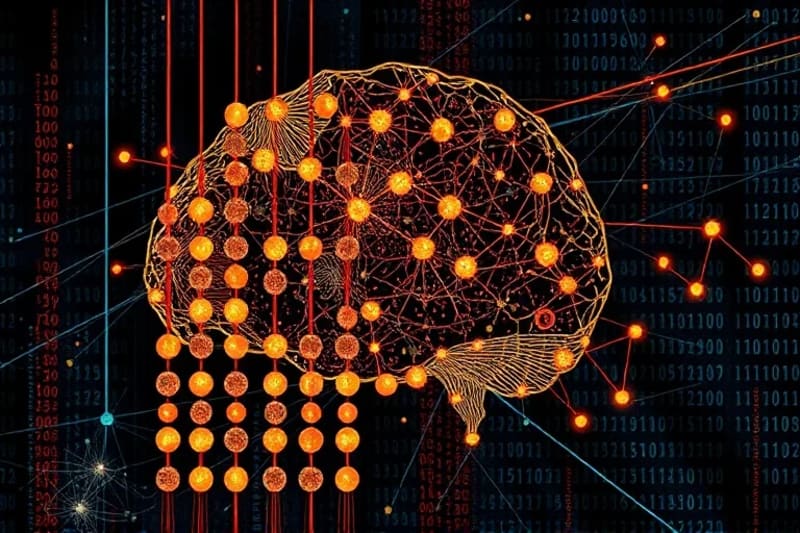
A conceptual still-life illustrating the abstract transition from the ancient abacus's structured counting to the complex neural networks of modern artificial intelligence.
This digital art piece is an AI-generated interpretation, blending historical computational tools with futuristic technological concepts, created under a free-to-use license.Beyond commerce, the abacus also supported the work of early mathematicians and astronomers. While Greek theoretical mathematics often focused on geometry and abstract proofs, the abacus provided a means to perform the necessary calculations for astronomical observations and the construction of intricate architectural marvels. It served as a bridge between abstract mathematical concepts and their concrete application, allowing for the practical verification of theoretical principles.
The development of arithmetic skills through the abacus also contributed to a broader numerical literacy within society. Although not everyone was a mathematician, the ability to use such a tool for basic calculations empowered individuals in their daily lives and economic activities. This widespread practical application fostered an environment where numerical reasoning was valued and continuously refined.
Philosophical Implications: Logic and Abstract Thought
Perhaps the most profound legacy of the Greek abacus lies in its contribution to logical and abstract thought. The very act of manipulating counters on a board to represent numbers and perform operations is an exercise in abstraction. It requires understanding that a physical object (the counter) can symbolize a quantity, and that its position dictates its value. This is a fundamental step towards symbolic representation, a cornerstone of both mathematics and logic.
Philosophers like Plato and Aristotle, while not directly discussing the abacus in detail, lived in a society where such tools were common. Their emphasis on logic, deductive reasoning, and the pursuit of ideal forms can be seen as indirectly influenced by the structured, systematic thinking fostered by devices like the abacus. The abacus provided a tangible model for sequential processing and rule-based manipulation, concepts central to formal logic. For more on the philosophical underpinnings of artificial intelligence, consider exploring the philosophy of artificial consciousness.
The process of using the abacus inherently taught principles of order, categorization, and transformation. Each movement of a counter was a discrete step in a larger algorithm, demonstrating how complex problems could be broken down into simpler, manageable operations. This systematic approach to problem-solving is a direct precursor to algorithmic thinking, which is vital in modern computer science and AI.
Connection to Modern Computing and AI
While seemingly primitive, the Greek abacus shares fundamental conceptual similarities with modern computing and artificial intelligence. At its core, an abacus is a mechanical device designed to process information based on predefined rules. This rule-based processing is a direct analogue to the algorithms that drive all digital computers and AI systems. The movement of counters on the abacus can be seen as an early form of state transition, where the configuration of the beads represents the current state of a calculation.

A conceptual architectural visualization of a data center, integrating geometric forms inspired by the abacus, symbolizing the enduring legacy of structured computation in modern technology.
This image is a unique AI-generated architectural concept, exploring the abstract connections between ancient tools and contemporary computational infrastructure, available under a creative commons license.The concept of representing data (numbers) and manipulating it systematically is the essence of computation. The abacus provided a physical model for this, demonstrating that complex problems could be solved through a series of simple, repeatable steps. This is the very definition of an algorithm, a concept that forms the backbone of all programming and AI development. The early Greek thinkers, by using and understanding the abacus, were implicitly engaging with algorithmic principles.
Furthermore, the abacus fostered an understanding of discrete mathematics and symbolic manipulation. These are critical areas in computer science, particularly in areas like Boolean algebra and logic gates, which are the building blocks of digital circuits. The idea that abstract symbols (counters) can represent different values based on their context (position) is a powerful conceptual leap that directly informs how computers process information using binary code.
The development of AI, particularly in its early stages, relied heavily on symbolic AI and expert systems, which operate on explicit rules and logical deductions. The structured, rule-based operation of the abacus provides an ancient parallel to these foundational AI approaches. Even in modern neural networks, which seem far removed, the underlying principles of structured data processing and transformation echo the fundamental lessons learned from early calculating devices. The legacy of structured thought from tools like the abacus can be seen in the Lovelace paradigm in quantum AI programming.
Comparison with Other Ancient Devices
To fully appreciate the Greek abacus, it's useful to compare it with other ancient calculating devices. While many cultures developed counting aids, their designs and underlying philosophies differed significantly.
| Feature | Greek Abacus (e.g., Salamis Tablet) | Roman Abacus | Chinese Suanpan / Japanese Soroban |
|---|---|---|---|
| Physical Form | Marble slab with carved grooves/lines; loose counters (psephoi). | Small metal or wooden board with beads sliding in fixed grooves. | Wooden frame with rods and beads (two-bead/five-bead configuration). |
| Numerical System | Decimal system, but often used with non-positional Greek numerals. | Decimal system, often used with Roman numerals; positional. | Decimal system, positional; typically base-10 with a base-5 component. |
| Portability | Less portable (large slabs), but smaller versions existed. | Highly portable. | Portable. |
| Ease of Use | Required careful counter placement; more abstract. | Relatively intuitive for basic arithmetic. | Highly efficient for rapid calculation by skilled users. |
| Philosophical Impact | Fostered abstract thought, logic, and algorithmic thinking. | Primarily a practical commercial tool. | Emphasized speed and efficiency in practical calculation. |
The key distinction lies in the loose counters of the Greek abacus compared to the fixed beads of its Roman and East Asian counterparts. While fixed-bead abaci offered speed and consistency, the Greek model's loose counters encouraged a more conceptual understanding of numerical operations. This difference highlights a cultural emphasis: practical efficiency in some, and abstract reasoning in others. The Greek abacus, therefore, stands out for its contribution to the *conceptual* development of computation rather than just its mechanical efficiency.
Legacy in Education and Cognitive Development
Even after the decline of ancient Greece, the principles embodied by the abacus continued to influence educational practices. The use of counting boards persisted in various forms throughout the Middle Ages in Europe, serving as a primary tool for teaching arithmetic. This hands-on approach to numbers was invaluable for developing cognitive skills related to quantity, order, and logical sequencing in young learners.
The tactile nature of manipulating counters on an abacus helps to bridge the gap between concrete objects and abstract numerical concepts. For children, this physical interaction can solidify their understanding of place value, addition, subtraction, and even more complex operations. In many cultures, the abacus is still used today as an educational tool to enhance mental arithmetic abilities and foster a deeper understanding of numbers.
The cognitive benefits extend beyond basic arithmetic. The systematic process of using an abacus trains the brain in pattern recognition, sequential processing, and problem-solving strategies. These are universal cognitive skills that are transferable to many other domains, including critical thinking and even the logical structures required for understanding modern technology. The enduring appeal of the abacus in education underscores its fundamental role in shaping how humans learn to think computationally.
Explore More Insights
- Green Coding: Sustainable Software for an Ecological Future
- Neuroarchitecture for Longevity: Designing Vital Spaces for Brain Health
- Digital Cryptozoology: Exploring Mythical Online Anomalies
- Norse Runes, Lunar Magic & Cosmic Abundance Rituals
- Eucharistic Mysticism and Neuroscience: Mind-Soul Connection
Source: Hybrid content assisted by AI and human editorial supervision.


Comentarios