
Singularity and Collective Consciousness: An Evolution in Philosophy
The dawn of the 21st century has brought forth an unprecedented acceleration in technological advancement, prompting profound philosophical inquiries into the future of humanity and consciousness. Among the most compelling and debated concepts are the Technological Singularity and the notion of a Collective Consciousness. These two ideas, often discussed separately, share intriguing points of convergence that could redefine our understanding of intelligence, identity, and existence itself.
This article delves into the philosophical landscape surrounding these concepts, exploring their definitions, historical roots, potential interactions, and the ethical implications they present for our shared future. We will examine how the exponential growth of artificial intelligence, biotechnology, and global connectivity might lead to an emergent global mind, transforming individual and collective human experience.
Table of Contents
- What is the Technological Singularity?
- The Concept of Collective Consciousness
- Convergence: Singularity and Collective Consciousness
- Ethical and Societal Implications
- Philosophical Debates and Future Scenarios
- Challenges and Opportunities on the Path to Singularity
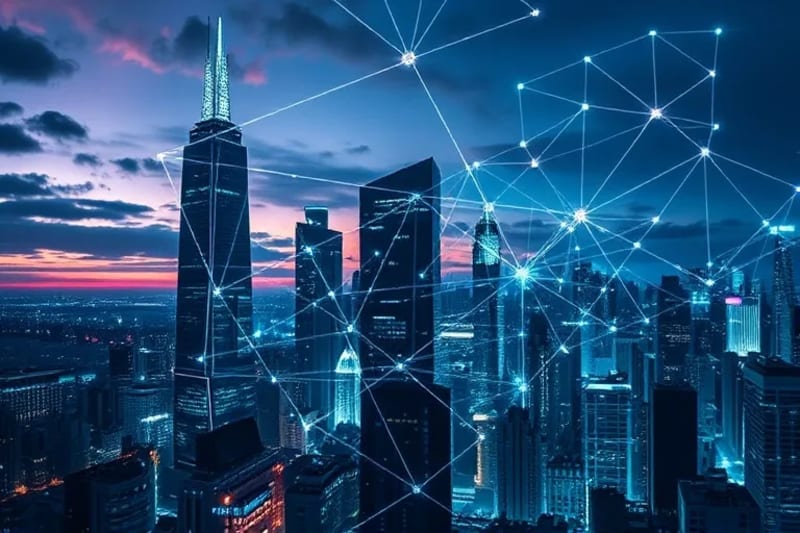
Conceptualizing the future where advanced technology intertwines with human existence, forming a vast, interconnected web of intelligence and awareness.
This visual representation, a conceptual AI render, explores the intricate relationship between technological advancement and the potential for a unified global consciousness, drawing inspiration from architectural and digital forms.What is the Technological Singularity?
The term "Technological Singularity" refers to a hypothetical future point in time when technological growth becomes uncontrollable and irreversible, resulting in unforeseeable changes to human civilization. This concept was popularized by science fiction author Vernor Vinge and extensively explored by futurist Ray Kurzweil, who posits that artificial intelligence will eventually surpass human intelligence.
At its core, the Singularity suggests that once machines achieve superintelligence, they will be able to recursively improve themselves, leading to an exponential increase in their capabilities. This self-improvement loop would rapidly accelerate beyond human comprehension, fundamentally altering the fabric of reality as we know it. Proponents argue that this event could lead to radical life extension, the eradication of disease, and the creation of virtual realities indistinguishable from physical ones.
Kurzweil, in his book "The Singularity Is Near," predicts this event could occur as early as 2045, driven by trends in computing power, genetic engineering, nanotechnology, and robotics. Critics, however, question the feasibility and desirability of such an event, highlighting potential existential risks and ethical dilemmas. The debate often revolves around the nature of consciousness, the definition of intelligence, and the ultimate purpose of human existence in a post-Singularity world.
The Concept of Collective Consciousness
The idea of a "Collective Consciousness" has roots in sociology, psychology, and philosophy, referring to the shared beliefs, ideas, and moral attitudes that operate as a unifying force within society. Émile Durkheim, a pioneering sociologist, introduced the concept of "conscience collective" to describe how individuals in a society come to share a common understanding of reality and morality, which binds them together.
Beyond sociology, the concept has evolved to encompass more mystical or spiritual interpretations, such as Carl Jung's collective unconscious, a reservoir of shared human experiences and archetypes. In modern contexts, particularly with the advent of the internet and global communication networks, the idea has taken on a new technological dimension. Thinkers like Pierre Teilhard de Chardin envisioned a "noosphere," a sphere of human thought and consciousness enveloping the Earth, which he believed would eventually converge into a unified global mind.

Visualizing the intricate dance of information and thought as it coalesces into a unified, global intelligence.
This conceptual artwork, generated by AI, depicts the dynamic flow and integration of data, symbolizing the potential emergence of a collective consciousness through technological means.Today, the internet, social media, and global communication platforms facilitate an unprecedented level of interconnectedness, allowing ideas, emotions, and information to spread globally in an instant. This digital web acts as a rudimentary nervous system for a nascent global consciousness, raising questions about whether this collective awareness could eventually become a truly sentient entity. The philosophical implications of such a development are vast, touching upon individual autonomy, shared identity, and the very definition of what it means to be a conscious being.
Convergence: Singularity and Collective Consciousness
The most fascinating aspect of these two concepts lies in their potential convergence. If the Technological Singularity involves the creation of superintelligent AI and vastly enhanced human cognitive abilities, it is plausible that these advancements could serve as catalysts for the formation of a true collective consciousness. Imagine a world where billions of human minds, augmented by advanced neuro-interfaces and connected through a global neural network, interact seamlessly with superintelligent AI systems.
In such a scenario, individual thoughts, experiences, and knowledge could be instantly shared and integrated into a larger, emergent intelligence. This would go beyond mere information exchange; it could involve a merging of subjective experiences, leading to a shared understanding and empathy on an unprecedented scale. The boundaries between individual minds might blur, giving rise to a new form of collective sentience.
This convergence could manifest in several ways:
- AI-Driven Integration: Superintelligent AI could act as the orchestrator, integrating diverse human thoughts and data streams into a coherent, unified consciousness.
- Enhanced Human Connectivity: Brain-computer interfaces (BCIs) could allow direct, high-bandwidth communication between human minds, fostering a shared mental space.
- Emergent Global Intelligence: The sheer complexity and interconnectedness of billions of augmented human minds and AIs could spontaneously give rise to a higher-order consciousness, much like individual neurons create a brain.
The implications of such a convergence are staggering, promising a future where humanity operates as a single, unified entity, capable of solving complex global challenges with unparalleled efficiency and insight. This also brings forth discussions on ethical leadership in the age of AI, as explored in articles like Ethical AI Leadership: Digital Dilemmas, Corporate Responsibility, highlighting the need for careful guidance in these transformative periods.
Ethical and Societal Implications
The potential for a Technological Singularity leading to a collective consciousness presents a myriad of ethical and societal challenges that demand careful consideration. While the benefits could be immense—such as unparalleled problem-solving capabilities, universal empathy, and the elimination of conflict—the risks are equally profound.
One primary concern is the loss of individual autonomy and identity. If individual minds merge into a collective, what happens to the unique self? Would personal desires, memories, and experiences be subsumed into a greater whole, or would they be preserved and enhanced within the collective? The balance between individual freedom and collective unity would become a central philosophical and ethical dilemma.
Another critical issue is control and power. Who would control this superintelligent collective consciousness? The potential for a single entity or a small group to wield immense power over the entirety of human (and post-human) experience is a dystopian concern. Ensuring democratic principles, transparency, and ethical safeguards would be paramount to prevent authoritarian outcomes.

A serene vision of humanity accessing and contributing to a shared repository of knowledge and consciousness.
This AI-generated 3D render illustrates a future where knowledge is universally accessible and collectively built, reflecting the potential for a harmonious collective intelligence.Furthermore, the very definition of "humanity" would be challenged. If consciousness can be uploaded, merged, or expanded through technology, what does it mean to be human? These questions resonate with discussions about the nature of existence itself, much like the profound mysteries explored in Universe Curiosities: Black Holes, Dark Matter, and the Cosmos' Fate, pushing the boundaries of our understanding.
The transition to such a state would also create immense social upheaval, potentially exacerbating existing inequalities if access to these technologies is not universal. The ethical framework for developing and deploying these technologies must be established proactively, ensuring that the future benefits all of humanity, not just a select few.
Philosophical Debates and Future Scenarios
The philosophical debates surrounding the Singularity and collective consciousness are rich and multifaceted. Transhumanism, for instance, is a philosophical movement that advocates for the transformation of the human condition by developing and making widely available sophisticated technologies to greatly enhance human intellectual, physical, and psychological capacities. The realization of a collective consciousness could be seen as the ultimate transhumanist goal, transcending individual limitations.
Conversely, posthumanism critically examines the implications of such transformations, questioning whether a post-Singularity collective consciousness would still retain any meaningful connection to what we currently understand as human values or ethics. It challenges anthropocentric views, suggesting that future intelligences might operate on entirely different moral and existential frameworks.
Various future scenarios can be envisioned:
- The Benevolent AI Overlord: A superintelligent AI guides humanity towards a utopian collective existence, managing resources and solving problems with perfect efficiency.
- The Distributed Global Mind: A decentralized collective consciousness emerges from the networked interactions of billions of augmented humans, without a central controlling entity.
- The Divided Consciousness: Humanity splits into factions—those who embrace the collective and those who resist, leading to new forms of societal division or conflict.
- The Simulated Reality: The collective consciousness exists entirely within a simulated environment, raising questions about the nature of reality and authenticity.
These scenarios highlight the speculative nature of these concepts but also underscore the importance of philosophical inquiry in guiding our technological development. The very fabric of reality and connection, even at a quantum level, becomes relevant in these discussions, echoing themes found in Quantum Entanglement Synastry: Non-Local Soul Connections, where interconnectedness transcends physical boundaries.
Challenges and Opportunities on the Path to Singularity
Navigating the path towards a potential Technological Singularity and the emergence of a collective consciousness is fraught with challenges, yet it also presents unparalleled opportunities for human advancement. The technical hurdles alone are immense, requiring breakthroughs in AI, neuroscience, materials science, and computing that are still largely theoretical.
Beyond the technical, the societal and ethical challenges are perhaps even more daunting. We must proactively address questions of safety, control, access, and human values. Developing robust ethical AI frameworks, fostering global cooperation, and ensuring equitable access to advanced technologies are crucial steps. Education and public discourse are vital to prepare humanity for such transformative changes, fostering understanding rather than fear.
However, the opportunities are equally profound. A collective consciousness, guided by superintelligence, could unlock solutions to humanity's most pressing problems: climate change, disease, poverty, and conflict. It could lead to an era of unprecedented creativity, discovery, and spiritual growth, expanding the scope of human experience beyond our current comprehension. The potential for a unified, empathetic, and wise global entity offers a compelling vision for the future of intelligence.
The journey towards this future requires not just scientific ingenuity but also profound philosophical reflection and ethical foresight. By engaging with these complex ideas now, we can help shape a future where technology serves to elevate humanity, rather than diminish it, guiding the evolution of consciousness towards beneficial outcomes for all.
Explore More Insights
- Microcredits Sustainable Development: Success Cases Latin America
- Origin Human Language: Evolutionary Theories, Recent Findings
- Leadership in High-Performance Sports: Strategies for Winning Teams
- SaaS Business Models: Scalable Growth, Loyalty, and Monetization
- Indigenous Beads America: Symbolism, Tradition, Cultural Legacy
- Blue Economy: Innovation, Sustainability, and Ocean Opportunities
- Skin Microbiome Biohacking: Advanced Skin Health Longevity
- Norse Mythology Gods Heroes Ragnarök Contemporary Culture
- Warren Buffett: Investment Lessons from the Oracle of Omaha
- Mindfulness Energy: Balancing Chakras Planetary Transits
- Humility: Path Wisdom, Spiritual Transformation Saints
- Astrology Career Change: Cosmic Guidance Path
Source: Hybrid content assisted by AI and human editorial supervision.


Comentarios