
Predictive Quantum Cybersecurity: Shielding Financial Infrastructure
Predictive Quantum Cybersecurity: Shielding Critical Financial Infrastructure
The digital landscape of global finance is under constant siege from increasingly sophisticated cyber threats. As nation-states and organized crime groups escalate their attacks, traditional cybersecurity measures, while robust, are struggling to keep pace. The advent of quantum computing poses both an unprecedented threat to current encryption standards and a revolutionary opportunity to build impenetrable defenses.
Predictive quantum cybersecurity represents the next frontier in digital defense, integrating the power of artificial intelligence (AI) with the principles of quantum mechanics to anticipate, detect, and neutralize threats before they can inflict damage. This advanced approach is becoming indispensable for safeguarding critical financial infrastructures, which are the backbone of the global economy.
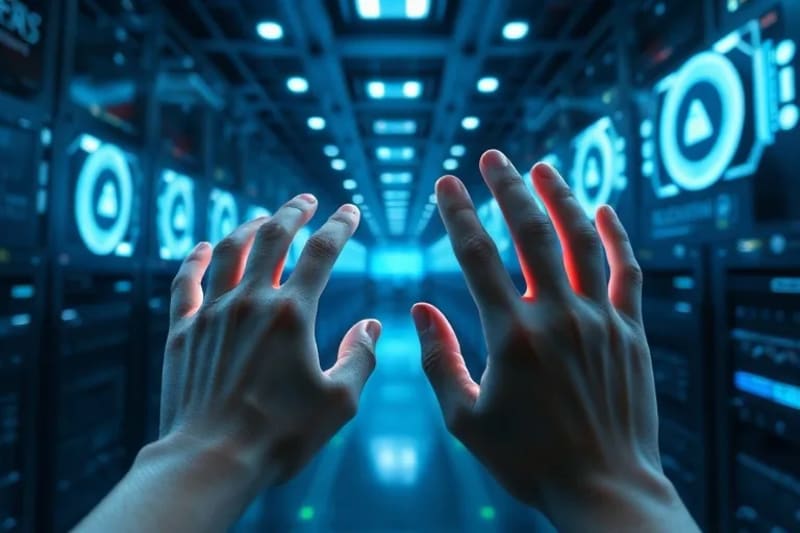
Conceptual render of advanced computational systems and their intricate interconnections, symbolizing the complex architecture required for robust quantum cybersecurity.
This visual representation, a conceptual AI render, illustrates the sophisticated interplay of technology and data that underpins next-generation security paradigms, drawing inspiration from the evolving landscape of digital defense.Table of Contents
- The Evolving Quantum Threat Landscape
- AI's Role in Predictive Cybersecurity
- Quantum Computing for Enhanced Defense
- Protecting Critical Financial Infrastructure
- Challenges and Future Implementation
- Legal and Ethical Frameworks
- Case Studies and Practical Applications
The Evolving Quantum Threat Landscape
The development of quantum computers, while still in its nascent stages, heralds a paradigm shift in cryptography. Shor's algorithm, for instance, has the potential to break widely used public-key encryption schemes like RSA and ECC, which currently secure vast amounts of financial transactions and sensitive data. This looming threat, often termed "Q-Day," necessitates a proactive and robust defense strategy.
Beyond the direct computational power of quantum machines, adversaries are also leveraging advanced AI techniques to identify vulnerabilities and orchestrate complex, multi-vector attacks. These AI-driven threats can adapt in real-time, making traditional signature-based detection methods obsolete. The financial sector, with its high-value targets and interconnected systems, is particularly vulnerable to these evolving threats.
AI's Role in Predictive Cybersecurity
Artificial intelligence is a cornerstone of predictive cybersecurity, offering unparalleled capabilities in data analysis and pattern recognition. Machine learning algorithms can process vast quantities of network traffic, user behavior, and threat intelligence to identify anomalies that indicate a potential attack. Unlike static rules, AI models can learn and evolve, adapting to new attack vectors as they emerge.
Key AI applications in this domain include:
- Anomaly Detection: AI systems can establish baselines of normal network activity and flag deviations that might signify a breach or malicious insider activity.
- Threat Intelligence Fusion: AI can correlate data from multiple sources, including global threat feeds, dark web monitoring, and historical attack patterns, to provide a comprehensive view of potential risks.
- Automated Response: In some cases, AI can initiate automated responses, such as isolating compromised systems or blocking malicious IP addresses, reducing the window of opportunity for attackers.
- Vulnerability Prediction: By analyzing codebases and system configurations, AI can predict potential vulnerabilities before they are exploited, allowing for proactive patching and hardening.
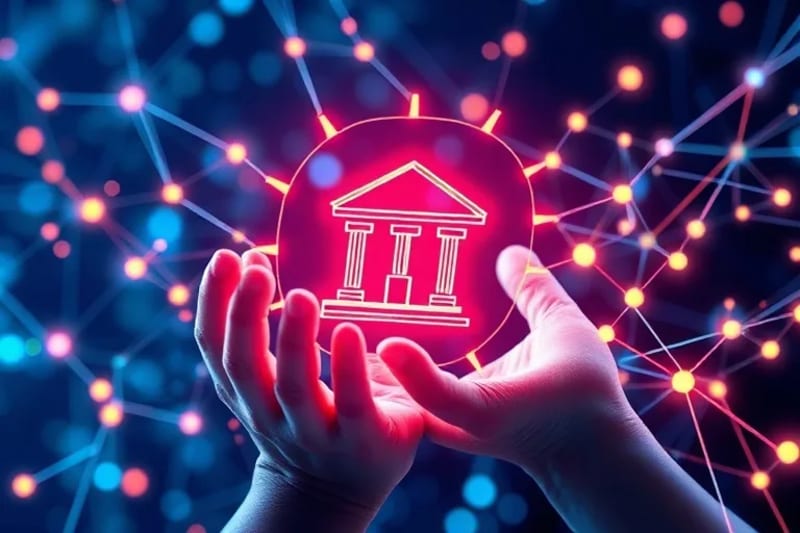
A vibrant vector art depiction of an intelligent network, symbolizing the adaptive and interconnected nature of AI-driven cybersecurity defenses.
Quantum Computing for Enhanced Defense
While quantum computing poses a threat, it also offers powerful tools for defense. Quantum cryptography, particularly Quantum Key Distribution (QKD), provides theoretically unhackable communication channels. QKD leverages the principles of quantum mechanics to detect any eavesdropping attempt, ensuring that encryption keys remain secure.
Beyond QKD, quantum-resistant algorithms (also known as post-quantum cryptography or PQC) are being developed to secure classical communication against future quantum attacks. These algorithms are designed to run on conventional computers but are believed to be resistant to attacks from quantum computers. The National Institute of Standards and Technology (NIST) is actively standardizing several PQC algorithms, paving the way for their widespread adoption.
The integration of quantum machine learning (QML) can further enhance predictive capabilities. QML algorithms, running on quantum computers, could potentially process and analyze data with a speed and complexity unattainable by classical AI, identifying subtle patterns of attack that would otherwise go unnoticed. This could revolutionize threat detection and response times. For more on advanced technological concepts, consider exploring topics like Digital Twins: Simulation, Industrial Optimization.
Protecting Critical Financial Infrastructure
Critical financial infrastructures, including banking systems, stock exchanges, payment networks, and central banks, are prime targets due to the immense value of the assets they control and their systemic importance. A successful cyberattack on any of these components could trigger widespread economic instability.
Predictive quantum cybersecurity offers several layers of protection:
- Quantum-Resistant Encryption: Implementing PQC algorithms to secure data at rest and in transit, ensuring that even future quantum computers cannot decrypt sensitive financial information.
- Real-time Threat Prediction: AI-driven systems continuously monitor network activity, identifying anomalous behaviors indicative of sophisticated attacks, including those leveraging quantum-inspired techniques.
- Secure Communication Channels: Utilizing QKD for highly sensitive communications between financial institutions, ensuring absolute confidentiality and integrity.
- Supply Chain Security: Extending predictive capabilities to the software supply chain to detect and prevent the injection of malicious code that could compromise financial systems.
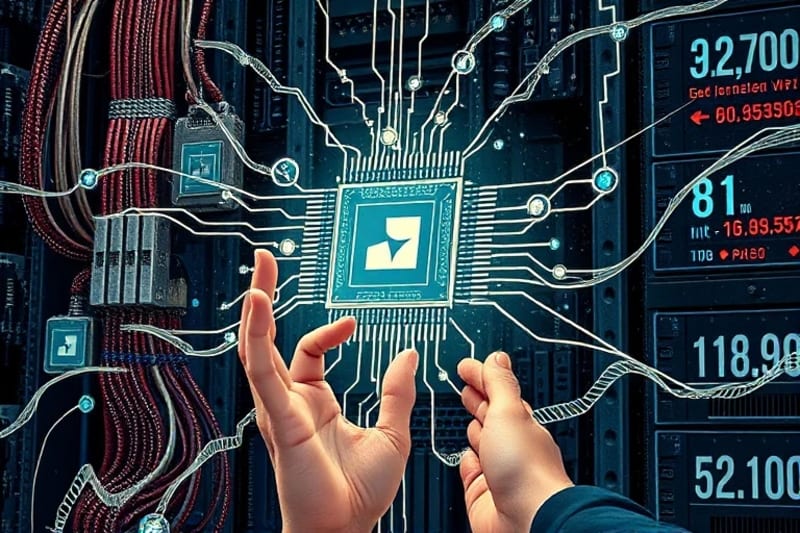
A sophisticated 3D render illustrating the intricate design of a quantum processor, symbolizing the physical embodiment of next-generation cybersecurity hardware.
Challenges and Future Implementation
Implementing predictive quantum cybersecurity is not without its challenges. The transition to PQC requires significant investment in infrastructure upgrades and re-architecting existing systems. There is also a shortage of skilled professionals with expertise in both quantum mechanics and cybersecurity. Standardization efforts are ongoing, and interoperability between different quantum-resistant solutions remains a key concern.
Despite these hurdles, the imperative to protect financial stability drives rapid innovation. Governments and leading financial institutions are actively investing in research and development, forming partnerships to accelerate the adoption of these technologies. The future will likely see a hybrid approach, where classical and quantum cybersecurity measures coexist and complement each other. The legal and ethical implications of such advanced technologies, including Neuro-rights and Digital Consciousness, are also critical considerations.
Legal and Ethical Frameworks
The deployment of highly advanced AI and quantum systems in cybersecurity raises important legal and ethical questions. Data privacy, algorithmic bias, and the potential for misuse of such powerful tools must be carefully addressed. Regulatory bodies worldwide are beginning to grapple with these issues, aiming to establish frameworks that foster innovation while ensuring accountability and protecting fundamental rights.
International cooperation is essential to develop harmonized standards and policies for quantum cybersecurity. This includes defining responsibilities in the event of a quantum-enabled attack and establishing protocols for information sharing and coordinated defense. The legal landscape surrounding digital assets and intellectual property, as discussed in Digital Intellectual Property: Copyright, Online Trademarks, will also need to adapt to these new technological realities.
Case Studies and Practical Applications
While full-scale quantum cybersecurity deployments are still emerging, several pilot projects and research initiatives demonstrate the practical applications of these technologies. Central banks are exploring QKD for securing interbank communications, and major financial institutions are testing PQC algorithms in their secure data transfer protocols.
One notable example involves leveraging AI to predict market manipulation attempts by analyzing trading patterns and news sentiment in real-time. By integrating quantum machine learning, the accuracy and speed of these predictions could be dramatically improved, providing financial regulators with an unprecedented advantage in maintaining market integrity. Such advancements are crucial for understanding complex financial systems and their vulnerabilities.
Another application involves using AI to model the behavior of advanced persistent threats (APTs) that target financial networks. By simulating various attack scenarios, AI can help identify weak points in defenses and recommend optimal mitigation strategies. When combined with quantum-safe encryption, these systems offer a formidable deterrent against even the most determined adversaries.
Explore More Advanced Topics
- Tech Entrepreneurs: Pioneers, Legacy, Future
- Digital Minimalism for Businesses: Productivity Optimization
- Alternative Investments: Cryptocurrencies, Art, Real Estate
- Circular Economy SaaS SMEs: Digitalization Green Growth
- Virtual Reality Therapies for Addictions: Ethics, Efficacy, Future
- Akashic Records Soul Blueprint Past Lives Guide
- Biblical Prophecies Technological Singularity Artificial Intelligence Signs
Source: Hybrid content assisted by AI and human editorial supervision.


Comentarios