
Neuroaesthetics Digital Art: Brain Processes AI Creativity | Althox
The intersection of art, science, and technology has always been a fertile ground for innovation and contemplation. In the 21st century, this convergence has given rise to an entirely new paradigm: AI-generated digital art. As algorithms become increasingly sophisticated, capable of producing visually compelling and emotionally resonant works, a critical question emerges: How does the human brain process and appreciate creativity that originates not from a human mind, but from artificial intelligence? This exploration delves into the burgeoning field of neuroaesthetics, examining the neural mechanisms underlying our perception of digital art and the unique challenges and opportunities presented by AI-driven artistic creation.
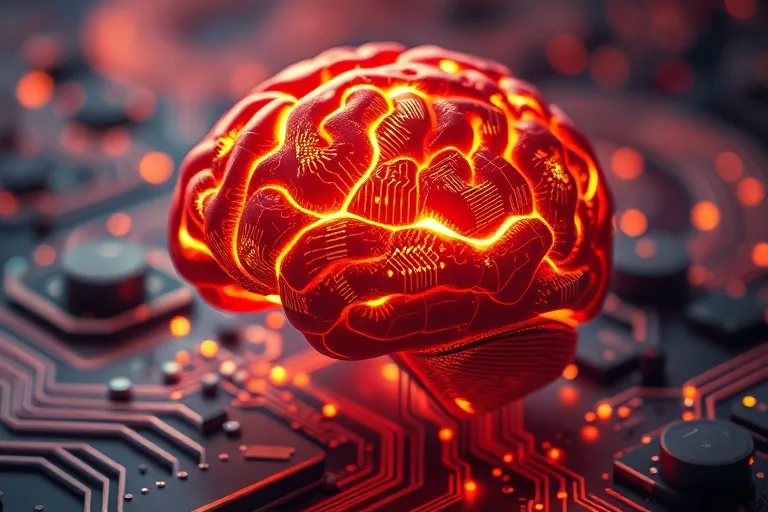 A conceptual visualization of the human brain's intricate connection with evolving digital art forms and AI-generated patterns, highlighting the fusion of biological and artificial creativity.
Neuroaesthetics, a discipline that bridges neuroscience and aesthetics, seeks to understand the biological bases of aesthetic experiences. By employing advanced neuroimaging techniques, scientists can observe brain activity as individuals engage with various forms of art. When applied to digital art, and particularly to works created by AI, this field offers unprecedented insights into the universality and specificity of our aesthetic judgments. It allows us to investigate whether the brain differentiates between human and machine creativity, and what fundamental elements trigger pleasure, curiosity, or even discomfort in response to algorithmic art.
This article will unpack the core concepts of neuroaesthetics, explore the mechanics of AI art generation, and analyze the cognitive and emotional responses evoked by these novel creations. We will consider the philosophical implications of machine creativity, the ethical dilemmas surrounding authorship, and the potential future trajectories of this dynamic interplay between human perception and artificial intelligence.
Table of Contents
- The Intersection of Art, Science, and Technology
- What is Neuroaesthetics?
- The Rise of AI-Generated Art
- How the Brain Responds to Art
- Unique Aspects of Digital Art Perception
- AI Creativity: Imitation or Innovation?
- Measuring Aesthetic Experience: Tools and Techniques
- Ethical and Philosophical Implications
- The Future of Neuroaesthetics and AI Art
The Intersection of Art, Science, and Technology
Throughout history, artistic expression has often been intertwined with the prevailing scientific and technological advancements of its era. From the development of new pigments and perspectives during the Renaissance to the advent of photography and cinema, technology has consistently provided artists with novel tools and mediums. The digital revolution, however, represents a quantum leap, transforming the very nature of artistic creation and dissemination.
The emergence of computers initially offered artists powerful tools for manipulation and rendering, leading to entirely new genres like digital painting, algorithmic art, and interactive installations. These early forms of digital art challenged traditional notions of authorship and originality. Now, with the rapid evolution of artificial intelligence, particularly in machine learning and generative models, the role of the artist is once again being redefined. AI is no longer just a tool; it has become a collaborator, and in some cases, an autonomous creator.
This technological shift necessitates a deeper understanding of how these new artistic forms are perceived. Traditional art history and criticism, while valuable, may not fully capture the complexities of human-AI artistic interaction. This is where neuroaesthetics steps in, offering a scientific lens to dissect the cognitive and emotional processes involved when we encounter art born from algorithms.
What is Neuroaesthetics?
Neuroaesthetics is an interdisciplinary field dedicated to understanding the neural bases of aesthetic experience. Pioneered by scientists like Semir Zeki, it investigates how the brain processes beauty, art, and other aesthetically pleasing stimuli. The core premise is that our appreciation of art is not purely subjective or cultural, but is rooted in universal brain mechanisms that respond to certain visual, auditory, or conceptual patterns.
Researchers in neuroaesthetics use a variety of scientific methods to study these phenomena:
- Functional Magnetic Resonance Imaging (fMRI): Measures brain activity by detecting changes associated with blood flow, identifying regions activated during aesthetic judgments.
- Electroencephalography (EEG): Records electrical activity in the brain, providing insights into the temporal dynamics of aesthetic processing.
- Eye-tracking: Monitors gaze patterns to understand how individuals scan and focus on artworks, revealing what features capture attention.
- Transcranial Magnetic Stimulation (TMS): Temporarily stimulates or inhibits specific brain regions to assess their causal role in aesthetic perception.
Studies have consistently shown that aesthetic experiences activate a network of brain regions, including those involved in reward (ventral striatum, orbitofrontal cortex), emotion (amygdala, insula), and higher-order cognition (prefrontal cortex). These findings suggest that our appreciation of art is a complex interplay of sensory processing, emotional response, and cognitive evaluation. Understanding these fundamental mechanisms is crucial for analyzing how the brain reacts to the novel stimuli presented by AI-generated art.
The Rise of AI-Generated Art
The concept of AI creating art has moved from science fiction to tangible reality with the advent of sophisticated machine learning models. Generative Adversarial Networks (GANs), Variational Autoencoders (VAEs), and more recently, Diffusion Models, are at the forefront of this revolution. These algorithms are trained on vast datasets of existing artworks, photographs, and other visual information, learning intricate patterns, styles, and compositional rules.
 An abstract digital painting illustrating the dynamic fusion of neural pathways and algorithmic brushstrokes, symbolizing the intricate interplay between human perception and AI-generated art.
Platforms like DeepDream (Google), DALL-E (OpenAI), Midjourney, and Stable Diffusion have democratized AI art, allowing anyone to generate complex images from simple text prompts. These tools can mimic existing styles, combine disparate concepts, or create entirely new visual aesthetics. The "creativity" of AI in this context is often debated. Is it true creativity, akin to human innovation, or merely a highly advanced form of pattern recognition and recombination? While AI doesn't possess consciousness or intent in the human sense, its ability to produce outputs that are novel, surprising, and aesthetically pleasing challenges our traditional definitions of artistic creation.
How the Brain Responds to Art
The human brain's response to art is a multifaceted process involving various cognitive and emotional systems. When we view a piece of art, our visual cortex processes basic features like lines, colors, and shapes. This information is then relayed to higher-order visual areas that recognize objects and scenes. Simultaneously, the limbic system, particularly the amygdala, evaluates the emotional content, triggering feelings of joy, sadness, awe, or discomfort.
The reward system, including the ventral striatum and orbitofrontal cortex, plays a crucial role in mediating pleasure and motivation. When an artwork is perceived as beautiful or meaningful, these areas become active, releasing neurotransmitters like dopamine, which contribute to the feeling of reward. Furthermore, the default mode network, associated with self-referential thought and introspection, can be engaged when art prompts personal reflection or connection to memories.
Universal aesthetic principles, such as symmetry, balance, contrast, and novelty, appear to elicit consistent responses across cultures, suggesting a hardwired component to aesthetic appreciation. However, individual preferences are also heavily influenced by personal experiences, cultural background, and current emotional states. The interplay between these universal and individual factors creates the rich tapestry of human aesthetic experience, which neuroaesthetics aims to unravel.
Unique Aspects of Digital Art Perception
Digital art, especially that generated by AI, presents unique characteristics that may influence how the brain perceives it compared to traditional art forms. The medium itself—often a screen—introduces differences in light emission versus reflected light, resolution, and interactivity. The ephemeral nature of some digital art, which can be easily modified, replicated, or even disappear, also contrasts with the permanence of physical artworks.
One significant aspect is the potential for the "uncanny valley" effect. This phenomenon describes the unsettling feeling evoked by objects that appear almost, but not quite, human. In AI-generated art, particularly with photorealistic images, slight imperfections or unusual combinations of features can trigger this sense of unease. Neuroaesthetics can investigate whether specific brain regions associated with threat detection or cognitive dissonance are activated more strongly when viewing AI art that falls into this uncanny territory.
Furthermore, the knowledge that an artwork was created by an AI, rather than a human, might influence perception. Studies suggest that attribution (knowing the artist's identity or origin) can modulate aesthetic judgments. This raises questions about whether the brain processes "machine creativity" differently, perhaps activating areas related to novelty or intellectual curiosity, or conversely, diminishing emotional engagement due to the perceived lack of human intent. For more on how technology impacts human experience, consider exploring the topic of Augmented Reality in Retail, which also delves into novel forms of digital interaction.
AI Creativity: Imitation or Innovation?
The debate over whether AI can truly be creative is central to understanding its impact on art and human perception. Some argue that AI merely imitates by recombining existing data, lacking genuine understanding, emotion, or intent. From this perspective, AI art is a sophisticated form of pastiche, impressive in its technical execution but devoid of true originality.
However, others contend that creativity is not solely about conscious intent but also about generating novel and valuable outputs. AI models, particularly advanced generative systems, can produce images that are genuinely surprising, complex, and beautiful, even to their human operators. They can explore latent spaces of possibility that human artists might not conceive, leading to unexpected aesthetic results. The role of the human "prompt engineer" or curator, who guides the AI and selects its best outputs, further blurs the lines of authorship and creative agency.
Neuroaesthetics can contribute to this debate by examining whether the brain's response to AI-generated novelty differs from its response to human-generated novelty. Do the same reward pathways activate? Is there a difference in the cognitive effort required to process AI art? The answers could reshape our understanding of creativity itself, extending it beyond the confines of biological intelligence. The ethical considerations around AI's creative output are also critical, as discussed in the context of Ethics of AI in Artistic Creation.
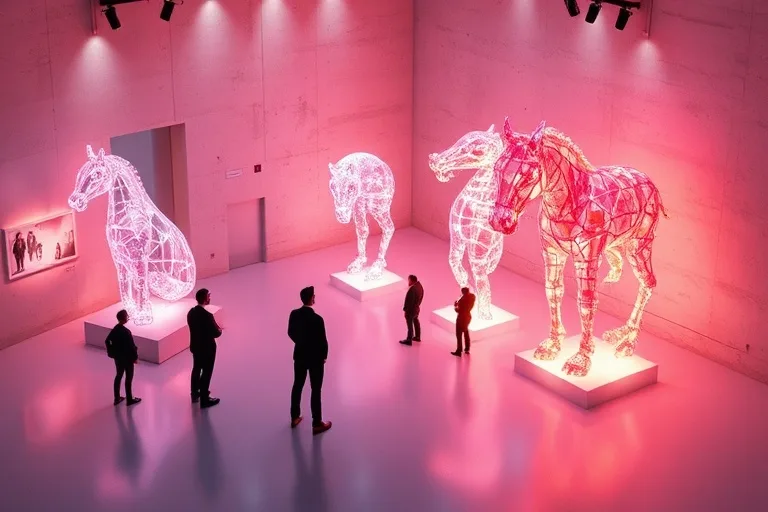 A sleek, futuristic gallery space featuring holographic projections of intricate, AI-generated sculptures, offering a glimpse into the evolving landscape of art and technology.
Measuring Aesthetic Experience: Tools and Techniques
Quantifying the subjective experience of aesthetics is a significant challenge, but neuroaesthetics employs a range of sophisticated tools and methodologies to achieve this. Beyond the neuroimaging techniques mentioned earlier (fMRI, EEG), researchers also rely on behavioral and physiological measures.
Behavioral studies involve asking participants to rate artworks based on beauty, novelty, complexity, or emotional impact. These subjective ratings, while prone to bias, provide valuable data on preferences. Eye-tracking can reveal which parts of an AI-generated image capture attention, indicating visual salience and compositional effectiveness. Physiological measures, such as heart rate, skin conductance, and pupil dilation, can indirectly reflect emotional arousal and engagement, offering objective correlates to subjective feelings.
When studying AI art, these methods can be used to compare responses to human-made art, identify unique patterns of brain activation, or explore how different generative models evoke distinct aesthetic experiences. The integration of these diverse approaches allows for a comprehensive understanding of the neural and psychological processes involved in appreciating machine creativity. The field of neurofeedback, for instance, offers insights into how brain activity can be monitored and potentially optimized, a concept relevant to understanding and enhancing aesthetic experiences, as explored in Agujeros Negros: Misterios, Astrofísica e IA.
| Measurement Type | Description | Relevance to AI Art |
|---|---|---|
| fMRI (Functional MRI) | Detects brain activity by measuring blood flow changes. | Identifies specific brain regions activated by AI art, comparing to human art. |
| EEG (Electroencephalography) | Records electrical brain activity via electrodes on the scalp. | Reveals temporal dynamics of aesthetic processing, e.g., speed of recognition. |
| Eye-tracking | Monitors gaze direction and duration on visual stimuli. | Shows what visual elements of AI art capture attention and engagement. |
| Behavioral Ratings | Subjective scores for beauty, novelty, complexity, emotional impact. | Directly assesses human preference and perception of AI-generated aesthetics. |
| Physiological Measures | Heart rate, skin conductance, pupil dilation. | Provides objective indicators of emotional arousal and engagement with AI art. |
Ethical and Philosophical Implications
The rise of AI-generated art introduces a host of ethical and philosophical questions that extend beyond mere aesthetic appreciation. One of the most contentious issues is that of authorship and intellectual property. If an AI creates an artwork, who owns the copyright? The programmer, the user who provided the prompt, or the AI itself? Current legal frameworks are struggling to adapt to these novel forms of creation.
The U.S. Copyright Office has stated that "copyright law only protects the fruits of human creativity." This stance implies that purely AI-generated works may not be eligible for copyright protection, raising significant questions for artists and developers working in this space.
Similarly, the European Union's proposed AI Act aims to regulate AI systems, but its implications for artistic creation and intellectual property are still being debated, with a focus on transparency and accountability rather than direct ownership of AI-generated content.
Beyond legalities, there are deeper philosophical questions about the value of art. Does the absence of human intent or emotion diminish an artwork's intrinsic worth? If AI can produce aesthetically pleasing images on demand, does it devalue human artistic skill or the unique human experience that traditionally underpins art? There's also the concern of bias: if AI models are trained on biased datasets, they may perpetuate or even amplify those biases in their artistic outputs, leading to ethical dilemmas regarding representation and cultural sensitivity.
The Future of Neuroaesthetics and AI Art
The future of neuroaesthetics and AI art promises to be a dynamic and transformative landscape. As AI models become even more sophisticated, capable of generating multimodal art (combining visual, auditory, and even tactile elements), neuroaesthetics will have new frontiers to explore. We might see the development of personalized art experiences, where AI generates artworks tailored to an individual's unique neural aesthetic preferences, potentially enhancing well-being or even aiding in therapeutic contexts.
The collaboration between human artists and AI is also expected to deepen. AI could serve as an endless source of inspiration, a tool for rapid prototyping, or even an active partner in the creative process, pushing the boundaries of what is possible. This evolving partnership will necessitate a continuous re-evaluation of the artist's role, shifting from sole creator to curator, prompt engineer, or conceptual director.
Ultimately, the study of how our brains process AI-generated creativity will not only inform our understanding of artificial intelligence but also deepen our insights into the very nature of human consciousness, perception, and the timeless pursuit of beauty. The dialogue between art and science, mediated by technology, will continue to unveil the intricate mechanisms that make us human. The field of Quantum AI also represents a frontier of technological advancement that could further influence artistic generation and our perception of complex patterns.
In conclusion, neuroaesthetics provides an essential framework for understanding the profound impact of AI-generated digital art on the human brain. By combining rigorous scientific methodologies with a deep appreciation for artistic expression, this field is poised to unravel the mysteries of aesthetic perception in an era where creativity is no longer exclusively human. As AI continues to evolve, so too will our understanding of the intricate dance between neurons and algorithms that shapes our experience of beauty.
Fuente: Contenido híbrido asistido por IAs y supervisión editorial humana.


Comentarios